
Michael Sainato in The Guardian:
 Evan Seyfried, 40, a Kroger employee for nearly 20 years in Milford, Ohio, died by suicide on 9 March 2021, after experiencing months of harassment, bullying and abuse in the workplace, according to a lawsuit against Kroger filed by his family in 2021 that is still pending in court. Jana Murphy, a close friend of the Seyfried family, organized Justice for Evan, a group that has organized several protests over the past year demanding action from Kroger. The group is pushing for not only justice for the Seyfried family, but for legislation to protect workers from workplace bullying and harassment such as Evan Seyfried allegedly endured. “No one was helping him. They didn’t want to be the target,” said Murphy. “There are these people now who have called me, crying their eyes out, feeling like they could have saved his life because they didn’t do anything.”
According to the lawsuit, Seyfried began experiencing bullying and harassment from his store manager for wearing a face mask at work and turning down her sexual advances. Then the bullying turned into sabotaging his department, intimidation, threats and surveillance. The harassment continued despite reports and complaints made with Kroger and the local union.
“He took all the proper channels that we’re told to utilize when these things happen, only to be shut down and not have it handled whatsoever,” said Erica Erskine, a Kroger employee in the south-west US for 24 years who has volunteered with the Justice for Evan group since 2021. “This goes on not only at Kroger, but in every job sector, private and public, all over the country. This is the time to bring this to light because of everything that transpired with the pandemic. Workers are finally standing up to say, we’re not going to tolerate this kind of treatment any more, we’re sick and tired of being abused.”
More here.
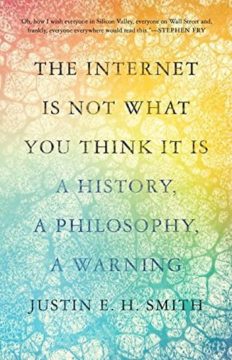 Talking sponges, spelling snails, dogs whose howls can be triggered from 1,000 miles away — these are but a few of the many historical examples upon which Justin E. H. Smith draws to illustrate the persistence of the telecommunicative imaginary throughout human history. Working in the same vein of scholarship as Ian Hacking’s “historical ontology,” Smith presents a view of technology in his new book, The Internet Is Not What You Think It Is: A History, a Philosophy, a Warning, that is the exact antithesis of much fashionable continental theorizing. Unlike a Kittler or Virilio — who see the technological object as forming the human subject who comes in contact with it, teaching him or her how to use it, its operation and value not explicitly designed but latent within its form, waiting to be discovered — Smith sees technology as a prosthesis, designed to meet stable desires: “[N]otwithstanding the enormous changes in the size, speed, and organization of the devices we use from one decade or century to the next, what these devices are, and how they shape our world, has been substantially the same throughout the course of human history.” In Smith’s view, the technological object is not “a discursive product forever trapped within the confines of a single epoch’s epistēmē,” but rather a continued striving toward what he presents as the dominant end of human technological innovation: the facilitation of communication.
 In recent years
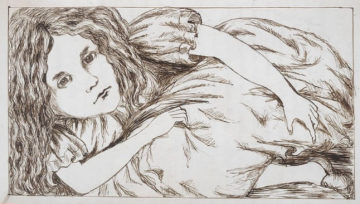 Nabokov and Balthus were intellectually and emotionally connected by their lifelong interest in Lewis Carroll and Edgar Allan Poe, and by their hatred of Sigmund Freud. Carroll epitomized the surprisingly large group of sexually repressed, dysfunctional and miserable English writers in the Victorian age, including Carlyle, Ruskin, Swinburne, Pater, Hopkins, Wilde and Housman. Carroll was a pseudonym, like Balthus and V. Sirin. A Cheshire cat appears in Alice in Wonderland and in many pictures by Balthus. At Cambridge, Nabokov translated Alice into Russian, and he describes Lolita as “a half-naked nymphet stilled in the act of combing her Alice-in-Wonderland hair.”
 A social anthropologist may already have asked this question, but what was it in the 1960s that caused so many young British men to become dedicated fans of American blues? Usually what went with it was a radical rejection of all they had been brought up to believe in. If you were lucky to live in the London area, you formed a band and could thump out some Muddy Waters. And if you were born in Glasgow? Interests there were more acoustic. A flourishing folk scene accommodated accomplished guitar pickers like Bert Jansch and even spawned psychedelic groups such as the Incredible String Band. Along with all this music, a vibrant poetry scene thrived in the city’s pubs and clubs.
 The United States has institutionalized the mass shooting in a way that Durkheim would immediately recognize. As I discovered to my shock when my own children started school in North Carolina some years ago, preparation for a shooting is a part of our children’s lives as soon as they enter kindergarten. The ritual of a Killing Day is known to all adults. It is taught to children first in outline only, and then gradually in more detail as they get older. The lockdown drill is its Mass. The language of “Active shooters”, “Safe corners”, and “Shelter in place” is its liturgy. “Run, Hide, Fight” is its creed. Security consultants and credential-dispensing experts are its clergy. My son and daughter have been institutionally readied to be shot dead as surely as I, at their age, was readied by my school to receive my first communion. They practice their movements. They are taught how to hold themselves; who to defer to; what to say to their parents; how to hold their hands. The only real difference is that there is a lottery for participation. Most will only prepare. But each week, a chosen few will fully consummate the process, and be killed.
 On May 18, 2022,
  When I learned that Knausgaard had published a new novel, The Morning Star, I was perplexed. The final book of My Struggle, The End, brings to termination the whole arc of the series, completing not only the story of Karl Ove’s father’s life and death but also Karl Ove’s own life as the author of that story: “Afterwards we will catch the train to Malmö, where we will get in the car and drive back to our house, and the whole way I will revel in, truly revel in, the thought that I am no longer a writer.”
 Readers who love Barbara Pym love her voice. She is an acute observer and describer of things and a gifted portraitist. Her canvas is small, but within it, she is interested in everything: clothes, food, décor, love, kindness, unkindness, self-presentation and self-deception. She is wryly and quietly funny. With each novel, she gives us a new version of her world, and their incremental changes of focus and sympathy are fascinating. Whether you share her concerns or preoccupations or want to live in her world hardly matters; the achievement is that she takes something real and moving and multidimensional and gets it onto the flat page, completely alive.
 In his 2019 book Monuments of Power, Tycho van der Hoog notes that midcentury North Korean public art and architectonics differ from versions in the Soviet Union and China because of the “near total destruction of Pyongyang during the Korean War,” which “meant a tabula rasa for city planners.” The image of North Korea literally constructing itself from the rubble of devastating aerial bombing campaigns by the United States undoubtedly resonated with African nationalist leaders, who were also attempting to chart a course for their infant nations. And in supporting anti-imperialist movements in Asia, Latin America, and Africa through its modeling of “proletarian internationalism,” the state hoped to gain allies in the United Nations as it attempted to end US domination both within the institution and on the Korean peninsula. The Mansudae Overseas Project was opened in 1974 as a sub-bureau of the larger studio, tasked with creating statues as gifts to African states. (Countries are presently billed for the monuments because they are a critical source of earning the state foreign currency.)
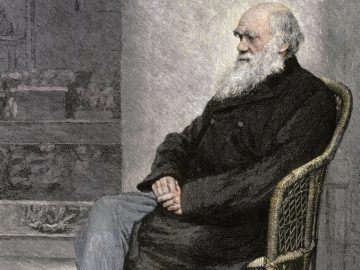 “If I have seen further,” Isaac Newton wrote to his fellow scientist Robert Hooke in 1675, “it is by standing on the shoulders of Giants.” Long seen as our greatest scientist’s greatest line, it may have been a sarcastic joke: Hooke, a rival who had claimed credit for Newton’s discoveries and whom Newton came to dislike intensely, was a short man. It was true, however, that Newton was supported by people who remained unseen. This was very much the case with his finances: Newton was an investor in the slave trade. He bought thousands of shares in the South Sea Company, the principal enterprise of which was to transport people from Africa to the Americas. Newton invested in this business for over a decade, making a significant profit (and then losing it in the crash of 1720).
 Hypomethylating agents (HMA) are currently used as a first-line treatment for patients with myelodysplastic syndrome (MDS), and increasingly in other diseases, but their mechanism of action is not clear. HMAs may affect many genes and could potentially activate an oncogene—a gene that contributes to the development of cancer—but this has not been clearly demonstrated to date. To test this, investigators from Brigham and Women’s Hospital, Harvard Stem Cell Institute and collaborators studied how HMA affects known oncogenes. They found that HMA activated the oncofetal protein SALL4 in up to 40 percent of
  To speak of Italo Calvino’s popularity outside of Italy is to speak of Calvino in translation, given that he has been read and loved abroad in other languages and not in Italian. For an author who floats, as Calvino himself said, “a bit in mid-air,” translation—that twofold and intermediate space—was his destiny.
 The origin of life here on Earth was an important and fascinating event, but it was also a long time ago and hasn’t left many pieces of direct evidence concerning what actually happened. One set of clues we have comes from processes in current living organisms, especially those processes that seem extremely common. The Krebs cycle, the sequence of reactions that functions as a pathway for energy distribution in aerobic organisms, is such an example. I talk with biochemist about the importance of the Krebs cycle to contemporary biology, as well as its possible significance in understanding the origin of life.