
Category: Recommended Reading
The Advent Of Truly Urban Versions Of Wildlife Species
Darryl Jones at Culturico:
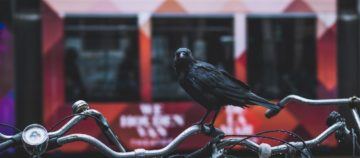 Cities are, indeed, the opposite of natural ecosystems. Net sinks of energy and materials, they are hot, noisy, poisonous and dangerous. They are constantly changing, often for frivolous or even wasteful reasons. Very few non-human species can cope with such chaos and stay away. Some species, however, see opportunities where others find only disturbance and stress. Cities offer countless productive chances for those willing and able to adapt. Those that take up this challenge share several crucial characteristics, including: already being abundant in the neighbouring landscape (10), having a generalised diet (with granivores being at a great advantage given the ubiquity of feeders)(11), demonstrating innovative foraging capacity and often belonging to groups with proportionally larger brains (12). Clearly, the latter two features go hand in hand.
One additional characteristic, however, can be regarded as a prerequisite for making the first steps into a human-dominated environment: the ability to tolerate the presence of humans.
more here.
Henrietta Maria: Conspirator, Warrior, Phoenix Queen
Lucy Hughes-Hallett at Literary Review:
 She was daughter, sister, wife or mother to five kings and two queens. On her wedding day, her pale blue velvet train was ostensibly held by three princesses of the blood, but so heavily encrusted was it with golden embroidery that a man had to walk concealed beneath it to carry the weight. Such a start in life might seem to presage a pleasant existence of leisure and luxury, but the career of Henrietta Maria, a Bourbon princess by birth and a Stuart queen by marriage, was as full of trouble and strife as the most harrowing of hard-luck case histories.
When she was six months old, her father, King Henri IV of France, was murdered. When she was seven, her eldest brother, who believed himself to be God’s representative on earth, had her mother arrested and banished from court.
more here.
the power of collective cognition
Steven Poole in The Guardian:
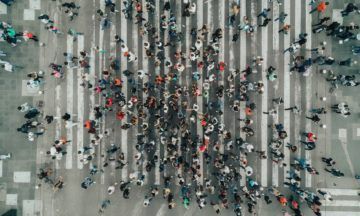 Intelligence – at least according to IQ test scores – is declining across the globe, which won’t surprise anyone who follows the news but doesn’t exactly bode well for the continuing survival on the species. What to do? One suggestion made by this book is that we all connect our brains to neural interfaces which will collect everyone’s thoughts in a massive “super-brain cloud”, the better to sweetly reason ourselves collectively out of disaster. What could possibly go wrong? This isn’t yet feasible anyway, but it is an example of the neuroscientist author’s determined optimism. Her central argument is important and correct: that we have become too used to thinking of intelligence as the private skill of individuals, vying against one another in a neoliberal world of relentless competition. What is needed, especially in an age of irredentist warmongering and climate disaster, is a greater emphasis on our ability to reason together, our “collective intelligence”.
This has been possible, of course, since we gruntingly taught one another how to make flint tools around the cave fire. What does neuroscience add to our understanding of it?
More here.
Cancer’s Got a Lot of Nerve
Lina Zeldovich in Nautilus:
 Manish Vira, a urologist at Northwell Health in New York performs prostate biopsy procedures three to five times a week. He inserts 12 needles into specific locations on the prostate gland, identified by MRI images that reveal malignant or suspicious lesions. The samples then go to a pathologist who determines whether cancer is present and how aggressive it is. “It’s a standard protocol,” explains Vira, who is also a chief oncologist at Northwell.
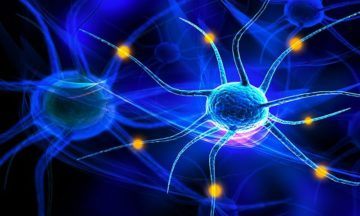
For the past few years, however, that standard protocol had a few extra steps. Now, the biopsy “wash”—a collection of molecules washed off the sample—goes to the research lab of Lloyd Trotman, a professor at Cold Spring Harbor Laboratory, who studies what makes these tumors aggressive or aids their metastases. Trotman’s team looks at the tumors’ genomic signatures—their genetic make-up, which can make them more aggressive. They look at the tumors’ microenvironments—the molecules that cancer surrounds itself with. And while researching these factors, they also dig into something that’s rarely looked at in cancer biology: the nervous system and its role in helping tumors spread.
More here.
Tuesday Poem
Swoon
The ear that hears the cardinal
hears in red;
the eye that spots the salmon
sees in wet.
My senses always fall in love:
they spin, swoon;
they lose themselves in one
another’s arms.
Your senses live alone
like bachelors,
like bitter, slanted rhymes whose
marriage is a sham.
They greet the world the way accountants
greet their books.
I tire of such mastery. And yet, my senses
often fail
to let me do the simplest things,
like walk outside.
Invariably, the sun invades
my ears
and terrifies my feet—the angular
assault of Heaven’s
heavy-metal chords.
I cannot hear
to see, cannot see to move.
And so I cling,
As on a listing ship at night,
to the stair-rail.
Sunday, August 21, 2022
When Science Is Not the Answer
Stephanie Bastek in The American Scholar:
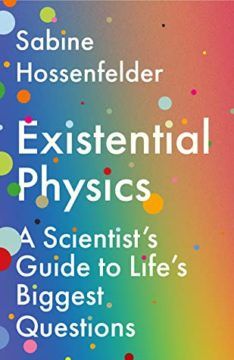 In pursuit of the natural laws of the universe, human beings have accomplished remarkable things. We’ve outlined the principles of gravity and thermodynamics. We’ve built enormous machines to dig into the deepest parts of the Earth, to understand what happens at the shortest quantum distances, and equally large machines to take pictures of the most distant parts of the cosmos. Still, there remain a number of foundational gaps in our knowledge—gaps that have allowed some wild ideas to take root. Some scientists hypothesize that, with every decision we make, our universe forks into multiverses, that consciousness arises from the quantum movements of microtubules, that the universe itself is conscious, or that there is this cat in a box and not in a box at the same time. These ideas, and related big questions about the nature of the universe, are the subject of particle physicist Sabine Hossenfelder’s new book, Existential Physics. In it, she argues that many of these far-out theories, put forward without evidence, are on par with religious belief. Physics, she contends, does not yet provide the answers to all of our questions—and it’s doubtful that it ever will.
More here.
The future of computing lies in exploiting the universe’s complex physical behaviors
Charlie Wood in Quanta:
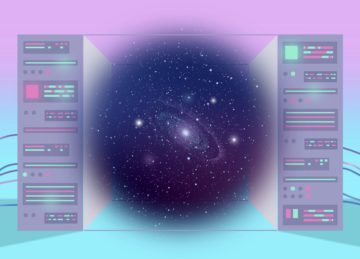 Inside a soundproofed crate sits one of the world’s worst neural networks. After being presented with an image of the number 6, it pauses for a moment before identifying the digit: zero. Peter McMahon, the physicist-engineer at Cornell University who led the development of the network, defends it with a sheepish smile, pointing out that the handwritten number looks sloppy. Logan Wright, a postdoc visiting McMahon’s lab from NTT Research, assures me that the device usually gets the answer right, but acknowledges that mistakes are common. “It’s just this bad,” he said.
Despite the underwhelming performance, this neural network is a groundbreaker. The researchers tip the crate over, revealing not a computer chip but a microphone angled toward a titanium plate that’s bolted to a speaker. Other neural networks operate in the digital world of 0s and 1s, but this device runs on sound.
More here.
The Dream of Electric Sheep
Ryan Kemp in The Hedgehog Review:
 We’ve got the Internet all wrong. Its raison d’être is not, as Mark Zuckerberg claims for his own corporation, to “strengthen our social fabric and bring the world closer together.” To the contrary, the Internet is a pernicious disease. It is—as Justin E.H. Smith argues in his new book, The Internet Is Not What You Think It Is—thoroughly “anti-human.”
The problem is straightforward: The Internet as we know and use it in our daily lives (the realm of Facebook, Google, Twitter, etc.) significantly limits our capacity for freedom in all the various and complex senses of the term. We might think about the proliferation of action-constraining algorithms and ubiquitous surveillance. Smith, a professor of philosophy at the University of Paris, admits that these things undermine our well-being, but he focuses instead on the so-called crisis of attention: the idea that the Internet is ferociously adept at cultivating distraction.
More here.
Interview With Siri Hustvedt
Noga Arikha in The White Review:
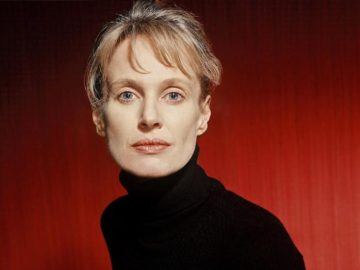 Very few writers in the twenty-first century are polymaths of the sort that previous centuries sometimes spawned – those who knew about all the subjects that mattered at the time, while still producing original work. Specialisation and the multiplication of fields and subfields of research, in both the humanities and the sciences, has rendered such breadth nearly impossible. Siri Hustvedt, however, is an exception: she is a polymath for our times, fluent in multiple specialised discourses, but whose mode is artistic.
More here.
Ailing Empire Blues
Jed Esty in The Baffler:
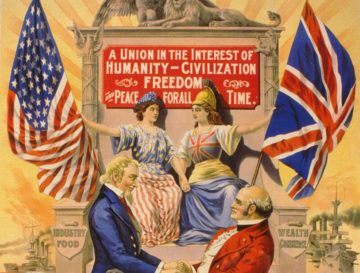 In the United States, the political baptism of the non-elites to the hegemonic mission happened in the years between 1920 and 1960. Mass culture in those crucial years paved the way for a patriotic politics built around U.S. military prowess, massive expansion of literacy and lifestyle, the phobias of the Red Scare and Jim Crow, and commercial success across the globe. By the midcentury, anti-communism produced a coordinated ideological effort at cohesion. Elites recruited the political aspirations of working-class and middle-class voters into the cause of American supremacy, framing the export of American consumer capitalism as the triple gift of sacred freedom, true democracy, and general prosperity. The Hollywood studio system picked up the plots of late-Victorian adventure genres, adapting them to the worldview of U.S. supremacy and global centrality.
More here.
How to go to therapy without talking about your feelings
Alice Su in The Economist:
 Two Chinese psychologists talk about divorce, stockpiling and crying into your mask.
Chuan He: Some of my patients were surprisingly happy when the lockdown began. There was a couple and the husband had had an affair. The wife was in pain, thinking, should I fight with my spouse, avoid him, or let myself go numb? Then suddenly they were inside together for months, forced to face their relationship. Things actually improved.
Other couples struggled. One of my clients is a high-performing businessman. At first he was OK, busy in his study all day. But after the fourth, fifth week of lockdown, work annoyed him and he started yelling at his wife and kids. He didn’t want to get up in the morning; he napped at lunch and then played mahjong and watched videos on his phone until 3am. He felt powerless and started to ask: What am I working for? What is this life for? Is there still meaning? That is depression. He needed a professional to tell him: “You’ve met something unprecedented. This is a stress response. It doesn’t mean you’ll always be like this.”
More here.
Wolfgang Petersen (1941 – 2022) Film Director
Frederick Buechner (1926 – 2022) Writer And Theologian
Abdul Wadud (1947 – 2022) Cellist
Sunday Poem
Be Brave
We are stuck in this story
of America,
these Whitman dreams,
Guthrie songs
and bright Ginsberg rants,
with even the land itself
teary-eyed, disillusioned,
forever in love,
knocked down
by Kerouacian gifts
of western horizons
and beautiful, unknown women
waiting in lost cafes,
flattened by Bukowski’s tender heart
bleeding beneath the drunken roar.
What is left? What epic has the soul left burning?
Get it down. Get everything down.
Chances remain,
but they must be taken
or lost.
America, like you, is here for the dance.
Her story will never be fully told.
by Jeff Weddle
from Poetry Feast
Saturday, August 20, 2022
More than Consumers
 Suzanne Kahn at the Roosevelt Institute:
In the first 18 months of the Biden presidency, while the administration executed one of the fastest economic recoveries in memory following the COVID-induced recession, rising prices nevertheless helped stall the progressive agenda. For policymakers, journalists, and the American public, inflation felt more salient than record employment levels.
In More than Consumers: Post-Neoliberal Identities and Economic Governance, Suzanne Kahn argues that this is partly due to the way in which policymakers and the public understand themselves: For generations, our government has understood its constituents primarily as consumers, with their other identities—workers, parents, etc.—taking a back seat, and Americans, in turn, have understood their government as responsible primarily for maintaining functioning consumer markets rather than providing essential public resources.
By looking at how policymakers since the New Deal have conceptualized the intersection of inflation, wages, and prices, this report explores how the governance stance shared across parties became one that imagined Americans’ primary identity as that of consumer. And while progressives have moved away from policies that center markets and the consumer in recent years, they’ve continued to frame the policy conversation around consumer identities.
Odourless Utopia
 Marco D’Eramo in Sidecar:
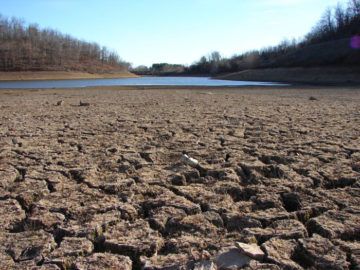
In Europe, the war bulletins come not just from Ukraine, but also from the climate front. The French government has cracked down on water use, banning watering lawns and washing cars in 62 of 101 departments, as more than 100 municipalities no longer have potable water. Nuclear power plants on the Rhône and Garonne have had to reduce production due to insufficient water in the rivers. In Italy, the government has declared a state of emergency in 5 of 20 regions, while Second World War bombs are discovered on the beds of its largest river, the dried-up Po. In Germany, the Rhine is so low that the barges plying its 1,000 kilometres from Austria to Holland have had to reduce their cargo from 3,000 to 900 tons so as not to run aground, and the river is expected to soon become impassable to freight traffic. In England, for the first time on record, the source of the Thames has dried up and the river is beginning to flow more than 5 miles further downstream. In Spain, restrictions on water consumption have been imposed in Catalonia, Galicia and Andalusia.
These are all warning signs. In a few centuries, the idea of water as an abundant resource and universal right may be unimaginable. It is easy to forget that even in the so-called advanced world, domestic running water – for toilets, cooking, personal hygiene, washing clothes and dishes – is a very recent and ephemeral phenomenon, dating back less than a century.
More here.
Planta Sapiens By Paco Calvo
PD Smith at The Guardian:
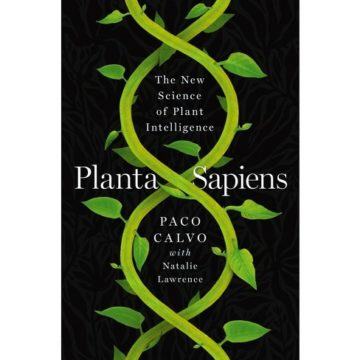 In the course of his book, Calvo describes many experiments that reveal plants’ remarkable range, including the way they communicate with others nearby using “chemical talk”, a language encoded in about 1,700 volatile organic compounds. He also shows how, like animals, they can be anaesthetised. In lectures, he places a Venus flytrap under a glass bell jar with a cotton pad soaked in anaesthetic. After an hour the plant no longer responds to touch by closing its traps. Tests show the plant’s electrical activity has stopped. It is effectively asleep, just as a cat would be. He also notes that the process of germination in seeds can be halted under anaesthetic. If plants can be put to sleep, does that imply they also have a waking state? Calvo thinks it does, for he argues that plants are not just “photosynthetic machines” and that it’s quite possible that they have an individual experience of the world: “They may be aware.”
more here.