
Category: Recommended Reading
Barbara Ehnrenreich (1941 – 2022) Essayist And Political Activist
Sunday Poem
Sleeping in the Forest
I thought the earth
remembered me, she
took me back so tenderly, arranging
her dark skirts, her pockets
full of lichens and seeds. I slept
as never before, a stone
on the riverbed, nothing
between me and the white fire of the stars
but my thoughts, and they floated
light as moths among the branches
of the perfect trees. All night
I heard the small kingdoms breathing
around me, the insects, and the birds
who do their work in the darkness. All night
I rose and fell, as if in water, grappling
with a luminous doom. By morning
I had vanished at least a dozen times
into something better.
by Mary Oliver
from News of the Universe
Poems of Twofold Consciousness
Sierra Club Books, 1980
Ian McEwan on ageing, legacy and the attack on his friend Salman Rushdie: ‘It’s beyond the edge of human cruelty’
Lisa Allardice in The Guardian:
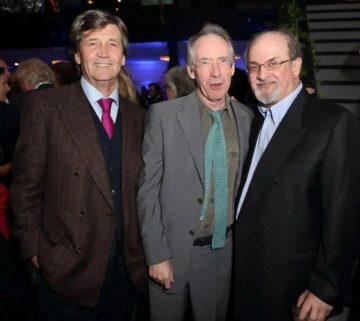 Ian McEwan was on holiday on the remote coast of north-west Scotland when he heard the news that his great friend Salman Rushdie had been attacked in New York. His wife, the writer Annalena McAfee, let out a cry from the next door room in the small hotel where they were staying. The numbness of his first response was quickly followed by a feeling of horrible inevitability: “How could I have been so blind?” Like Rushdie, McEwan had hoped the threat of the fatwa was over. “The tragedy of this is Salman always wanted to get back to having an ‘ordinary’ writing life, and that seemed to have happened,” McEwan says on a video call a week after the incident. The 74-year-old novelist is back in his Cotswolds home, surrounded by books and looking slightly beaten up after his first bout of Covid.
More here.
The Surreal Abundance of Alaska’s Permafrost Farms
Yasmin Tayag in The New Yorker:
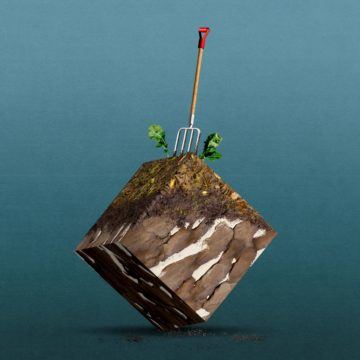 In 2010, Brad St. Pierre and his wife, Christine, moved from California to Fairbanks, Alaska, to work as farmers. “People thought we were crazy,” Brad said. “They were, like, ‘You can grow things in Alaska?’ ” Their new home, not far from where Christine grew up, was as far north as Reykjavík, Iceland, and receives about sixty inches of snow each year. It routinely experiences winter temperatures below minus ten degrees Fahrenheit. In the summer, however, the sun shines for twenty-one hours a day and the weather resembles San Francisco’s. Sturdy cabbages and carrots thrive in the ground, while fussier tomatoes and cucumbers flourish in greenhouses.
The main challenge with farming in this part of Alaska, Brad told me recently, is that craters often open up in fields, and some are the size of Volkswagen Beetles. The holes form when patches of frozen water, known as ice lenses, melt and gulp down the surrounding earth in a process known as subsidence. They tend to expand each year and sometimes fuse with other nearby pits; they can be filled, but farmers often run out of soil, so the pits become ponds. Sometimes holes hide under ruffles of kale or the shade of tart-cherry trees, or threaten to swallow Brad’s tractor. “All of a sudden, you have to stop,” he said. “There’s no grass. There’s just a hole.”
More here.
Saturday, September 3, 2022
The ‘New’ India
 Pranab Bardhan in New Left Review:
The preamble to the Constitution of India affirms the solemn resolve of its people to found a ‘socialist, secular, democratic republic’. Today, on the 75th anniversary of the country’s Independence, it is plainly neither socialist nor secular—nor, one could well argue, democratic. Indeed, contrary to journalistic wisdom, India has never been ‘socialist’, unless one confuses the term with statism. The concept of secularism is contested, but if we use the political theorist Rajeev Bhargava’s thoughtful interpretation of it as entailing a ‘principled distance’ between religion and the state, then it certainly does not exist in India any more, going by the practice and utterings of its current leaders. India’s democratic institutions have been on the decline for decades, but this has accelerated so much in the last few years that Sweden’s V-Dem Institute has authoritatively described it as an electoral autocracy. In a negative sense this helps to define some key aspects of the ‘new’ India.
What follows will reflect on broad trends in India’s political economy over the last few decades. The aim is not to provide a detailed blow-by-blow account, nor an exhaustive or quantitative analysis of what has happened in this vast heterogeneous country. Instead I want to paint a broad-brush picture of the obstacles to India’s economic development and the respects in which these represent failures on the part of its state. I go on to analyse India’s ‘governance effectiveness’ in terms of three factors: public resources, state capacity and the centralized federal structure, with the concomitant weakness of regional and local government. I then examine the performance of the private economy, focusing first on the aborted structural transition that lies behind India’s politically explosive failure to create productive jobs for its bulging youth population and the general weakening of the bargaining power of labour, before going on to explore the ways in which the inequalities and concentrations of the Indian economy foster a conclave economy and a crony-oligarchic capitalism of an increasingly Latin American kind. Finally, I discuss how this is legitimated through a mixture of limited welfare measures for the poor and a majoritarian nationalism that sustains itself by stifling the democratic process.
More here.
Mikhail Gorbachev, the Fundamentally Soviet Man
Masha Gessen in The New Yorker:
Mikhail Gorbachev, the last leader of the Soviet Union, died in Moscow, on Tuesday, at the age of ninety-one. In the last two decades of his life, he rarely granted interviews. So, in 2010, when he agreed to speak to someone from a Moscow magazine that I edited, I felt both awe and some misgivings: here was a unique opportunity that would almost certainly be wasted. Gorbachev was a notoriously terrible interviewee. He rambled; he went off on tangents; he almost never finished a sentence. In a desperate move, my colleagues and I asked readers to send in questions. Someone asked, “What could bring you joy now?” This time, Gorbachev was ready with a concise answer. “If someone could promise me that in the next world I will see Raisa,” he said. “But I don’t believe in that.” Raisa, his wife of forty-six years, had died, of leukemia, in 1999.
“I don’t believe in God,” Gorbachev continued. Raisa had not been a believer, either, but “she progressed faster than I did in this direction.” What he seemed to be getting at was that Raisa had stayed in step with her country, becoming a post-Soviet Russian, while Gorbachev remained a fundamentally Soviet man.
More here.
Larry Fink: Here’s Your Answer to the Despicable Letter from the GOP Attorneys General
 Nell Minnow in response to 19 Republican state attorneys general’s letter to Blackrock:
I’m sure BlackRock CEO Larry Fink’s response to the obnoxious, accusatory, misleading, letter he received from 19 Republican state attorneys general will be measured, diplomatic, and thoroughly lawyered over. He will hope to mollify them to continue to be able to do business with the government pension funds. That is only right for someone who is in business, with employees, clients, and his own shareholders to consider.
I operate under no such restrictions, and therefore, like Keegan-Michael Key playing the part of Luther, President Obama’s anger translator, I have drafted the letter I wish Mr. Fink could send.
To the Attorneys General:
The letter bearing your signatures but apparently drafted by the corporate donors to the Republican State Attorneys General Fund is such an appalling mixture of political theater and disinformation that I question whether the signers actually read it. I will respond to some of its allegations but I will begin with one key point: it takes a lot of chutzpah for a bunch of elected officials to claim — without any substantiation — that the decisions made by financial professionals are based on politics rather than financial returns when it is you who are urging us to bend our criteria based on your political pandering. We operate under extensive regulatory requirements, including fiduciary obligation, the duties of care and loyalty you refer to, the strictest standard of our legal system. We are also governed by the unforgiving, stringent pressures of competition in the market.
So let me be clear about the answer to all of your charges: Every single decision made by us at BlackRock, from investment criteria to economic forecasts to incentive compensation to the purchase of office supplies is exclusively based on our best assessment of risk and return. That includes doing whatever it takes to create sustainable growth and continue to attract and retain clients.
More here.
The African Enlightenment
 Dag Herbjørnsrud in Aeon:
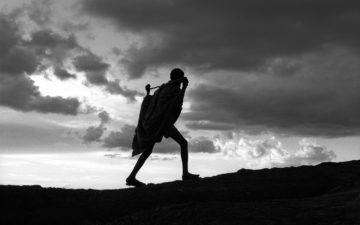
The ideals of the Enlightenment are the basis of our democracies and universities in the 21st century: belief in reason, science, skepticism, secularism, and equality. In fact, no other era compares with the Age of Enlightenment. Classical Antiquity is inspiring, but a world away from our modern societies. The Middle Ages was more reasonable than its reputation, but still medieval. The Renaissance was glorious, but largely because of its result: the Enlightenment. The Romantic era was a reaction to the Age of Reason – but the ideals of today’s modern states are seldom expressed in terms of romanticism and emotion. Immanuel Kant’s argument in the essay ‘Perpetual Peace’ (1795) that ‘the human race’ should work for ‘a cosmopolitan constitution’ can be seen as a precursor for the United Nations.
As the story usually goes, the Enlightenment began with René Descartes’s Discourse on the Method (1637), continuing on through John Locke, Isaac Newton, David Hume, Voltaire and Kant for around one and a half centuries, and ending with the French Revolution of 1789, or perhaps with the Reign of Terror in 1793. By the time that Thomas Paine published The Age of Reason in 1794, that era had reached its twilight. Napoleon was on the rise.
But what if this story is wrong? What if the Enlightenment can be found in places and thinkers that we often overlook? Such questions have haunted me since I stumbled upon the work of the 17th-century Ethiopian philosopher Zera Yacob (1599-1692), also spelled Zära Yaqob.
More here.
Time As We Know It
Marna Clarke in Lens Culture:
 I am 81 years old, my partner 92. On my 70th birthday, I woke from a dream in which I had rounded a corner and seen the end. This disturbing dream moved me to begin photographing the two of us, chronicling our time together, growing old.
Now, 11 years down the line, he and I face numerous physical challenges: decreased mental acuity, especially memory; the diminished quality of our skin, hair and teeth; mild disfigurement; as well as the need to tend vigilantly to our balance, hearing, sight, physical agility and getting adequate sleep. Inside we are learning to accept it, sometimes going from anger, impatience, sadness or fear to seeing the humor in the idiosyncrasies of aging. We realize that if we can be comfortable with our own aged appearances and limitations, then the potential exists that others will become more comfortable witnessing this transformation and possibly become more comfortable with their own.
I have entered a taboo territory: aging and death. The creation of these photos is part of my own way of dealing with the inevitability of dying by bringing attention to it and accepting it. I have come to embrace the photographs as a tribute not just to our lives but also to the demanding and courageous task of growing old gracefully, graciously, and aware. A certain wisdom is evolving from years of living and observing, eventually unveiling previously unseen associations, patterns and similarities. I am gaining a much-appreciated perspective that was not available to me previously.
More here.
Is the individual obsolete?
George Will in The Washington Post:
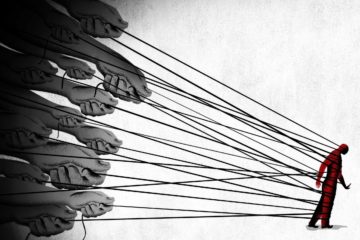 During the 2012 presidential election, there occurred one of those remarkably rare moments when campaign rhetoric actually clarified a large issue. It happened when Barack Obama, speaking without a written text, spoke from his heart and revealed his mind: “Look, if you’ve been successful, you didn’t get there on your own. . . . If you were successful, somebody along the line gave you some help. There was a great teacher somewhere in your life. Somebody helped to create this unbelievable American system that we have that allowed you to thrive. Somebody invested in roads and bridges. If you’ve got a business — you didn’t build that. Somebody else made that happen. The Internet didn’t get invented on its own. Government research created the Internet so that all the companies could make money off the Internet. The point is, is that when we succeed, we succeed because of our individual initiative, but also because we do things together.”
The italicized words ignited a heated debate, and Obama aides insisted that their meaning was distorted by taking them “out of context.” But Obama was merely reprising something said less than a year earlier by Elizabeth Warren, a former member of his administration who was campaigning to become a U.S. senator from Massachusetts. She said: “There is nobody in this country who got rich on his own. Nobody. You built a factory out there — good for you. But I want to be clear. You moved your goods to market on the roads the rest of us paid for. You hired workers the rest of us paid to educate. You were safe in your factory because of police forces and fire forces that the rest of us paid for. . . . You built a factory and it turned into something terrific or a great idea — God bless, keep a big hunk of it. But part of the underlying social contract is you take a hunk of that and pay forward for the next kid who comes along.”
More here.
The Invention of Nature: Alexander von Humboldt’s New World
‘High’ by Erika Fatland
Anna Fleming at The Guardian:
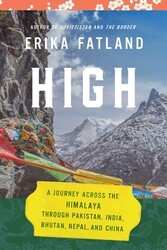 A magnet for explorers, climbers and seekers of enlightenment, the Himalayas have drawn swathes of travellers over the years. The resulting outpouring of stories can leave one wondering quite what more there is to say.
But at the outset of this extended travel narrative, Norwegian anthropologist Erika Fatland, whose previous books include Sovietistan, distinguishes herself from the stereotypes. She is not a “spiritual tourist” on a mystical journey, she explains, nor is she a climber, or a star travel writer looking to stamp her identity over people and places. The “holy grail” Fatland pursues in the opening pages is a visa, and this quest sets the tone for what is a modern and unromantic approach to her subject. A series of thoughtful chapters lead us on a trail through Pakistan, India, Bhutan, Nepal, China and Tibet.
more here.
The First Romantics And The Invention Of The Self
Tim Blanning at Literary Review:
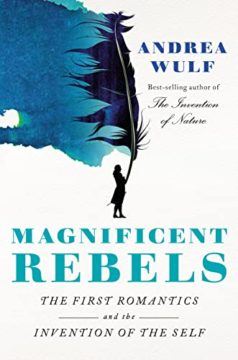 In 1793 Caroline Böhmer paid for her support for the French Revolution with arrest by the Prussians and three months of incarceration in a damp, dark, overcrowded, vermin-infested cell in the fortress of Königstein. It was made doubly painful by her having to share her suffering with her seven-year-old daughter. Intelligent, well educated, physically attractive, articulate and with a strong personality (‘I never flatter, I say what I think and feel’), Böhmer liked to be in charge. She was also unconventional when it came to sexual morality. Her spell in prison was complicated by the discovery that she was pregnant, the result of a one-night stand with a teenage French soldier. It was not to be the last of her extramarital adventures.
Böhmer was the queen bee of the ‘Jena Set’, a group of intellectuals who settled in that little Thuringian town in the mid-1790s. Rarely has there been such a concentration of cerebral power in such a small place (population 4,500).
more here.
Saturday Poem
Summation
I am glad of the great obligations
I imposed on myself. In my life
many strange and material things have crowded together—
fragile wraiths that entangled me,
categorical mineral hands,
an irrational wind that dismayed me,
barbed kisses that scarred me, the hard reality
of my brothers,
my implacable vow to keep watchful,
my penchant for loneliness—to keep to myself
in the frailty of my personal whims.
This is why—water on stone—my whole life has
sung itself out between chance and austerity.
by Pablo Neruda
from Five Decades:Poems 1925-1970
.
Original Spanish at Read More below Read more »
Friday, September 2, 2022
How Wile E. Coyote Explains The World
Editor’s Note: This is six years old but still very much worth reading.
Albert Burneko in Deadspin:
 A joke has structure. It has a central rule. Setup, punchline. The setup produces a tensed, expectant state; the punchline resolves the tension with a surprise. If the elements of the joke are not arranged into a setup and a punchline, it is not a joke. It is just a statement.
This is a matter of mechanical necessity; it’s true of every kind of joke, from long story jokes to one-liners. Consider this short, immaculate, spectacularly stupid joke by the immortal Jack Handey, which has never failed to make me giggle uncontrollably, and which I now will ruin with explanation:
The crows seemed to be calling his name, thought Caw.
Structure makes this a funny joke. The first clause—“The crows seemed to be calling his name”—paints a deliberately writerly picture in which the word “seemed” is the key. You’ve got crows calling, and you’ve got a name somebody—probably a dipshit—is hearing in their calls. “Seemed” is what suggests that the relationship between the calls and the name is interpretive, possibly even imaginary. That’s the setup: Between the autumnal image of crows and the way the word “seemed” puts you in mind of the sort of person who’d search for acknowledgment in animal sounds, this seems to be a lonely sort of image, of the sort you’d find in a crappy novel about a lonely, imaginative naïf with an artist’s soul or some shit. And then you get the punchline, that glorious punchline, not diluted over a whole sentence but breaking out sharply like a sudden fart for maximum impact on that ridiculous last word, and it changes your perception of what came before it. The crows aren’t calling his name. The crows are yelling caw. Caw is what crows yell—it’s called cawing, for Chrissakes—and Caw is a doofus.
More here.
The Ideological Refusal to Acknowledge Evolved Sex Differences
David C. Geary in Quillette:
 Much remains to be learned about the nature and origins of various sex differences, but more is known than most people realize. Much of the current confusion is generated by activists who suppress, attack, and distort information on sex differences in order to reinforce their preferred ideological narratives. These ideology-driven distortions are helpfully illustrated by a recent New York Times essay by Chelsea Conaboy, which announces that the maternal instinct is a “myth”—a social construct generated and upheld by the patriarchy to impel women to raise children and keep them out of the workforce.
Conaboy’s goal, apparently, is to undo 200 million years of mammalian evolution, which produced maternal investment in offspring. She correctly points out that, in the past, Western societies discouraged and often excluded women from entering higher education and professional jobs. But while this continues to occur in many parts of the world, in highly developed Western societies women now outnumber men in higher education. Jerry Coyne has provided a valuable rejoinder on this point and several others in Conaboy’s essay, to which I will add a few more here.
More here.
Mikhail Gorbachev: The contradictory legacy of Soviet leader who attempted ‘revolution from above’
Ronald Suny in The Conversation:
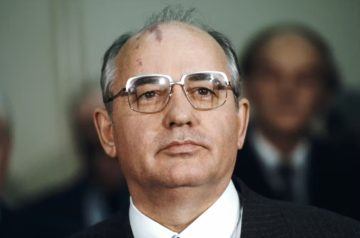 Mikhail Gorbachev was a contradictory figure; his legacy, complex. Hailed in the West as a democrat and liberator of his people – which he genuinely was – he increasingly became despised by many within Russia for destroying the Soviet Union and dismantling a great power.
Either way, he was consequential. Indeed, his death at 91, announced by state media in Russia on Aug. 30, 2022, comes as the ripples of the transformation he helped engineer continue to be felt. The invasion of Ukraine is, in part, an attempt to reverse the loss of status felt in post-Cold War Russia by the disintegration of the Soviet Union that occurred under Gorbachev – something Vladimir Putin views as “the greatest geopolitical catastrophe of the [20th] century.” In a sense, the unraveling of the Soviet Union that began 30 years ago is still going on now, in the bloody war in Ukraine.
Of course, that is not how he is perceived in the West.
More here.
Steven Pinker: The Best Time To Learn Something – And It’s NOT When You Think
The Song of the Cell
Marie Vodicka in Science:
 Through a series of vignettes peppered with illustrative analogies and vibrant characters, Siddhartha Mukherjee invites readers of his new book, The Song of the Cell, on a tour of cell biology from its early origins to its present and future applications. Mukherjee is clear from the start that the book is not a comprehensive history of the field but rather a meandering journey through selected seminal scientific discoveries. The book’s conversational style draws the reader in, and the text is enlivened by descriptions of major players in the field. We learn, for example, that Frederick Banting—co-winner of the Nobel Prize for the discovery of insulin—devised his key experiment only after experiencing financial difficulties in his medical practice, a broken-down car, and a sleepless night puzzling over a recently published journal article.
While practitioners of biology will recognize many in this cast of characters, from historical icons to cameos by peers and contemporaries, the book’s individual and idiosyncratic descriptions of the scientists and their discoveries are both a strength and a weakness. Such a strategy can help to keep readers engaged, but it can also perpetuate the inaccurate notion of science as a solitary activity, sparked by individual genius.
More here.