
Category: Recommended Reading
Bruno Latour’s ‘Facing Gaia’ With Tim Howles
Paulin Soumanou Vieyra And The Birth Of African Cinema
Akin Adeṣọkan at The Current:
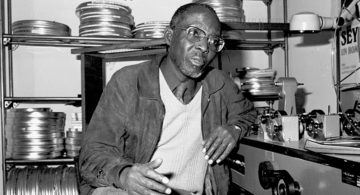 Birago Diop was a brilliant high-school student in Senegal. During his final exam, he made the unusual mistake of misconjugating a French verb, an error that was to prove fateful for his career. With a wry, self-deprecating smile past the camera, Diop, now an acclaimed poet and short-story writer, declares that what happened to him followed “the law of destiny.” The professional paths open to colonial students in the French system were narrow: they could become teachers if they passed a critical test, or doctors or civil servants if they didn’t. Diop went on to study veterinary medicine in France, and his collections are filled with animal tales.
Sitting behind the camera and listening to this story in Birago Diop, conteur (1981), Paulin Soumanou Vieyra, the Beninese-Senegalese filmmaker, historian, critic, and bureaucrat, must have heard something of his own travails. The two men, both outstanding artists, achieved renown despite the constricting educational system of the French colonies.
more here.
Deep Emotion, Plain Speech: Camus’s The Plague
Laura Marris at The Paris Review:
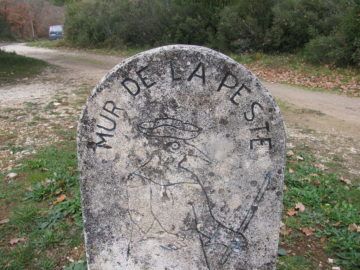 The Plague was not an easy book to write. Camus was ill when he began it, then trapped by the borders keeping him in Nazi-occupied France. Aside from these difficulties, there was the pressure of authentically speaking up about the violence of World War II without falling into the nationalist heroics he deplored. Like with most problems in art, the solution was to address it directly: in one of the most revelatory sections of the novel, the character Tarrou blurs the line between fancy rhetoric and violence. “I’ve heard so much reasoning that almost turned my head,” he says, “and which had turned enough other heads to make them consent to killing, and I understood that all human sorrow came from not keeping language clear.”
All human sorrow! The boldness of this claim hints at how much Camus believed in words.
more here.
Wednesday Poem
Lessons
“What’s a patriot, Dad?
Hey, Dad! ‘Earth to Dad—
Earth to Dad!’
Get your nose out of
the newspaper!
Help me with my homework!
What’s a patriot, Dad?”
“Well, I guess, a person
who loves the land.
Although some people act as if
a patriot’s a man
who hates another land.”
“Hey, Dad! Don’t
give me a lecture—
all I need’s
a word! Just a word!
What’s a veteran, Dad?
Hey, Dad! DAD!”
“A veteran’s what your
father is—” his mother
chimed in, clear across the room.
“Oh, I got it:
somebody who’s always out
of work, home with us
kids— huh, Dad?
Is that what a veteran is?
“Yep—” Dad got out,
remembering suddenly
the time his youngest son
had stopped breathing
right there at the kitchen table
(with his oldest son screaming,
“Nicky’s dead! Nicky’s dead!”)
and the frantic fight
to find a sign of life,
while dialing the emergency number
for an ambulance.
“What’s war? Dad!
You know, Dad! War—war!
Dad! What the hell’s war?”
And old Dad blurted out,
still thinking of the desperate
battle one desperate night
to save the baby’s life:
“Ten minutes of terror,
after twenty years of anticipation,
and then twenty years of worrying
‘when’s it going to happen
again?”
by Jan Barry
from Unaccustomed Mercy—
Soldier Poets of the Vietnam War
Texas Tech University Press
Why Do We Die Without Sleep?
Steven Strogatz in Quanta Magazine:
Why do we sleep anyway? We spend about a third of our lives asleep, so it seems like it must be pretty important. But there’s still so much about it that we don’t understand. One thing that sleep researchers are pretty sure of is that every system in our body seems to be impacted by sleep. When we miss out on sleep, it impairs our circulation, our digestion, immune system, metabolism, and of course, brain function. And sleep deprivation doesn’t need to be long term to do damage. In fact, if you go without sleep long enough, you will die. But why, exactly?
…Rogulja (02:07): Well, you’re probably sitting right now and kind of resting in some way. But you’re definitely not sleeping, right? So, yeah, what is it that’s so different? And I would say that, for me, what is the kind of most defining characteristic of sleep is that kind of loss of awareness of the external environment and of your internal state, in many ways.
More here.
Which Neurons Go to Sleep First in Humans?
Alejandra Manjarrez in The Scientist:
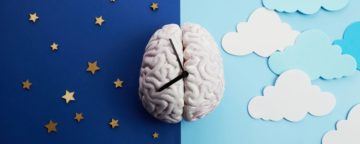 In the last decades, science has taught us that the mammalian brain isn’t always entirely awake or asleep. Dolphins can swim with one hemisphere asleep while the other is alert, and some neurons in sleep-deprived rats can “switch off” while the animals are still awake. In humans, this so-called “local sleep,” in which specific neuronal populations take a nap while the rest of the brain is awake, has been more challenging to study, since the invasive methods used to track it in other mammals cannot be used on people.
A new study published July 21 in PNAS seems to have overcome this challenge. By simultaneously mapping human brain signals measured with two different methods (one with good temporal resolution and the other with good spatial resolution), the team pinpointed the waking or sleeping state of neuronal populations at the local level. The achievement made it possible to identify which brain regions are the first to fall asleep and which are the first to wake up, and experts say it promises to be a valuable tool for studying sleep in humans.
More here.
Tuesday, September 27, 2022
No one in physics dares say so, but the race to invent new particles is pointless
Sabine Hossenfelder in The Guardian:
 Imagine you go to a zoology conference. The first speaker talks about her 3D model of a 12-legged purple spider that lives in the Arctic. There’s no evidence it exists, she admits, but it’s a testable hypothesis, and she argues that a mission should be sent off to search the Arctic for spiders.
The second speaker has a model for a flying earthworm, but it flies only in caves. There’s no evidence for that either, but he petitions to search the world’s caves. The third one has a model for octopuses on Mars. It’s testable, he stresses.
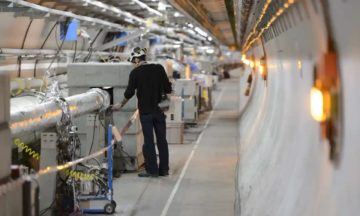
Kudos to zoologists, I’ve never heard of such a conference. But almost every particle physics conference has sessions just like this, except they do it with more maths. It has become common among physicists to invent new particles for which there is no evidence, publish papers about them, write more papers about these particles’ properties, and demand the hypothesis be experimentally tested. Many of these tests have actually been done, and more are being commissioned as we speak. It is wasting time and money.
More here.
How should we do research on human nature?
Iris Berent in the Los Angeles Times:
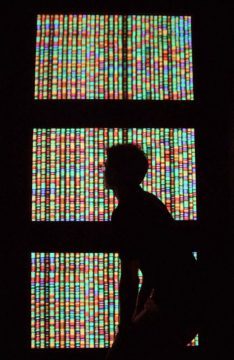 Parenting can make you wonder about human nature. If you have kids, you might have noticed their differences early on. When my infant son first heard music, his eyes grew big, and his gaze got intense. My infant daughter was clearly the people person. At 3 months, she was using her single tooth to mischievously bite me and watch my reaction. No wonder my son became a composer and my daughter turned to psychology.
Were they born this way? Does nature shape who we are? Since the advent of cognitive science, neuroscience and behavioral genetics, this age-old question has become the topic of intense scientific research. But in the current social and political climate, the concern with human nature has become dangerously loaded.
More here.
In Pakistan, 33 Million People Have Been Displaced in Floods
Zoha Tunio in Undark:
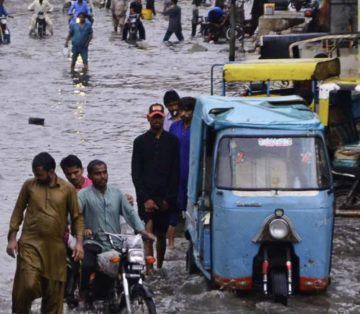 The southwestern province of Balochistan and the southern province of Sindh have been the worst hit, with more than 500,000 people currently living in shelters. Across the country more than 750,000 livestock have died and over 3 million acres of agricultural land have been completely washed away. Agriculture accounts for more than a quarter of Pakistan’s economy. Of the country’s 154 districts, 116 are severely affected and 80 have been declared “calamity hit.”
Ahsan Iqbal, Pakistan’s minister for planning, development and reform, placed initial flood damages at $10 billion. Two weeks later damages in the country have risen to $30 billion. “I call on the international community that Pakistan needs massive financial support, as according to initial estimates the losses are around $30 billion,” said Antonio Guterres, secretary general of the United Nations, during a news conference in Islamabad. He called on the international community for “massive financial support,” noting all of the country’s losses.
More here.
Noam Chomsky on Consciousness
Is Knowing The Most Distinctively Human Capacity? Richard Rorty (1996)
Miyake’s Layers
Jane Hu and other writers at n+1:
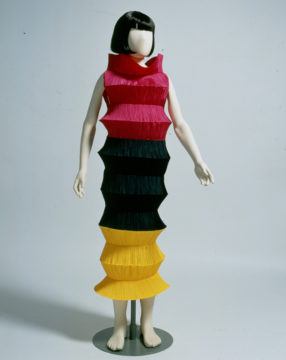 AT EVERY JOB I’ve ever had in fashion there’s always a certain brand or designer or aesthetic that gets adopted by everyone, no matter their taste or preference, for good reason: it’s good. For the job I most recently worked, I still see it the second I step foot out of my apartment. Friends wear it with sneakers on our hikes up the mountain, people on the subway brush nonexistent dust off of it after sitting down, and there is always that moment of eye contact at the coffee shop between two customers dressed in the same pair of pants. The first time I went to a new dentist, recommended by a colleague, I was wearing mine. The dentist looked me up and down above his clipboard, and rather than ask who referred me gestured at my outfit. “SSENSE,” he said, like a statement.
“Yes,” I said, holding the delicate material with a pinch.
more here.
‘And Finally: Matters of Life and Death’ By Henry Marsh
Salley Vickers at Literary Review:
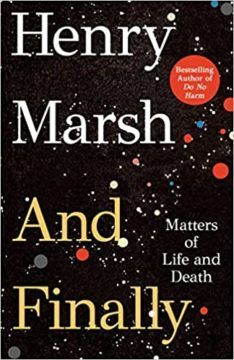 There is a well-attested connection between being a good doctor and being a good writer (think Keats). Neurosurgeon Henry Marsh’s Do No Harm, published in 2014, achieved unlikely but deserved success, and among his many praiseworthy qualities is the ability to write elegant, unpretentious prose. In this and his subsequent book, Admissions (2017), he explored the human brain from the vantage point of the practising surgeon. Now retired from practice in the UK, he has continued to work overseas, particularly in Nepal, Albania and Ukraine, the last a country for which he has a special affection, and whose currently beleaguered state he writes of movingly.
In his latest book, And Finally: Matters of Life and Death, Marsh turns his penetrating mind inwards.
more here.
Pakistan’s Biblical Floods and the Case for Climate Reparations
Mohammed Hanif in The New Yorker:
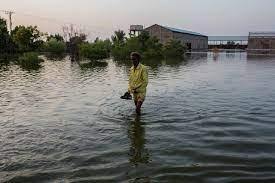 We have tried, in various ways, to convey to the world the scale of destruction caused by recent floods in Pakistan, because, apparently, a third of the country underwater and thirty-three million lives upended doesn’t cut it. Pakistan’s climate minister has called it Biblical. We have shot and shared videos in which the landmark New Honeymoon Hotel crumbles in the duration of a TikTok. The U.N. Secretary-General, António Guterres, who is seventy-three and has called the climate crisis a “code red for humanity,” visited Pakistan and said that he hadn’t seen this scale of climate carnage in his life. Some of us have created maps showing that the areas underwater are larger than Britain. We have shown pictures of dead and starving cattle to appeal to animal-lovers. We have posted videos of puppies being heroically rescued from rushing waters.
Maybe when the world seems to be ending, it needs poets. A poet in Khairpur, in southern Pakistan, one of the worst-affected areas, was asked by a journalist if he had received a tent to shelter his family. He found the idea so improbable that he asked, “Why are you making fun of me? Why would anyone give me a tent?”
More here.
Why Iranian women are risking everything by burning their hijabs
Jonathan Guyer in Vox:
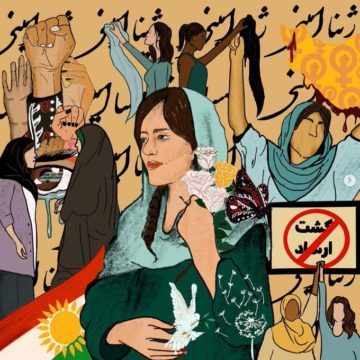 It was not an isolated incident of police violence in Iran. But the death of 22-year-old Mahsa Amini in police custody last week has captured the country’s attention.
Amini was visiting the capital of Tehran, coming from the Kurdish province in the country’s northwest, and Iran’s so-called morality police detained her, allegedly for wearing the mandatory headscarf improperly. Several hours after entering police custody, she was in a coma. She died two days later. Iranian police claimed she died after a stroke and suffering cardiac arrest, but witnesses say she died after sustaining blows to the head, and shocking photos that spread online of Amini intubated in a hospital have galvanized the nation. Protesters have since taken to the streets in more than 50 cities across Iran. Authorities reportedly have killed as many as 36 people during demonstrations. The government has also restricted the internet, so the complete picture may not be available. But the growing arrests of human rights defenders, activists, and journalists are particularly troubling.
More here.
Tuesday Poem
Moonlit Apples
At the top of the house the apples are laid in rows,
And the skylight lets the moonlight in, and those
Apples are deep-sea apples of green. There goes
A cloud on the moon in the autumn night.
A mouse in the wainscot scratches, and scratches, and then
There is no sound at the top of the house of men
Or mice; and the cloud is blown, and the moon again
Dapples the apples with deep-sea light.
They are lying in rows there, under the gloomy beams;
On the sagging floor; they gather in silver streams
Out of the moon, those moonlit apples of dreams,
And quiet is the steep stair under.
In the corridors under there is nothing but sleep.
And stiller than ever on orchard boughs they keep
Tryst with the moon, and deep is the silence, deep
on moon-washed apples of wonder
by John Drinkwater
from The Poetry Archive
Sunday, September 25, 2022
Mahsa Amini and the bravery of Iran’s anti-hijab protesters
Joanna Williams in Spiked:
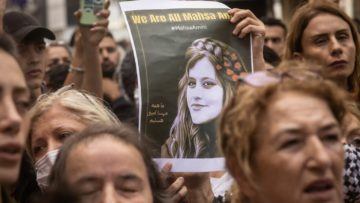 The word ‘bravery’ is applied all too liberally nowadays. A posh actress tells the world she is non-binary and wants to be called ‘they / them’? How brave! An ageing television presenter comes out as gay? So brave! Footballers kneel for Black Lives Matter? Stunning and brave! But then, every so often, we are confronted with true bravery, with breathtaking acts of courage. And we find that the words we might once have reached for now seem woefully inadequate.
Over the past few days, women and men have been taking to the streets in towns and cities all over Iran, in protest against the death in police custody of Mahsa Amini. Despite the risk of death, injury, arrest and social shaming, the demonstrations have gained momentum day by day. And while they were sparked by the treatment of Amini, they have now become a broader expression of anger with the Iranian regime.
Mahsa Amini personifies courage. Last week, Amini, a 22-year-old woman from Saqqez in Iranian Kurdistan, was stopped by police outside a metro station in Tehran, the Iranian capital. Amini had shown her hair in public. In Iran, this is a punishable offence. Under the regime’s strict Islamic laws, women must wear the hijab when in public and must make sure their arms and legs are covered by loose-fitting clothing. Amini’s refusal to comply led to her arrest by the Iranian state’s so-called morality police.
More here.
Sunday Poem
Your Data is Political
Your presence rises from scavenging: pages and words
and webs and signs. You’ve become a target but without
the old spy store gadgets. I’d like to know what you know,
not just your count. I click on you, then you click back,
precious darling surface. We add, poke, text.
On my iPhone, you’re called The Outlier.
Your profile pic of a yellow vase
is so allusory, so art, or your skirt flips up and you’re viral,
or someone else outs you as the double-crossing wife
because it’s the Old West open season on Facebook.
Pages ripple with alacrity, with betrayal and Outlook keeps
the other engine purring and sneaky. Two presences.
The real and the fable vanish before you and to them
within barcode, a cornucopia of insight
(a family’s fleecing, caravans of product, blurry pirated video).
I’ll play Sarah McLachlin over your visage, elegiac, or someone
will paste your face onto the porno performance artist
baptized with secretion. I’ll be the cultural anxiety,
and you can be the Luddite. We’ll be the perfect pairing
of antediluvian (the wine) and digital (the host).
by Carmen Gimenez Smith
from Milk & Filth
University of Arizona Press, Tucson, 2013
Alain Tanner (1929 – 2022) Film Director