
Category: Recommended Reading
The Making of Norman Mailer: The young man went to war and became a novelist. But did he ever really come back?
David Denby in The New Yorker:
 When Norman Mailer was inducted into the Army, in March, 1944, he was a freshly married twenty-one-year-old Harvard graduate, a slight young man of five feet eight inches and a hundred and thirty-five pounds. In the previous few years, he had published some stories and written a play and two novels (one of them published, in a typescript facsimile, as “A Transit to Narcissus,” in 1978). Even as a student, he thought of himself as a professional writer, and from the day that Japan attacked Pearl Harbor, in December, 1941, he had wanted to write a big book about the war. He was sent for basic training to Fort Bragg, North Carolina, where many of the men were from Pennsylvania, the South, and the Upper Midwest. Mailer was from middle-class Jewish Brooklyn; he had landed in the great working-class Gentile world, and was eager to observe. He canvassed the recruits about their sex lives, taking notes on a yellow legal pad. (He discovered that many of them did not believe in foreplay.) Mailer knew that tough Jews served in the war, including criminals, louts, and bitterly determined, hardworking men, but he was without physical skills. He had never worked a thresher, or manhandled heavy goods into a truck, or tinkered with Dad’s jalopy.
In early January, 1945, General Douglas MacArthur landed with an enormous invasion force on Luzon, the largest of the Philippine islands; Mailer, after waiting in a troopship, went ashore a few weeks later. He was thrown as a rifleman into the 112th Cavalry Regiment, out of Texas. The 112th had been in combat in the Pacific for more than a year, and many men in the unit had died. Mailer described those who remained as a little crazy, and physically messed up—some with open ulcers from jungle rot. The Texans were joined by men from other parts of the country, some of them bar fighters and casual anti-Semites (not by theory but by habit). “I didn’t open my mouth for six months in that outfit,” he later said.
More here.
Is Sufi poetry the new religion?
Vinita Agrawal in Frontline:
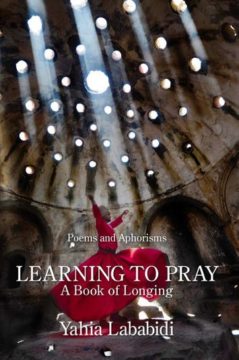 The twin books of Egyptian poet Yahia Lababidi— Learning to Pray: A Book of Longing and Desert Songs, published in 2021 and 2022, respectively—uphold the Sufi tradition that was critical in shaping the imagery, symbolism, metaphors, tropes, and indeed the world view, of classical Sufi poetry and portray mercy with a pluralistic vision by upholding an expression of love above all divides. Lababidi does this by the clean magic of his language, relatable imagery and fine craft.
In Lababidi’s poetry, one is brought face to face with the knowledge that it is love and love alone which can address all discord, whether spiritual or material, and help us find peace. This peace is beyond the fabric of political peace or peace between nations as we know it—it is the sublime bliss of becoming one with God, the cessation of inner turmoil and the sweet melding of the heart with the divine. And is that not the fundamental teaching of all religions?
More here.
Friday Poem
Being Called a Faggot While Walking the Road to Clemson, South Carolina
The honeysuckle dew slick
& sweet this morning
& only an empty Wendy’s cup
thrown to ditch
& the truck passing
(& it is almost always
a truck) slows just
to roll down
the window & O
I wish they could smell
this & O I wish
I could quit
them driving
so fast & missing
this honeysuckle, so dew-
sweet this morning.
by D. Gilson
from Split This Rock, 2015
Thursday, December 22, 2022
The Deadly Lack of Imagination in the Democratic Party
Thomas Frank in the New York Times:
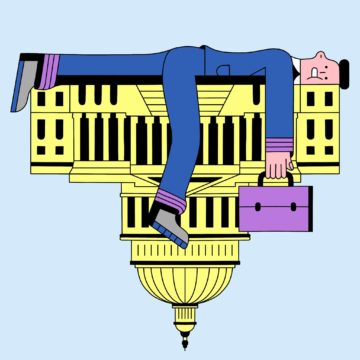 Democrats did so well, in part, because a conservative Supreme Court handed them a political gift by overturning Roe v. Wade and Republicans ran a group of dreadful celebrity Senate candidates.
The reality of the triumph, however, is that liberals are back to stalemate. Stalemate, that is, with an opponent that has been radicalizing for 50 years. An opponent that continually produces outrageous fire-breathing extremists, then supplants them with a new crop when the zealotry of the first bunch has worn off. It feels like the cycle is endless. But there is an answer to this problem, if we can just think beyond the limits of our current political imagination.
Ever since I started paying attention, virtually all the country’s political dynamism has been located on the right. They brought us Prop 13, the Reagan revolution, the Gingrich revolution, the Tea Party and Trumpism, each successive explosion securing some new tax cut or making some grand deregulatory thrust before exhausting itself and leaving the stage. That there will be another explosion soon, picking up where the last one left off, is almost a certainty.
More here.
The Guests Of Ants: How Myrmecophiles Interact With Their Hosts
Leon Vlieger in The Inquisitive Biologist:
 It has to be one of the more delightful details of the natural world: the ecosystem of an ant’s nest is home to its own constellation of creatures that specialise in living within or nearby it. Daniel Kronauer’s book Army Ants first drew my attention to these so-called myrmecophiles and their sometimes bizarre adaptations. I was stoked when Harvard University Press announced it would publish a monograph focusing on just this aspect of ant biology, authored by entomology professors Bert Hölldobler (a frequent co-author to E.O. Wilson) and Christina L. Kwapich. The Guests of Ants gives a beautifully illustrated, wide-ranging, and critical literature review of this delightful corner of myrmecology. Will ants make it to my personal top 5 for a third-year running? This book is a very strong contender.
More here.
Universalism, Relativism and Qatar
Kenan Malik in Pandaemonium:
 “Everyone has their beliefs and cultures. We welcome and respect that. All we ask is that other people do the same for us.” So insists Yasir al-Jamal, deputy general secretary of the Qatar 2022 Supreme Committee for Delivery and Legacy for the World Cup.
The torrent of criticism that has poured down on Qatar at the start of the World Cup, particularly over its treatment of women, gay people and migrant workers, has also created a pushback, both from supporters of the Qatari regime and those who see in the criticism only Western “performative moral outrage”, “colonial myths” and “orientalist stereotypes”.
Certainly, there is hypocrisy and racism woven into the discussion of Qatar. That should not, however, be a shield to protect Qatar or elicit “respect” for its culture and mores.
What al-Jamal considers to be Qatari cultural beliefs to be welcomed and respected by the rest of the world are rejected by many Qataris themselves. Qatari gay, lesbian and trans people live in fear of imprisonment, even death, because their own beliefs and cultural ways are not just not respected by the authorities but brutally repressed.
Many thousands of Qatari women do not “welcome and respect” the denial of equal rights. Nor do tens of thousands of migrant workers facing brutal treatment in a country that bans trade unions.
More here.
What’s Strong Emergence?
Thursday Poem
Before the Scales, Tomorrow
And when the enthusiastic
story of our time
is told,
for those
who are yet to be born
but announce themselves
with more generous face,
we will come out ahead
—those who have suffered the most from it.
And that
being ahead of your time
means suffering much from it.
But it’s beautiful to love the world
with eyes
that have not yet
been born.
And splendid
to know yourself victorious
when all around you
it’s still so cold,
…………………… so dark.
by Otto René Castillo
from Poetry Like Bread
Curbstone Press, 1997
What’s A School?
Paul Tough at Lapham’s Quarterly:
 As these debates about identity and representation in American education were raging throughout the twentieth century, a second major shift was taking place. The central belief of Horace Mann and Catharine Beecher—that the point of education was to purify young souls—gradually gave way to a more utilitarian calculation that schools, first and foremost, were places to gain the skills that were valued in an increasingly competitive labor market. By 1972, when Gallup asked American parents why they wanted their children to be educated, the most frequent response was “to get better jobs”; “to make more money” was the third.
This shift began early in the twentieth century, at a moment of great turmoil for American workers. Agriculture still employed about a third of all working Americans, but that fraction was shrinking quickly, while the service sector was rapidly expanding.
more here.
The GOP elite wants to brand Trump a loser
Amanda Marcotte in Salon:
 It’s no secret, among political junkies anyway, that Senate Minority Leader Mitch McConnell and much of the Republican elite have been casting around for a way to derail Donald Trump’s bid to be the 2024 GOP presidential nominee. It’s a delicate operation, to be certain. Trump’s allure to the GOP primary voting base isn’t just that he triggers the liberals, but that he ruffles the feathers of the Republican establishment. It makes the deplorables feel powerful, watching people like McConnell and House Minority Leader Kevin McCarthy bow and scrape to the ludicrous reality TV host foisted on them by their own voters. So the strategy is always about trying to find some way to undermine Trump without provoking him to unload personal invective on Truth Social in retaliation.
…Trump’s voters forgive him for being a liar, a criminal, a whiner and a narcissist, but only because they think he’s a “winner” who owns the liberals. The GOP elite is betting the base can be dissuaded from backing Trump if he’s stripped of that “winner” image, so voters can see the insecure loser underneath all the bluster. The NFTs portray Trump as a big, tough guy, but they are just cheesy and worthless crap. In this, they are the perfect symbol of who he is. The only question is whether Republican voters are ready to accept the Trump everyone else sees, the world-class loser whose “winning” exists only in the realm of lies and delusions.
More here.
What Was The Shopping Mall?
Melvin Backman at The Nation:
 The shopping mall has a great many antecedents: the opulent markets of Victorian London, the arcades of Paris, and the department stores in the United States that could swallow an entire city block. But the mall as we know it has only one daddy: the architect Victor Gruen. A Viennese socialist, Gruen had established a tidy practice designing residential projects and shops before the Nazis seized Austria in 1938. Gruen’s forte was making the quotidian a bit lovelier: A typical tweak of retail spaces might have involved relieving the tight, cloying atmosphere of a tiny perfumery by placing mirrors on the ceiling. After fleeing to the United States, Gruen dipped his toe in wage drudgery before deciding to unpack his drafting desk and return to his bread-and-butter work of transforming shops into open and welcoming spaces in a freelance capacity.
What made Gruen’s designs distinct was the way they were able to add small pleasures to the act of shopping. An early American commission came from another recent émigré, the Polish chocolatier Stefan Klein, who was looking to bring fancy chocolates to New York.
more here.
Science Unlimited? (Herbert Feigl 1970)
The very serious science of humor
Allie Volpe in Vox:
 To find mirth in the world is to be human.
No culture is unfamiliar with humor, according to Joseph Polimeni, an associate professor of psychiatry at the University of Manitoba. For someone who analyzes humor, Polimeni tells me he’s still surprised by its complexity: How words and phrases and jokes have different meanings to everyone, but we all have the instinct to laugh. Just as humans have an innate ability to understand language, Polimeni says, so, too, do they have a reflex for comprehending everyday comedy. Sure, there are people who are better suited at making others laugh, but “almost everybody,” Polimeni tells me, can appreciate a quip.
As much as humor is universal, how it works is, to most people, a mystery. We seek out laughs in nearly every form of media, from film and TV to memes and TikToks. At the box office, popular comedies rake in big bucks. Funny people are idolized in pop culture.
More here.
Wednesday, December 21, 2022
On Raymond Geuss’s “Not Thinking Like a Liberal”
Richard Eldridge in the Los Angeles Review of Books:
 Psychically, Geuss argues, liberalism offers “the fantasy of being an entirely sovereign individual” as “a reaction to massive anxiety about real loss of agency in the world.” It offers the false security of “living in a bubble of nostalgia” for the international economic hegemony that the United States began to lose from the mid-1960s onwards, first as other economies recovered from the devastations of World War II and then with increasing globalization, job flight, Trumpism, and Brexit. In this situation, liberalism “responds in a particularly satisfactory way to deep human needs and to the vested interests of powerful economic and social groups.”
How, then, did Geuss manage to escape it? Born in 1946 and raised outside Philadelphia as the son of a devout Catholic steelworker, young Raymond was sent at the age of 13 as a scholarship student to Devon Preparatory School, a boarding school run by Hungarian priests (émigrés from the failed 1956 Hungarian Revolution), members of Order of the Pious. Unusually, and unlike the schools of the Jesuits, the school was non-Thomist, antiliberal, and nonauthoritarian. Students were instructed to think for themselves, all the while understanding that the resources available for thought were the fruits of complex religious, linguistic, and social traditions within which they lived, and that they were themselves more than likely to be sinful in one way or another. Above all, “illusions of purity, absolute autonomy, and self-dependence” were taken to be “ungrounded […] sinful […] expressions of human pride.” Religious beliefs were not matters of taste, opinion, decision, or otherwise things at one’s individual command.
More here.
How the Brain Distinguishes Memories From Perceptions
Yasemin Saplakoglu in Quanta:
 Memory and perception seem like entirely distinct experiences, and neuroscientists used to be confident that the brain produced them differently, too. But in the 1990s neuroimaging studies revealed that parts of the brain that were thought to be active only during sensory perception are also active during the recall of memories.
“It started to raise the question of whether a memory representation is actually different from a perceptual representation at all,” said Sam Ling, an associate professor of neuroscience and director of the Visual Neuroscience Lab at Boston University. Could our memory of a beautiful forest glade, for example, be just a re-creation of the neural activity that previously enabled us to see it?
“The argument has swung from being this debate over whether there’s even any involvement of sensory cortices to saying ‘Oh, wait a minute, is there any difference?’” said Christopher Baker, an investigator at the National Institute of Mental Health who runs the learning and plasticity unit. “The pendulum has swung from one side to the other, but it’s swung too far.”
Even if there is a very strong neurological similarity between memories and experiences, we know that they can’t be exactly the same.
More here.
Richard Dawkins and Denis Noble debate the Selfish Gene view of Evolution
A Canadian euthanasia regime that efficiently ushers the vulnerable to a “beautiful” death
Alexander Raikin in The New Atlantis:
 This is the promise of medical assistance in dying: that vulnerable people who want to die for the wrong reasons will be encouraged to live, as they always have been — while people who want to die for the right reasons will have their autonomous decision upheld. If even a single vulnerable person were pushed into assisted death, it would be a scandal to the system. That is why safeguards were put into place.
And yet stories describing just this — a system that does encourage the vulnerable to seek medical death — are coming fast and hard lately. A number of recent news articles have reported on Canadians who, driven by poverty and a lack of access to adequate health care, housing, and social services, have turned to the country’s euthanasia system.
More here.
Fotini Markopoulou – What is Space-Time?
In Search Of Annie Ernaux
Kit Duckworth at Artforum:
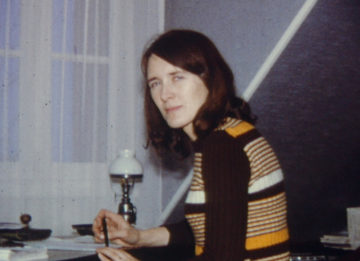 IN THE WINTER OF 1972, around the time Manhattan gallerygoers were immersing themselves in Memory—a sprawling installation comprising over a thousand tiled photographs and several hours of tape-recorded text amassed by the American poet Bernadette Mayer—the French writer of memory Annie Ernaux and her then-husband, Philippe, bought a Bell and Howell Super 8 camera. Mayer, who died this year and who in life seemed ahead of the future, once imagined “a computer or device that could record everything you think or see, even for a single day”—a thought Ernaux would echo across space and time: “Someday, would we be able to see, imprinted on a person’s brain, everything they had done, said, seen and heard?” And even so, would that suffice? Though Mayer shot a roll of film each day for one month, all the while jotting down and revising her exhaustive impressions, it was the gaps in Memory, like the ghostly zones of a photonegative, that stood out: “emotions, thoughts, sex, the relationship between poetry and light, storytelling, walking, and voyaging to name a few.” To name a few! To name everything—everything, that is, worth saving: the so-called empty hours haloing mundane life.
more here.