
Category: Recommended Reading
Tuesday Poem
The Grand Guignol of Countries
……………….. or
Country of the Grand Guignol
the circus and its clowns
the theater and its marionettes
the carnival and its masks
the zoo and its monkeys
the arena and its bulls
the slaughterhouse and its black beef
the yankee and the money wheel
the native and the wheel of blood
voodoo and its grand Dons
the holy family and its demons
the people and their misery
exile and its survivors
without faith without law
Haiti and its cross
Haiti in hell
in the name of the father
and of the son
and of the zombie
by Paul Laraque
from Poetry Like Bread
…..—Poets f the Political Imagination
Curbstone Books, 1994
The Science of Awe
Hope Reese in The New York Times:
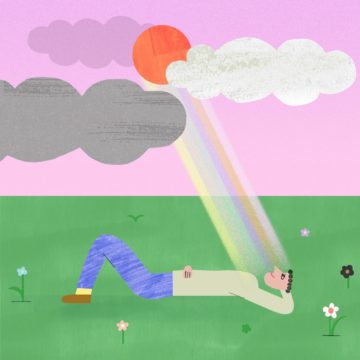 Awe can mean many things. It can be witnessing a total solar eclipse. Or seeing your child take her first steps. Or hearing Lizzo perform live. But, while many of us know it when we feel it, awe is not easy to define. “Awe is the feeling of being in the presence of something vast that transcends your understanding of the world,” said Dacher Keltner, a psychologist at the University of California, Berkeley.
It’s vast, yes. But awe is also simpler than we think — and accessible to everyone, he writes in his book “Awe: The New Science of Everyday Wonder and How It Can Transform Your Life.” While many of us associate awe with dramatic, life-changing events, the truth is that awe can be part of everyday life. Experiencing awe comes from what Dr. Keltner has called a “perceived vastness,” as well as something that challenges us to rethink our previously held ideas. Awe can be triggered from moments like seeing the Grand Canyon or witnessing an act of kindness. (About a quarter of awe experiences are “flavored with feeling threatened,” he said, and they can arise, for example, by looking at a lion in a zoo or even gruesome videos of genocide).
More here.
Scientists Uncover a Gut-Brain Connection for Social Development
From SciTechDaily:
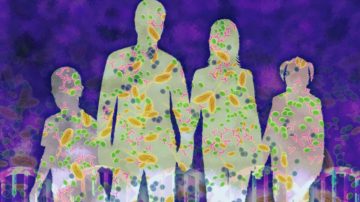 To learn to socialize, zebrafish need to trust their gut. Gut microbes encourage specialized cells to prune back extra connections in brain circuits that control social behavior, new University of Oregon research in zebrafish shows. The pruning is essential for the development of normal social behavior.
The researchers also found that these ‘social’ neurons are similar in zebrafish and mice. That suggests the findings might translate between species — and could possibly point the way to treatments for a range of neurodevelopmental conditions. “This is a big step forward,” said University of Oregon neuroscientist Judith Eisen, who co-led the work with neuroscientist Philip Washbourne. “It also sheds light on things that are going on in larger, furrier animals.” The team reports their findings in two new papers, published in PLOS Biology and BMC Genomics.
While social behavior is a complex phenomenon involving many parts of the brain, Washbourne’s lab previously identified a set of neurons in the zebrafish brain that are required for one particular kind of social interaction. Normally, if two zebrafish see each other through a glass partition, they’ll approach each other and swim side by side. But zebrafish without these neurons don’t show interest. Here, the team found a pathway linking microbes in the gut to these neurons in the brain. In healthy fish, gut microbes spurred cells called microglia to prune back extra links between neurons.
More here.
Sunday, January 1, 2022
So are you a Narrative or a non-Narrative?
Galen Strawson in Aeon:
 Each of us constructs and lives a “narrative”,’ wrote the British neurologist Oliver Sacks, ‘this narrative is us’. Likewise the American cognitive psychologist Jerome Bruner: ‘Self is a perpetually rewritten story.’ And: ‘In the end, we become the autobiographical narratives by which we “tell about” our lives.’ Or a fellow American psychologist, Dan P McAdams: ‘We are all storytellers, and we are the stories we tell.’ And here’s the American moral philosopher J David Velleman: ‘We invent ourselves… but we really are the characters we invent.’ And, for good measure, another American philosopher, Daniel Dennett: ‘we are all virtuoso novelists, who find ourselves engaged in all sorts of behaviour… and we always put the best “faces” on it we can. We try to make all of our material cohere into a single good story. And that story is our autobiography. The chief fictional character at the centre of that autobiography is one’s self.’
So say the narrativists. We story ourselves and we are our stories. There’s a remarkably robust consensus about this claim, not only in the humanities but also in psychotherapy. It’s standardly linked with the idea that self-narration is a good thing, necessary for a full human life.
I think it’s false – false that everyone stories themselves, and false that it’s always a good thing.
More here.
Why everyone should be at least a little bit worried about AI going into 2023
Gary Marcus in his Substack newsletter:
 What do Noam Chomsky, living legend of linguistics, Kai-Fu Lee, perhaps the most famous AI researcher in all of China, and Yejin Choi, the 2022 MacArthur Fellowship winner who was profiled earlier this week in The New York Times Magazine—and more than a dozen other scientists, economists, researchers, and elected officials—all have in common?
They are all worried about the near-term future of AI. The most worrisome thing of all? They are all worried about different things.
Each spoke last week at December 23’s AGI Debate (co-organized by Montreal.AI’s Vince Boucher and myself). No summary can capture all that was said (though Tiernan Ray’s 8,000 word account at ZDNet comes close), but here are a few of the many concerns that were raised…
More here.
Volt Rush: The Winners And Losers In The Race To Go Green
Leon Vlieger in The Inquisitive Biologist:
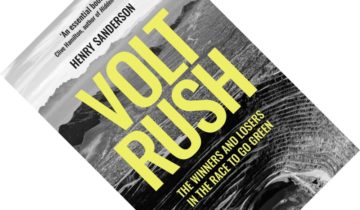 The problems created by humanity’s dependence on fossil fuels are widely appreciated, and governments and businesses are now pursuing renewable energy and electric vehicles as the solution. Less appreciated is that this new infrastructure will require the mining of vast amounts of metals, creating different problems. In Volt Rush, Financial Times journalist Henry Sanderson gives a well-rounded and thought-provoking exposé of the companies and characters behind the supply chain of foremost the batteries that will power the vehicles of the future. If you think a greener and cleaner world awaits us, Volt Rush makes it clear that this is far from a given.
As Sanderson explains in his introduction, his aim in writing this book is to equip readers with the background knowledge needed to ask critical questions regarding our transition away from fossil fuels. Without it, we risk falling prey to feel-good narratives and corporate greenwash. Though not apparent from the title and flap text, Sanderson focuses on four metals important in the batteries of electric vehicles. Lithium is one of the substances that will be in high demand, and I am reviewing this book in tandem with Lukasz Bednarski’s Lithium, but as Volt Rush makes clear, cobalt, nickel, and copper are equally vital.
More here.
Does true kindness have to be selfless?
Claudia Hammond in The Guardian:
 I really enjoy doing it: it makes me feel good about myself. It gives me a boost, mentally and physically.” If these were your reactions to an activity, you’d surely be inclined to do it as often as you could. After all, aren’t a lot of us looking for ways to find more meaning in life and to be happier and healthier? What, then, is the act that elicits such positive responses? The answer: being kind.
A growing body of evidence from the fields of psychology and neuroscience demonstrates that performing kind acts increases mental wellbeing, enhances physical health and might even improve life expectancy. Kindness is not just beneficial for the recipient, but also for the giver.
In 2021 I worked with a team at the University of Sussex to create the Kindness Test. This online study was launched on BBC Radio 4, and more than 60,000 people took part. We found that the more acts of kindness people told us they carried out, the greater their wellbeing.
More here.
Sunday Poem
Sitting With Others
The front seats filled last. Laggards, Buffoons,
and kiss-ups falling in beside local politicos,
the about to be honored, and the hard of hearing.
No help from the middle, blenders and criminals,
And the back rows: restless, intelligent, unable to commit.
my place was always left-center, a little to the rear.
The shy sat with me, fearful of discovery.
Behind me the dead man’s illegitimate children
and the bride’s and groom’s former lovers.
There, when lights were lowered, hands
plunged under skirts or deftly unzipped flies,
and, lights up again, rose and pattered applause.
Ahead, the bored practiced impeccable signatures.
But was it a movie or singing? I remember
the whole crowd uplifted, but not the event
or the word that brought us together as one —
One, I say now when I had felt myself many,
speaking and listening: that was the contradiction.
by Rodney Jones
from Salvation Blues
Mariner Books, 2007
Pelé (1940 – 2022) Soccer Player
Terry Hall (1959 – 2022) Musician And Singer
Vivienne Westwood (1941 – 2022) Fashion Designer
Male and Female Stem Cells Derived from One Donor in Scientific First
Dan Robitzski in The Scientist:
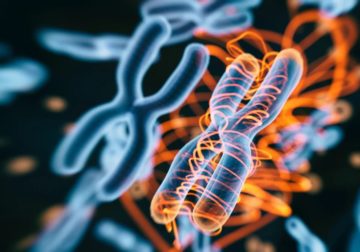 Scientists have developed a new line of stem cells—all derived from the same person—that can be used to study sex differences without the confounds of interpersonal genetic differences.
…To develop such a model, the team obtained cells from a repository that had been taken from someone with an unusual case of Klinefelter syndrome, a rare genetic condition that affects roughly 1 in 500 boys in which they’re born with an extra copy of the X chromosome, resulting in an XXY genetic makeup. What made this person even more unusual—and ideal for Reubinoff’s vision—is that, in addition to the 47XXY cells characteristic of the condition, they also had a large number of 46XY cells, a phenomenon known as a mosaic phenotype. As the study, published on November 24 in Stem Cell Reports, describes, the variety of cells taken from the Klinefelter patient allowed the team to generate 46XX, 46XY, 45X0, and 47XXY hiPSCs that are otherwise genetically identical. This means that any observable differences among them—related, for example, to disease risk factors or response to a pharmaceutical—can almost definitely be attributed to genetic sex differences.
“When you study individuals, and you compare males to females and you find differences, you cannot differentiate whether they stem from the chromosomal differences or hormonal differences,” Reubinoff explains. “This model is unique because it allows you to differentiate between chromosomal effects and hormonal effects.”
More here.
This Nerve Influences Nearly Every Internal Organ. Can It Improve Our Mental State, Too?
Christina Caron in The New York Times:
 In recent years, the vagus nerve has become an object of fascination, especially on social media. The vagal nerve fibers, which run from the brain to the abdomen, have been anointed by some influencers as the key to reducing anxiety, regulating the nervous system and helping the body to relax.
TikTok videos with the hashtag “#vagusnerve” have been viewed more than 64 million times and there are nearly 70,000 posts with the hashtag on Instagram. Some of the most popular ones feature simple hacks to “tone” or “reset” the vagus nerve, in which people plunge their faces into ice water baths or lie on their backs with ice packs on their chests. There are also neck and ear massages, eye exercises and deep-breathing techniques. Now, wellness companies have capitalized on the trend, offering products like “vagus massage oil,” vibrating bracelets and pillow mists, that claim to stimulate the nerve, but that have not been endorsed by the scientific community. Researchers who study the vagus nerve say that stimulating it with electrodes can potentially help improve mood and alleviate symptoms in those who suffer from treatment-resistant depression, among other ailments. But are there other ways to activate the vagus nerve? Who would benefit most from doing so? And what exactly is the vagus nerve, anyway? Here’s a look at what we know so far.
More here.
Saturday, December 31, 2022
Facts on the Ground
 Alex Turnbull in Phenomenal World:
The energy system that underpins contemporary life is marked with blindspots. Take the fossil fuel sector. Facing simultaneous existential and geopolitical vulnerability—due to Russia invading Ukraine, advances in renewable energy, and the climate imperative—there is profound uncertainty about how demand for fossil fuels will transform over the next five to seven years, the time it takes to bring a new gas or offshore oil field online. On the supply side, that uncertainty is matched by the lack of knowledge and monitoring of physical flows of commodities—let alone the kind of detailed information needed to model the ways that geopolitical, climate, and technological disruptions may play out.
Climate campaigners aim for an end to fossil fuel extraction—the minimum requirement to reduce catastrophic and irreversible climatic harm. But with much built infrastructure still relying on fossil fuels, unexpected supply shocks roil households, firms, and governments. New analysis from Isabella Weber, Jesus Lara Jauegui, Lucas Teixeira, and Luiza Nassif Pires shows that energy—in particular petroleum, coal, and oil and gas extraction—are intrinsically more important to inflation than other prices.
What if policymakers could assess inflation with the knowledge that it is driven partly by geopolitical shocks with an unknown timeframe to resolution, and can be approached by policy tools, poured concrete, and steel? These micro considerations do not tend to filter up to the macro modelers whose work informs monetary and fiscal policy. The consequences are significant.
More here.
Starless Sky
 Marco D’Eramo in Sidecar:
If the three wise men were to travel on their camels to the stable in Bethlehem this year, they would almost certainly get lost. Along vast tracts of their route, they would be unable to rely upon their guiding star, for the simple reason that it would not be visible. Baby Jesus would have to forego his gold, frankincense and myrrh.
A paradox characterises our society: we know more about the universe than ever before – we know why the stars shine, how they are born, how they grow old and die, can perceive the swirling motion of galaxies invisible to the naked eye, listen (so to speak) to the sounds of the origin of the universe emitted some 15 billion years ago. Yet for the first time in human history few adults can recognize even the brightest of stars, while most children have never witnessed a starry night. I say most because the majority of the world’s population today – now surpassing 4 billion – live in urban areas, where artificial light obscures the stars from view.
(This is a form of contradiction common to modern life. The moment we are able to satisfy our desire to fly across the world to exotic beaches and get a tan, the hole in the ozone layer makes the ultraviolet rays of the sun dangerous and carcinogenic. As soon as we realize our desire for cleanliness – see my previous article on eliminating odours – water becomes a limited resource, and so on.)
The awesome spectacle of the star-filled sky is quite unknown to most of us today.
More here.
Real Scary
 David Kurnick in Bookforum:
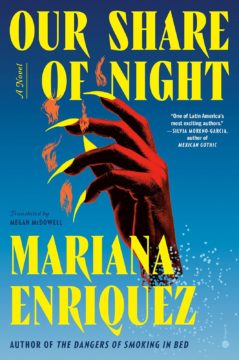
The Ishiguro blurb (“The most exciting discovery I’ve made in fiction for some time”) might be designed to entice skittish readers of literary fiction into committing to six hundred pages of horror. Who better than the SF-dabbling Nobel laureate to assure us that we can indulge our genre pleasures and remain serious people? Mariana Enriquez’s Our Share of Night, her first novel to be translated into English, comes well weighted with prestige-ballast: the novel won the 2019 Herralde Prize awarded by the Spanish publishing house Anagrama, and her second story collection, The Dangers of Smoking in Bed, was shortlisted for last year’s Booker. But Our Share of Night makes Ishiguro’s genre-gestures look hesitant and polite by comparison. Enriquez is unabashed about the camp-gothic trappings of her chosen genre, the kitschy nomenclature and the stomach-churning ceremonies and the bruised eroticism. You’ll get your meditation on Argentine history here, but you’ll also get the mysterious entity called the Darkness and the aristocratic Order that serves it—along with houses that eat little girls, sacred texts stored in a secret London library, mutilated infants held in underground dungeons, and an impossibly sexy “medium,” broken and dangerous as a young Brando. The novel’s most audacious gambit isn’t that it makes all this emotionally and intellectually powerful (it does), but that it never surrenders its trashy allure in doing so.
Enriquez takes her time disclosing the extent of her world’s departures from our own. The novel opens on a road trip in January 1981 from Buenos Aires to the northeastern province of Misiones, wedged between Paraguay and Brazil. Juan Peterson is driving his ten-year-old son Gaspar to the country mansion of his obscenely wealthy in-laws, the Reyes Bradfords. Something is atmospherically off-kilter in these early pages, but there are plenty of real-world explanations: the summer humidity is stifling; the military dictatorship that has controlled the country since 1974 is keeping “a brutal watch over the highways”; most important is the absence from the car of Rosario, Juan’s wife and Gaspar’s mother, killed a few months prior in a bus accident in the capital. It’s only when Gaspar calmly indicates that he can see a strange woman in their hotel room that the supernatural intrudes.
More here.
Jazz Is Freedom
 Paul Grimstad in The Baffler:
ON MARCH 12, 1955, Charlie Parker collapsed in the Baroness Pannonica de Koenigswarter’s Upper East Side apartment after a three-day booze binge. The improviser of superhuman poise was dead at thirty-four, eliciting solemn observance from musicians and fans, particularly those who’d been hanging around Minton’s Playhouse in Harlem where, in the early 1940s, a new kind of music called bebop had been invented. “Bird has disintegrated into pure sound!” is said to have been overheard somewhere near the Five Spot on Cooper Square, the Beat tavern where much bad poetry was recited, and where some great musicians nightly turned the style that came out of Harlem into ever more febrile and kinked contortions. Part of the Bird enigma was the impossible fusion of musical angel and reptilian addict, a miraculously graceful artist who might steal your horn and pawn it for smack.
Four months after Bird’s death, his one-time personal assistant Miles Davis seduced everyone at the Newport Jazz Festival, performing a tune called “Round Midnight,” written by someone who had been part of the Minton’s scene but was still an underground figure: Thelonious Monk, who had only a handful of records under his belt and, then approaching forty, was still playing on other people’s dates. Indeed, he was the pianist behind Miles for the Newport performance, which would help the younger musician sign with Columbia records, putting him on the road to stardom. An oft-told anecdote has the two sharing a car back to New York. “You weren’t playing the tune right,” Monk says, to which Miles replies that he is just jealous, at which point Monk orders the car to pull over and takes the ferry to the city alone
More here.
Saturday Poem
How to End a Year
Your silhouette arched on the railing
of the balcony takes stock of space and time,
the world so far-flung and your eyes so far-
reaching you mistake yourself for God,
though your hands are full of holes, fault
lines riddling the tract of a life you would
gladly exchange for another. But now is not
the time for penance but for the savor of grace
in the air. The city alive at your feet, pulsing
blend of sound and light, a wild stallion
broken for you. How in the house the boombox
breathes in tandem with the tangos of those
you love, who beam like characters at the end
of a fairy tale. Isn’t this lilting world shaped
as an open door? You can walk through it
and never come back. Overhead, the dusky sky
bursts into a fit of colors, fire flowers blooming
from an orchard of mirth, and a time flows
into another like a dazzling river beckoning you
to drink.
by Samuel A. Betiku
from Poets Respond
December 31, 2022
My money or your life: the bank robbers of Beirut
Wendell Steavenson in More Intelligent Life:
 On August 11th an unemployed 42-year-old grabbed his shotgun and a large jerry can of petrol. Dressed in a T-shirt and flip-flops, Bassam al-Sheikh Hussein walked into a Beirut branch of the Federal Bank of Lebanon, intending to carry out a heist. As he entered, he slammed the heavy metal gate behind him with all his force. “It sounded like an explosion,” he told me. Inside the bank were seven or eight employees, two male customers and a woman who slumped to the floor at the sight of the armed man, begging to be spared. Hussein stopped her from banging her head and let her leave. “I was not rash,” he told me. “I was very calculated. I was calm.”
He sloshed petrol over the desks and an oily, pungent smell rose up. Employees complained it was suffocating them. Hussein grabbed the manager by the collar of his suit jacket and propelled him into a room at the rear. He jabbed the rifle into his back and told him to open the vault. The bank manager complied.
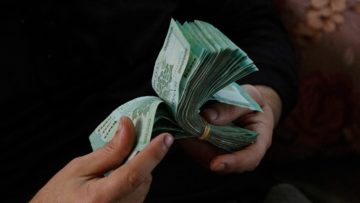
Inside were tall stacks of Lebanese pounds, as well as a small pile of dollars, amounting to around $3,500. The manager counted out four $100 bills.
“Are you fucking stupid or what?” said Hussein.
The manager offered him all the dollars.
“Call your bosses and tell them I want all of my $210,000 right now!”
More here.