
Category: Recommended Reading
Concrete
Joe Zadeh at Noema:

Most of humanity now lives in cities made possible by concrete. The majority of buildings, from skyscrapers to social housing, are made of concrete or contain large amounts of it. Even buildings made from steel, stone, brick or timber are almost always resting on concrete foundations and are sometimes masking an unseen concrete frame. Inside, concrete is ceilings and floors. Outside, it is bridges and sidewalks, piers and parking lots, roads and tunnels and airport landing strips and subway systems. It is water pipes, sewers and storm drains. It is electricity: dams and power plants and the foundations of wind turbines. Concrete is the wall between Israel and Palestine and the Berlin Wall and most other walls. It is “almost anything,” wrote the architect Sarah Nichols in an essay this year, “almost anywhere.”
Concrete is modern, yet ancient. There’s a sense in which it was born in the bowels of volcanoes, formulated by the eruptions of the Earth.
more here.
The Kindness Of Strangers
Lawrence Weschler at Wondercabinet:
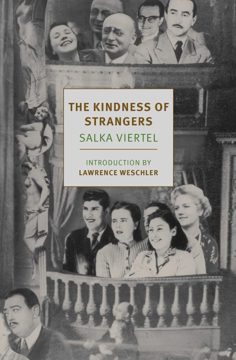 Nowadays the title reads not only as tepid and banal but as distinctly unrepresentative of the ensuing narrative’s principal themes and contours. In fairness, when the onetime Austro-Hungarian actress and subsequently Hollywood scenarist Salka Viertel first began auditioning the phrase “the kindness of strangers” for the title of her memoir in progress, back in the mid-1950s, as her recent biographer Donna Rifkind has pointed out, the words were not nearly as hackneyed as they are today. (The sensational play A Streetcar Named Desire, from which they sprang, was only a few years old, having premiered in 1947; the film had only been released in 1951; and the primary chestnut to have emerged from the latter was Stanley’s bloodcurdling scream of “Stella! Stellllaaaa!” and not so much Blanche’s breathy Southern belle protestations of having always reliii-ed on the kindness of strangers.) Salka’s husband, the internationally acclaimed theater director Berthold Viertel, had been translating their friend Tennessee Williams’s plays for some years already and staging them all over Europe, and perhaps Salka savored the nod in the young playwright’s direction. Such selfless generosity, indeed such kindness on her own part, would have been just like her.
more here.
The Case of the Fake Sherlock
David Gauvey Herbert in New York Magazine:
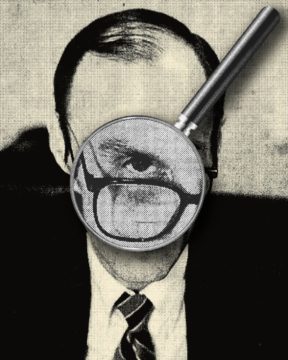 Walter was tall and gaunt with a hard-to-place, vaguely English accent. He favored Kools and Chardonnay, and he was never photographed in anything but a dark suit, a tiny smile often curling at the corner of his mouth. His public profile was about to explode. A publisher was finalizing a book about the Vidocq Society, The Murder Room, which detailed Walter’s casework on four continents and claimed that at Scotland Yard he was known as “the living Sherlock Holmes.”
More here.
Thursday, April 13, 2023
Detroit’s Huckleberry Explorer’s Club
Sarah Rose Sharp at Hyperallergic:
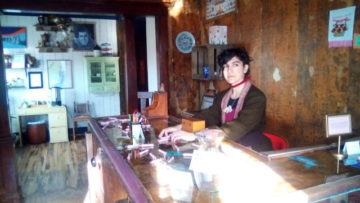 Nothing really prepares one for the experience of entering the Huckleberry Explorer’s Club (HEC), a small museum in a duplex in Detroit’s burgeoning Core City neighborhood whose ground floor houses a general store full of secondhand oddities for sale at throwaway prices…. One of the items on display is a wedding ring that Golberg discovered inside a desk she found on a street in Brooklyn. An inscription on the ring reads, “Steven and Julie” with the date February 12, 1988.
“I just felt so moved by this object, thinking through all of the different possible scenarios as to how that ring got to be inside the desk; it felt like this object had so much aura around it,” Golberg said. “More and more as I started, these sorts of things came into my life, and it wasn’t just about the things themselves or the picture [she took], but the relationship between two of us. It was kind of like I was marrying this moment.”
Golberg began marking her objects with little tags that offer context, dates, or adjacent experiences.
more here.
Deborah Levy’s work inspires a devotion few literary authors ever achieve
Charlotte Higgins in The Guardian:
 Last August, the author Deborah Levy began to sit for her portrait. The starting point was a selfie – eyes penetrating, lips sensuous, head topped by a tower of chestnut hair. The artist, her friend Paul Heber-Percy, used Photoshop, then a pencil and tracing paper, to reverse and multiply the image of her face, until he had a drawing, neatly laid out on a grid, that satisfied him.
Then it was time to paint. He liked to work in the mornings, in hour-long bursts, in his tiny attic studio. When Levy came for sittings, he’d bring the painting down to the dining room, and the two of them would drink tea or wine, and talk. Not that these were sittings in the traditional sense, but “times I could observe her without feeling self-conscious”, he said.
Sometimes they’d discuss Levy’s new novel, August Blue, which she was finishing; but mostly it was “everyday things – friends, the news, exchanging recipes, how to unblock a sink”, said Levy. But, Heber-Percy told me, nothing about these conversations was really everyday. She is the sort of person who makes the mundane remarkable.
More here.
The rise and fall of peer review
Adam Mastroianni at Experimental History:
 For the last 60 years or so, science has been running an experiment on itself. The experimental design wasn’t great; there was no randomization and no control group. Nobody was in charge, exactly, and nobody was really taking consistent measurements. And yet it was the most massive experiment ever run, and it included every scientist on Earth.
Most of those folks didn’t even realize they were in an experiment. Many of them, including me, weren’t born when the experiment started. If we had noticed what was going on, maybe we would have demanded a basic level of scientific rigor. Maybe nobody objected because the hypothesis seemed so obviously true: science will be better off if we have someone check every paper and reject the ones that don’t pass muster. They called it “peer review.”
This was a massive change. From antiquity to modernity, scientists wrote letters and circulated monographs, and the main barriers stopping them from communicating their findings were the cost of paper, postage, or a printing press, or on rare occasions, the cost of a visit from the Catholic Church.
Israel: Whose Constitution, Whose Democracy?
Joshua Leifer in the New York Review of Books:
 Many opponents of Netanyahu’s judicial overhaul have called for Israel to finally draft a constitution, but any serious attempt will mean choosing between a democratic state and one that privileges Jewish citizens above all others.
On March 26 Benjamin Netanyahu, the prime minister of Israel, announced that he was firing his defense minister, Yoav Gallant. The previous day, Gallant, a former navy commando, had demanded that Netanyahu halt the government’s plan to overhaul the country’s judiciary—a plan that threatens to dismantle as much as reshape it. The proposal, unveiled by the justice minister, Yariv Levin, in early January, would give the governing coalition control over the appointment of judges, limit the Supreme Court’s ability to annul legislation through judicial review, and enable Israel’s parliament, the Knesset, to override decisions made by the court. Levin committed to passing each plank of the plan as a bill of its own in quick succession.
Since January opponents of Levin’s proposal to subordinate the judiciary to the Knesset have held demonstrations around the country every Saturday night.
More here.
Yoshua Bengio on Pausing More Powerful AI Models and His Work on World Models
Amy Clampitt’s Poetry Of Deep Ambition And Erotic Intensity
Heather Clark at Poetry Magazine:
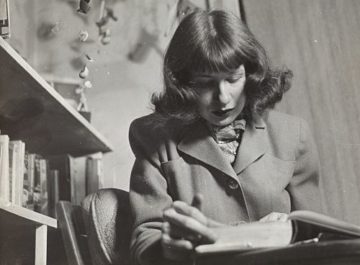 “She had no sympathy,” Spiegelman tells us, “for people who paraded their inner misfortunes.” Clampitt’s dismissive attitude toward the self-indulgences of confessional verse, which commanded so much attention in the 1960s and 1970s, was a product, he writes, of “her stern midwestern upbringing.” And her models: Hopkins, Keats, Wordsworth, Dickinson, Millay, Swinburne. Clampitt returned to their lives again and again in her work, and their echoes sound in “The Kingfisher.” But T.S. Eliot also haunts the poem: memory and desire, European landscapes, breakdown, and even the nightingale recall The Waste Land. Clampitt knew it all. In 1956, she told her brother Philip that she could write a history of English literature from memory “and know just where to place everybody in it, with hardly any trouble at all. The reason being, apparently, that I feel I am in it.” Spiegelman notes the boldness of this claim, especially for a woman writer who did not publish her first poem until 1978.
more here.
Amy Clampitt Reads From A Silence Opens
How transcendent feelings arise from the forces of Darwinian natural selection
Alan Lightman in Nautilus:
 One morning in Maine, soon after dawn, I stood by the ocean just as a light fog began moving in. The rising sun became a gauzy fire. Suddenly, the air started to glow. Fog scattered the sunlight, bounced it around and back and forth until each cupful of air shone with its own source of light. In all directions, the air beamed and shimmered and glowed, and the gulls stopped their squawking and the ospreys became quiet. For some time, I stood there spellbound by the silence and the glowing air. I felt as if inside a cathedral of sunlight and air. Then the fog burned away and the glow disappeared.
Hinduism has a concept called darshan, which is the opportunity to experience the sacred. One is advised to be open to such experiences.
I’m a scientist and have always had a scientific view of the world—by which I mean that the universe is made of material stuff, and only material stuff, and that stuff is governed by a small number of fundamental laws. Every phenomenon has a cause, which originates in the physical universe. I’m a materialist. Not in the sense of seeking happiness in cars and nice clothes, but in the literal sense of the word: the belief that everything is made out of atoms and molecules, and nothing more. Yet, I have transcendent experiences. I witnessed the air shining that morning in Maine. I’ve communed with wild ospreys. I have feelings of being part of things larger than myself. I have a sense of connection to other people and to the world of living things, even to the stars. I have a sense of beauty. I have experiences of awe. And I’ve had transporting creative moments. Of course, all of us have had similar feelings and moments. While these experiences are not exactly the same, they have sufficient similarity that I’ll gather them together under the heading of “spirituality.” I will call myself a spiritual materialist.
More here. (Note: For Abbasi. See comment)
What really happened at waco
Rachel Munroe in The New Yorker:
 The federal raid on the Branch Davidian compound, thirty years ago, was flawed from the start. The Branch Davidians were a fringe offshoot of the Seventh-day Adventist Church, and, in the early nineties, they were led by David Koresh, a charismatic long-haired man who believed that the end of days was imminent. The Davidians lived on a compound called Mount Carmel, twenty miles northeast of Waco, and were well known to local law enforcement, who considered them relatively benign.
The Bureau of Alcohol, Tobacco, and Firearms suspected the Davidians of illegally converting semi-automatic rifles into fully automatic weapons. (The weapons allegations seemed to inspire more reason for action than reports that Koresh was sexually assaulting his followers’ underage daughters.) During the ensuing investigation, A.T.F. agents repeatedly overestimated their capacity for subterfuge. When a group of undercover agents posing as college students moved into a house across the street from the Branch Davidian compound, their rental cars gave them away. The agents hosted a party to deflect suspicion, but it had the opposite effect: “Some of the Branch Davidians showed up, mingled, and reported back to Koresh that these were federal agents for sure,” Jeff Guinn writes, in the recently published “Waco: David Koresh, the Branch Davidians, and a Legacy of Rage.”
More here.
Thursday Poem
The Love for My Culture
Maybe it’s the Spanish running through my veins
That’s the only way I know how to explain it
Maybe it’s the r’s rrrolling off my tongue
See,
The love for my culture reaches the sky
The love for my culture will never die
And while you get up and have your milk and cereal
Siempre desayuno con platano de mangu
Not no cheerios
I always mix it up
Con salsa y merengue
Constantly side ways glanced at
Like, she speak no ingles
Yo si puedo hablar, ingles y espanol
Hasta puedo entender dos y tres
Languages!
Confronted with problems like immigration
Forced to have my parties down in the basement
Confined to the more popular story that my family
Criss, crossed, and slid past borders
Trying to find a new place to live
Guilty of chasing paper
without papers
but when that visa is blinking green
It’s saying
“Go, go m’jita! Fight for your dreams!”
See, My mother came here with a belly full of
liberty and hope
She bore them both
Naturalization
the wiping out of my roots made legal under oath
invisible legally but
constantly contributing economically
Corporate America doesn’t want to see me
The fields y los barrios embrace queen
My culture has this game on choke hold
Americana y Dominicana
means I’m worth gold
With traditions so deep
And a passion this strong
The love for my culture
Will forever live on
by Elexia Alleyne
from Split This Rock
Wednesday, April 12, 2023
Unboxing Rilke’s Nachlass
Ian Ellison in the Los Angeles Review of Books:
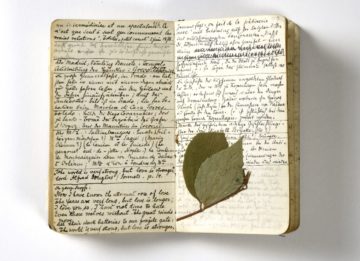 What is it about Rainer Maria Rilke? The influence of the Bohemian Austrian poet on modern culture reads like a who’s who of the great and the good. W. H. Auden, Cecil Day-Lewis, and Edith Sitwell claimed to be directly inspired by him. The first English translations of his work, published by Leonard and Virginia Woolf’s Hogarth Press, became classics in their own right. He has been set to music (both classical and rock) and proven himself a Hollywood touchstone, most recently providing the concluding epigraph of Taika Waititi’s Jojo Rabbit. Oprah Winfrey has quoted him on television and Lady Gaga has lines from his Letters to a Young Poet (1929) tattooed on her arm.
More here.
Scott Aaronson: GPT-4 gets a ‘B’ on my quantum computing final exam
Scott Aaronson in Shtetl-Optimized:
 As I’ve mentioned before, economist, blogger, and friend Bryan Caplan was unimpressed when ChatGPT got merely a D on his Labor Economics midterm. So on Bryan’s blog, appropriately named “Bet On It,” he made a public bet that no AI would score on A on his exam before January 30, 2029. GPT-4 then scored an A a mere three months later (!!!), leading to what Bryan agrees will likely be one of the first public bets he’ll ever have to concede (he hasn’t yet “formally” conceded, but only because of technicalities in how the bet was structured). Bryan has now joined the ranks of the GPT believers, writing
When the answers change, I change my mind
AI enthusiasts have cried wolf for decades. GPT-4 is the wolf. I’ve seen it with my own eyes.
But OK, labor econ is one thing. What about a truly unfakeable test of true intelligence? Like, y’know, a quantum computing test?
Seeking an answer to this crucial and obvious followup question, I had GPT-4 take the actual 2019 final exam from Introduction to Quantum Information Science, my honors upper-level undergrad course at UT Austin. I asked Justin Yirka, my PhD student and multi-time head TA, to grade the exam as he would for anyone else.
More here.
Andrei Linde: How I Invented Eternal Inflation
John Horgan: My Controversial Diatribe Against “Skeptics”
John Horgan at his own website:
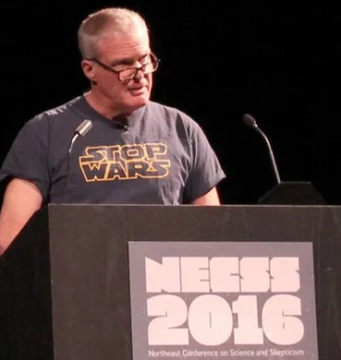 I hate preaching to the converted. If you were Buddhists, I’d bash Buddhism. But you’re skeptics, so I have to bash skepticism.
I’m a science journalist. I don’t celebrate science, I criticize it, because science needs critics more than cheerleaders. I point out gaps between scientific hype and reality. That keeps me busy, because, as you know, most peer-reviewed scientific claims are wrong.
I’m a skeptic, but with a small S, not capital S. I don’t belong to skeptical societies. I don’t hang out with people who self-identify as capital-S Skeptics. Or Atheists. Or Rationalists.
When people like this get together, they become tribal. They pat each other on the back and tell each other how smart they are compared to those outside the tribe. But belonging to a tribe can make you dumber.
More here.
George Clinton | Broken Record
Type-writers And Their Discontents
Barry Sanders at Cabinet Magazine:
 Twain bangs the keys—swiftly. For Remington’s levers, links, and triggers had made the typewriter resemble in kinetic spirit a kind of machine gun. Making writing rapid-fire, Remington turned a rather staid and quiet activity—writing—into one dominated by force and noise and physical effort. Sharp, metal characters smashed themselves against a platen, hitting with enough percussive force so that each letter impressed itself deeply into the paper. By 1881, with the introduction of the Remington II, a faster machine than its predecessor, sales exploded. From 1881 to 1890, typists increased in number from 5,000 to 33,400; and by 1900, according to census figures, America could boast 112,600 typists and stenographers. A good typist developed a distinctive rhythm, clacking out line after continuous line. A truly fast typist commanded attention. And respect. And sometimes even suspicion. At the Rosenberg spy trial, in 1952, the prosecuting attorney sharpened the government’s case against Ethel Rosenberg by asking the jury to visualize the female, Jewish suspect sitting behind her typewriter, “hitting the keys, blow by blow, against her own country in the interest of the Soviets.”
more here.