
Enjoying the content on 3QD? Help keep us going by donating now.
Category: Recommended Reading
On Writers and Their Day Jobs
Ed Simon at Literary Hub:
 For nineteen years, until his retirement in 1885, Herman Melville would awake, slick back his dark hair and unsnarl the snags from his beard, don a uniform of dark navy pilot cloth and affix to his chest the brass badge of a U.S. Customs Inspector. Operating at the Lower Manhattan docks, Melville’s task was to examine ship manifests against unloaded cargo. “I am tormented with an everlasting itch for things remote,” said Ishmael in Moby-Dick. “I love to sail forbidden seas, and land on barbarous coasts.”
Before penning those watery books Typee, Benito Cereno, The Confidence Man, and Billy Budd (and of course the one about the whale), Melville had been a sailor on the St. Lawrence in 1839, a harpooner aboard the Acushnet in 1841, even a mutineer briefly on the Lucy Ann a year later. In middle age, though, the only seaway Melville encountered was the brackish Hudson and his journeys consisted of tabulating the wool unloaded from Manchester, rum from Havana, and tea from Calcutta.
More here.
Enjoying the content on 3QD? Help keep us going by donating now.
Somebody Is Walking on Your Grave
Mariana Enriquez at Bomb Magazine:
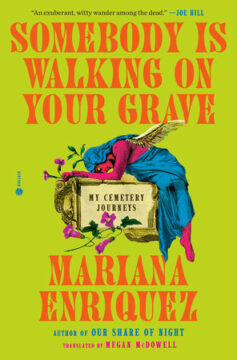 New Orleans has around 350 thousand inhabitants—over a million if you include its metropolitan area—and forty-two cemeteries. That’s a lot. Graves here are aboveground; there are almost no burials. The city is in a swamp, so close to the water table that it’s as if it were floating. To attempt an underground grave means condemning the coffin to float out someday, when the water rises. That’s why there are only niches, vaults, mausoleums.
St. Louis No. 1 is the city’s oldest cemetery. It’s not far from Congo Square, the plaza where, two hundred years ago, enslaved people could congregate, dance, sing, and were even allowed to drum. That’s where jazz was born. For many years, the graves of St. Louis No. 1 were crumbling and collapsing, and bones were scattered. The city’s cemeteries were badly neglected. However, for some time now, NGOs have been working to protect and restore them—in particular, Save Our Cemeteries, which takes care of all New Orleans graveyards. No other city in the world has so many: New Orleans has forty-two cities of the dead.
more here.
Enjoying the content on 3QD? Help keep us going by donating now.
Filoplumes: Nature’s Super Feathers
Jim Robbins in the New York Times:
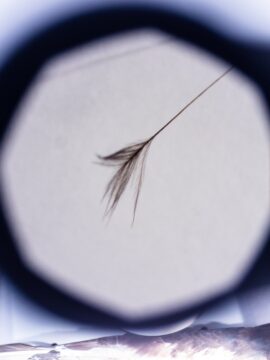 Vanya Gregor Rohwer slid open a drawer to display the rich pink spread wing of a roseate spoonbill, one of thousands of mounted wings at the Cornell University Museum of Vertebrates.
He pulled up a long flight feather to expose, at its base, a palm-tree shaped feather so minuscule it could easily be missed. For a long time, this tiny feature called a filoplume was indeed obscure.
“The history of research on filoplumes is not super robust. They are kind of an overlooked feather,” said Dr. Rohwer, a curator of birds and mammals at the museum. “They were considered a degenerate feather or a useless feather, a relic.”
No longer.
More here.
Enjoying the content on 3QD? Help keep us going by donating now.
The Life of Indian Physicist Satyendra Nath Bose
Somaditya (Soma) Banerjee at Aeon Magazine:
 On a summer day in 1924, a young Indian physicist named Satyendra Nath Bose sent a paper and a letter to Albert Einstein. It would shape the nascent field of quantum mechanics and secure Bose a place in the annals of scientific history.
At the time, Bose was teaching in colonial India, thousands of miles from the centres of European science. In his letter, the 30-year-old Bose explained that he had found a more elegant way to derive one of the pivotal laws of physics (Planck’s law of radiation) and asked for Einstein’s help in publishing it. To Bose’s astonishment, Einstein replied enthusiastically. He translated Bose’s manuscript into German and arranged for it to be published in Zeitschrift für Physik, a leading physics journal of the time. Thus was born Bose-Einstein statistics, a cornerstone of quantum physics.
What made it so significant? In plain terms, Bose devised a new way to count and describe the behaviour of identical quantum particles, most famously, particles of light called photons.
more here.
Enjoying the content on 3QD? Help keep us going by donating now.
Sean Carroll: The problem with pretending quantum mechanics makes sense
Enjoying the content on 3QD? Help keep us going by donating now.
How The ‘AI Job Shock’ Will Differ From The ‘China Trade Shock’
Nathan Gardels at Noema:
 Among the job doomsayers of the AI revolution, David Autor is a bit of an outlier. As the MIT economist has written in Noema, the capacity of mid-level professions such as nursing, design or production management to access greater expertise and knowledge once available only to doctors or specialists will boost the “applicable” value of their labor, and thus the wages and salaries that can sustain a middle class.
Unlike rote, low-level clerical work, cognitive labor of this sort is more likely to be augmented by decision-support information afforded by AI than displaced by intelligent machines.
By contrast, “inexpert” tasks, such as those performed by retirement home orderlies, child-care providers, security guards, janitors or food service workers, will be poorly remunerated even as they remain socially valuable. Since these jobs cannot be automated or enhanced by further knowledge, those who labor in them are a “bottleneck” to improved productivity that would lead to higher wages. Since there will be a vast pool of people without skills who can take those jobs, the value of their labor will be driven down even further.
This is problematic from the perspective of economic disparity because four out of every five jobs created in the U.S. are in this service sector.
More here.
Enjoying the content on 3QD? Help keep us going by donating now.
What Goes Wrong in Cancer?
Enjoying the content on 3QD? Help keep us going by donating now.
The real da Vinci code
From Science:
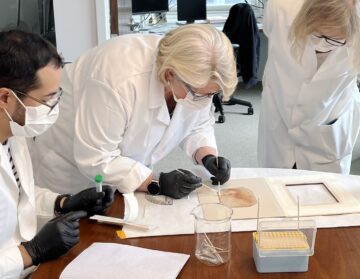 In April 2024, microbial geneticist Norberto Gonzalez-Juarbe stood over an enigmatic drawing in a private New York City collection. Gently, he rubbed its centuries-old surface, front and back, with a swab like those used in COVID-19 testing. “It’s not every day,” Gonzalez-Juarbe recalls with a laugh, “that one gets to touch a Leonardo.” Rendered in red chalk on paper, Holy Child shows a young boy’s head inclined slightly to the side, his features sketched with feathery strokes. Light pools softly around his cheeks and brow, dissolving the edges of his pensive face in a haze of sfumato. The late art dealer Fred Kline, who acquired the drawing in the early 2000s, had claimed stylistic features such as left-handed hatching, a trademark of Leonardo da Vinci’s, link Holy Child to the Renaissance master. But its authorship remains in dispute; experts say one of his students could have produced it.
Gonzalez-Juarbe’s swabs may have captured a biological clue. In a remarkable milestone in a decadelong odyssey, he and other members of the Leonardo da Vinci DNA Project (LDVP), a global scientific collective, report in a paper posted today on bioRxiv that they have recovered DNA from Holy Child and other objects—and some may be from Leonardo himself.
More here.
Enjoying the content on 3QD? Help keep us going by donating now.
Thursday Poem
How to Teach a Child to Pray
Humiliate her at every checkpoint. Replace
the Second Surah with air raids and shelling.
—
Reduce everything she knows to rubble.
Bury her younger brother under his school.
—
Laugh when she raises her hands in front of her face
and asks your God for peace.
—
Surveil her dreams of clean water and fresh bread.
Reduce everything she knows to rubble, again.
—
Direct her to ignore the smell of decaying bodies
when bowing down to perform Ruku.
—
Strip search her grandparents in the street
let her hold their shame.
—
Expect her gratitude for being able to count
on one hand cousins who have one hand.
—
Teach her to dread shelters and refugee camps
instead of periods.
—
Assume her capacity to forgive will be longer
than her memory.
—
Dare her to stand up and repeat
“God is Good!.”
—
by Frank X Walker
from Kinfolk.
Poetry Magazine January/February 2026 issue of Poetry.
—
Enjoying the content on 3QD? Help keep us going by donating now.
Wednesday, January 21, 2026
Could This Portrait of an Elderly Man With a Young Woman’s Face Hidden in His Beard Be a Long-Lost Study by Peter Paul Rubens?
Sonja Anderson at Smithsonian Magazine:
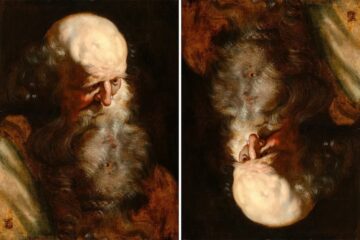 Three years ago, Belgian art dealer Klaas Muller paid about $115,000 for an undated, unsigned painting of an elderly man. Offered online by a “lesser-known auction house in northern Europe,” the piece was billed as a study by an unknown master of the “Flemish school,” Muller tells the Guardian’s Philip Oltermann.
However, the oil-on-paper piece may be the work of Peter Paul Rubens, the renowned Flemish painter of the 17th century. When Muller first glimpsed the warm-toned painting—depicting a man gazing downward past his long, wavy beard—he recognized something in it.
“I wasn’t sure it was a Rubens. I just knew it was very Rubens-esque, so it was still a gamble,” Muller tells the Guardian. “I have a library of books about [Rubens] at home and look at them most evenings. … It’s a bit of an addiction.”
Muller also thought the man in the painting looked familiar. He guessed it was St. Peter the Apostle or the Roman god Neptune, he tells the Belgian newspaper De Standaard’s Geert Sels. Muller began combing his reference books.
More here.
Enjoying the content on 3QD? Help keep us going by donating now.
Does OnlyFans Empower Or Exploit Women?
Enjoying the content on 3QD? Help keep us going by donating now.
World is entering an era of ‘water bankruptcy’
Alec Luhn in New Scientist:
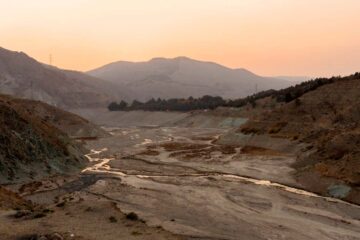 Earth has entered an “era of water bankruptcy” due to over-consumption and global warming, with 3 in 4 people living in countries that face water shortages, water contamination or drought.
That’s the conclusion of a United Nations report that has found most regions are overdrawing their annual income of rainwater and snowmelt and dipping into their savings of groundwater, which can take thousands of years to replenish. Seventy per cent of major aquifers are declining. Many of these changes are irreversible.
Two key drivers are agriculture and cities expanding into arid areas, which are getting even drier due to climate change. Almost 700 sinkholes have appeared in Turkey due to groundwater pumping, while dust storms from desertification have killed hundreds in Beijing.
More here.
Enjoying the content on 3QD? Help keep us going by donating now.
On Editing and Not Editing
Brian Patrick Eha at The Hedgehog Review:
 Joan Didion could hardly stand It. More than once, It made Robert Caro wrathful, yelling down the telephone line: because periods had been softened into semicolons, semicolons diminished into commas. Gay Talese, when he was a New York Times reporter, if he thought himself ill-used by It, would call the copy desk and demand that his byline be struck from the offending piece before it could run in the paper’s afternoon edition. John McPhee, dealing with a philistine who dared apply a Procrustean rule to the juicy forty-thousand-word piece on oranges he had blithely filed as his third-ever contribution to The New Yorker, sectioning off 85 percent of the story, fought for five days running to restore as much as possible of his manuscript—enough, in the end, to make a serial feature published in two sequential issues.1 A bane of the top talents and best minds, shortening by God knows how many lost hours their productive working lives—this is what It is and does.
By now, you have surely guessed what It is. I refer of course to editing.
more here.
Enjoying the content on 3QD? Help keep us going by donating now.
Canada’s Prime Minister Mark Carney’s powerful address in Davos
Speech is in English after first 40 seconds.
Enjoying the content on 3QD? Help keep us going by donating now.
Scientists in Dreamland
Alice Vernon at The American Scholar:
 In 1897, Russian physician and scientist Marie de Manacéïne made a startling but necessary observation: “If we pay no attention to sleep, we thereby admit that a third part of our lives is unworthy of investigation.” The quality and content of our dreams and our sleep, she believed, could reveal an immense amount of information about our worries, our memories, the things we learn, and the condition of our bodies. Dreams should never be washed away with the morning splash of water to the face.
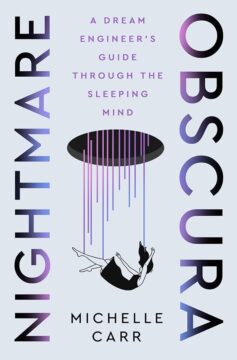
More than 100 years after de Manacéïne, sleep scientist Michelle Carr, based at the University of Montreal, is shining a light on our sleeping minds. Her new book, Nightmare Obscura, is a thorough and engaging tour through the science and philosophy of our dreaming lives. Needless to say, there is still much work to be done in transferring the discoveries of sleep scientists to general clinical practice. Take nightmares, for example. “A nightmare is a real experience,” Carr writes, and indeed, multiple large-population studies have shown that up to 40 percent of adults experience a nightmare every month.
more here.
Enjoying the content on 3QD? Help keep us going by donating now.
Landholder vs stockholder: The origin of our political divisions
Catherine Nichols at Aeon:
 The terms ‘left’ and ‘right’ come from the seating arrangements in the National Assembly during the French Revolution, where the combatants used the medieval estate groupings to define their battle lines. According to their writings, land-owning aristocrats (the Second Estate) were the party of the Right, while the interests of nearly everyone else (the Third Estate) belonged to the Left. This Third Estate included peasants working for the landowners but also every other kind of business owner and worker. Decades later, Karl Marx offered a different analysis of capitalism: he put owners of both land and businesses together on one side (the bourgeoisie), while grouping workers from fields and factories on the other side (the proletariat) in a single, world-wide class struggle. The trouble with both these ways of parsing Left and Right is that voting patterns never seem to line up with class. Both historic analyses leave us with questions about the contemporary world – and not just the paradox of why so many Left-leaning places are so rich. Why, for example, do working-class conservatives appear to vote against their material interests, year in and year out, across generations?
More here.
Enjoying the content on 3QD? Help keep us going by donating now.
Are Men OK?
Enjoying the content on 3QD? Help keep us going by donating now.
Girls are starting puberty younger — why, and what are the risks?
Cassandra Willyard in Nature:
 When Lola was eight years old, she went through a massive growth spurt and started developing acne. Her mother, Elise, thought Lola was just growing fast because of genes inherited from her father. But when she noticed that Lola had grown pubic hair too, she was floored. A visit to an endocrinologist in 2023 confirmed that Lola’s brain was already producing hormones that had kick-started puberty. Lola had also been struggling emotionally. “She would have panic attacks every day at school,” says Elise, who lives in Minneapolis, Minnesota, and asked that her surname and Lola’s real name be omitted.
Although eight might seem young to start puberty, it’s not as rare as it once was. Data show that girls around the world are entering puberty younger than before. In the 1840s, the average age of first menstruation, or menarche, was about 16 or 17; today, it’s around 12. The average age for onset of breast development fell from 11 years in the 1960s to around 9 or 10 years in the United States by the 1990s. Some research hints that the trend mysteriously accelerated during the COVID-19 pandemic. (Although some data suggest that puberty is happening earlier for boys too, the shift seems to be less pronounced.)
More here.
Enjoying the content on 3QD? Help keep us going by donating now.
Wednesday Poem
Written for the inauguration of Zohran Mamdani, Jan 1, 2026, NYC.
Proof
You have to imagine it:
Who said you were too dark/too
Large? Too queer/too loud?
Who said you were too poor/
Too strange? Too fat?
You have to imagine it:
Who said you must keep quiet?
Who heard your story, then
Rolled their eyes?
Who tried to change your name
To invisible?
You’ve got to imagine:
Who heard your name
And refused to pronounce it?
Who checked their watch
And said “not now”?
James Baldwin wrote:
“The place in which I’ll fit
Will not exist
Until I make it.”
New York, city of invention,
Roiling town, refresher
And re-newer,
New York, city of the real,
Where the canyons
Whisper in a hundred
Tongues,
New York,
Where your lucky self
Waits for your
Arrival,
Where there is always soil
For your root.
This is our time.
The taste of us/the spice of us
The hollers and the rhythms and
The beats of us.
In the echo of our
Ancestors,
Who made certain we know
Who we are.
City of Insistence,
City of Resistance,
You have to imagine:
An Army that wins without
Firing a bullet,
A joy that wears down
The rock of no.
Up from insults,
Up from blocked doors,
Up from trick bags,
Up from fear/up from shame,
Up from the way it was done before.
You have to imagine:
That space they said wasn’t yours.
That time they said you’d never own.
The invisible city lit, on its way.
This moment is our proof.
.
.
Enjoying the content on 3QD? Help keep us going by donating now.