
Daniel Bessner at The Nation:
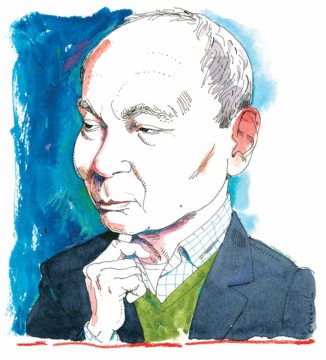 The end of the Cold War was supposed to usher in a better world. After four decades of struggle, the great battle between liberalism and Bolshevism had ended in the former’s decisive victory. Many in the West hoped that liberalism would now have free rein to shape events around the world. Utopia, at least of a liberal form, was finally within humanity’s grasp.
No essay embodied this feeling more than “The End of History?” Published in 1989 in The National Interest and written by a then-unknown State Department official named Francis Fukuyama, the piece proffered a simple three-step argument. First, Fukuyama claimed that throughout the world, people had decided that liberal democratic capitalism was superior to the authoritarian communism produced by Bolshevism and Maoism. Second, he argued that liberalism’s triumph meant that “History”—understood as the struggle between rival ideologies—had ended. Finally, he concluded that, over time, many nations that hadn’t yet become liberal capitalist democracies would inevitably do so, and that this would be good for humankind.
more here.
 Describe your ideal reading experience (when, where, what, how).
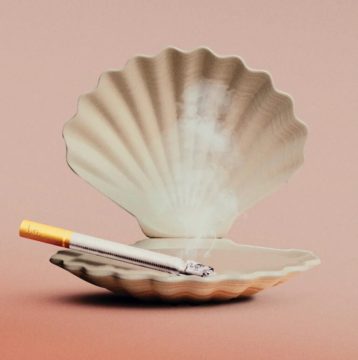 They told me they couldn’t offer me an interview with her at this time. Fine by me—I didn’t want to talk to her anyway. She talks a lot and doesn’t say much. A Financial Times profile published on the occasion of her fiftieth birthday suggested we have her to thank for spirulina, celebrity skin care lines, the good divorce, blended families, sex positivity, and dry skin brushing (just what it sounds like). I’ve also heard she made yoga happen. This is all obviously ridiculous, flatly ahistorical, except maybe the celebrity skin care line thing, but that doesn’t matter—even if someone thinks she’s done more harm than good, and that a lot of it is an upscale scam, they will comment, wearily, pragmatically, just a little bit enviously, that you have to respect it, don’t you, what she’s done. She has successfully integrated her imperial wellness company into American life. Memories of a time when gut health wasn’t something you discussed at parties are distant. Moms are microdosing. Vulnerability reigns. The countervailing spirit of resistance to quackery and “fake news” that characterized the Trump era is over, and eggs made of jade that you’re supposed to put in your vagina are still for sale. Everybody knows about the vagina eggs. The elderly know about them. People from Belgium know about them. What comes next, epochally, is still unclear. In the meantime, she has been, for some reason, partnering with a cruise line.
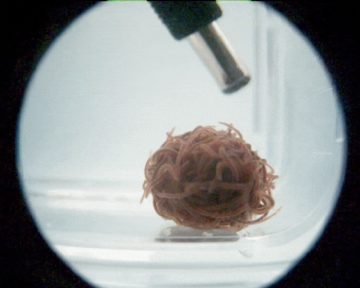 Anyone who’s grappled with jumbled headphones knows the difficulty of disentangling snarled cords. A tight knot is nothing for a California blackworm, however. These tiny worms twist together by the thousands to form tightly packed blobs reminiscent of a forkful of squirming spaghetti. While these tangles take minutes to form, intertwined blackworms can wriggle free in a matter of milliseconds. Now scientists have finally straightened out how these legless escape artists use only a simple collection of muscles and neurons to
 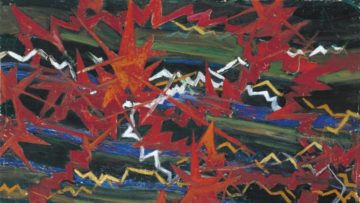 For the millions who were enraged, disgusted, and shocked by the Capitol riots of January 6, the enduring object of skepticism has been not so much the lie that provoked the riots but the believers themselves. A year out, and book publishers confirmed this, releasing titles that addressed the question still addling public consciousness: How can people believe this shit? A minority of rioters at the Capitol had nefarious intentions rooted in authentic ideology, but most of them conveyed no purpose other than to announce to the world that they believed — specifically, that the 2020 election was hijacked through an international conspiracy — and that nothing could sway their confidence. This belief possessed them, not the other way around.
 Whenever I leave my Berlin apartment, the first thing I see is a sign saying CHICKEN HAUS BURGER; the second is a café blackboard announcing: « You can’t buy happiness but you can buy CROIFFLE and that’s kind of the same thing. » A billboard advertises an upcoming film as « ein STATEMENT für GIRLPOWER »; one shop promises a wide range of Funsocken. Rather more disturbing — particularly here in Neukölln, a neighbourhood copiously populated by leftie Americans and families from the Middle East — is the Arabic-German barber shop called WHITE BOSS. And when I go downtown to the bookstore where I occasionally host readings, the only good coffee nearby is served by a place unbelievably named PURE ORIGINS.
 Suppose a large inbound asteroid were discovered, and we learned that half of all astronomers gave it at least 10% chance of causing human extinction, just as a similar asteroid exterminated the dinosaurs about 66 million years ago. Since we have such a long history of thinking about this threat and what to do about it, from scientific conferences to Hollywood blockbusters, you might expect humanity to shift into high gear with a deflection mission to steer it in a safer direction.
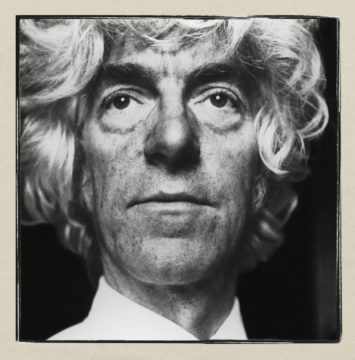 Philosophers can be quirky. Take Ludwig Wittgenstein. His rooms in Cambridge were bare except for two deck chairs, a camp bed, and sets of identical clothes in a wardrobe. When asked what he wanted to eat, he said he didn’t care just so long as it was the same thing every day. He refused to lunch at high table in Trinity College, not wanting to set himself literally above other people. But then he had a special table made at the same height as that of the students so he could sit alone.
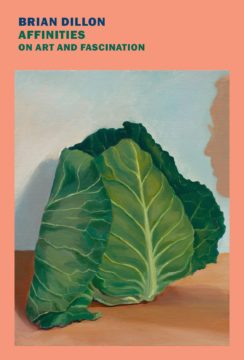 As Dillon explains at the outset of Affinities, he decided to write this collection after reflecting on his own writing career. Dillon, a professor of creative writing at Queen Mary University of London and an author of eight books, has spent more than 20 years writing about visual art for magazines, books, and exhibition catalogs. Over the course of his long tenure as an art critic and essayist, he found himself not only using the word “affinity” as an adjective when speaking or writing but also bringing forth the vague practice of it, particularly when trying to draw connections between artists’ work and their studio ephemera, personal notes, and historical anecdotes. “How to describe, as a writer, the relation it seemed the artists had with their chosen and not chosen,” Dillon asks in the book’s first essay, which continues intermittently throughout the collection, alternating with essays on the first noted photograph of a person, an illustration of a fly’s eyeball, professional street photos, and other artworks which have inexplicably clung to Dillon’s mind.
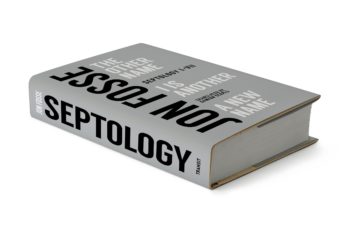 Innumerable nothings happen in the dim, watery fjord lands of Jon Fosse’s novels and plays. In the novella Aliss at the Fire, a woman named Signe lies on a bench and remembers (or hallucinates) her husband Asle, who disappeared one night two decades earlier, after announcing he would head out onto the fjord. In Fosse’s magnum opus, Septology, a widowed painter, also named Asle, spends hundreds of pages thinking about his wife, his doppelgänger, his neighbor and the painting he can’t seem to rid himself of. Almost nothing occurs. And everything that does, recurs.
 A George Washington University study offers new insights into why human cultures become more complex over time. The study finds that people combine and generalize socially acquired knowledge over time, resulting in new and more complex knowledge. The ability to combine and generalize socially learned knowledge appears to occur prior to formal schooling and may represent a unique feature of human intelligence called generative cultural learning.
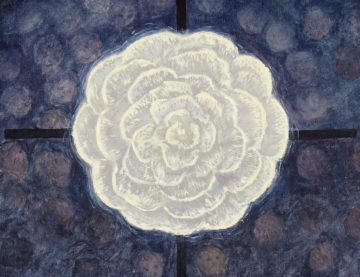 In recent years we have heard much about The Five, the spiritualist group of women—af Klint, Cassel, Cornelia Cederberg, Sigrid Hedman, and Mathilda Nilsson—who channeled messages from “higher powers” from 1897 to 1907. A gifted medium, Cassel would eventually come to dominate the group, while af Klint played a more subsidiary role. It was working together outside of this quintet, however, that af Klint and Cassel each began to receive messages from the spirit realms asking for their participation in a “special mission.” The ensuing visual collaboration resulted in numerous preliminary sketches and twenty-seven small oil paintings executed between October 1906 and September 1907; this is the inaugural series of “The Paintings for the Temple” and thus a crucial juncture in the history of abstraction. Titled “Series I” or “The First 26 Small Ones” (the title would be changed later to “Primordial Chaos”), this body of work endeavored to visualize the so-called Akashic records: a supernatural compendium, as elucidated by Theosophy’s cofounder and chief theoretician, Helena Blavatsky, of all universal events and thoughts occurring in the past, present, and future and concerning all life forms. Analyzing the works in Cassel’s notebooks, Martin has convincingly been able to parcel out fourteen works belonging to her in this series and includes two comparisons that illustrate the women’s different styles. Cassel paid greater attention to detail, for example, and her application of paint was more careful and smoother than af Klint’s expressive surfaces, resulting in a deeper saturation of color.
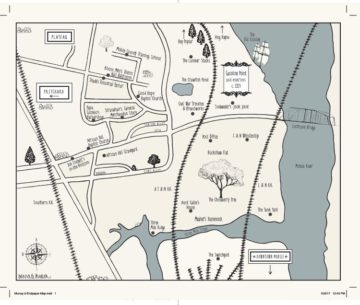 Circa 1969, the writer Albert Murray paid a visit to his hometown on the Alabama Gulf Coast, to report a story for Harper’s. Murray hadn’t lived there since 1935, the year he left for college. During his childhood, elements of heavy industry—sawmills, paper mills, an oil refinery—had always coexisted with wilderness, in the kind of eerily beautiful landscapes that are found only in bayou country. But as an adult, Murray was aghast to see how much industry had encroached. The “fabulous old sawmill-whistle territory, the boy-blue adventure country” of his childhood, he wrote, had been overtaken by a massive paper factory: a “storybook dragon disguised as a wide-sprawling, foul-smelling, smoke-chugging factory.” He imagined that the people who had died during his years away had been “victims of dragon claws.”
 Two hundred years ago, the poets and philosophers of the Romantic movement came to an intoxicating thought: art can express the otherwise inexpressible conditions that make everyday sense and experience possible. Art, the Romantics said, is our interface with the real patterns and relations that weave up the world of rational thought and perception. And, although most philosophers and artists today don’t profess to taking this idea very literally, I believe that not much in our current way of caring about literature and music, film and painting, dance and sculpture, works without it. My purpose here is to show that today’s first blushings of a mathematical viewpoint on pattern, mind and (human) world make the Romantic theory of art literally plausible.
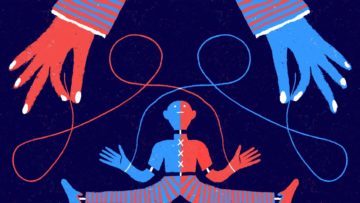 Dazzling intricacies of brain structure are revealed every day, but one of the most obvious aspects of brain wiring eludes neuroscientists. The nervous system is cross-wired, so that the left side of the brain controls the right half of the body and vice versa. Every doctor relies upon this fact in performing neurological exams, but when I asked my doctor last week why this should be, all I got was a shrug. So I asked