
Category: Recommended Reading
What Johnny Depp Has Become
Stephanie Zackarek in Time:
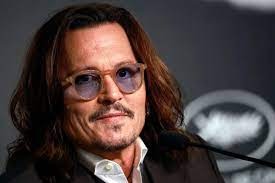 The aging process is kind to no one, and that includes Johnny Depp.
On Tuesday, Depp was here in Cannes to walk the red carpet for the festival’s opening night film, Maïwenn’s misunderstood-mistress extravaganza Jeanne du Barry, in which Depp plays King Louis XV, whose devotion to his favorite extramarital squeeze brought scandal upon Versailles. When it was announced that a Depp film would be opening the festival, murmurs of “Sacre bleu!” were heard far beyond the kingdom, though perhaps not so much in France: the festival itself has opened its arms wide to Depp, who hasn’t exactly been untouched by controversy in the past few years, given his involvement in two high-profile defamation suits connected with allegations that he physically abused his former wife, Amber Heard. (The jury ruled that Heard defamed Depp on three counts and awarded him $15 million in damages; Depp was found guilty of one of three charges in Heard’s countersuit and she was awarded $2 million in compensatory damages.)
More here.
Friday Poem
On Visiting Central Park Zoo
The animals, hanging around in forms,
are each resigned to be what each one is,
imprisoned twice, in flesh first, then in irons.
The Bactrian camel is adjusted or is not
as, with his humps collapsed for lack of need
for water and with useless tufts of hair
like hummocks on the great plains of his flanks,
he stands around in shape and chews
a curd of solace, whether bitter, bland, or sweet,
who knows? Such is his formal pride,
his gargoyle’s face remains a stone
assertion as he pisses in between his splayed,
seemingly rachitic legs and stays
that way, in place, for want of something else
to do, caught in his double prison all the time.
Whatever he is, he goes on being what he is,
although ridiculous in forced review,
perseverant in not doing what he need not do.
by Alan Duggan
from New and Collected Poems
Ecco Press, New York, 1983
Unmixed Blessing: crops that can be propagated indefinitely, without sex
Erik Stokstad in Science:
 In early summer, unusual pollinators swoop over rice fields in Texas and Arkansas. Small, nimble helicopters fly low and steady so their rotors blow pollen from one row of plants to another. The flights help RiceTec, a plant breeding company, produce seed for high-yielding, robust varieties of rice grown across the southern United States. It’s an expensive and complicated way to create seed.
But the effort is worthwhile because the seeds sprout into plants with a mysterious robustness and resilience. The phenomenon, called hybrid vigor, comes from crossing two strains of inbred parents. Why hybrids are superior to normal plants is not clear, but one long-standing hypothesis is that favorable versions of genes from one parent dominate poor-performing, recessive genes from the other.
The development of hybrid varieties has boosted the yield of maize, sorghum, and other crops by up to 50% and has resulted in other valuable traits, such as better drought tolerance. But the method is only feasible in some species; there’s no practical way to produce hybrid wheat or soybeans, for example. And when it works, it’s extremely labor intensive.
More here.
On Chuck Berry
Ian Penman at Harper’s Magazine:
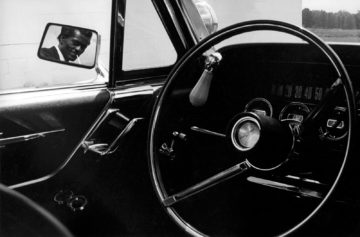 Berry never claimed that he invented rock and roll, and was always quite happy to point out where he’d gotten his inspiration: from the great hinterland and invisible college of rhythm and blues. He happily fessed up to his influences, such as Louis Jordan and T-Bone Walker. There was a lot of guilt-free recycling involved—transplanting a riff or a lick, a line or a trope, into fresh new settings. (Jordan’s guitarist Carl Hogan was the source for the famous opening guitar riff of “Johnny B. Goode.”) Even the execrable (but insanely popular) late hit “My Ding-A-Ling” was a virtual xerox of a roiling 1952 R & B side by the marvelous Dave Bartholomew. He tinkered, customized, and retooled songs as if giving an old car a new coat of paint, adding horsepower, then taking them back out on the open road again.
What he did do, indisputably, was visualize a whole new postwar landscape, and provide a soundtrack for its leisure time: a hybrid somewhere between white pop and black R & B. Smith has a lovely phrase for this: “Scraps and rags and things given away for free were pulled together and made into a brand new flag.”
more here.
Osip Mandelstam
Donald Rayfield at Literary Review:
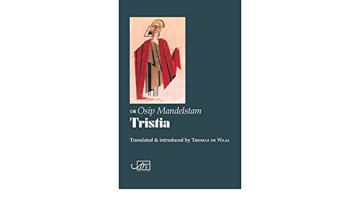 When in 1960 I first came across Osip Mandelstam’s poetry, nobody in the USSR had enjoyed access to his work since the early 1930s and few even knew of his existence, let alone of his death, as he had predicted, in Stalin’s Gulag. His books had been removed from libraries and bookshops. Only braver readers kept them, sometimes hidden in saucepans at their dachas. From 1958, supported by the CIA, émigré scholars collected what they could from Russian publications of the writings of banned Russian authors; the works were so in demand that students like myself copied them out by hand. Impressionable readers were stunned by the hypnotic musicality of Mandelstam’s early poems, by the penetrating appreciation of the disaster that unfolded – the ‘ship of time going to the bottom’ – during the First World War and the Russian Revolution, by the fine love poems and by the use of biology to elucidate his times.
For a student of Russian literature, Mandelstam is a godsend. Every poem has memorable lines that could be quoted in many imaginable situations.
more here.
Thursday, May 18, 2023
CEO behind ChatGPT warns Congress AI could cause ‘harm to the world’
Cat Zakrzewski, Cristiano Lima and Will Oremus in the Washington Post:
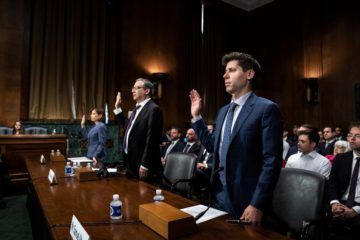 OpenAI chief executive Sam Altman delivered a sobering account of ways artificial intelligence could “cause significant harm to the world” during his first congressional testimony, expressing a willingness to work with nervous lawmakers to address the risks presented by his company’s ChatGPT and other AI tools.
Altman advocated a number of regulations — including a new government agency charged with creating standards for the field — to address mounting concerns that generative AI could distort reality and create unprecedented safety hazards. The CEO tallied “risky” behaviors presented by technology like ChatGPT, including spreading “one-on-one interactive disinformation” and emotional manipulation. At one point he acknowledged AI could be used to target drone strikes.
More here.
Quantum physics proposes a new way to study biology – and the results could revolutionize our understanding of how life works
Clarice D. Aiello in The Conversation:
 Imagine using your cellphone to control the activity of your own cells to treat injuries and disease. It sounds like something from the imagination of an overly optimistic science fiction writer. But this may one day be a possibility through the emerging field of quantum biology.
Over the past few decades, scientists have made incredible progress in understanding and manipulating biological systems at increasingly small scales, from protein folding to genetic engineering. And yet, the extent to which quantum effects influence living systems remains barely understood.
Quantum effects are phenomena that occur between atoms and molecules that can’t be explained by classical physics. It has been known for more than a century that the rules of classical mechanics, like Newton’s laws of motion, break down at atomic scales. Instead, tiny objects behave according to a different set of laws known as quantum mechanics.
More here.
Collective Guilt is the Most Indefensible Form of Cancel Culture
Yascha Mounk in Persuasion:
 In January 1941, the world found itself in the darkest depths of World War II. Nazi Germany had conquered Poland and France. It remained allied with Japan and the Soviet Union, and now seemed on the verge of subduing the United Kingdom. The stakes were existential and the outlook increasingly bleak.
In the United States, Franklin D. Roosevelt was pushing for America to come to the rescue of civilization. Against strong domestic opposition he supported Britain with the Lend-Lease Act and was readying the American armed forces for a potential entry into the war.
It must at the time have been tempting to condemn all Germans for the actions of the Nazis, who had after all gained power in good part because of their strength at the ballot box. But rather than ascribing collective guilt to all Germans—as, shamefully, his administration was soon to do in the case of Japanese-Americans—F.D.R. recognized the distinction between Germans who supported and Germans who opposed the Nazis. He courted exiled dissidents and, at the beginning of that fateful year, went so far as to invite one of the most famous of them for an overnight stay at the White House.
More here.
A Lesson In Cognitive Dissonance
Kyle Dunn’s Night Fever
Jerry Saltz at New York Magazine:
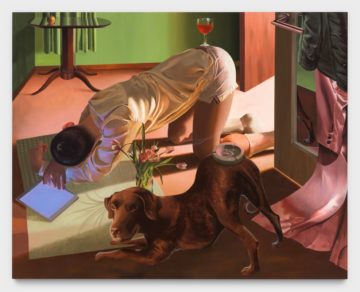 Ten paintings. Each engaging; each mysterious; each stranger than the next. Vivid color, erotic tension, mistrust, and atonement for what society has deemed are perverse games of sexual desecration. The figures in Kyle Dunn’s Night Pictures, now on display at P·P·O·W gallery, exist in suspended states of crisis, in the throes of jealousy and loneliness, withdrawn into shadow — burned out, exhausted, beautiful.
In Paper Angel, a naked male figure is crouching alone in a room, in front of a mirror, looking at a pile of books, food, and other paraphernalia. He personifies procrastination as a creative force. Is he the subject of an invisible painter, the painter himself, or an apparition for a painting? A paper cut-out of an angel adorns the wall, witness to a prayer of desire. The painting is also a superb topological map of open wounds. Here is a world without eros, no “other.” Just wistful longing.
more here.
Exaggerating The AI Disinfo Threat
James R. Ostrowski at The New Atlantis:
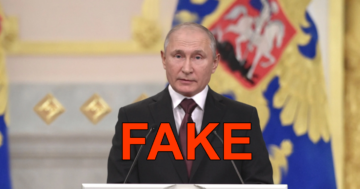 Any machine learning researcher will admit that there is a critical disconnect between what’s possible in the lab and what’s happening in the field. Take deepfakes. When the technology was first developed, public discourse was saturated with proclamations that it would slacken society’s grip on reality. A 2019 New York Times op-ed, indicative of the general sentiment of this time, was titled “Deepfakes Are Coming. We Can No Longer Believe What We See.” That same week, Politico sounded the alarm in its article “‘Nightmarish’: Lawmakers brace for swarm of 2020 deepfakes.” A Forbes article asked us to imagine a deepfake video of President Trump announcing a nuclear weapons launch against North Korea. These stories, like others in the genre, gloss over questions of practicality.
Chroniclers of disinformation often assume that because a tactic is hypothetically available to an attacker, the attacker is using it. But state-backed actors assigned to carry out influence operations face budgetary and time constraints like everyone else, and must maximize the influence they get for every dollar spent. Tim Hwang, a research fellow at the Center for Security and Emerging Technology, explains in a 2020 report that “propagandists are pragmatists.”
more here.
Enheduanna and Women of Mesopotamia ca. 3400-2000 BC
For the bullied, bullies, and bystanders: This mom has a plan
JJ Wahlberg in The Christian Science Monitor:
 When Shadi Pourkashef takes the stage at elementary school auditoriums, students know she’s there to talk about being kind, stopping bullying, and understanding others. So it might be surprising to them that she begins by asking what they think she does outside of her presentations.
The kids guess all kinds of things: “You’re a lawyer.” “You’re a teacher.” “You make drinks at Starbucks.” Then Ms. Pourkashef shows a photo of herself leading an orchestra and explains that she is a composer for movies and commercials, a piano teacher, and a conductor. The kids are amazed. “You couldn’t tell all that just by looking at me, could you?” she asks them.
And that’s the heart of the message that she brings from her Ability Awareness Project (AAP): You don’t know everything that someone is capable of just from a single observation or interaction. At her sunny studio here, her musical work is obvious. Two keyboards and a piano occupy three walls. She works via video chat with a student on piano finger placement. But her “other work” – combating bullying with kindness – happens beyond the studio walls throughout the community.
More here.
Med Men: How Big Pharma’s investment in the advertising model taught us to view health as another consumer choice
Ann Bauer in Tablet:
 In 2009, I took a job as a copywriter with an ad agency in Minneapolis. After 10 years of academia and publishing in obscure literary magazines, I began writing copy for health care and medical device accounts. The work was boring but the salary was grand, and so I threw myself into learning about stents and dilatation balloons.
About a year into the job a large meeting was called. Suddenly my colleagues—those of the running shoe and vodka accounts—wanted in. Our flagship health care client was looking for a multimedia retail campaign for their pacemaker. A pacemaker is a simple device that can be lifesaving, essentially a low-voltage clock used to speed up and regulate a slow or sloppy heart rate. It was developed in the late 1950s and patented in 1962. Since then, the technology has not changed much. The device got smaller and the surgery to insert it more streamlined, but as a mechanical object, the design was pretty perfect.
More here.
Thursday Poem
“And so it goes.” —Kurt Vonnegut
The Death of God
When the news filtered to the angels
they were overwhelmed by their sudden aloneness.
Long into the night they waited for instructions;
the night was quieter than any night they’d known.
I don’t have a thought in my head, one angel lamented.
Others worried, Is there such a thing as an angel now?
New to questioning, dashed by the dry light
of reason, some fell into despair. Many disappeared.
A few wandered naturally toward power, were hired
by dictators who needed something like an angel
to represent them to the world.
These angels spoke the pure secular word.
They murdered sweetly and extolled the greater good.
The Dark Angel himself was simply amused.
The void grew, and was fabulously filled.
Vast stadiums and elaborate malls—
the new cathedrals—were built
where people cheered and consumed.
At the nostalgia shops angel trinkets
and plastic crucifixes lined the shelves.
The old churches were homes for the poor.
And yet before meals and at bedtime
and in the iconographies of dreams,
God took his invisible place in the kingdom of need.
Disaffected minstrels made and sang His songs.
The angels were given breath and brain.
This all went on while He was dead to the world.
The Dark Angel observed it, waiting as ever.
On these things his entire existence depended.
by Stephen Dunn
from Different Hours
W.W. Norton & Company, 2000
Wednesday, May 17, 2023
Why a Silicon Valley culture that was once obsessed with reason is going woo
Tara Isabella Burton in The New Atlantis:
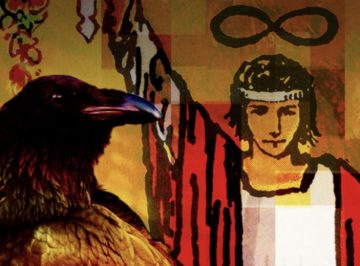 Vogel is part of a loose online subculture known as the postrationalists — also known by the jokey endonym “this part of Twitter,” or TPOT. They are a group of writers, thinkers, readers, and Internet trolls alike who were once rationalists, or members of adjacent communities like the effective altruism movement, but grew disillusioned. To them, rationality culture’s technocratic focus on ameliorating the human condition through hyper-utilitarian goals — increasing the number of malaria nets in the developing world, say, or minimizing the existential risk posed by the development of unfriendly artificial intelligence — had come at the expense of taking seriously the less quantifiable elements of a well-lived human life.
More here.
Robert Trivers, Stalin, and the Dark Side of Idealism
Richard Hanania in his Substack newsletter:
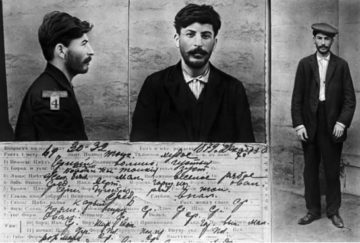 Allow me to make the case for understanding the life of Joseph Stalin. It is difficult to think of many people who lived lives more interesting than that of the Soviet dictator. The son of a cobbler and seamstress living from the outskirts of the Russian empire, he would grow up to be at the center of three once-in-a-lifetime type geopolitical events: the Russian Revolution, World War II, and the beginning of the Cold War. Stalin was also the preeminent force behind the drive to build the first communist great power in world history. This included the 1936–1938 purge of the country’s leadership that was perhaps unlike anything documented history had seen before or since. Twenty years after the Russian Revolution, Stalin would wipe out the vast majority of its more prominent figures still alive, in addition to much of the country’s military and intelligence leadership.
How was one man able to pull this off?
More here.
Why use of AI is a major sticking point in the ongoing writers’ strike
Jeremy Hsu in New Scientist:
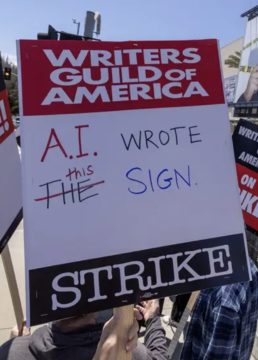 Could AI soon write your favourite Hollywood film or streaming show? That concern is one of the issues driving a US film and television writers’ strike that has halted many productions nationwide.
The Writers Guild of America (WGA), a labour union representing writers who primarily work in film and television, began the work strike this month after reaching an impasse in negotiations with the Alliance of Motion Picture and Television Producers that represents the US entertainment industry. Part of the disagreement revolves around a WGA proposal to ban the industry from using AIs such as ChatGPT to generate story ideas or scripts for films and shows – the union wants to ensure that such technologies do not undermine writers’ compensation and writing credits.
“The fear is that AI could be used to produce first drafts of shows, and then a small number of writers would work off of those scripts,” says Virginia Doellgast at Cornell University in New York.
More here.