
Simon Worrall at The Guardian:
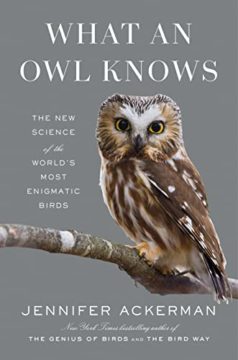 The book is not just about owls, though, but about the people who study them. There are many scientists and conservationists, who have, like Ackerman, fallen under the spell of these endearing creatures. People like José Luis Peña, a neuroscientist at the Albert Einstein College of Medicine, in New York, who has discovered that a barn owl’s sound localisation system relies on sophisticated mathematical computations to pinpoint its prey. Or zoomusicologist Magnus Robb, who studies hoots.
“If anyone knows anything about anything,” Winnie-the-Pooh famously remarked, “it’s Owl who knows something about something.” And it turns out, owls know a lot. Equipped with super-sensitive hearing, great grey owls in the far north are capable of detecting and catching voles deep beneath the snow by sound alone. Scientists have even discovered that owls process sound in the visual centre of their brains, so they may actually get a “picture” of the environment they are hearing.
more here.
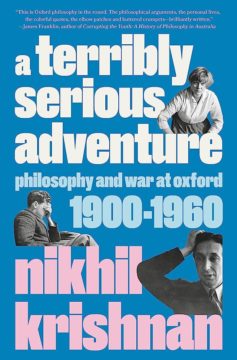 When setting out to write “A Terribly Serious Adventure: Philosophy and War at Oxford, 1900-1960,” Nikhil Krishnan certainly had his work cut out for him. How to generate excitement for a “much-maligned” philosophical tradition that hinges on finicky distinctions in language? Whose main figures were mostly well-to-do white men, routinely caricatured — and not always unfairly — for being suspicious of foreign ideas and imperiously, insufferably smug?
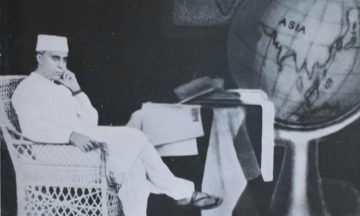 The sudden rise of
 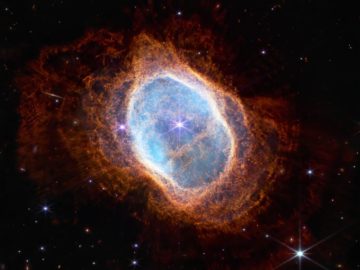 The James Webb Space Telescope, the largest and most sophisticated space observatory ever built, has been sending back images and data for almost a full year now—and in that time it has delivered a treasure trove of information about everything from stars and planetary systems in our own galactic neighborhood to distant galaxies that formed when the universe was a tiny fraction of its current age. Webb has also sent back stunning images that surpass those garnered by its famous predecessor, the
 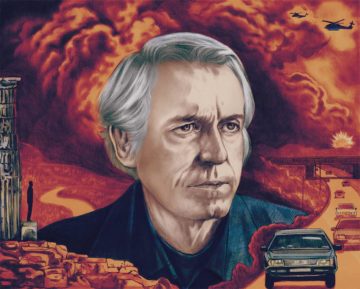 An assassin works from a partial understanding of the world. If not literally a hashishi, as suggested by the word’s etymology, an assassin must nevertheless see the world in tunnel vision, his victim viewed through the lens of a scope. The vast, complex network of humanity to which he and his victim belong, with contending narratives and blurred individual motives, cannot be allowed to exist. To do so would be to fail as an assassin.
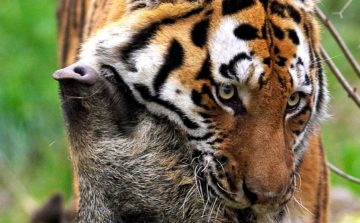 We cannot be sure what animals are, because we cannot be sure what we are. We are beasts among beasts, and something qualitatively different. The boundary between these two kinds of being is always ready to dissolve by moonlight.
 The Supreme Court last week outlawed the use of race-based affirmative action in college admissions. That practice was understandable and even necessary 60 years ago. The question I have asked for some time was precisely how long it would be required to continue. I’d personally come to believe that preferences focused on socioeconomic factors — wealth, income, even neighborhood — would accomplish more good while requiring less straightforward unfairness.
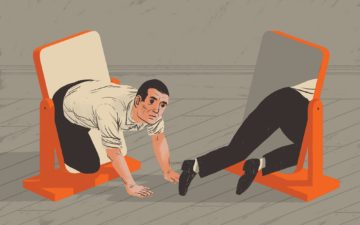 Every life contains pain. Even the perfect life, the life where you have everything you want, hides its own unique struggles. Writing in The Genealogy of Morals (1887),
 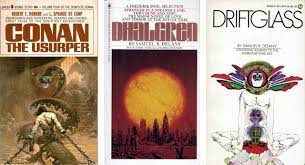 In the stellar neighborhood of American letters, there have been few minds as generous, transgressive, and polymathically brilliant as Samuel Delany’s. Many know him as the country’s first prominent Black author of science fiction, who transformed the field with richly textured, cerebral novels like “Babel-17” (1966) and “Dhalgren” (1975). Others know the revolutionary chronicler of gay life, whose autobiography, “The Motion of Light in Water” (1988), stands as an essential document of pre-Stonewall New York. Still others know the professor, the pornographer, or the prolific essayist whose purview extends from cyborg feminism to Biblical philology.
 Michael Levin, a developmental biologist at Tufts University, has a knack for taking an unassuming organism and showing it’s capable of the darnedest things. He and his team once extracted skin cells from a frog embryo and cultivated them on their own. With no other cell types around, they were not “bullied,” as he put it, into forming skin tissue. Instead, they reassembled into a new organism of sorts, a “
 When the notable figures of our day pass away, they wind up on our screens, short clips documenting their achievements, talking heads discussing their influence. The quiet lives, though, pass on soundlessly in the background. And yet those are the lives in our skin, guiding us from breakfast to bed. They’re the lives that have made us, that keep the world turning.
 We have just experienced the hottest day ever recorded on Earth – for the second day in a row. The average global air temperature recorded 2 metres above Earth’s surface hit 17.18°C (62.92°F) on 4 July,
  In the mid-1920s, the mood in the United States was buoyant. After years of surging economic growth, fuelled by expansion in the automobile industry and speculation in financial markets, the United States had the lowest debt of any large industrial nation. The future looked just as rosy. A 1926 article in The Wall Street Journal noted how “American wealth has doubled in the past dozen years”, delivering “a rate of progress that has never been known in Europe”.