
From The Drift:
 It’s commonplace to note that sociopolitical upheaval and artistic experimentation often flourish side by side. But today — despite an alleged “polycrisis” — new modes of cultural production don’t seem to be emerging. Three years after the start of the Covid-19 pandemic and the subsequent George Floyd rebellion, the arts seem stagnant and stubbornly centralized: franchise fare dominates at the box office; literary output is hampered by monopolized publishers; even the obsession with so-called nepo babies suggests a cultural bloodline without disruption. The internet, meanwhile, tends to both homogenize art and silo audiences by algorithm. We’ve begun to wonder if we’re overlooking experimental movements, or if they’re going extinct.
For Issue Ten, we asked artists and thinkers across disciplines — novelists, sculptors, composers, dancers, critics — to reflect on the current state of the avant-garde. What’s to blame for the lack of a coherent movement? If the avant-garde is dead, what killed it — and what’s been lost along the way? In politics, nothing seems to surprise us anymore. In art, can we still be shocked? Should we?
More here.
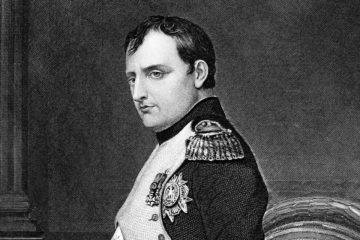 Let’s get this out of the way up front: Napoleon Bonaparte was not short. Most contemporary sources put him at about 5-foot-6,
 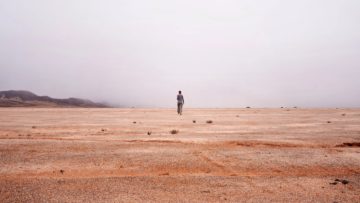 In 2017, a team of scientists from Germany trekked to Chile to investigate how living organisms sculpt the face of the Earth. A local ranger guided them through Pan de Azúcar, a roughly 150-square-mile national park on the southern coast of the Atacama Desert, which is often described as the driest place on Earth. They found themselves in a flat, gravelly wasteland interrupted by occasional hills, where hairy cacti reached their arms toward a sky that never rained. The ground under their feet formed a checkerboard, with irregular patches of dark pebbles sitting between lighter ones as bleached as bone.
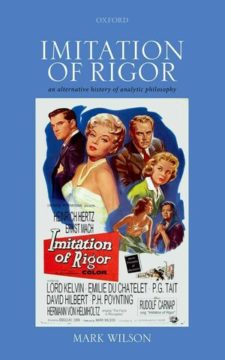 Katherine Brading in Notre Dame Philosophical Reviews:
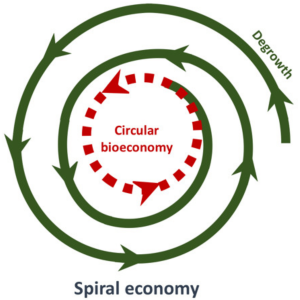 John Bellamy Foster in Monthly Review:
 Tony Wood in the LRB:
 In 1867, shortly after Prussia’s decisive military victories over Denmark (in 1864) and Austria (in 1866), a dinner guest asked the Prussian prime minister, Otto von Bismarck, about the prospect of a further armed conflict, this time against France. Would it be expedient to somehow provoke a French attack on Prussia in order to unify the German states against a common enemy? Bismarck rejected the idea: ‘Anyone who has ever looked into the glazed eyes of a soldier dying on the battlefield will think hard before starting a war.’
 P
P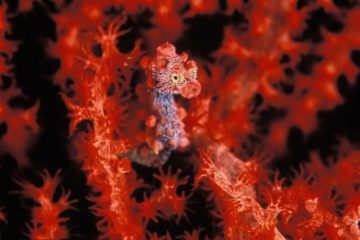 Over the last five decades, we’ve burned enough coal, gas and oil, cut down enough trees, and produced enough other emissions to trap some six billion Hiroshima bombs’ worth of heat inside the climate system. Shockingly, though, only
 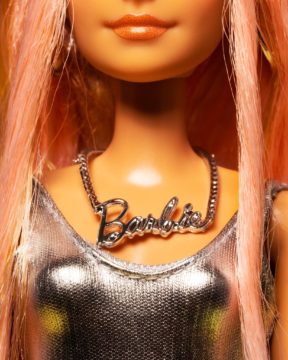 Maybe you’ve heard there’s a Barbie movie coming out?
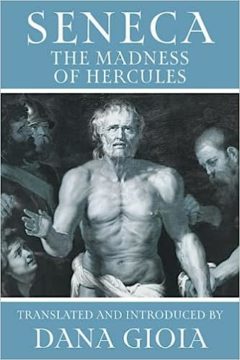 For 1,500 years, no writer except
  How bad have things gotten? In