
Akeel Bilgrami in The India Forum:
 I will begin on a self-conscious note. For some years, I have put off writing about Gandhi’s views on caste for my long-gestating book manuscript on Gandhi’s thought. The subject had become so fraught, as a result of recent invectives directed at Gandhi, that I did not trust myself to not get caught up in an ideological maelstrom in which anything one said by way of trying to merely even understand his views would come off as a kind of apologetics, which I had no wish to produce since, for all my admiring interest in him, I am not a Gandhi-bhakt. Indeed, as will emerge in what I am about to say, he is sometimes quite wrong on this subject as, no doubt, on others.
What I am certain of, even so, is that his views on the subject and his motivations in forming them have not always been understood with the necessary depth. It is fine to find someone to be wrong, so long as you get right what you think is wrong. And it is with that in mind that I write this essay to present the larger framework within which, I think, his ideas about and his struggles over caste must be understood.
More here.
 Scotus remains a polarising figure, but his humanist detractors would be horrified to learn that here in the
  In “The Song of Myself”, Whitman tells us “I am the man, I suffered, I was there”. The poetic force of his work, which the American poet James Wright terms his “delicacy”, arises from the exactness of his observations; Whitman’s dedication to what he called “every organ and attribute”. This commitment to specificity is vital in understanding Del Rey’s artistic evolution; in her work on NFR! and beyond, she exhibits an oblique approach to individual experience, one that places a similar emphasis on precision. An instinct for poetic specificity is most apparent on “Blue Bannisters”, “Kintsugi” and “Fingertips”, sprawling, stream-of-consciousness confessionals that speak to Jesus, her family, lovers past and present, the dead and the living and the unborn, America, the Earth and the heavens, herself. There’s a Whitman-esque delicacy to her lyrics, whether they’re about the way John Denver holds the note on “Rocky Mountain High”, her sister making birthday cake while chickens run around the yard, or dropping a location pin to her lover on a hot night in the canyon.
 The 2024 presidential election is 14 months away, which means political news sites are already saturated with poll-obsessed prognostication and horse-race reporting. In this way, every election season is alike—but this year’s run-up has felt particularly repetitive. Joe Biden, who reportedly told advisers in 2019 that he
  How long can human beings live? Although
 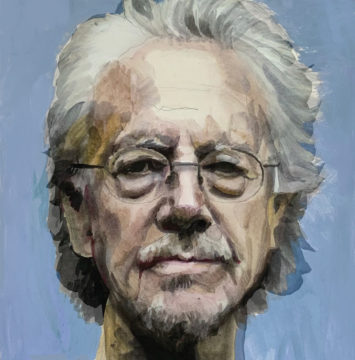 Although Handke first came to prominence as a playwright and novelist of prolific output (he’s the author of dozens of works), he has become much better known for his politics. His support for Serbia in the Balkan Wars of the 1990s, particularly his statements about the genocidal violence committed against Bosnian Muslims, has made him a pariah. A habitual contrarian, Handke embraced his outcast status and offered a bizarre disputation of the facts of the war that struck many as delusional, especially considering that he had only a glancing personal interest in Balkan politics—his mother was Slovenian, a fact he clung to with increasing intensity. In the years that followed, Handke has dug in even deeper. When Slobodan Milošević died in 2006 during his trial for war crimes, Handke spoke at his funeral. Years later, he was feted and decorated by the Serbian government. Despite the support of high-profile writers like Elfriede Jelinek and Karl Ove Knausgaard, his reputation has suffered. When he was awarded the Nobel Prize in Literature in 2019, protest was widespread and one member of the Nobel committee promptly resigned, in part because of his politics.
 The goal of this article is to make a lot of this knowledge accessible to a broad audience. We’ll aim to explain what’s known about the inner workings of these models without resorting to technical jargon or advanced math.
 Let’s get a few things straight to start with. First, higher education as it currently exists is not going anywhere. There are more than
 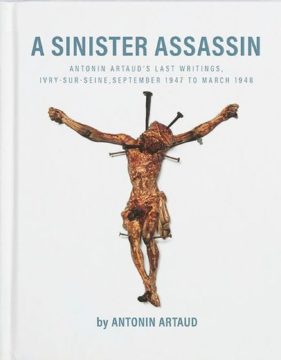 AT THE END of his life, the inveterate surrealist Antonin Artaud returned to his notion of a transformative “Theater of Cruelty.” In February 1948, a month before his death, in a famously banned radio broadcast in Paris entitled To Have Done with the Judgment of God, he proclaimed, “Man is ill because he is badly constructed,” announcing a “body without organs” that “will have delivered him from all his automatisms / and returned him to his true liberty.” Artaud saw this last radio work as a “mini-model” of what a Theater of Cruelty could be. Artaud had just emerged from a horrific, nine-year asylum confinement (lasting from September 1937 to May 1946), and the series of radio works were part of a ferocious taking back of his voice and life.
 Tiny
Tiny  In a marked moment near the opening of Joyland—directed by Saim Sadiq and the first Pakistani film to be shortlisted by the Academy Awards—Haider meets Biba in a hospital in Lahore, looking dazed in a blood-splattered shirt. Though this is the first time they’ve met, we’re given no narration, just Haider’s wide-eyed, fascinated gaze. Later, in an intimate moment in her room, Biba tells Haider more about that night: about seeing her friend, also trans
 Progress in the worlds of nutrition and everyday health has stalled, as has medicine to a more limited degree. We know a few things. You should exercise, avoid smoking, not be fat, and not jump off tall buildings. Besides that, there isn’t much we can tell you with certainty about what to eat and how to live your life.
 In the past 20 years, on economic measures, America has outperformed other rich countries. Over that period, median wages grew by 25%, compared with just 17% in Germany. Managers at Buc-ee’s, a Texas-based chain of stores, can make more than experienced doctors earn in Britain. But on a more fundamental measure of wellness—how long people live—America is falling behind. To its detractors, this is a cause for schadenfreude. “Many people say it is easier to buy a gun than baby formula in the us,” gloated a statement released by the Chinese Ministry of Foreign Affairs last year, which also pointed to declining life expectancy in general. In the past few years, according to some estimates, life expectancy in China overtook that in America. For Americans, that ought to be a more serious source of introspection than it is.