
Flora Graham in Nature:
 Nearly 40% of new cancer cases worldwide are potentially preventable, according to one of the first investigations1 of its kind, which analysed dozens of cancer types in almost 200 countries.
The study found that in 2022, roughly seven million cancer diagnoses were linked to modifiable risk factors — those that can be changed, controlled or managed to reduce the likelihood of developing the disease. Overall, tobacco smoking was the leading contributor to worldwide cancer cases, followed by infections and drinking alcohol. The findings suggest that avoiding such risk factors is “one of the most powerful ways that we can potentially reduce the future cancer burden”, says study co-author Hanna Fink, a cancer epidemiologist at the World Health Organization’s International Agency for Research on Cancer in Lyon, France.
More here.
Enjoying the content on 3QD? Help keep us going by donating now.
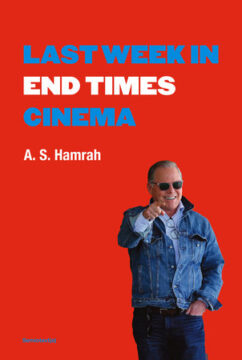 Hamrah’s most recent project was Last Week in End Times Cinema, a weekly newsletter collecting together “pathetic and ridiculous” news stories about the movie business. (True to form, Hamrah blasted these digests out from his EarthLink account rather than bothering with Substack.) Those columns are now available in a separate collection as well. There are dispiriting headlines like “Winnie-the-Pooh: Blood and Honey 2 Ending Explained” and summaries of news stories about Sam Altman, the “eyebrowless CEO of OpenAI,” suggesting “AI might figure out on its own how to stop itself from ending the human race.” Read enough of these missives and it becomes obvious why studio heads were too focused on replacing actors with algorithms to properly market a film like Train Dreams, filing it away in Netflix’s library of slop after a curtailed theatrical release.

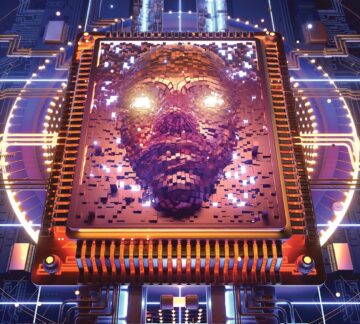 We think the current evidence is clear. By inference to the best explanation — the same reasoning we use in attributing general intelligence to other people — we are observing AGI of a high degree. Machines such as those envisioned by Turing have arrived. Similar arguments have been made before, and have engendered controversy and push-back. Our argument benefits from substantial advances and extra time. As of early 2026, the case for AGI is considerably more clear-cut.
 NEW YORK — A Doberman pinscher named Penny was awarded best in show at the Westminster Kennel Club Dog Show on Tuesday night, the fifth of its breed to take the title of top dog. “You can’t attribute it to one thing, but she’s as great a Doberman as I’ve ever seen,” said her handler, Andy Linton, who previously won best in show 37 years ago and had hoped for a second victory, adding, “I had some goals, and this was one of them.”
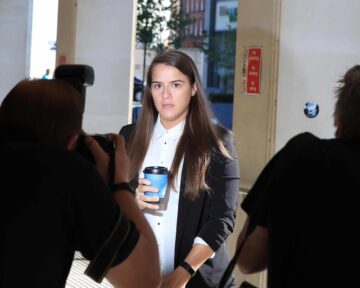 I
I Daniel Kahneman and Amos Tversky’s joint papers from the 1970s and 1980s have inspired many, including myself. These articles magically turned statistical thinking—previously a niche interest—into a major re-search focus. Kahneman and Tversky revived the concept of heuristics, which had largely been forgotten at the time, and played a pivotal role in bringing psychology to the attention of economics and other social sciences. I was also deeply influenced by Tversky’s seminal work on the foundations of measurement, which inspired my first book on modeling.
 On Jan. 28, 2026, President Donald Trump sharply intensified his threats to the Islamic Republic, suggesting that if Tehran did not agree to a set of demands, he could mount an attack “
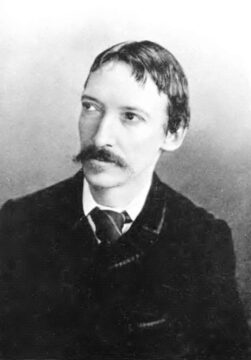 The adventure story and the historical romance were two genres at which Stevenson excelled, but he was also brilliant at the macabre psychological parable in his novella The Strange Case of Dr. Jekyll and Mr. Hyde (1886), and the supernatural in his short story “Thrawn Janet” (1881). The first of these takes on the very “fortress of identity” (in Jekyll’s words) that has so obsessed us of late but turns it into something timeless. Damrosch tells us that the novella caused a furious argument between Stevenson and his wife, in which she comes off better than he does. When Louis read aloud his first draft, as Fanny’s son Lloyd recalled, “Her praise was constrained; the words seemed to come with difficulty; and then all at once she broke out with criticism. He had missed the point, she said; had missed the allegory; had made it merely a story—a magnificent bit of sensationalism—when it should have been a masterpiece.” Damrosch continues, “Fanny’s point was that Louis had ruined the story by turning it into a mere tale about a secret life. . . . What was needed was not just a character wearing a disguise, but something far more profound: a character struggling with a deeper hidden self that breaks loose and fights for supremacy.” Louis resisted, then came around, went back to work, and gave her the masterpiece she wanted. Thereafter, he jokingly referred to her as “the critic on the hearth.”
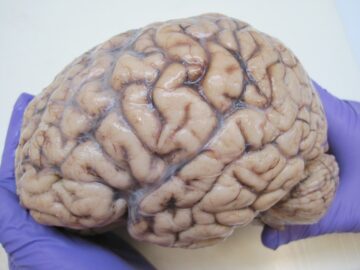 Popular wisdom holds we can ‘rewire’ our brains: after a stroke, after trauma, after learning a new skill, even with
 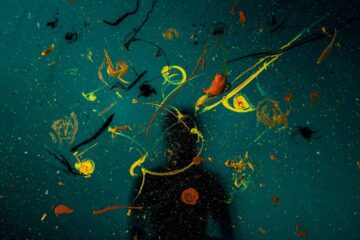 Creativity is a trait that AI critics say is likely to remain the preserve of humans for the foreseeable future. But a large-scale study finds that leading generative language models can now exceed the average human performance on linguistic creativity tests.
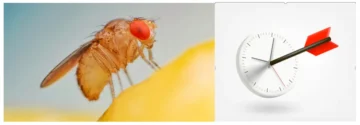 So I was thinking about the old logic problem/koan