
Ville Lähde in Aeon:
 Sometimes words explode. It is a safe bet that, before 2022, you had never even heard the term ‘polycrisis’. Now, there is a very good chance you have run into it; and, if you are engaged in environmental, economic or security issues, you most likely have – you might even have become frustrated with it. First virtually nobody was using polycrisis talk, and suddenly everyone seems to be.
But, as often happens, people seem to mean quite different things with the word. So, what does ‘polycrisis’ mean? The term reverberated at the United Nations Climate Change Conference (COP27) in Sharm El-Sheikh in November 2022, and in Davos the following January, as The New York Times noted. In the Financial Times, Jonathan Derbyshire chose it for his 2022 ‘Year in a Word’ piece, defining ‘polycrisis’ as a collective term for interlocking and simultaneous crises.
More here.
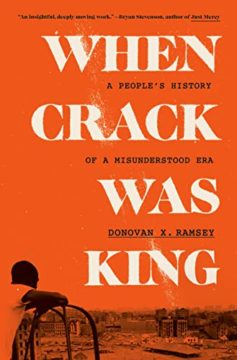 Hiding in plain sight, the largely unexamined crack epidemic of the 1980s and early 1990s has much to teach us about current US drug policy, the blatant racism of drug-related sentencing, and the power of community action. In his important, balanced book
  The tiny forest lives atop an old landfill in the city of Cambridge, Mass. Though it is still a baby, it’s already acting quite a bit older than its actual age, which is just shy of 2. Its aspens are growing at twice the speed normally expected, with fragrant sumac and tulip trees racing to catch up. It has absorbed storm water without washing out, suppressed many weeds and stayed lush throughout last year’s drought. The little forest managed all this because of its enriched soil and density, and despite its diminutive size: 1,400 native shrubs and saplings, thriving in an area roughly the size of a basketball court.

 Advait Arun in Phenomenal World:
 Greg Conti in Compact Magazine:
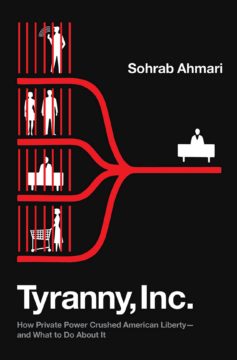 Jodi Dean in LA Review of Books:
 D
D Two pages into his new biography of Harry Smith, the enigmatic anthropologist, underground filmmaker, painter and music collector responsible for the influential “
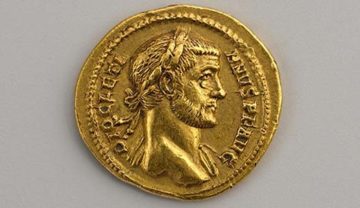 Writing to his uncle from quarantine in Rhodes, a twenty-eight-year-old
  Sixty years ago, in the summer of 1963, a four-story townhouse on West 130th Street in Harlem became the headquarters for what was then the largest civil rights event in American history, the March on Washington for Jobs and Freedom. For one summer the house, a former home for “
 The Moshiach came to Madison Avenue this summer. All over a not particularly Jewish neighborhood, posters of the bearded, Rembrandtesque Rebbe Schneerson appeared, mucilaged to every light post and bearing the caption “Long Live the Lubavitcher Rebbe King Messiah forever!” This was, or ought to have been, trebly astonishing. First, the rebbe being urged to a longer life died in 1994, and the new insistence that he was nonetheless the Moshiach skirted, as his followers tend to do, the question of whether he might remain somehow alive. Second, the very concept of a messiah recapitulates a specific national hope of a small and oft-defeated nation several thousand years ago, and spoke originally to the local Judaean dream of a warrior who would lead his people to victory over the Persians, the Greeks, and, latterly, the Roman colonizers. And, third, the disputes surrounding the rebbe from Crown Heights are strikingly similar to those which surrounded the rebbe Yeshua, or Jesus, when his followers first pressed his claim: was this messianic pretension a horrific blasphemy or a final fulfillment? Yet there it was, another Jewish messiah, on a poster, in 2023.
 Everyone knows about the importance of a good night’s sleep. Researchers have also shown the harmful effects of prolonged