
Pouya Afshar in The Conversation:
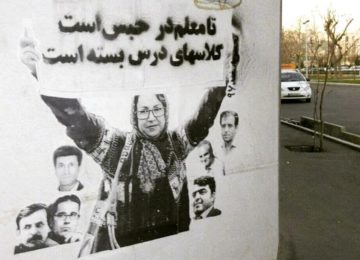 A recent rise in activism in Iran has added a new chapter to the country’s long-standing history of murals and other public art. But as the sentiments being expressed in those works have changed, the government’s view of them has shifted, too.
The ancient Persians, who lived in what is now Iran, adorned their palaces, temples and tombs with intricate wall paintings, showcasing scenes of royal court life, religious rituals and epic tales. Following the 1979 revolution and the Iran-Iraq war, murals in Iran took on a new significance and played a crucial role in shaping the national narrative. These murals became powerful visual representations of the ideals and values of the Islamic Republic. They were used to depict scenes of heroism, martyrdom and religious devotion, aiming to inspire national unity and pride among Iranians.
More here.
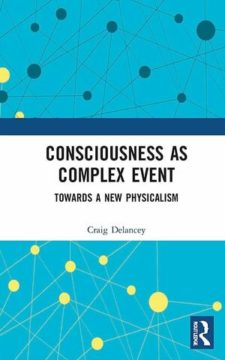 In Consciousness as Complex Event: Towards a New Physicalism, Craig DeLancey argues that what makes conscious (or “phenomenal”) experiences mysterious and seemingly impossible to explain is that they are extremely complex brain events. This is then used to debunk the most influential anti-physicalist arguments, such as the knowledge argument. A new “complexity-based” way of thinking about physicalism is then said to emerge.
 The opening sentence of Jacob Mikanowski’s sweeping history of Eastern Europe—“a place,” he asserts, “that doesn’t exist”—calls to mind a seminal 1983 essay by the recently deceased Czech-French novelist, Milan Kundera. In A Kidnapped West: A Tragedy of Central Europe, Kundera reminded his readers that Poland, Hungary, and Czechoslovakia were historically and culturally closer to the West than to the Soviet East, and should therefore be thought of as central rather than eastern European. Alas, his appeal fell on deaf ears, and the region remains “eastern,” shorthand for a place where, rumor has it, nobody smiles and the smell of burned cabbage wafts through the corridors of charmless, concrete apartment blocks. Indeed, western prejudice was never more in evidence than during the early days of Russia’s invasion of Ukraine, when many commentators painted the war as just another incomprehensible scuffle in the other Europe, among the denizens of lands once obscured by the Iron Curtain.
 An artificial-intelligence system can describe how compounds smell simply by analysing their molecular structures — and its descriptions are often similar to those of trained human sniffers.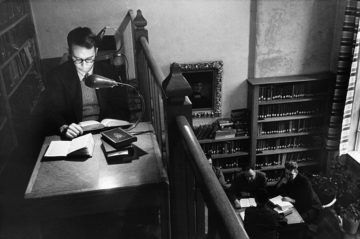
 Over the last year, AI large-language models (LLMs) like
 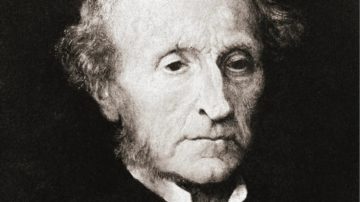 One hundred and fifty years ago, John Stuart Mill died in his home in Avignon. His last words were to his step-daughter, Helen Taylor: “You know that I have done my work.”
 We often think of proteins as immutable 3D sculptures. That’s not quite right. Many proteins are transformers that twist and change their shapes depending on biological needs. One configuration may propagate damaging signals from a stroke or heart attack. Another may block the resulting molecular cascade and limit harm.
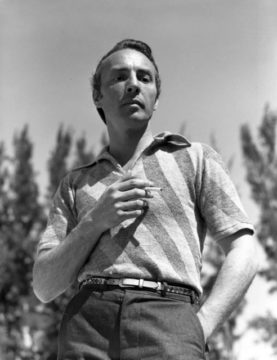 It’s fitting that choreographer George Balanchine is experiencing a cultural moment around the 40th anniversary of his death. In the ephemeral realm of dance, the longevity of his influence is unique and it shows no signs of waning. Balanchine’s ballets—beloved for their sophisticated abstraction and musicality—have become staples of the repertoire for ballet companies in the United States and beyond, and they have been performed more often since his death than during his lifetime. Two institutions jointly founded by Balanchine and impresario Lincoln Kirstein—the New York City Ballet (NYCB) and the School of American Ballet (SAB)—continue to cultivate his artistic legacy on the stages and in the classrooms of Lincoln Center. Among his other accomplishments, Balanchine made The Nutcracker a Christmas classic in the United States, and for many ballet enthusiasts it would be as difficult to conceive of ballet without Balanchine as it would be to spend the holidays without the Mouse King and the Sugar Plum Fairy.
 In March, 1929, when the twenty-four-year-old Chinese American actress
 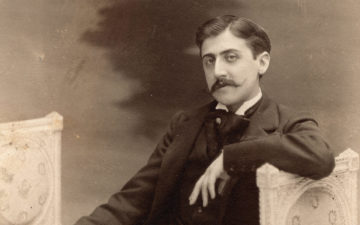 Among the many dolls mentioned in Greta Gerwig’s film Barbie there is one associated with time and memory and literally named after Marcel Proust. It didn’t sell well. Perhaps Mattel got the wrong writer. They could have gone for the same Marcel, but as a comedian, a French, philosophical, disguised partner of Dickens. Critics have been finding Proust funny since 1928—he died in 1922. Christopher Prendergast’s
 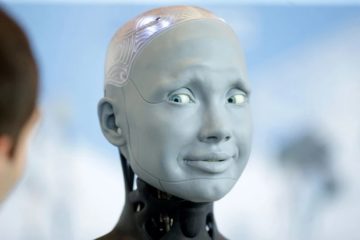 Science fiction has long entertained the idea of artificial intelligence becoming conscious — think of HAL 9000, the supercomputer-turned-villain in the 1968 film 2001: A Space Odyssey. With the rapid progress of artificial intelligence (AI), that possibility is becoming less and less fantastical, and has even been acknowledged by leaders in AI. Last year, for instance, Ilya Sutskever, chief scientist at OpenAI, the company behind the chatbot ChatGPT, tweeted that some of the most cutting-edge AI networks