Eric Hoel in The Intrinsic Perspective:
There’s an unkillable myth that the very definition of the word “consciousness” is somehow so slippery, so bedeviled with problems, that we must first specify what we mean out of ten different notions. When this definitional objection is raised, its implicit point is often—not always, but often—that the people who wish to study consciousness scientifically (or philosophically) are so fundamentally confused they can’t even agree on a definition. And if a definition cannot be agreed upon, we should question whether there is anything to say at all.
Unfortunately, this “argument from undefinability” shows up regularly among a certain set of well-educated people. Just to given an example, there was recently an interesting LessWrong post wherein the writer reported on his attempts to ask people to define consciousness, from a group of:
Mostly academics I met in grad school, in cognitive science, AI, ML, and mathematics.
He found that such people would regularly conflate “consciousness” with things like introspection, purposefulness, pleasure and pain, intelligence, and so on. These sort of conflations being common is my impression as well, as I run into them whenever I have given public talks about the neuroscience of consciousness, and I too have found it most prominent among those with a computer science, math, or tech background. It is especially prominent right now amid AI researchers.
So I am here to say that, at least linguistically, “consciousness” is well-defined, and that this isn’t really a matter of opinion.
More here.

 Italy would be where I would whisk, mix, and knead my way into an idealized self. If I could get there, I would shed my anxious energy and compulsive need for affirmation, my nasty addiction to the cool-mint vape. I would slow down; I would journal. I would become tan and strong from simple pastas. I would eat intuitively — no more take-out burritos in the middle of the night, no more nubby cheeses scrounged from the bowels of the fridge. If I could find a way to go to Italy, I would become a real baker.
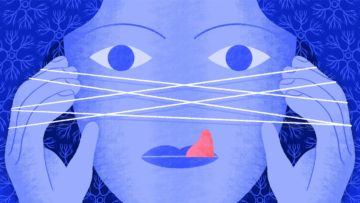 One day, while threading a needle to sew a button, I noticed that my tongue was sticking out. The same thing happened later, as I carefully cut out a photograph. Then another day, as I perched precariously on a ladder painting the window frame of my house, there it was again!
 Smith was not only a great thinker but also a great writer. He was an empirical economist whose sketchy data were
  Halfway through my interview with the co-founder of
 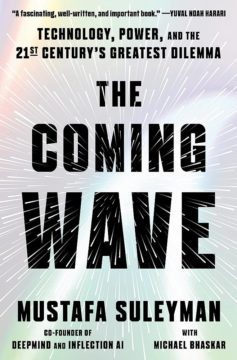 The Coming Wave distils what is about to happen in a forcefully clear way. AI, Suleyman argues, will rapidly reduce the price of achieving any goal. Its astonishing labour-saving and problem-solving capabilities will be available cheaply and to anyone who wants to use them. He memorably calls this “the plummeting cost of power”. If the printing press allowed ordinary people to own books, and the silicon chip put a computer in every home, AI will democratise simply doing things. So, sure, that means getting a virtual assistant to set up a company for you, or using a swarm of builder bots to throw up an extension. Unfortunately, it also means engineering a run on a bank, or creating a deadly virus using a DNA synthesiser.
 In 1947, the Black German musician Fasia Jansen stood on a street in Hamburg and began to sing the music of Brecht in her thick Low German accent to anyone passing by. Perhaps she’d learned the songs from prisoners and internees at Neuengamme, the concentration camp where she’d been forced to work four years earlier. Perhaps she’d learned them in the early days after the war, when she’d performed with Holocaust survivors at a hospital in 1945. One thing was clear: As Jansen wrestled with her trauma, song was at the center of her experience.
 Herman Mark Schwartz in The Syllabus:
 Samuel Moyn in Boston Review:
 In 2012, the mathematician Shinichi Mochizuki claimed he had solved the abc conjecture, a major open question in number theory about the relationship between addition and multiplication. There was just one problem: His proof, which was more than 500 pages long, was completely impenetrable. It relied on a snarl of new definitions, notation, and theories that nearly all mathematicians found impossible to make sense of. Years later, when two mathematicians translated large parts of the proof into more familiar terms, they pointed to what one called a “