
Charlotte Alter in Time Magazine:
 In a neat little neighborhood in Venice, Calif., there’s a block of squat, similar homes, filled with mortals spending their finite days on the planet eating pizza with friends, blowing out candles on birthday cakes, and binging late-night television. Halfway down the street, there’s a cavernous black modern box. This is where Bryan Johnson is working on what he calls “the most significant revolution in the history of Homo sapiens.”
Johnson, 46, is a centimillionaire tech entrepreneur who has spent most of the last three years in pursuit of a singular goal: don’t die. During that time, he’s spent more than $4 million developing a life-extension system called Blueprint, in which he outsources every decision involving his body to a team of doctors, who use data to develop a strict health regimen to reduce what Johnson calls his “biological age.” That system includes downing 111 pills every day, wearing a baseball cap that shoots red light into his scalp, collecting his own stool samples, and sleeping with a tiny jet pack attached to his penis to monitor his nighttime erections. Johnson thinks of any act that accelerates aging—like eating a cookie, or getting less than eight hours of sleep—as an “act of violence.”
More here.
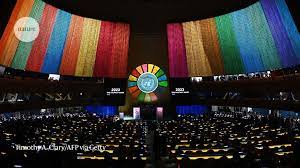 None of the United Nations’ 17 Sustainable Development Goals (SDGs), outlined in 2015, will be met by the self-imposed 2030 deadline. Governments and leaders are better at making promises than at keeping them, scientists have told Nature. However, there are signs that the SDG agenda is having an impact, they say.
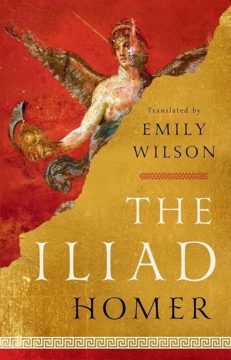 Some three millennia ago, a blind bard whose name in ancient Greek means “hostage” is said to have composed two masterpieces of oral poetry that still speak to us. The Iliad’s subject is death, and the Odyssey’s is survival. Both plumb the male psyche and women’s enthrallment to its bravado. “Tell the old story for our modern times,” Homer entreats his muse, in the Odyssey’s first stanza. The translator Emily Wilson took him at his word. Her radically plainspoken
 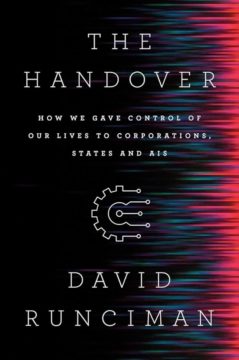 We do not typically think in our everyday interactions with them of states and corporations as vast, powerful, long-lived, non-human ‘intelligences’. But, as Runciman rightly reminds us, the premier theorist of the modern state, Thomas Hobbes, explicitly conceived of it in such terms. A long intellectual tradition, likewise, has emphasised that states and corporations, organised alike through bureaucratic forms that restrict the personal spontaneity of their human components via techniques of abstraction and routinisation, possess peculiar modes of ‘thinking’ that are not quite comparable to the way individual people think. Theorists like Emile Durkheim, Max Weber and Michel Foucault registered, with different degrees of admiration and horror, their recognition that the modern era had witnessed the almost total subsuming of human life, at least in the developed world, into forms imposed on it by these artificial intelligences.
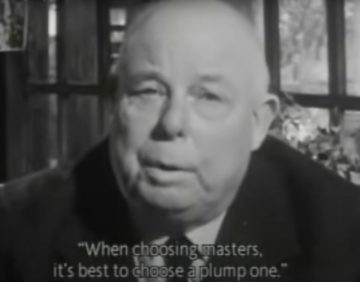 There was a period in my twenties when I found it important to adopt the attitudes and dispositions of a cinephile. I drove to Tower Records on Broadway in Downtown Sacramento, fifteen miles both ways, to rent VHS tapes of the works of F. W. Murnau, Satyajit Ray, Carl Theodor Dreyer. I considered it a great virtue to sit through hours of Stan Brakhage’s abstractions. I was, in truth, deeply bored by Yasujiro Ozu’s quiet people with their little lives, but I took the willingness to endure this boredom likewise as a mark of a special species of virtue — the cinephile virtue. (I have rewatched Ozu in more recent years and have found his work utterly compelling.) I strained to read the Cahiers du Cinéma, barely understanding a word, but loving the adoration those French intellos were willing to shower upon, say, Clint Eastwood, or, in the back catalogue of issues, the love that poured forth from François Truffaut and Jean-Pierre Melville for the most common run of American policiers. It seemed to me that cinephilia, in the particular form it took in the twentieth century, was the most thriving and generous bastion of true humanism, where it was generally understood to be something best expressed in sensibility and attention, rather than in any particular concrete message. No one, I still think, embodied this humanism more fully than Jean Renoir.
 Several countries, including the US, Canada and the UK, have approved new covid-19 booster vaccines, targeting a more recent variant than the boosters used last year. Here is what you need to know.
 It is no longer just our leaders we must fear, but a whole section of the population. The banality of evil, the normalisation of evil is now manifest in our streets, in our classrooms, in very many public spaces. The mainstream press, the hundreds of 24-hour news channels have been harnessed to the cause of fascist majoritarianism. India’s Constitution has been effectively set aside. The Indian Penal Code is being rewritten. If the current regime wins a majority in 2024, it is very likely that we will see a new Constitution.
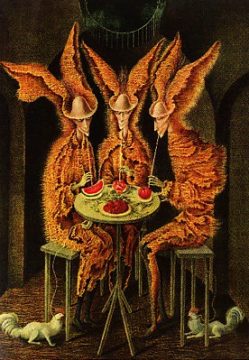 In “Science Fictions,” the Art Institute of Chicago presents more than 60 of Varo’s paintings and drawings, all made between 1955 and 1963, the year she died of a heart attack at 54. Long revered in Latin America, Varo has entered the canon more slowly in the United States. This is her first exhibition here in more than two decades. Like other female Surrealists, especially her friend and fellow émigré Leonora Carrington, who shares a similar animism and mystical iconography, Varo’s achievements are still being measured. This show makes an irrefutable case for her technical mastery while also affirming her as a first-rate fabulist whose disparate influences—chivalric romance, medieval architecture, tarot, psychology, astronomy, and much more—cohere into a visionary whole.
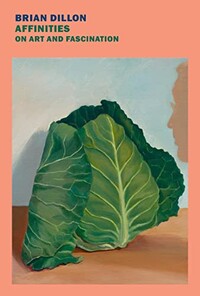 “I found myself frequently using the word affinity,” he writes, “and wondered what I meant by it.” Taken together, the book’s ten “essays on affinity” can be described as a kind of manifesto for an anti-critical criticism. Dillon subjects the word to a familiar array of para-academic procedures. He considers its etymology; its relationship to cognate concepts like fascination, appreciation, sympathy, attraction, the crush; its lowly position in the hierarchy of accepted aesthetic categories; the history of its usage in the discourses of literature, science, and theory; its metaphorical relations to images of, for example, fog and light; its unassimilability to the norms and procedures of scholarship; its noncognitive status as an affective atmosphere or mood. Much like Dillon himself, who supplements his freelance work by teaching creative writing at Queen Mary University of London, “affinity” is perched on a wire between the technical jargon of the English department, where interpretations are advanced and arguments in support of them are defended, and the demotic vocabulary of the social cataloguing site, where an algorithm sorts objects according to their similarities, and users are content to simply “like” them. “When I wrote affinity in a piece of critical prose,” Dillon muses, “perhaps I was trying to point elsewhere, to a realm of the unthought, [the] unthinkable, something unkillable by attitudes or arguments.”
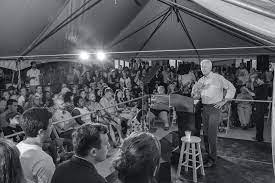 For decades, New Hampshire has generated brisk and gratifying drama with its first-in-the-nation presidential primary. The Granite State momentously destroyed a presidency in 1968, when the Minnesota senator Eugene McCarthy ran against President Lyndon Johnson on an antiwar platform. Johnson had been so confident of his renomination that he had not initially deigned to enter the New Hampshire race, while other leading Democratic politicians, including Robert F. Kennedy Sr., remained aloof, fearful of challenging the president despite his mounting unpopularity during the Vietnam War. Thus, McCarthy was the only major Democrat on the ballot. When the fervor behind his campaign revealed the senator’s surging support, Johnson hurriedly mobilized a write-in effort, which duly yielded him a 50 percent share against McCarthy’s 42—a poor enough showing for a sitting president to embolden Kennedy to enter the race four days later, and for Johnson to announce his retirement from the race two weeks after that. For Joe Biden, the New Hampshire primary’s history is entirely hateful.
 N
N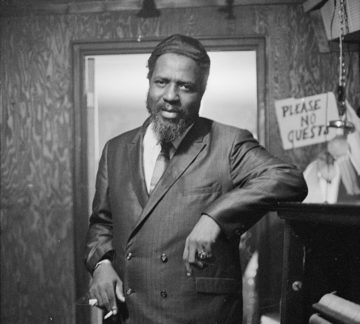 Usually Monk walked. He ambled across the city on feet as light as a tap-dancer. He weaved his way down block after block, whistling, humming, snapping his fingers. Monk liked to take different routes, but most of them led eventually to the Hudson River, where the large man in the strange hat would lean on the railing and watch the lights of the city dance on the black water.
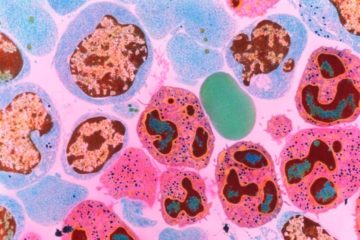 The average adult male has around 36 trillion cells in their body, while average adult females have 28 trillion, researchers have found. Unexpectedly, the mass of small cells in our bodies, such as blood cells, is roughly the same as that of large ones such as muscle cells – a finding that has puzzled researchers.
 Madness in gigantic proportions. That’s how Austrian writer Stefan Zweig described Germany in the 1920s. Between French re-occupation, communist and fascist putsches, regional separatist movements, mass migration from Eastern Europe, and the popular introduction of television and radio, there was also the main event: hyperinflation. After World War I, the dollar-to-mark currency exchange rate was thirteen and a half. Less than five years later, it would reach into the trillions. When you ordered a half-glass of water, so the joke went, it would cost you a hundred thousand marks. By the time it was poured, it would cost two-hundred thousand. And without a stable financial value, all other values—moral, political, artistic—seemed to lose their footing. Vice became indulgence. Reality took on a dream-like quality. In response, the country became a seance. It begged for a voice from the deep to make sense of what was happening. And eventually that voice spoke.
 The previous week, I’d traveled with two of these American friends, both philosophers, Steven and Morgan, from Berlin to Hamburg to Lübeck because, again, why not. We ate chicken tikka on jacket potatoes at outdoor tables overlooking the warehouses near the city gates used as the abandoned building where Nosferatu lives in Murnau’s classic 1922 film. Just as I’d lined up my shot in my best imitation Expressionist light, with the setting sun pouring through a keyhole shape in the building, a paddle-boarder glided into the frame to ruin the picture, a 10/10 German prank on a film location tourist.