
Jo Livingstone in Book Forum:
 AMONG THE OLDEST REFERENCES to menstruation in literature is in the book of Genesis, in a story about a lie. Rachel stole her father’s household gods, it goes, and when he came to retrieve them, she threw a covering over the objects and sat on it. She couldn’t stand, she apologized to her father, because she was in “the way of women.” At the end of the sixteenth century, an English clergyman clarified in his guide to Genesis that Rachel wasn’t pretending to be incapable of standing, just uncomfortable, due to her “monethly custome,” an ancestor to our contemporary “period.” As Jenni Nuttall explains in her new book Mother Tongue: The Surprising History of Women’s Words, “period” has been in use to name a quantity of time since the Middle Ages, but “only at the end of the seventeenth century”—so, a little after the clergyman’s time—“does the phrase ‘monthly period’ appear in medical books as a name for menstruation.”
More here.
 In an
In an 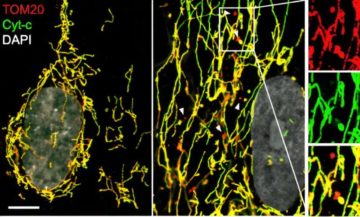 How we grow old gracefully—and whether we can do anything to slow down the process—has long been a fascination of humanity. However, despite continued research the answer to how we can successfully combat aging still remains elusive.
 Over the last several decades, the rates of new cases of lung cancer have fallen in the United States. There were roughly 65
 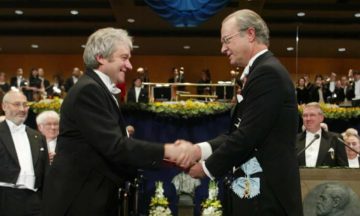 The prize changed our lives. It is the one scientific prize everyone knows. Suddenly you become a public figure being asked to do all sorts of things: to give lectures, quite often on topics you know little about; to sit on committees and reviews you are not always well qualified to be on; to visit countries you have barely heard of; to sign endless petitions on what are probably good causes, but you never know. It is like having a whole new extra job, with upwards of 500 requests a year. It is
  I have for years been an evangelist for Fosse, who
 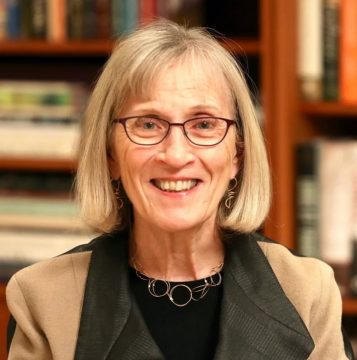 The 2023 Econ Nobel
 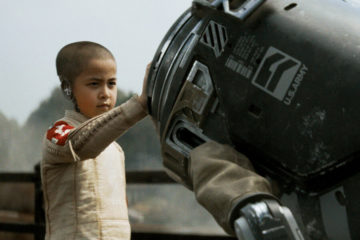 Humans are at war with machines. In the near future, an artificial intelligence defense system detonates a nuclear warhead in Los Angeles. It deploys a formidable army of robots, some of which resemble people. Yet humans still have a shot at victory. So a supersoldier is dispatched on a mission to find the youth who will one day turn the tide in the war.
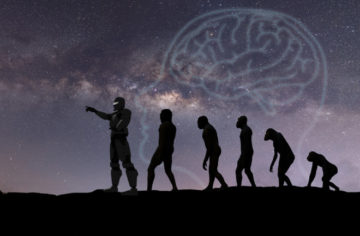 Since Darwin revealed his seminal theory of evolution by natural selection, human beings have endeavored to understand their own evolutionary origins and history. A lot of questions still remain, but these mainly pertain to the specifics. Today, paleoanthropologists understand in great detail the evolutionary emergence of a number of traits that we consider, at least superficially, unique to modern humans.
 Are we living in a simulation? It’s a trippy idea that has inspired many classic tales, from Plato’s Allegory of the Cave to The Matrix franchise, but it is also increasingly becoming a subject of genuine scientific debate and inquiry.
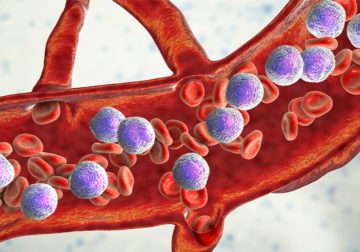 In solid cancers, cellular behaviors such as motility and invasiveness are well characterized contributors to poor prognosis and cancer spread. Scientists pay close attention to a process called
  SINCE RUSSIA’S FULL-SCALE INVASION of Ukraine in February 2022, Ukrainian cultural figures have been grappling with Theodor Adorno’s declaration: “To write poetry after Auschwitz is barbaric.” After the massacre at Bucha, the siege of Mariupol, and the seemingly endless stream of war crimes revealed every time a Ukrainian hamlet is liberated, artists, musicians, and writers are left wondering if they can possibly create something meaningful out of the barbarism—and, perhaps more pertinently, if they should. Theater critic John Freedman’s new anthology A Dictionary of Emotions in a Time of War: 20 Short Works by Ukrainian Playwrights is a response to this question.
 For more than a century, researchers have known that people are generally very good at eyeballing quantities of four or fewer items. But performance at sizing up numbers drops markedly — becoming slower and more prone to error — in the face of larger numbers.
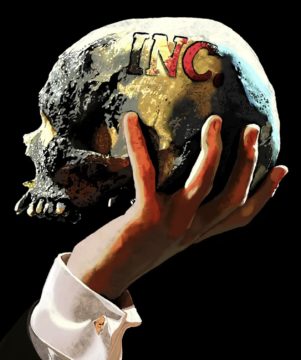 The parting gift, I expect, of the bankrupt liberalism of the Democratic Party will be a Christianized fascist state. The
 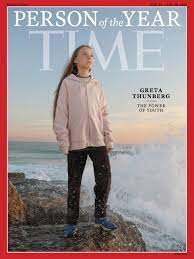 The 20-year-old has become one of the world’s best-known campaigners against climate change. She first learned about climate change when she was eight. At the age of 11 or 12, she started suffering from depression, according to her father, Svante: “She stopped talking… she stopped going to school,” he said. Around the same time she was diagnosed with Asperger’s syndrome, a form of autism.
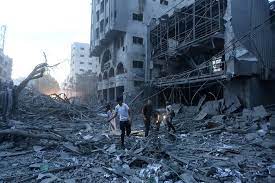 Hamas’ attack on Israel this weekend—including the indiscriminate murder of Israelis—has led to a spiraling of an already dire situation in the region. The recent declaration of war, and the subsequent military actions in Gaza, has set off a crisis in an already calamitous conflict, particularly for the 2 million Gazans—half of whom are children—who have been living in one of the mostly densely populated places on Earth. The