
Robert Archambeau at The Hudson Review:
 He constructed something else to go along with his literary life, too: he created a persona, what we might almost call a carapace. In an academic career that took him on what he called “many years of pilgrimage over the academic map,” from Smith to Bard to Rochester to Georgetown, he adopted the dress and mannerisms of an English gentleman, perhaps in response to what he called the “covert anti-semitism” in some of the departments in which he taught. Beginning his career at a time when creative writers were still viewed with some suspicion by their more conventionally trained colleagues, Hecht compensated by becoming what Yezzi calls “the very model of a modern literature professor: bearded, tweedy, pensive, reserved.” Hecht gravitated to teaching Shakespeare more than creative writing. While his love of Shakespeare was deep-seated, it was also an important part of this process of self-creation. “Nothing could be more canonical” than Shakespeare, Yezzi writes, nothing “more revered and accepted on both intellectual and aesthetic grounds.”
more here.
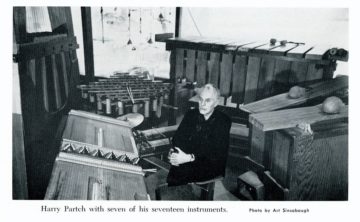 In winter 1940, beside a highway in the California desert, a reedy man bends down for a closer look at the road’s guardrail, where someone has scribbled graffiti: It’s January twenty-six. I’m freezing. Going home. I’m hungry and broke. I wish I was dead. But today I am a man … The onlooker feels a pang of recognition. He can hear these words in his head—the beginnings of another song.
 Luca Giomi
 Of all the culprits that make it harder for Americans to afford and access
  For someone working in the culture industries, the only thing worse than having the wrong position on a political controversy is having no position at all. Today’s artists are the high priests of the secular middle classes, with cathedrals (art galleries) in every major city. In recent years, rather than defend free expression and the exploration of
 W
W Adam Sisman presents this new book on John le Carré as a ‘secret annexe’ to his earlier biography of the author. Its subject is the women in le Carré’s life – the ones the novelist didn’t marry, that is, but to whom he repeatedly offered the secret parts of himself, which the ones he did marry almost never got to see. It’s only a slim volume, but, as we are so often told, size doesn’t matter if a fellow knows what he is doing. As one of le Carré’s women myself, I feel in a position to take a view.
 Before the pandemic,
  Desaire and her colleagues first described their ChatGPT detector in June, when they applied it to Perspective articles from the journal Science
 There is an outdated idea that science and art are polar opposites. That science, associated with the left brain hemisphere, is logical, structured, whereas art, the domain of the right hemisphere is soft, intuitive, creative, guided by practiced judgement and innate skill. Of course, any neuro-scientist will tell you that the distinction between “right and left brain thinking” is a myth, that both sides are equally important in thinking through a math problem and painting a picture.
 These are good times to be a thinking, conscious creature, despite events in the world that might make us doubt that. These are even better times to be a creature who thinks about consciousness: the scientific debate is livelier than ever, and technological advances and political controversies are making the practical and philosophical questions surrounding consciousness ever more pressing. Will artificial intelligence (AI) become conscious? (Or maybe it already is…? Well, no, I would say, but we’ll get to that later.) Can state-of-the-art algorithms manipulate our consciousness to change our view of the world? Which animals, besides humans, are conscious? What about fetuses? Or artificial neural organoids?
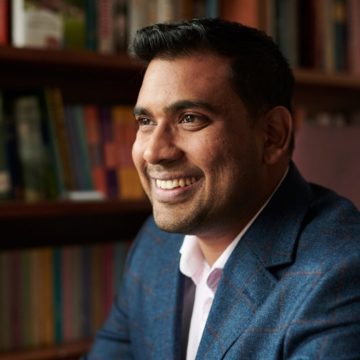 A “Theory of Everything” is physicists’ somewhat tongue-in-cheek phrase for a hypothetical model of all the fundamental physical interactions. Of course, even if we had such a theory, it would tell us nothing new about higher-level emergent phenomena, all the way up to human behavior and society. Can we even imagine a “Theory of Everyone,” providing basic organizing principles for society? Michael Muthukrishna believes we can, and indeed that we can see the outlines of such a theory emerging, based on the relationships of people to each other and to the physical resources available.
 In a cat’s world, where smells are paramount, it must be a bewildering experience when they first hear a person speak. So many different, unfamiliar sounds directed either at another person or, even more perplexingly, at the cat. Humans are very preoccupied with the spoken word, babbling away at everyone and everything we meet. Intrigued as to what their “spoken” sounds mean, we have developed something of a fascination with the vocalizations of cats too. Nestled deep in the history books, a diary entry by the Abbé Galiani of Naples, dated March 21, 1772, offers some of the earliest recorded insights into cat vocalizations.
 After Betty Friedan got her Smith College classmates to complete a questionnaire about their lives at their 15th reunion in 1957, she immediately grasped the significance of their responses. Many of the highly educated women felt trapped by midcentury America’s constrictive domestic ideals, unfulfilled by the roles of housewife and mother. Friedan, a freelance writer and a wife and mother herself, was unable to interest any magazines in publishing her findings. She instead embarked on writing “The Feminine Mystique,” the explosive and groundbreaking book whose 1963 publication turned its author into a celebrity and, more significantly, is credited with igniting the second wave of the feminist movement.