
Category: Recommended Reading
After Melville
Andrew Shenker at The Baffler:
 EVERYONE FINDS the Melville they want.
Writing in 2005, Andrew Delbanco observed, in his critical biography Melville: His World and Work, that the author of Moby-Dick “seems to renew himself for each new generation.” Since the mid-twentieth century, Delbanco notes, “there has been a steady stream of new Melvilles, all of whom seem somehow able to keep up with the preoccupations of the moment.” He lists a few:
myth-and-symbol Melville
countercultural Melville
anti-war Melville
environmentalist Melville
gay or bisexual Melville
multicultural Melville
global Melville
And then there’s his deathless creation, Ahab, the man who, per Elizabeth Hardwick, “has no ancestor in literature other than all of literature.” Inspired in part, Delbanco speculates, by former vice president and staunch slavery defender John C. Calhoun, the Pequod’s monomaniacal commander has been likened to everyone from Hitler to the nuclear scientists responsible for the atomic bomb to, inevitably, Donald Trump. (Unless, in a reading popular in right-wing media, Trump is actually the white whale and the Democrats who impeached him are Ahab.)
more here.
Wednesday Poem
When One Has Lived A Long Time Alone
1.
When one has lived a long time alone,
one refrains from swatting the fly
and lets him go, and one hesitates to strike
the mosquito, though more than willing to slap
the flesh under her, and one lifts the toad
from the pit too deep to hop out of
and carries him to the grass, without minding
the poisoned urine he slicks his body with,
and one envelopes, in a towel, the swift
who fell down the chimney and knocks herself
against the window glass and releases her outside
and watches her fly free, a life line flung at reality,
when one has lived a long time alone.
by Galway Kinnell
from When One Has Lived a Long Time Alone
Alfred A, Knoph, New York, 2003
Entire 11 stanza’s: here
‘Breakthrough’ CRISPR Treatment Slashes Cholesterol in First Human Clinical Trial
Shelly Fan in Singularity Hub:
 CRISPR-based therapies just hit another milestone. In a small clinical trial with 10 people genetically prone to dangerously high levels of cholesterol, a single infusion of the precision gene editor slashed the artery-clogging fat by up to 55 percent. If all goes well, the one-shot treatment could last a lifetime.
The trial, led by Verve Therapeutics, is the first to explore CRISPR for a chronic disease that’s usually managed with decades of daily pills. It also marks the first use of a newer class of gene editors directly in humans. Called base editing, the technology is more precise—and potentially safer—than the original set of CRISPR tools. The new treatment, VERVE-101, uses a base editor to disable a gene encoding a liver protein that regulates cholesterol.
To be clear, these results are just a sneak peek into the trial, which was designed to test for safety, rather than the treatment’s efficacy. Not all participants responded well. Two people suffered severe heart issues, with one case potentially related to the treatment. Nevertheless, “it is a breakthrough to have shown in humans that in vivo [in the body] base editing works efficiently in the liver,” Dr. Gerald Schwank at the University of Zurich, who wasn’t involved in the trial, told Science.
More here.
Justice for the Palestinians and Security for Israel
Bernie Sanders in The New York Times:
 There have been five wars in the last 15 years between Israel and Hamas. How do we end the current one and prevent a sixth from happening, sooner or later? How do we balance our desire to stop the fighting with the need to address the roots of the conflict? For 75 years, diplomats, well-intentioned Israelis and Palestinians and government leaders around the world have struggled to bring peace to this region. In that time an Egyptian president and an Israeli prime minister were assassinated by extremists for their efforts to end the violence.
And on and on it goes.
For those of us who want not only to bring this war to end, but to avoid a future one, we must first be cleareyed about facts. On Oct. 7, Hamas, a terrorist organization, unleashed a barbaric attack against Israel, killing about 1,200 innocent men, women and children, and taking more than 200 hostages. On a per-capita basis, if Israel had the same population as the United States, that attack would have been the equivalent of nearly 40,000 deaths, more than 10 times the fatalities that we suffered on 9/11.
Israel, in response, under the leadership of its right-wing prime minister, Benjamin Netanyahu, who is under indictment for corruption and whose cabinet includes outright racists, unleashed what amounts to total war against the Palestinian people. In Gaza, over 1.6 million Palestinians were forced out of their homes. Food, water, medical supplies and fuel were cut off. The United Nations estimates that 45 percent of the housing units in Gaza have been damaged or destroyed. According to the Gaza health ministry, more than 12,000 Palestinians, about half of whom are children, have been killed and many more wounded. And the situation becomes more dire every day.
More here.
Tuesday, November 21, 2023
OpenAI Total Chaos
Anna Cassel’s Prescient Paintings
Johanna Fateman at Bookforum:
IN 1912, THE SWEDISH ARTIST-CLAIRVOYANT Anna Cassel recorded the following message, crystal-clear instructions from a spirit guide, in her diary: “First, allow yourself to have dreams and then visions and colors and numbers, letters and images. Make a careful note of everything. It is of utmost importance to be thorough in your description.” Cassel was a lifelong friend of the spiritualist painter Hilma af Klint (and very likely more than a friend, for a time), as well as a close collaborator. In af Klint’s notebooks, Cassel’s group of 144 enthralling small paintings, her dutifully thorough description of a primordial story, transmitted to her from the astral plane, is referred to as “The Saga of the Rose.” The cycle was meant to serve as both a prayer book for the artists’ devout Christian-occult community (whose all-women initiates totaled just thirteen) and a history of the world. Discovered in the archive of the Swedish Anthroposophical Society in 2021, the sacred illustrations are reproduced in this solemnly beautiful clothbound book, its hushed design aligning with Cassel’s glyphic and celestial compositions. Fastidious and fervent, aware of trends in painting and Modernist decorative arts, Cassel favored botanically inspired lines, distilled geometries, and a crepuscular-or-witching hour palette to capture the strange wind and cold light of a particular metaphysical space.
more here.
Kurt Vonnegut’s House Is Not Haunted
Sophie Kemp at The Paris Review:
 In August, I decided to drive to the house for the first time. I did this with my father, because he was the one who gave me Slaughterhouse-Five, and also because he’s now semi-retired and agreed in advance that it would be “funny,” and “cool,” to accompany his twenty-seven-year-old daughter on a “reporting trip” four miles down the road from his house. “Did you know he lived in Schenectady before you moved here?” I asked my father. “No, I don’t think so,” he responded. Out the window: my former elementary school and preschool, the Chinese Fellowship Bible Church, anonymous corporate campuses, new housing developments that when I was a kid were huge, empty fields.
Vonnegut’s house, which I found by googling “Vonnegut’s house Schenectady NY,” is set directly overlooking Alplaus Creek, on a quiet side street. It is kind of in the woods. Lots of big trees on the street. The houses are old but not old. None of them are big. A few of them have big campers and ATVs out front, and the occasional snow mobile. Old cowboy boots used as planters and wind chimes. Vonnegut’s house is red, slightly set back from the road. It has seen better days, but it is kind of charmingly shabby, overgrown with plants spilling out of the gutters.
more here.
Tuesday Poem
Failing and Flying
Everyone forgets that Icarus also flew.
It’s the same when love comes to an end,
or the marriage fails and people say
they knew it was a mistake, that everybody
said it would never work. That she was
old enough to know better. But anything
worth doing is worth doing badly.
Like being there by that summer ocean
on the other side of the island while
love was fading out of her, the stars
burning so extravagantly those nights that
anyone could tell you they would never last.
Every morning she was asleep in my bed
like a visitation, the gentleness in her
like antelope standing in the dawn mist.
Each afternoon I watched her coming back
through the hot stoney field after swimming,
the sea light behind her and the huge sky
on the other side of that. Listened to her
while we ate lunch. How can they say
the marriage had failed? Like the people who
came back from Provence (when it was Provence)
and said it was pretty but the food was greasy.
I believe Icarus was not failing as he fell,
but just coming to the end of his triumph.
by Jack Gilbert
from Open Field-Poems from Group 18
Open Field Press, Northampton Ma. 2011
How ideas made Derek Parfit
Paul Nedelisky in The Hedgehog Review:
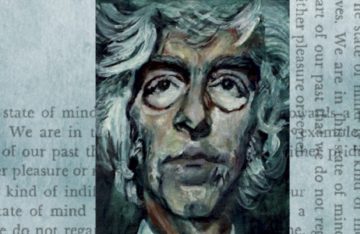 In 2007, the American philosopher Susan Hurley was dying of cancer. Twenty years earlier, she had been the first female fellow of All Souls College, Oxford. While there, she had been romantically involved with her philosopher colleague Derek Parfit. The romance faded but had turned into a deep friendship. Now, aware of her terminal illness, Hurley journeyed back to Oxford to say goodbye. Hurley and a mutual friend, Bill Ewald, asked Parfit to go to dinner with them. Parfit—by then an esteemed ethicist—refused to join them, protesting that he was too busy with his book manuscript, which concerned “what matters.” Saddened but undeterred, Hurley and Ewald stopped by Parfit’s rooms after dinner so that Hurley could still make her goodbye. Shockingly, Parfit showed them the door, again insisting that he could not spare the time. In truth, he was under no imminent or unalterable deadline. And even if he were, what is a few hours’ tardiness on a deadline compared to a final parting with an old friend? Was this man Parfit some kind of sociopath? Was this perhaps one of those rare but nevertheless possible momentary lapses of moral judgment? Or was he simply a wicked man?
More here.
How Laws Evolved by Natural Selection
Peter DeScioli in Psychology Today:
 Laws may seem unlikely to come from evolution. There are so many laws, and they differ so much across societies. This variation shows that natural selection did not install a single code of laws in the human mind. We do not have 10 commandments, or five or 20, etched into our minds, or else we would see the same code of laws repeated in society after society.
But does this mean that human evolution has little to tell us about the origin of laws? Not at all. To see why, just compare laws to tools. Humans make countless tools, and tools vary tremendously across societies. Yet, it is well-understood that humans evolved adaptations to make and use tools. The human mind does not have a fixed set of blueprints for 10 or 20 tools.
More here.
Steven Weinberg and Richard Dawkins in Conversation, from 2008
A President’s Council on Artificial Intelligence
M. Anthony Mills in The New Atlantis:
 Last month, President Joe Biden issued an executive order on artificial intelligence. Among the longest in recent decades and encompassing directives to dozens of federal agencies and certain companies, the order is a decidedly mixed bag. It shrinks back from the most aggressive proposals for federal intervention but leaves plenty for proponents of limited government to fret about. For instance, the order invokes the Defense Production Act — a law designed to assist private industry in providing necessary resources during a national security crisis — to regulate an emerging technology. This surely strains the law’s intent, not to mention allowing the executive branch to circumvent Congress.
Setting aside the merits or demerits of the order itself, however, it is worth stepping back to consider what this move by the White House tells us about the politics of AI — and in particular what it leaves out.
More here.
Why Do Evil and Suffering Exist? Religion Has One Answer, Literature Another
Ayana Mathis in The New York Times:
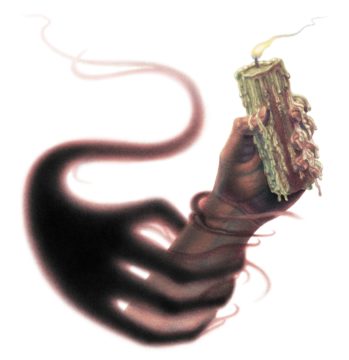 In the church of my childhood, we believed God’s angels battled demons in a war for our souls. This was not a metaphor. We were Pentecostals, though not strictly and not always. We weren’t picky about denomination; what mattered was belief in the redeeming blood of Christ, in the Bible literally interpreted and in God’s endless love. And evil. We believed in evil.
Sometimes evil was obvious — lies, betrayals, the misfortunes of innocents — but just as often it was camouflaged and seductive. It lurked in the card game, in the pop song and on the movie screen. It was in the allure of those things prohibited by religious or moral standards. The world was sunk in an evil passed down through Adam and Eve’s original sin and their fall from Eden.
I long ago abandoned this version of reality, but the questions it meant to address persist: Are the sensational evils that continue to plague us — murder and torture and its ilk — an expression of a (metaphorically) fallen world? Why these wars and more wars, these repeating atrocities of every stripe? How do we navigate a world beset by dark forces, and what do we do in the face of the suffering they cause?
More here.
At 33, I knew everything. At 69, I know something much more important
Anne Lamott in The Washington Post:
 In many of Albert Bierstadt’s Western paintings, there is a darkness on one side, maybe a mountain or its shadow. Then toward the middle, animals graze or drink from a lake or stream. And then at the far right or in the sky, splashes of light lie like shawls across the shoulders of the mountains. The great darkness says to me what I often say to heartbroken friends — “I don’t know.”
Is there meaning in the Maine shootings?
I don’t know. Not yet.
My white-haired husband said on our first date seven years ago that “I don’t know” is the portal to the richness inside us. This insight was one reason I agreed to a second date (along with his beautiful hands). It was a game-changer. Twenty years earlier, when my brothers and I were trying to take care of our mother in her apartment when she first had Alzheimer’s, we cried out to her gerontology nurse, “We don’t know if she can stay here, how to help her take her meds, how to get her to eat better since she forgets.” And the nurse said gently, “How could you know?”
This literally had not crossed our minds. We just thought we were incompetent. In the shadow of the mountain of our mother’s decline, we hardly knew where to begin. So we started where we were, in the not knowing.
More here.
Sunday, November 19, 2023
What the Doomsayers Get Wrong About Deepfakes
Daniel Immerwahr in The New Yorker:
 There’s a video of Gal Gadot having sex with her stepbrother on the internet.” With that sentence, written by the journalist Samantha Cole for the tech site Motherboard in December, 2017, a queasy new chapter in our cultural history opened. A programmer calling himself “deepfakes” told Cole that he’d used artificial intelligence to insert Gadot’s face into a pornographic video. And he’d made others: clips altered to feature Aubrey Plaza, Scarlett Johansson, Maisie Williams, and Taylor Swift.
A.S. Byatt (1936 – 2023) Critic, Novelist, Poet
Don Walsh (1931 – 2023) Oceanographer, Deep Sea Explorer
George Brown (1949 – 2023) Kool And The Gang Drummer
The Astonishing Behavior of Recursive Sequences
Alex Stone in Quanta Magazine:
 In mathematics, simple rules can unlock universes of complexity and beauty. Take the famous Fibonacci sequence, which is defined as follows: It begins with 1 and 1, and each subsequent number is the sum of the previous two. The first few numbers are:
1, 1, 2, 3, 5, 8, 13, 21, 34 …
Simple, yes, but this unassuming recipe gives rise to a pattern of far-reaching significance, one that appears to be woven into the very fabric of the natural world. It’s seen in the whorls of nautilus shells, the bones in our fingers, and the arrangement of leaves on tree branches. Its mathematical reach extends to geometry, algebra and probability, among other areas. Eight centuries since the sequence was introduced to the West — Indian mathematicians studied it long before Fibonacci — the numbers continue to attract the interest of researchers, a testament to how much mathematical depth can underlie even the most elementary number sequence.
More here.