
Leon Vlieger in The Inquisitive Biologist:
 The road to hell might be paved with good intentions, but the roads to pretty much everywhere else are paved with the corpses of animals. In Crossings, environmental journalist Ben Goldfarb explores the outsized yet underappreciated impacts of the, by one estimate, 65 million kilometres of roads that hold the planet in a paved stranglehold. These extend beyond roadkill to numerous other insidious biological effects. The relatively young discipline of road ecology tries to gauge and mitigate them and sees biologists join forces with engineers and roadbuilders. This is a wide-ranging and eye-opening survey of the situation in the USA and various other countries.
More here.
 F
F
 University administrators faced with the challenge of responding to the various (and opposed) constituencies invested in the Hamas-Israel war have come up with a number of strategies.
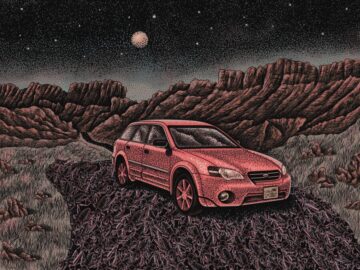 At twenty-six, in 2006, the year before the iPhone launched, I found myself driving a red Subaru Outback—the color was technically “claret metallic,” the friend who’d lent me the car had told me, in case I ever wanted to touch up the paint—on Highway 12 in Utah. I was heading to the East Bay after a painful breakup in New York. I remember, wrongly, that I was listening to a book on tape, a work by a prominent linguist, as I moved through the alien landscape, jagged formations of red rock towering against a cloudless sky.
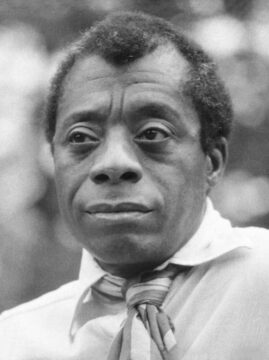
 Ignacio Silva Neira in Phenomenal World:
 T
T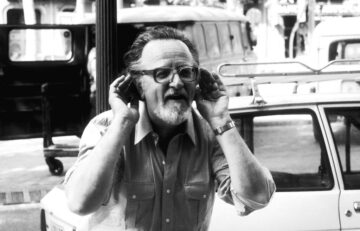 The Latin American Boom of the 1960s and ‘70s is associated with some of contemporary Spanish-language literature’s most towering figures, among them Julio Cortázar, Carlos Fuentes, Mario Vargas Llosa, and Gabriel García Márquez. But of all the
 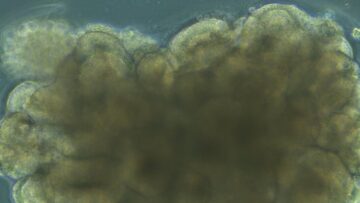 A tiny ball of brain cells hums with activity as it sits atop an array of electrodes. For two days, it receives a pattern of electrical zaps, each stimulation encoding the speech peculiarities of eight people. By day three, it can discriminate between speakers. Dubbed Brainoware, the system raises the bar for biocomputing by tapping into 3D brain organoids, or “mini-brains.” These models, usually grown from human stem cells, rapidly expand into a variety of neurons knitted into neural networks.
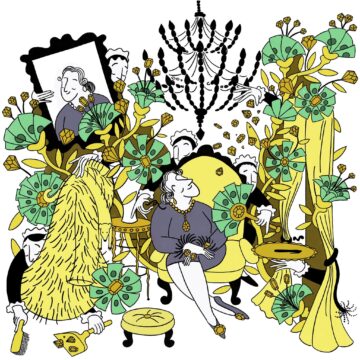 “Class consciousness takes a vacation while we’re in the thrall of this book,” Barbara Grizzuti Harrison
 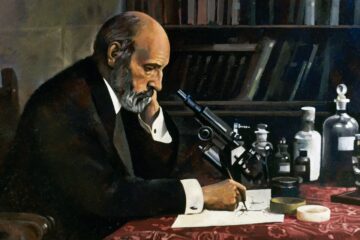 Sometimes when I’m looking out across the northern meadow of Brooklyn’s Prospect Park, or even the concrete parking lot outside my office window, I wonder if someone like Shakespeare or Emily Dickinson could have taken in the same view and seen more. I don’t mean making out blurry details or more objects in the scene. But through the lens of their minds, could they encounter the exact same world as me and yet have a richer experience? One way to answer that question, at least as a thought experiment, could be to compare the electrical activity inside our brains while gazing out upon the same scene, and running some statistical analysis designed to actually tell us whose brain activity indicates more richness. But that’s just a loopy thought experiment, right?
 “Earthrise, that iconic photograph