
Sophie McBain at The New Statesman:
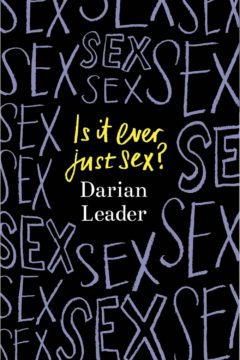 It is said that psychoanalysts see sex in everything, attributing any number of problems to unconscious sexual desires, but the British Lacanian psychoanalyst Darian Leader wonders if such desires are themselves cover for other motivations. As he puts it, what are we “actually doing when we are doing sex?” (“Doing” sex?) Urban legend has it that men think about sex every seven seconds; researchers have ascertained it’s more like every hour and a half – but even then, are sexy thoughts a diversion from other, unhappier ones? This might explain, for example, why porn use surges on a Sunday night and Monday, when we confront the work stress we’ve set aside for the weekend.
While we tend to view sexual desire as a primal instinct to be tamed by society, our desires and how we express them are shaped by culture. Nor, as much as we might want to have no-strings-attached sex, is it possible to separate our sex lives from our emotional lives.
more here.
 Three versions of Gemini have been created for different applications, called Nano, Pro and Ultra, which increase in size and capability. Google declined to answer questions on the size of Pro and Ultra, the number of parameters they include or the scale or source of their training data. But its smallest version, Nano, which is designed to run locally on smartphones, is actually two models: one for slower phones that has 1.8 billion parameters and one for more powerful devices that has 3.25 billion parameters. Comparing the capabilities of AI models is an inexact science, but GPT-4 is rumoured to include up to 1.7 trillion parameters and Meta’s
  WHEN I DISCOVERED the field of philosophy at roughly the age of 17, I was seduced by its abstraction from—or its abstraction away from, as the late philosopher Charles W. Mills would put it—the world of nonideal theory; of harmful immigration policy; of pain and suffering; of racism, anti-Blackness, sexism, femicide, classism, genocide, oppression, poverty, xenophobia, transphobia, white domination, ableist normativity. I’m sure that this is partly why I fell in love with Plato, especially his theory of Forms, which holds that ordinary physical objects are mere appearances—images, shadows—that don’t provide us with true knowledge but with opinion only. It was the immutability of the Forms that transfixed my attention, not the contingent suffering of Plato’s teacher, Socrates, condemned to death by drinking hemlock for being a gadfly. The implication was that, as a philosopher, I had to transcend the messiness of empirical reality, had to stay focused on and seek out capital-R Reality through conceptual abstraction.
 CRISPR has a problem: an embarrassment of riches.
 T
T In his memoir
  Despite worries about the ethics and safety of AI, the military is betting big on artificial intelligence. The U.S. Department of Defense has requested $1.8 billion for AI and machine learning in 2024, on top of $1.4 billion for a specific initiative that will use AI to link vehicles, sensors, and people scattered across the world. “The U.S. has stated a very active interest in integrating AI across all warfighting functions,” said Benjamin Boudreaux, a policy researcher at the RAND Corporation and co-author of a
 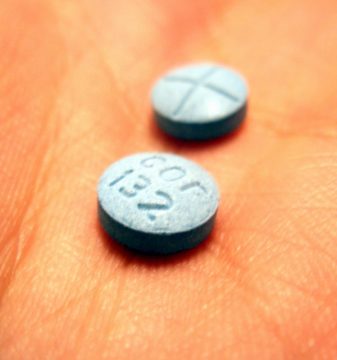 Americans can’t find enough Adderall. In 2021 pharmacists filled
  Although Wiman is among the most distinguished Christian writers of his generation, he is uncomfortable with the word “miracle.” But he doesn’t have an alternative description for what happened last Easter or after any of the other treatments that have kept him alive for the past nineteen years. In his new book, “
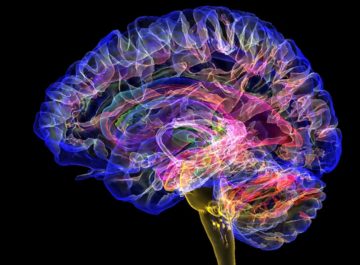 The technique known as deep brain stimulation (DBS) has improved cognition in people with traumatic brain injuries, a small clinical trial has found.
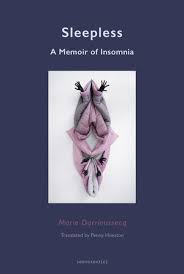 I will never forget the first time I saw the devil—leering at me, lurking in the corner of the room, glowing red and approaching my motionless body. I was caught between sleep and waking; I blinked furiously; I struggled to rouse my heavy limbs as he raised his hand to my face. I could not even muster the strength to open my mouth and cry out, help, mommy, help, the monster will get me—
 Based on Paul Theroux’s novel of the same name, the film is the director Peter Bogdanovich’s Vietnam movie as well as his Casablanca, a wartime melodrama about a raffish American trying to make a buck on the periphery of the conflict. A lot happens to Jack Flowers—he falls in love, finds a kindred spirit (platonic), fulfills his dream of running a brothel, runs afoul of local gangsters, goes into business with the U.S. military, witnesses the death of a friend, and gets roped in to a smear operation by the CIA—but the film’s tone and pacing belie its density of event. Saint Jack is laid-back, even chill. Applied to heavy material, this attitude usually produces a comedy, but Saint Jack, while full of funny moments, achieves something serious: the sublime.