
Andrew Russeth at Art In America:
Speaking to avant-garde music devotees in Germany in 1984, composer Morton Feldman delivered a mischievous provocation, almost a warning. “The people who you think are radicals might really be conservatives,” he said. “The people who you think are conservative might really be radical.” Feldman then hummed a section of a symphony by an ostensibly old-fashioned forebear, the proud Finn Jean Sibelius.
That story came to mind while soaking in the Chang Ucchin retrospective at the National Museum of Modern and Contemporary Art’s Deoksugung Palace branch in Seoul during the last days of summer. Its four galleries are jam-packed with some 300 pieces by the 20th-century painter, who “became almost a mythic figure in Korea,” as art historian Hong Sunpyo writes in the show’s robust catalogue. Depicting tranquil, harmonious, sometimes dreamy scenes of rural Korea with an economy of marks on a flat plane, almost all the pieces charm. Birds fly in a row through the sky. Trees stand proud. People peer from tiny houses. At first glance, they could be the work of a very good illustrator of books for young children.
more here.
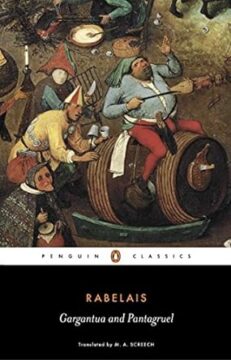 To try to understand the whole of Rabelais or his writing is the work of a lifetime—I am not sure if Rabelais himself would think such a lifetime well spent—but even a passing acquaintance with this odd fellow is certainly worthwhile. There is a mystery here, of the finest vintage; every time I pick up the blue brick called Gargantua and Pantagruel, I find myself asking, in the midst of chuckles, how can something so stupid have turned literature upside down? Why does this book matter at all?
  When Luana Marques was growing up in Brazil, life was not easy. Her parents had her when they were very young, and they didn’t know how to take care of themselves, much less their children. Drugs and alcohol were also a problem. “Between the many instances of domestic violence, I often felt scared, wondering when something bad would happen next,” she says. She lived
  Obesity plays out as a private struggle and a public health crisis. In the United States, about 70% of adults are affected by excess weight, and in Europe that number is more than half. The stigma against fat can be crushing; its risks, life-threatening. Defined as a body mass index of at least 30, obesity is thought to power type 2 diabetes, heart disease, arthritis, fatty liver disease, and certain cancers. Yet drug treatments for obesity have a sorry past, one often intertwined with social pressure to lose weight and the widespread belief that excess weight reflects weak willpower. From “rainbow diet pills” packed with amphetamines and diuretics that were marketed to women beginning in the 1940s, to the 1990s rise and fall of fen-phen, which triggered catastrophic heart and lung conditions, history is beset by failures to find safe, successful weight loss drugs.
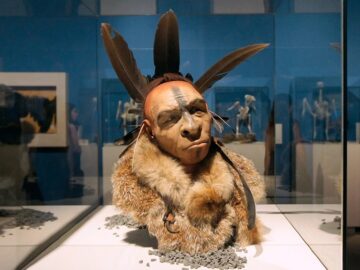 Will we ever truly understand the Neanderthals? Archaeologist Ludovic Slimak paints a vivid picture in The Naked Neanderthal. Written like a philosophical travelogue, this intriguing book offers personal vignettes of archaeological excavations and provocative critiques of researchers’ tendencies to interpret Neanderthals (Homo neanderthalensis) as the intellectual and creative cousins of Homo sapiens. Instead, the author argues, they are stranger to us than people might admit, with a culture that is both sophisticated and alien.
 We are living in an age of tech backlash. Especially given the perceived effects of social media on the outcome, the 2016 election undoubtedly catalyzed much of the critical sentiment about the role technology plays in our private lives and in society at large. This backlash can be attributed to a shift in thinking neatly expressed by the title of sociologist Zeynep Tufekci’s 2018 essay for MIT Technology Review, “How Social Media Took Us From Tahrir Square to Donald Trump.” The same technologies that, circa 2010, were expected to herald a golden age of democracy were, by 2018, more likely to be framed as authoritarian tools and threats to democracy. Around the same time, less rapt voices also gained traction in debates about the relative merits not only of social media but of smartphones, the Internet, algorithmic governance, automation, self-driving cars, and, most recently, artificial intelligence. While it is not obvious to me that this critical sentiment has amounted to a reconfiguration of how our society relates to technology, it nevertheless seems clear that our collective technoenthusiasm has been dialed down a few notches.
 A monkey in the zoo, defiantly
 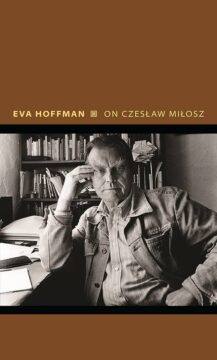 In a late poem about a friend’s death, Czesław Miłosz writes of the long passage between youth and age as one of learning ‘how to bear what is borne by others’. It could be a summary of his own poetic witness. Eva Hoffman’s moving and eloquent essay traces the ways in which that simultaneously guilty, compassionate and fastidious response characterises Miłosz’s work from its earliest days. Bearing what is borne by others is, for Miłosz, close to the heart of the poetic task, but it is also fraught with risk. Hoffman pinpoints how Miłosz’s hypersensitivity to the risks of sentimentality and grandstanding led to what many readers saw as an evasion of necessary commitment. He stood aside during the Warsaw Rising of 1944, wary of the overheated and unrealistic rhetoric surrounding it; he saw his first duty as being to the integrity of his poetry, not to the mythology of a sacrificially heroic Poland. Yet, as Hoffman stresses, the poetry itself reveals his full awareness of ambivalent motives and the dangers of willed detachment. Was he nervous of ‘being overwhelmed by emotions from which no detachment was possible’? The lines (from 1945), ‘You swore never to touch/The deep wounds of your nation’ – indeed, the whole poem in which they occur – reveal both a concern not to cheapen such wounds by sacralising the agonies of others and a recognition of the unbearable character of the pain involved: ‘My pen is lighter/Than a hummingbird’s feather. This burden/Is too much for it to bear.’
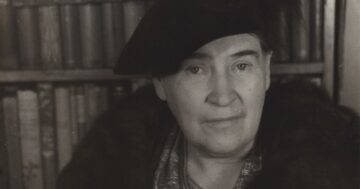 Willa Cather loathed biographers, professors, and autograph fiends. After her war novel, One of Ours, won the Pulitzer in 1923, she decided to cull the herd. “This is not a case for the Federal Bureau of Investigation,” she told one researcher. Burn my letters and manuscripts, she begged her friends. Hollywood filmed a loose adaptation of A Lost Lady, starring Barbara Stanwyck, in 1934, and Cather soon forbade any further screen, radio, and television versions of her work. No direct quotations from surviving correspondence, she ordered libraries, and for decades a family trust enforced her commands.
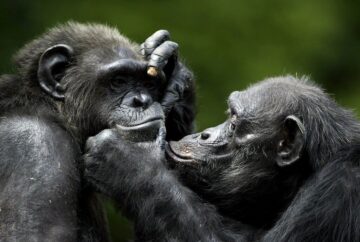 In 2015, while working as an undergraduate researcher at the North Carolina Zoo, Laura Lewis became friends with a male chimpanzee named Kendall. Whenever she visited the chimps, Kendall would gently take her hands and inspect her fingernails.
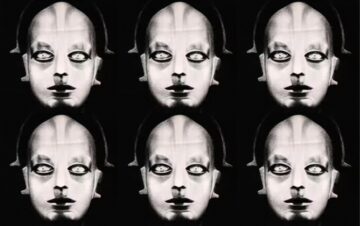 Let’s imagine, for the purpose of this essay, that the following statement is true: An AI writes a novel.
 The road to hell might be paved with good intentions, but the roads to pretty much everywhere else are paved with the corpses of animals. In Crossings, environmental journalist Ben Goldfarb explores the outsized yet underappreciated impacts of the, by one estimate, 65 million kilometres of roads that hold the planet in a paved stranglehold. These extend beyond roadkill to numerous other insidious biological effects. The relatively young discipline of road ecology tries to gauge and mitigate them and sees biologists join forces with engineers and roadbuilders. This is a wide-ranging and eye-opening survey of the situation in the USA and various other countries.
 F
F
 University administrators faced with the challenge of responding to the various (and opposed) constituencies invested in the Hamas-Israel war have come up with a number of strategies.