
Olga Zolotareva at The Millions:
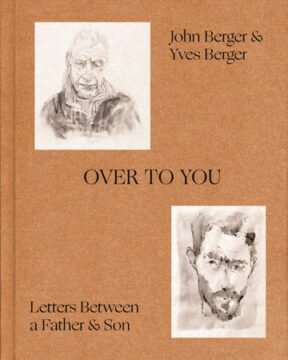 Halfway through Over to You, the painter Yves Berger recounts a meeting with university students interested in his creative process. The meeting, he feels, was a “failure,” in part because of the inadequacy of his visual aid—photographs of three of his works in various stages of completion. The photographs “gave the impression of a linear process, as if Time were an arrow, whereas the real experience we have of it is made of folds, and folds within folds, sometimes touching one another.”
Over to You, a collection of letters exchanged by Yves and his father between 2015 and 2016, the artist and art critic John Berger (1926-2017), comes closer to giving us “the real experience” of time. In its pages, paintings from different historical periods (all helpfully reproduced in color) call out to one another: Albrecht Dürer’s Screech Owl (1508) “wink[s]” at Max Beckmann’s Columbine (1950); Vincent Van Gogh’s Still Life with Bible (1885) responds to Rogier van der Weyden’s The Annunciation (c. 1440); and John Berger’s own watercolor rose nods to Andrea della Robbia’s Madonna with Four Angels (c. 1480-1490). Throughout much of the book, the images are embedded in the letters. But toward the end, the words disappear, giving way to a visual essay—a form that would be familiar to the readers of John Berger’s celebrated 1972 book Ways of Seeing.
more here.
Enjoying the content on 3QD? Help keep us going by donating now.
 V
V In the original clinical trials of
  I
I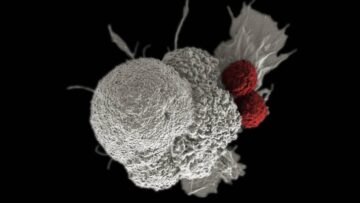 Lights, vitamin, action. A combination of vitamin B2 and ultraviolet light hardly sounds like a next-generation cancer treatment. But
  It was just the type of document I was hoping to find.
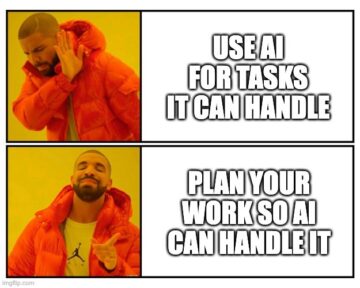 It’s often been observed that taking full advantage of AI will require changing work practices, just as taking full advantage of electric motors in manufacturing required changing the way factories were laid out. But what will those changes look like? Early answers are starting to emerge, coming (unsurprisingly) from the field of software development. Interestingly, the biggest impacts may not be cost savings!
 S.N.S. Sastry’s 1967 documentary film I Am 20 opens with the whistle of a train and the words of T. N. Subramanian, a loquacious young man with a book of chemistry in front. In a nearly 20-minute film documenting the reflections, hopes, and fears of 20-year-old Indians regarding the equally old Indian republic, Subramanian begins with confessing his ambition, much like Mohandas Gandhi who had returned from South Africa, to “go through this country top to bottom” with “a pad and paper, a tape recorder, and a camera… seeing all kinds of people… their anguish and their anger, the fertile soil, the pastures, everything! So that one day when I could come back, I could open the book and remind myself of what I am part of and what is part of me.”
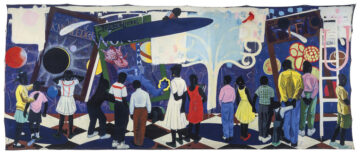 The artist’s astounding success was by no means predictable when he started out. History painting, the highest of the classical painterly genres as defined by the Royal Academy’s founders, was a distant memory by the 1980s, when the revival of figurative painting and tired Expressionist formulas on both sides of the Atlantic inspired the passionate critiques of Benjamin H. D. Buchloh and his October compatriots. In his well-argued catalogue essay, Godfrey reckons with his own earlier skepticism of figuration, including Marshall’s. As he describes, a visit to the painter’s Chicago studio in 2012 instigated a process of internal interrogation. He came to believe that history painting—if refreshed by new techniques—would speak more directly to audiences, including viewers not typically drawn to museums, than the conceptualist formulas of a prior generation, embracing a position he ascribes to Marshall himself: “As [Marshall] knew, figurative paintings in museums attracted a large audience of experts, first-timers, tourists and schoolchildren, far broader than the niche audience for the lens- and text-based artworks I revered then.” The crowds of teenagers and children listening raptly to the lectures of identical-looking docents in the back-to-back galleries in Untitled (Underpainting), 2018, imagine an art world infinitely more inclusive than the one Marshall entered as a young artist.
 JOHN MARTIN NEVER smoked cigarettes. He did not use drugs or drink alcohol. Martin’s vice was book collecting, which he began in earnest in the late 1930s after he dropped out of UCLA. His enrollment was brief: he left when he discovered that his favorite modern authors, such as Ezra Pound, D. H. Lawrence, and Wallace Stevens, were not on the curriculum.