
Richard Hughes Gibson at The Hedgehog Review:
 Generative artificial intelligence is a headspace and a technology—as much an event playing out in our minds as it is a material reality emerging at our fingertips. Fast and fluent, AI writing and image-making machines inspire in us visions of doomsday or a radiant posthuman future. They raise existential questions about themselves and ourselves. And, not least, they should lead us to reconsider certain neglected thinkers of recent intellectual history.
Consider a few of the bolder claims made by experts. Two years ago, Blaise Agüera y Arcas, vice president of Google Research, had already declared the end of the animal kingdom’s monopoly on language on the strength of Google’s experiments with large language models. LLMs, he argued, “illustrate for the first time the way that language understanding and intelligence can be dissociated from all the embodied and emotional characteristics we share with each other and with many other animals.”1 In a similar vein, the Stanford University computer scientist Christopher Manning has argued that if “meaning” constitutes “understanding of the network of connections between linguistic form and other things,” be they “objects in the world or other linguistic forms,” then “there can be no doubt” that LLMs can “learn meanings.”
more here.
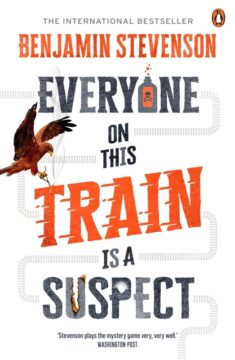 It’s the Australian Mystery Writers’ Festival and debut author Ernest Cunningham is one of the participating writers. Cunningham arrives at the festival—hosted on the Ghan, the famous train that goes from Darwin to Adelaide—following the publication of his memoir Everyone in My Family Has Killed Someone (also, the title of author Benjamin Stevenson’s novel that first introduces Cunningham) and is, having signed a six-figure advance, now stuck trying to find an idea for a novel.
 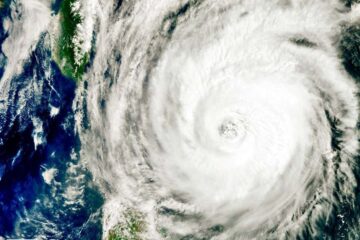 In the past decade, five tropical storms had wind speeds so high that they should have been classified as “category 6” storms, according to an analysis that suggests the hurricane scale may need to be updated as rising temperatures fuel stronger storms.
 One bright day in April 1956, Moshe Dayan, the one-eyed chief of staff of the Israel Defense Forces (IDF), drove south to Nahal Oz, a recently established kibbutz near the border of the Gaza Strip. Dayan came to attend the funeral of 21-year-old Roi Rotberg, who had been murdered the previous morning by Palestinians while he was patrolling the fields on horseback. The killers dragged Rotberg’s body to the other side of the border, where it was found mutilated, its eyes poked out. The result was nationwide shock and agony.
 Here are four ideas I have long nurtured as suspicions for what makes the most productive people quite so successful, inspired by a recent conversation I had that I’m hoping to bring to you soon. Many people will have aspects of more than one of these criteria—Beethoven, for example.
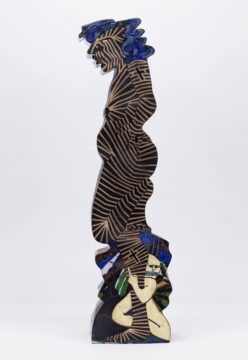 In honor of Black History Month, Artsy is featuring the work of 28 Black artists who are not as widely known or celebrated as some of their historical or contemporary peers. This list is meant to shine a light on artists who have prominence within institutions, but are often excluded from mainstream conversations meant to amplify overlooked Black artists or canonize them as leading figures of art history.
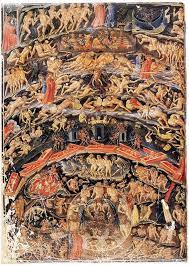 I have a friend who, before she ran from Kyiv as Russia bombarded the city in early 2022, spent weeks shivering in the bomb shelters as the city was shelled.
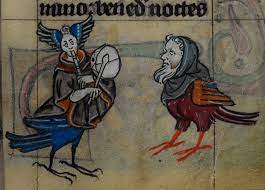 Although bestiaries were popular texts in medieval Europe, many of their tales derive from a far older text from northern Africa known as the Physiologus. The Physiologus (meaning Natural Philosopher) was originally written in Greek by an unknown author, probably someone living in Alexandria during the third century CE. This text in turn is made up of stories whose influences can be traced even further back in time to texts on natural philosophy and religion by ancient Greek and Roman writers.
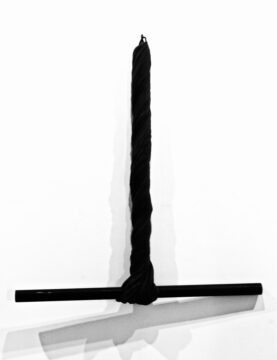 Throughout the late 1960s and ’70s, the heyday of Arte Povera and European conceptualism, Anselmo continued to create objects that use the slightest material intervention as a means to heighten viewers’ awareness of the relativity of human existence and the natural forces that determine it. They provoke interrogation without offering resolution. He was invited to take part in Daniela Palazzoli’s groundbreaking Con temp l’azione—a punning title that refers to both contemplation and time-based actions—which was an exhibition that spanned three different Turin galleries and issued a foldout broadsheet as its catalogue. Fittingly, Anselmo created works for this show that reinforced reflection on the way we exist in a nexus of natural and built environments. Direzione (Direction), 1967–68, for instance, is a low triangular slab of schist with a small compass embedded in its surface. The stone is a metamorphic rock, meaning it was formed in response to environmental heat or pressure, and the compass responds to Earth’s magnetic field, indicating the point of reference we call North. Brought together into this succinct arrangement, which reflects the logic of Duchamp’s assisted readymades, the natural material and the manufactured tool offer palpable traces of the ever-present natural forces that determine our sense of the world, even in the supposedly neutral white cube of the gallery.
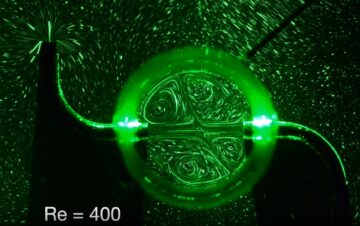 A typical lawn sprinkler features various nozzles arranged at angles on a rotating wheel; when water is pumped in, they release jets that cause the wheel to rotate. But what would happen if the water were sucked into the sprinkler instead? In which direction would the wheel turn then, or would it even turn at all? That’s the essence of the “
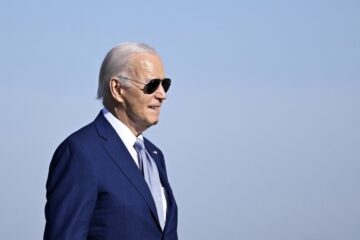 Good news for Joe Biden this week. Job gains beat forecasts and the phrase “surprisingly strong economy” once again appeared in headlines. Voters mostly refused to acknowledge the good news through 2023 but the latest consumer sentiment surveys suggest the sunshine is finally penetrating the gloom. Optimism is rising. If the economy maintains course through 2024, Biden, for all his faults and weaknesses, will be the heavy favourite for re-election.