
Harry Cliff at Literary Hub:
 The first thing to understand is that all measurements come with “uncertainties” or “errors,” two words often used interchangeably. The uncertainly on a measurement is an expression of the precision with which we think we have measured a particular quantity. Uncertainties come in two key types. There are statistical uncertainties and systematic uncertainties.
Let’s start with statistical uncertainty. To draw on the classic example, imagine I gave you a coin and asked you to determine if that coin is fair, or to put it more formally, if the probability of that coin coming up heads or tails is equal. To test this, you toss the coin twice and get one head and one tail. On the face of it, this might suggest that the coin is fair.
But you probably have the feeling that we can’t really be sure from only two tosses. Indeed, like all measurements, this one comes with an uncertainty, and with only two coin tosses this uncertainly is large. I’ll spare you the math and tell you that it’s around 26 percent.
More here.

 “You need to work on your face.”
 F
F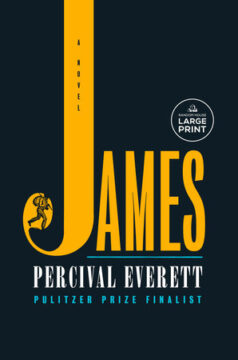 Everett has spoken in the past with frustration about Erasure looming so large in his body of work. Does he still feel that way? “The only thing that ever pissed me off is that everyone agreed with it. No one took issue, or said: ‘It’s not like that.’” Why was that annoying? “I like the blowback. It’s interesting. There’s nothing worse than preaching to the choir, right?” Erasure came out in 2001, but people have taken American
  Despite its notoriously opaque prose, Butler’s best-known book, “Gender Trouble: Feminism and the Subversion of Identity” (1990), has been both credited and blamed for popularizing a multitude of ideas, including some that Butler doesn’t propound, like the notions that biology is entirely unreal and that everybody experiences gender as a choice.
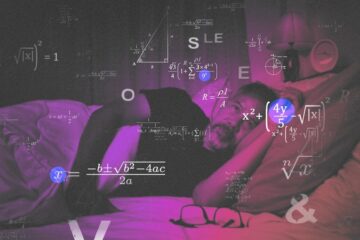 Charles Lutwidge Dodgson, pen name Lewis Carroll, is best known as the Victorian-era author of Alice’s Adventures in Wonderland. Now, out of obscurity, comes
 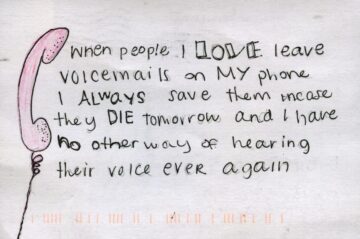 In the fall of 2004, Frank came up with an idea for a project. After he finished delivering documents for the day, he’d drive through the darkened streets of Washington, D.C., with stacks of self-addressed postcards—three thousand in total. At metro stops, he’d approach strangers. “Hi,” he’d say. “I’m Frank. And I collect secrets.” Some people shrugged him off, or told him they didn’t have any secrets. Surely, Frank thought, those people had the best ones. Others were amused, or intrigued. They took cards and, following instructions he’d left next to the address, decorated them, wrote down secrets they’d never told anyone before, and mailed them back to Frank. All the secrets were anonymous.
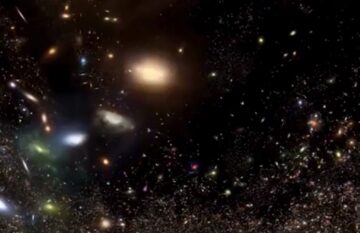 On Thursday, astronomers who are conducting what they describe as the biggest and most precise survey yet of the history of the universe announced that they might have discovered a major flaw in their understanding of dark energy, the mysterious force that is speeding up the expansion of the cosmos.