
Lauren Michele Jackson and Maggie Nelson at The New Yorker:
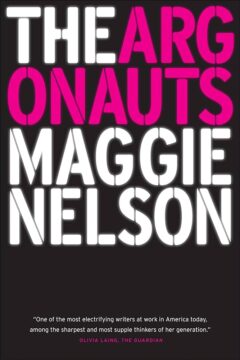 We have a sense, I think, of the false border sequestering art from theory. And so to remark on Maggie Nelson’s facility in mating the two is to say the least about how she does so—which is with a hurtling gusto that nonetheless invites us to pause and think. For this, her books are beloved by audiences with varying attachments to the categories that are often, imperfectly, applied to what they are reading: “memoir,” “art criticism,” “poetry,” “queer theory,” “feminism.” This is one way of saying that describing Nelson’s writing can be harder than consuming it, as one of its defining features involves unfurling the shorthand that governs—literally and figuratively—so much of our lives, including the terms we use to identify ourselves.
Nelson was raised in Northern California and moved to New York after college. While there, in the nineties, she became immersed, academically and recreationally, in the rad ideation in literature, theory, and art of the times, and was guided by her daring predecessors: the poet and novelist Eileen Myles, the artist and writer Wayne Koestenbaum, and the critic and queer theorist Eve Kosofsky Sedgwick.
more here.
 In 1968
 Daniel Kahneman died last week at the age of 90. His legacy is immense. He was, as he put it, the “grandfather” of behavioural economics — think economics but with a realistic model of what a human is — a role which won him a Nobel Prize. But Kahneman’s legacy is bigger than that. Kahneman and Tversky changed how we think about how people think, and if you change that, you change everything. You can see their influence all across the social sciences and much of the humanities.
 The detective in a typical British crime procedural would say that
  An estimated
  H
H E
E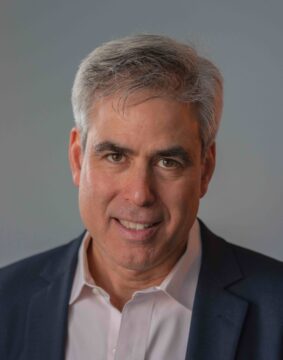 Odgers recently stated the skeptics’ case in an essay in Nature titled
 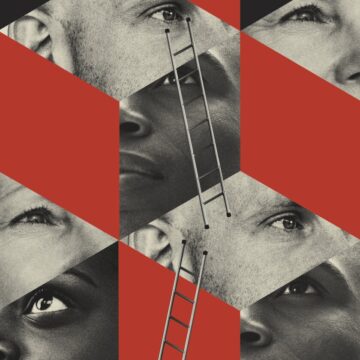 Equity has become a familiar term on American college campuses in recent years, as well as a flashpoint in the nation’s culture wars.
 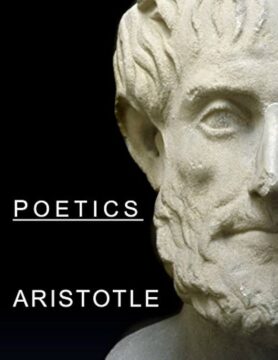 If the Poetics, Aristotle’s treatise on the subject of tragedy, is rarely studied today, it is largely because the French Neoclassicists of the seventeenth century turned Aristotle’s descriptions of Greek tragedy into prescriptions. Finessed by Corneille and Racine, ignored by Molière, challenged by the Romantics, and rejected by the Modernists, the Poetics was all but forgotten by 1953. But each in his own way, Beckett and Clarke heeded the deeper insights it contains.
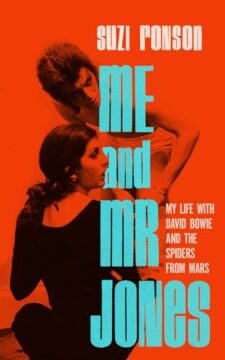 Earth was dying. We had five years left to live. Ziggy Stardust, the bisexual alien rock star, was sent from another planet to grey, binary 1970s Britain to give us a message of hope. I’m not sure about the hope part of the message, but he really turned us on.
 IN DECEMBER
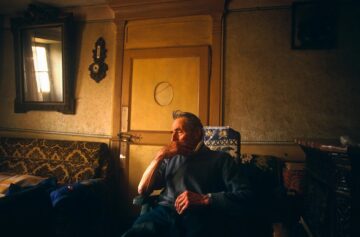 In 2010, Theresa Chaklos was diagnosed with chronic lymphocytic leukaemia — the first in a series of ailments that she has had to deal with since. She’d always been an independent person, living alone and supporting herself as a family-law facilitator in the Washington DC court system. But after illness hit, her independence turned into
  Alexandra Hudson is a writer, an adjunct professor at the Indiana University Lilly School of Philanthropy, and the founder of the publication Civic Renaissance. Hudson’s first book is