
Ann Gibbons in Science:
 Zeresenay Alemseged doesn’t remember the 1974 discovery of the famous fossil Lucy at Hadar in Ethiopia, because he was 5 years old, living 600 kilometers away in Axum. Later he saw Lucy’s name on cafes and taxis, but he knew little about her until he became a geologist working at the National Museum of Ethiopia. Then, she changed his life. In 2000, Alemseged was swept into Lucy’s orbit: He discovered “Lucy’s child,” a partial skeleton of a toddler of her species, at Dikika, 10 kilometers from Hadar. In 2015, by then a well-known scientist, he had the honor of showing Lucy to then-President Barack Obama before a state dinner at Ethiopia’s National Palace. Alemseged allowed Obama to touch the prized skeleton, telling him the fossil shows Ethiopia is the birthplace of humankind and that “every single person” on the planet shares an origin in Africa. “Including Donald Trump,” Alemseged joked to Obama.
Fifty years after her discovery, “Lucy is an icon,” says Alemseged, now a paleoanthropologist at the University of Chicago.
More here.
 Geoff Dyer: Yeah, it’s a little piece of self-encouragement. Because, you know, sometimes I’m sort of worried about my take on a given subject. Do I know enough about it? Take for example, my history of photography called The Ongoing Moment. I wrote that book because I wanted to find out about the history of photography. I wrote the book for the same reason that readers might later go to it.
 Granted, the social lives of viruses aren’t quite like those of other species. Viruses don’t post selfies to social media, volunteer at food banks or commit identity theft like humans do. They don’t fight with allies to dominate a troop like baboons; they don’t collect nectar to feed their queen like honeybees; they don’t even congeal into slimy mats for their common defense like some bacteria do. Nevertheless, sociovirologists believe that viruses do
  Saar Wilf is an ex-Israeli entrepreneur. Since 2016, he’s been developing a new form of reasoning, meant to transcend normal human bias.
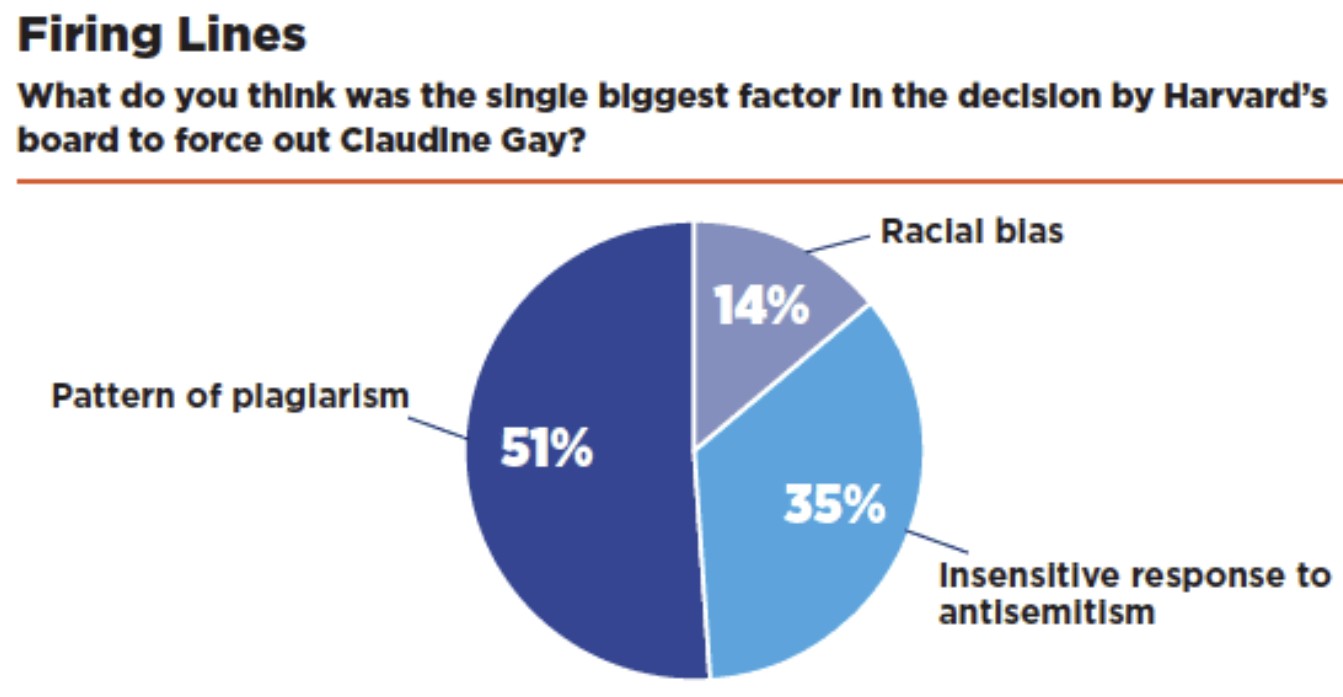 The negative buzz over board challenges experienced by Harvard, Tesla and Boeing shows remarkably parallel problems over the same period. Harvard’s stumble is particularly educational for boards facing a governance crisis.
 I
I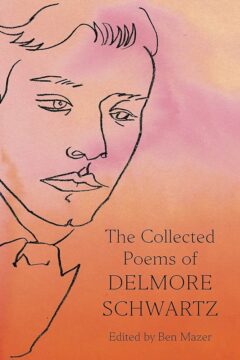 Come with me, down the rabbit hole that is the life and work of the Brooklyn-born poet Delmore Schwartz (1913-66). There are two primary portals into Delmore World. Neither involves his own verse. Reading about Schwartz is more invigorating than reading him, or so I have long thought. He was so intense and unbuttoned that he inspired two of the best books of the second half of the 20th century.
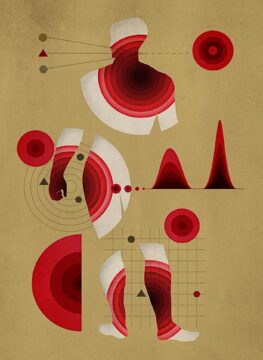 Several years ago, I fell at the gym and ripped two tendons in my wrist. The pain was excruciating, and within minutes my hand had swollen grotesquely and become hot to the touch. I was reminded of a patient I’d seen early in medical school, whose bacterial infection extended from his knee to his toes. Latin was long absent from the teaching curriculum, but, as my instructor examined the leg, he cited the four classic symptoms of inflammation articulated by the Roman medical writer Celsus in the first century: rubor, redness; tumor, swelling; calor, heat; and dolor, pain. In Latin, inflammatio means “setting on fire,” and as I considered the searing pain in my injured hand I understood how the condition earned its name.
 In 2008, the biotech industry
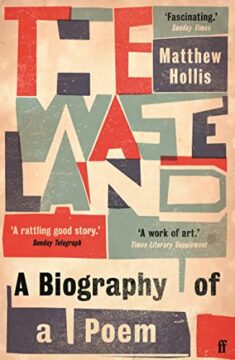 My first impression, upon opening Hollis’s The Waste Land: A Biography of a Poem was admittedly delicious. A usual kind of epigraph greets us: “There is always another one walking beside you,” from Eliot’s poem, but then we turn the page, and on the back of the epigraph page is a quotation from Eliot, a meaty paragraph, and facing it, on the right-hand side, is a shorter passage from Pound. Right away, then, the two men are side by side, in the opening pages in a way that disrupts the usual front page material of a tome. It is a nice touch that not only forecasts the book’s focus on the relationship between the two men in the crafting of one of the inarguably influential English language poems of the twentieth century but also indicates the attention to detail and summoning of atmosphere that characterize the bulk of Hollis’s project, if not its achievement. Which is this: to demythologize, and at times painfully, re-animate the gross disturbances in Eliot’s life and character that, for better or worse, have bequeathed us the still-jarring title poem.