
Category: Recommended Reading
Tuesday Poem
The House Slave
The first horn lifts its arm over the dew-lit grass
and in the slave quarters there is a rustling—
children are bundled into aprons, cornbread
and water gourds grabbed, a salt pork breakfast taken.
I watch them driven into the vague before-dawn
while their mistress sleeps like an ivory toothpick
and Massa dreams of asses, rum and slave-funk.
I cannot fall asleep again. At the second horn,
the whip curls across the backs of the laggards—
sometimes my sister’s voice, unmistaken, among them.
“Oh! pray,” she cries. “Oh! pray!” Those days
I lie on my cot, shivering in the early heat,
and as the fields unfold to whiteness,
and they spill like bees among the fat flowers,
I weep. It is not yet daylight.
by Rita Dove
from Selected Poems
W.W. Norton, 1993
Arooj Aftab – Raat Ki Rani
The bird is fine, the bird is fine, the bird is fine, it’s dead
Jonathan Weiner in MIT Technology Review:
 If high intelligence is the ability to hold two opposing ideas in our heads at the same time, then most of us are geniuses about aging a few times over. We think it will never come for us. We think it might come but it will stop before it reaches us. We think it’s coming and there is absolutely nothing we can do about it. It was the great molecular biologist Seymour Benzer who got me interested in the idea that aging might be malleable. Benzer was a night owl. I was writing a book about him, and in the late 1990s he used to talk about aging in his Fly Room at Caltech in a hushed, conspiratorial voice, even though it was just the two of us and a thousand fly bottles at three in the morning. I’ll never forget how startling it was to hear a serious scientist say, We might be able to do something about this.
Nor was he the only one to say it. At the University of California, San Francisco, Cynthia Kenyon was dissecting the aging of the worm C. elegans. In 1993, she had announced the discovery of a mutant that lived about twice as long as the average C. elegans and looked young and sleek almost to the end. At MIT, Lenny Guarente was dissecting the genetics of aging in yeast, and he seemed to be getting somewhere too. In 1998, when Benzer was 77 years old, he announced the discovery of a mutant fruit fly he called Methuselah. It could live for 100 days. The average fly in his bottles died at around 60.
More here.
Sunday, April 21, 2024
Doug Hofstadter remembers Dan Dennett
Douglas Hofstadter at Marcus on AI:
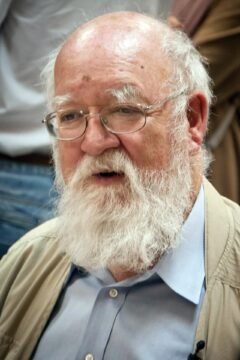 I just received the very sad news about the passing of Dan Dennett, a lodestar in my life and in many thoughtful people’s lives.
Dan was a deep thinker about what it is to be human. Quite early on, he arrived at what many would see as shocking conclusions about consciousness (essentially that it is just an emergent effect of physical interactions of tiny inanimate components), and from then on, he was a dead-set opponent of dualism (the idea that there is an ethereal nonphysical elixir called “consciousness”, over and above the physical events taking place in the enormously complex substrate of a human or animal brain, and perhaps that of a silicon network as well). Dan thus totally rejected the notion of “qualia” (pure sensations of such things as colors, tastes, and so forth), and his arguments against the mystique of qualia were subtle but very cogent.
Dan had many adversaries in the world of philosophers, but also quite a few who shared his views, and as for myself, I was almost always aligned with him. Our only notable divergence was on the question of free will, which Dan maintained exists, in some sense of “free”, whereas I just agreed that “will” exists, but maintained that there is no freedom in it.
More here.
Flaws Of Nature: The Limits And Liabilities Of Natural Selection
Leon Vlieger at The Inquisitive Biologist:
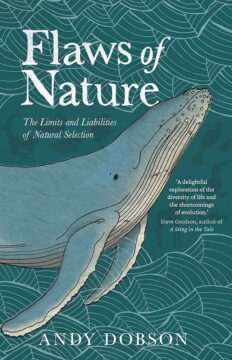 Most popular accounts of evolution focus on the amazing adaptations of organisms to their environment. But, Dobson counters, “whilst there seems no end to evolution’s artistry, it is all too easy to be blinded by the pyrotechnics on display” (p. 14). To better understand natural selection it is equally instructive to consider what it can not do. Though on paper it is a relentless mechanism to weed out the evolutionary unfit, in practice the process often results in suboptimal adaptations, cumbersome traits, evolutionary dead ends, and runaway selection that in the end is costly to all parties involved.
More here.
The Israel-India worker deal resembles British indenture
Michelle Buckley and Paula Chakravartty in the Boston Review:
 In December, Indian Prime Minister Narendra Modi received a personal request from his friend and political ally, Israeli Prime Minister Benjamin Netanyahu: expedite the supply of Indian construction labor and other migrant workers to Israel. Prior to October 7, Palestinians from the West Bank and Gaza made up the majority of workers in Israel’s construction and agriculture sectors, doing crucial, if invisible, work in the country’s apartheid society. But in the wake of the Hamas attacks, Israel terminated the work permits—more than two hundred thousand in all—granted by Israel to Palestinian workers from the Occupied Palestinian Territories including Gaza. To fill the gap, thousands of Indian workers will soon arrive in Israel; the first planeload of workers has already landed. In the coming month, tens of thousands more men, hailing from some of India’s poorest states like Bihar and Uttar Pradesh, are expected to join them.
More here.
Beating Slow Horses
Brad East in The Hedgehog Review:
 The conceit at the heart of Mick Herron’s Slow Horses novels is simple. There is a house in London for misfit spies. When MI5 is unable, for one reason or another, to fire failed employees, it opts to send them there. The exile is permanent, though the losers who suffer it do their best to pretend it isn’t. It’s a win-win for the service, in any case. No one gets sued. HR is pacified. And banishment proves either so unbearably dull and humiliating that the misfit spies voluntarily quit, or they remain there forever, whiling away the hours without hope of redemption. It is said of the souls in Dante’s purgatorio that the unhappiest are happier than the happiest on earth. Conversely, the happiest in Herron’s inferno are unhappier than the unhappiest outside its walls.
More here.
Bill Maher’s ‘Pedophiles in Hollywood’ Remarks
Rachel Dobkin in Newsweek:
 Comedian Bill Maher‘s “Kid ‘N Prey” segment on Friday went viral on social media after he criticized the child entertainment industry. On Friday’s episode of Real Time with Bill Maher, Maher reacted to the recently released documentary Quiet on Set: The Dark Side of Kids TV, which exposed the sexual abuse and hostile work environment that child actors faced at the hands of adults at Nickelodeon. The comedian posted the segment from his show on X, formerly Twitter, on Friday night with the caption, “It turns out for pedophiles in Hollywood, ‘It’s A Small World After All.'” It has amassed 28.3 million views as of Saturday afternoon. Maher said he was “grossed out” by the revelations in the documentary, adding that “it didn’t just expose a dangerous workplace. It also exposed hypocrisy.”
He said that when Republican Florida Governor Ron DeSantis “was saying the exact same thing about kids and creepy stuff at Disney—that liberals now find intolerable at Nickelodeon—he was dismissed as a hick and a bigot, but why would a kid’s content factory like Disney be all that different than the one at Nickelodeon?” During a legal feud with Disney that started when the company’s then-CEO Bob Chapek publicly opposed a controversial bill that restricts certain instruction about sexual orientation and gender identity in Florida schools known as the “Don’t Say Gay” law, DeSantis accused Disney of adding a lot of “sexuality into the programming for young kids,” which the company denied. The legal dispute was settled in March.
Maher referenced a 2014 CNN article that reported that at least 35 Disney employees were arrested on sex crimes involving children since 2006, according to court records and other documentation.
More here.
Biohacking our way to health with robot cells
Faith Ringgold (1930 – 2024) Artist
Dickey Betts (1943 – 2024) Founding Member of Allman Brothers
Daniel Dennett (1942 – 2024) Philosopher
Sunday Poem
Worm Moon
I.
In March the earth remembers its own name.
Everywhere the plates of snow are cracking.
The rivers begin to sing. In the sky
the winter stars are sliding away; new stars
appear as, later, small blades of grain
will shine in the dark fields.
And the name of every place
is joyful.
II.
The season of curiosity is everlasting
and the hour for adventure never ends,
but tonight
even the men who walked upon the moon
are lying content
by open windows
where the winds are sweeping over the fields,
over water,
over the naked earth,
into villages, and lonely country houses, and the vast cities
III.
because it is spring;
because once more the moon and the earth are eloping –
a love match that will bring forth fantastic children
who will learn to stand, walk, and finally run
over the surface of earth;
who will believe, for years,
that everything is possible.
IV.
Born of clay,
how shall a man be holy;
born of water,
how shall a man visit the stars;
born of the seasons,
how shall a man live forever?
V.
Soon
the child of the red-spotted newt, the eft,
will enter his life from the tiny egg.
On his delicate legs
he will run through the valleys of moss
down to the leaf mold by the streams,
where lately white snow lay upon the earth
like a deep and lustrous blanket
of moon-fire,
VI.
and probably
everything
is possible.
by Mary Oliver
from — 12 Moons.
Saturday, April 20, 2024
Gwendolyn Brooks reads We Real Cool
How Cloud Seeding Works and Why It’s Wrongly Blamed for Floods From Dubai to California
Koh Ewe in Time:
 In a place as dry as the desert city of Dubai, whenever they can get rain, they’ll take it. United Arab Emirates authorities will often even try to make it rain—as they did earlier this week when the National Center of Meteorology dispatched planes to inject chemicals into the clouds to try to coax some showering. But this time they got much more than they wanted. Dubai faced torrential downpours on Tuesday, with flooding shutting down much of the city, including schools and its major airport—killing at least one man whose car was swept away as well as at least 18 others in neighboring Oman, including a bus full of schoolchildren. The UAE government media office said it was the heaviest rainfall recorded in 75 years and called it “an exceptional event.” More than a typical year’s worth of water was dumped on the country in a single day.
Now, many people are pointing a finger at the “cloud seeding” operations preceding the precipitation.
More here.
Medieval LOLs: Fabliaux
‘Everything Must Go’ by Dorian Lynskey
Fara Dabhoiwala at The Guardian:
 Everything Must Go is about how, over the past 200 years, writers and artists have built on this inheritance to create new kinds of non-Christian eschatology. Ever since Lord Byron’s poem Darkness (1816), which dispensed with God, people have been creating secular fictions about the three main non-divine ways in which things might end – the annihilation of the planet, the extinction of humankind or the collapse of civilisation. Movies, radio broadcasts, comic books, pop songs, plays, novels, paintings, television shows, video games – it turns out that these scenarios have inspired a huge amount of detailed invention, mainly for entertainment. We love to wallow in our worst nightmares.
The form that such stories take is always influenced by the scientific and environmental events and concerns of their time. In May 1941, months before the start of the top-secret Manhattan Project, author Robert Heinlein published a story about a clandestine scheme to build a weapon from uranium-235.
more here.
Byron
Benjamin Markovits at the New York Times:
 This week is the 200th anniversary of Lord Byron’s death. The most famous poet of his age (an odd phrase now) died fighting for Greek independence in the marshes of Missolonghi. “Who would write, who had anything better to do?” he once said. There was a strange contest over his body and memory: The lungs and larynx remained in Greece but friends carried the rest back to England, where huge crowds followed the funeral procession. A month after his death, his former editor burned his memoirs, worried they would damage the reputation of a superstar read around the world.
Does anyone read Byron now? He’s one of those unusual figures who have become better known for the lives they led than the books they wrote. Even some of his fans admire the letters more than the poems. It isn’t totally clear what it means to say that Byron is your favorite poet. Of the so-called Big Six Romantics, he’s the hardest to place.
more here.
Saturday Poem
Death is Smoking my Cigars
You know: I’m drunk once again
here
listening to Tchaikovsky
on the radio.
Jesus, I heard him 47 years
ago
when I was a starving writer
and here he is
again
and now I am a minor success as
a writer
and death is walking
up and down
this room
smoking my cigars
taking hits of my
wine
as Tchaik is working away
at the Pathetique,
it’s been some journey
and any luck I’ve had was
because I rolled the dice
right:
I starved for my art, I starved to
gain 5 god-damned minutes, 5 hours,
5 days-
I just wanted to get the word
down;
fame, money, didn’t matter:
I wanted the word down;
and “they” wanted me to be a stock boy in a
department store.
Well, death says, as he walks by,
I’m going to get you anyhow
no matter what you’ve been:
writer, cab driver, pimp, butcher,
sky-diver, I’m going to get
you…
Ok baby, I tell him.
We drink together now
as one am slides to 2
a.m. and
only he knows the
moment, but I worked a con
on him: I got my
5 god-damned minutes
and much
more.
by Charles Bukowski
from: The Last Night of the Earth Poems.