
Thich Nhat Hanh in The Dewdrop:
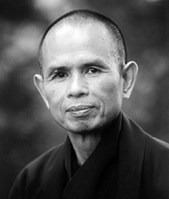 What are the most basic elements of love and how can we manifest them in our lives and our relationships? This is the question that Thich Nhat Hanh tackles in his short book, ‘True Love’. Looking at human love through the lens of Buddhist teaching, he breaks it down into four aspects: loving-kindness, compassion, joy and freedom and uses his direct and simple style to advise us how to put these elements to work in our own lives.
According to Buddhism, there are four elements of true love. The first is maitri, which can be translated as loving-kindness or benevolence. Loving-kindness is not only the desire to make someone happy, to bring joy to a beloved person; it is the ability to bring joy and happiness to the person you love, because even if your intention is to love this person, your love might make him or her suffer. Training is needed in order to love properly; and to be able to give happiness and joy, you must practice deep looking directed toward the person you love. Because if you do not understand this person, you cannot love properly. Understanding is the essence of love. If you cannot understand, you cannot love. That is the message of the Buddha. If a husband, for example, does not understand his wife’s deepest troubles, her deepest aspirations, if he does not understand her suffering, he will not be able to love her in the right way. Without understanding, love is an impossible thing.
More here.
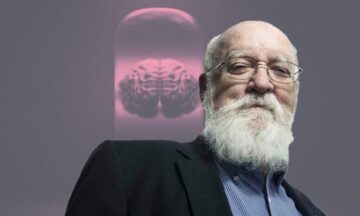 When Daniel Dennett’s essay collection “Brainstorms” was published in 1978, the interdisciplinary field of cognitive science was just emerging. Dennett was a young scholar who wanted to get philosophers out of their armchairs and into conversations with psychologists, linguists, and computer scientists. “I tried in ‘Brainstorms’ to write about the problems in language accessible to all serious thinkers, as jargon-free as possible, with lots of examples,” he writes in the preface to
  Scientists have successfully developed a new, controllable prosthetic extra thumb designed to enhance productivity.
 At the dawn of the twenty-first century India’s intellectual classes professed a cautious optimism – verging at times on self-congratulation – about the nation’s tryst with democracy. For many, the unruly coalition governments of the late 1990s and early 2000s reflected the deepening of democratic norms and a shared commitment to the peaceful transfer of power. Others pointed to high voter turnouts – especially among the poor – and the rise of elected representatives from hitherto subordinated castes as proof that democracy had been profoundly vernacularized.
 At the heart of Pop Art, Lichtenstein adeptly appropriated and reimagined iconic symbols, from Mickey Mouse to love and war comics, to popular advertising motifs. Through his masterful reinterpretations, he challenged conventional notions of high and low culture, inviting viewers to reconsider the significance of everyday imagery in the realm of art.
 Anthony Fauci, the former head of the US National Institute of Allergy and Infectious Diseases (NIAID), emphatically fended off allegations at a Republican-led hearing in Washington DC today that his agency funded research that created the COVID-19 pandemic or that he coordinated a cover-up of the pandemic’s origins, calling the claims “simply preposterous”. The 3 June session was one of the most anticipated hearings hosted by the US House of Representatives Select Subcommittee on the Coronavirus Pandemic. The subcommittee has held 27 hearings or briefings over the past 15 months to examine the federal government’s response to the pandemic and
  Ibram X. Kendi has a notebook that prompts him, on every other page, to write down “Things to be grateful for.” There are many things he might put under that heading. First and foremost, his wife and two daughters, and his health, having made it through Stage 4 colon cancer in his 30s — a diagnosis with a 12 percent survival rate. Tenure at Boston University, where Martin Luther King Jr. earned his doctorate in theology. A National Book Award, and a MacArthur “genius” grant for “transforming how many people understand, discuss and attempt to redress America’s longstanding racial challenges.” Then there were the millions of people who bought “How to Be an Antiracist,” the first of five of his books to take the No. 1 spot on the New York Times best-seller list. But he was particularly grateful to the readers who wrote to him to say his work changed them for the better.
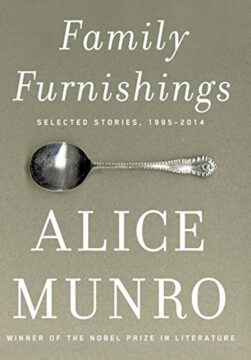 The stories selected in Family Furnishings, a fine and timely follow-up to Alice Munro’s winning of the 2013 Nobel Prize, date (it says on the cover) from 1995 to 2014, thus making a sequel to the Selected Stories of 1996, which drew on the previous thirty years of Munro’s writing. But there is one exception to this dating in the new selection, the magnificent story “Home.” “Home” was first published in a collection of Canadian stories in 1974, so it was written when Munro was in her early forties. She then went on working on it for thirty years, revising, correcting, and changing its shape, and it was republished in much-altered form in 2006: so it appears here as a “late” story. That process of revisiting is fundamental to Munro’s methods. She constantly revises her work; she reuses her subject matter with the utmost concentration and attention; and her characters, like her (and often they are like her), compulsively return to their pasts.
 Dear Reader,
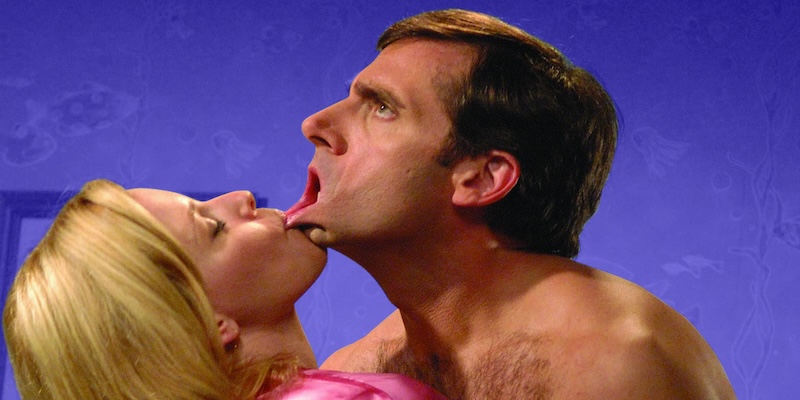 For a few years now I’ve been teaching a class on erotic writing. Most of it follows the same structure of any creative-writing class—we discuss character and motivation—but the content, you can imagine, takes on a different slant.
 We’re comparing an electric car and a traditional petrol one and looking at the life-cycle emissions — that is, all the emissions produced from cradle to grave.
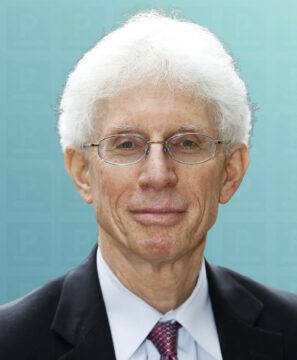 William Galston is an author and academic who holds the Ezra K. Zilker Chair in Governance Studies at the Brookings Institution. Galston was also deputy assistant for domestic policy to President Bill Clinton. His latest book is
  Unlike many art historians and art critics, philosophers do not look for works of art that are necessarily beautiful or interesting. Most of us—at least those educated in the continental tradition of Hegel, Nietzsche, and Arendt—instead look for works that disclose a theoretical stance. Martin Heidegger’s writing on Van Gogh’s shoes paintings, Arthur Danto on Andy Warhol’s Pop Art, and Jacques Rancière on Alfredo Jaar’s photographs are paradigmatic examples. This does not mean we do not care about the artist’s effort in creating such work; rather, we focus more on whether the work discloses an aesthetic notion, political idea, or anthropological concept that has meaning for society at large. Artists, for us, have the same ontological purpose as scientists or politicians. A great work of art, new scientific discovery, or progressive policy can change people’s relationship with reality. If these works, discoveries, and policies change this relationship, it is not necessarily because they are “better” than others but because they touch our existence to a greater degree.
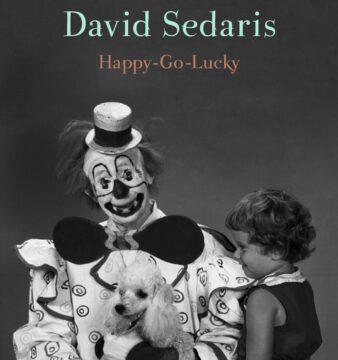 His father set a number of things in place so that after death “there would be little bombs that would explode upon me,” Sedaris tells me. “Like when I graduated from college, he said he’d set up an IRA for me and talked for years about it. You know, he never set it up. And he left me the minimum amount of money you can leave somebody so they wouldn’t contest the will. When I found out about it and confronted him, that was his big disappointment, that I’d found out before he died. It was also in his will that I would get any boats or cars that he owned. We’d never had a boat and I don’t even know how to drive. My father took pains to sell his 1964 mint-condition Porsche a year before he died just so I wouldn’t get it. It’s nasty things, hurtful things. I’m not hurting for money, but it’s not about that. It bothers me that I’m allowing him to hurt me. Everyone else in my family is getting two-and-a-half million dollars. If he had left me that two-and-a-half million dollars, I’d probably be thinking, you know, he’s not so bad, maybe I just misunderstood him. But to have been treated that way in life and then in death as well? I feel pathetic being a 65-year-old man whining because his father wasn’t nice. And then it bothers me that I’m being pathetic.”