
Category: Recommended Reading
Woolworth’s shrine to commerce

At 7.30 on the evening of April 24, 1913, President Woodrow Wilson pushed a button on his desk in Washington, DC, sending a telegraphic signal to New York where it set off an alarm bell in the engine room of a skyscraper and set in motion four mighty Corliss-type engines and dynamos. In an instant, some 80,000 incandescent bulbs flashed on, illuminating for the first time the world’s tallest skyscraper – the Woolworth Building. Thousands of spectators had gathered in City Hall Park and along lower Broadway to witness the dazzling electrical spectacle that marked the opening of this fifty-five-storey addition to New York’s skyline. On the New Jersey shore, people caught their breath as the tower appeared, shimmering against the night sky, a gleaming beacon of modernity visible from ships a hundred miles away. As the 792-foot tall skyscraper was bathed in electric light, the news was being transmitted from its pinnacle by Marconi wireless to a receiver on the Eiffel Tower. From there it was beamed around the world. This modern media event was, as one commentator said, “the premier publicity stunt of this or any other day”. It was a fitting opening for what would become the most famous office building in the world.
more from the TLS here.
Like a Guest That Won’t Leave, BPA Lingers in the Human Body
From Scientific American:
A new study indicates that bisphenol A (BPA), a chemical used in plastic bottles and can linings that has been linked to heart disease, diabetes and liver failure, may linger in the body far longer than previously believed. Environmental health scientist Richard Stahlhut of the University of Rochester Medical Center and his colleagues discovered that even those who had been fasting for 24 hours still had high BPA levels in their urine, using a U.S. Centers for Disease Control and Prevention (CDC) survey of 1,469 adults.
Stahlhut says that it appears that the amount of BPA in the body drops relatively rapidly from four to nine hours after exposure, but then levels out. “After the nine hours or so,” he says, “it stops doing what it's supposed to and the decline goes flat.” Previous research had suggested that levels of BPA, which mimics the female hormone estrogen in the human body, declined by 50 percent every five hours after it was ingested in foods or water it had leached into from plastic containers. But the new research indicates that the chemical declines initially but then sticks around, making it potentially more harmful.
More here.
Stock-Surfing the Tsunami
From The New York Times:
In recent months, as the stock market has virtually spun off its axis, most people—the reasonable ones—have fled for their economic lives. But like a big-wave rider or a tornado chaser, Peter Milman dives in and out of the market’s sickening maw, riding the explosions of panic and greed and trying to snatch victory—profits—from the jaws of worldwide financial defeat. As a day trader who follows every tick of the Dow, he has a visceral view of the most manic-depressive stock market in recent history.
It is precisely the terrifying volatility—the VIX, the ticker symbol for the Chicago Board Options Exchange Volatility Index, has reached its highest recorded levels in recent months—that has made day traders suddenly hot again after years in the wilderness following the dot-com bust of 2000. (In fact, they don’t call themselves “day traders” anymore, preferring the term “active,” or “professional,” traders.) Downswings of hundreds of points on the Dow followed by equally large reversals offer great opportunities for the short-term investor. One need only jump in and chase a stock or an index for a few points: Buy in, sell off, repeat. Traders try to make money on the upswings and the downswings, in the latter case by short-selling—temporarily covering a long position for another party on the bet that his stock will go down. But Milman prefers to hitch a ride on the rebounds, the style of trading he learned during the bull market.
More here. (Note: Thanks to Dr. S.T. Raza)
Thursday Poem
Only you may have this thought.
You think, perhaps, this thought is mine?
You, me, we? Silly boy, I think.
……………………………….-Elena Wisebrough
///
“To Opinion: An Assay”
Jane HirshfieldMany capacities have been thought to define the human—
yet finches and wasps use tools; speech comes
into this world in many forms.
Perhaps it is you, Opinion.Though I cannot know for certain,
I doubt the singing dolphins have opinions.This thought of course, is you.
A mosquito's estimation of her meal, however subtle,
is not an opinion. That's my opinion, too.To think about you is to step into
your arms? a thicket? pitfall?When you come rising strongly in me, I feel myself grow separate
and more lonely.
Even when others share you, this is so.Darwin said no fact or description that fails to support an argument can serve.
Myoe wrote: Bright, bright, bright, bright, the moon.
Last night there were whole minutes when you released me.
Ocean ocean ocean was the sound the sand made of the moonlit waves
breaking on it.I felt no argument with any part of my life.
Not even with you, Opinion, who drifted in salt waters with the bullwhip kelp
and phosphorescent plankton,
nibbling my legs and ribcage to remind me where Others end and I begin.Good joke, I agreed with you, companion Opinion.
///
Wednesday, January 28, 2009
Toasting Robert Burns
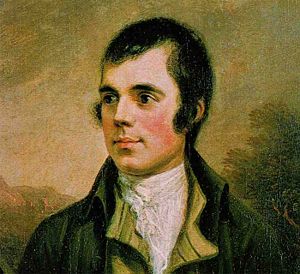
He became Scotland's answer to Shakespeare. And that was a relief to the Scots. Those long incoherent English rambles confused many. And still do. And across the Atlantic Ocean in the colonies, American patriots were dumping tea in Boston's harbor, telling the Brits to pack their bags. Burns admired that. He had little time for British monarchy and its fine china. They had stolen Scotland's independence a generation before his time.
Burns was a modern rebel. Every Scot could recite his line, “Scots wha' ha'e wi' Wallace bled,” and everyone knew what it meant, including Mel Gibson in “Braveheart,” 200 years later.
Ironically, after his death, his poetic influence was spread by Scots taking their place at the vanguard of the British Empire. While the British were relieving countries of their art, taming the native chiefs with tea on the lawn and inflicting the odd massacre on their people, Burns was being read by revolutionaries everywhere. From Moscow to Havana, in China and beyond, anyone with a beef against a bully, or a cause worth fighting for, found Burns to be their poet of choice. His most eloquent call for equality came in his most famous poem of all – “A Man's a Man for a' That”:
“Then let us pray, that come it may, (As come it will for a' that,) That Sense and Worth o'er a' the earth, Shall bear the gree an' a' that, For a' that and a' that, It's coming yet for a' that, That Man to Man the world o'er, Shall brothers be for a' that.”
He had written “Imagine,” two centuries before John Lennon.
Tonight, thousands around the world will be attending Burns Suppers, listening to bagpipes, wearing kilts, getting sloshed and eating the most unknowable culinary invention known to mankind, the Scottish haggis, or as Burns called it, “the Great Chieftain o' the Puddin' race.”
What’s Missing in the Stimulus Plan
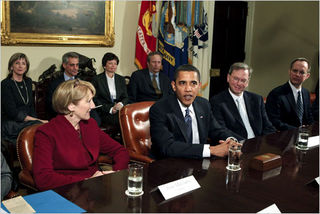
The stimulus package is an impressive feat of fast drafting, progressive principle and good politics. It should pass and it will help. But given the depth of the crisis and the lock-up of the financial system, it is not an end-point, only a start.
If we are in a true financial crisis of the type in the 1930s — and there is many good reasons to think that we are — then the approach of a short-term stimulus combined with troubled-asset relief will not do the whole job. It will become necessary to think and act on a larger scale, to recognize that the private financial sector will not recover until after household balance sheets have been restored.
Another package will be needed, and here’s what it should include:
– Open-ended support for the current operations of state and local governments for the duration of the crisis, including open-ended support for public capital investment. All the resources being released from residential and commercial construction should be taken up in public building. At the federal level, strategic investments in mass transit and other long-term improvements — largely omitted from the current package — should be authorized via a permanent National Infrastructure Fund.
Chandan Kukathas on Genocide
Over at philosophy bites, an audio of an interview:
Genocide is, at first glance, a straightforward term. We think we know what it is and why it is such an evil. But, as Chandran Kukathas of the London School of Economics argues in this episode of the Philosophy Bites podcast, perhaps the received definition of this term that emerged following the Second World War needs refinement.
Charles Stross book event
Over at Crooked Timber; responses can be found here and here, thus far:
A New Year, a new Crooked Timber book event. But instead of one book, we’re covering a dozen or so, all written by Charlie Stross, exploring different forms of the SF genre from postcyberpunk to alternate history and beyond. For this we need an all star cast, and, in addition to several CT regulars (Henry, both Johns and Maria), we have contributions from Paul Krugman, Brad DeLong and Ken MacLeod. Between us, we’ve managed to cover nearly everything. Glaring exceptions include the Laundry series, which every fan of Len Deighton and HP Lovecraft should read, and Glasshouse. I’ve added an open thread at the end of the seminar, for those who want to discuss what we missed.
For those who haven’t read Stross, start off with Maria Farrell who shows why you should. As Maria says, “Charles Stross has more ideas than is probably healthy for one man”, and her essay shows some of this amazing range. With that to whet your appetite, it’s probably best to jump randomly to whatever sounds most interesting, but for those who prefer some order, I’ll give a summary of the seminar, mainly in chronological (reverse blog) order.
Starting off with a heavy hitter, we’ve got Paul Krugman writing on The Merchant Princes, considered as a thought experiment in development economics. Of course, as Paul points out, these books are first, and foremost, great fun. But, unlike others in the ‘between alternate timelines genre’ Stross focuses on the big question: how does an agrarian society respond to a sudden irruption of modern industrial technology?
Is Science the Mirror of Democracy?

When the new president went on vowing to harness the sun, the wind and the soil, and to “wield technology’s wonders,” I felt the glow of a spring sunrise washing my cheeks, and I could almost imagine I heard the music of swords being hammered into plowshares.
Wow. My first reaction was to worry that scientists were now in the awkward position of being expected to save the world. As they say, be careful what you wish for.
My second reaction was to wonder what the “rightful place” of science in our society really is.
The answer, I would argue, is On a Pedestal — but not for the reasons you might think…
It is no coincidence that these [value that are found in science] are the same qualities that make for democracy and that they arose as a collective behavior about the same time that parliamentary democracies were appearing. If there is anything democracy requires and thrives on, it is the willingness to embrace debate and respect one another and the freedom to shun received wisdom. Science and democracy have always been twins.
Today that dynamic is most clearly and perhaps crucially tested in China. As I pondered Mr. Obama’s words, I thought of Xu Liangying, an elderly Chinese physicist and Einstein scholar I met a couple of years ago, who has spent most of his life under house arrest for upholding Einstein’s maxim that there is no science without freedom of speech.
The converse might also be true. The habit of questioning that you learn in physics is invaluable in the rest of society.
the last professor
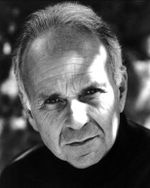
Everyone is reading Stanley Fish’s essay, “The Last Professor,” in the New York Times (January 25), a column itself based on the title of a book by Frank Donoghue, one of Fish’s former pupils. It seems highly appropriate that a column entitled “Last Things” should be interested in one entitled “The Last Professor.” A professor who does not in his discipline also touch on its relation to the last things is merely a professor, not a wise man as a result of what he has learned about the whole of reality that he encounters in his studies, however narrow. The “last professor” must, as Cicero said in his essay on “Old Age,” finally take his stand before the last things if he is to live, what Aristotle called, a complete life. The phrase, “the last professor” means, in Fish’s context, that what a professor is said to do in his professorship no longer has any market. The lives of students have no place for the “impractical” enterprise of simply knowing. Everything is now practical, “down-to-earth,” job-oriented. No one, it is said, cares for things “for their own sakes,” to use Aristotle’s expression. As a letter to the editor said, the teachers are looking to the AFL-CIO for help. That is, everyone now recognizes that Fish is right.
more from First Principles here.
freeze them out!
In the early nineties the ungrateful European countries, including Czecho-Slovakia, expelled from their territories the Russian army which had been promoting peace and understanding among nations for twenty years. The Russian army’s presence ensured that Russian music and poetry was ceaselessly broadcast by the media, Russian films played in all the cinemas, publishers brought out Russian books and theatres staged Russian plays. Those times are over, never to return. In addition, much of the population regarded Russians as a completely alien element and were highly suspicious of them. The time has come for radical action. Theoreticians agree that nothing beats the personal experience of art, in the flesh, so to speak. That is why it has become necessary to apply the old but reliable strategy which has paid off on numerous occasions in history and which was started by the legendary general Kutuzov who used it in his war with Napoleon. Freeze them out!
more from Salon) here.
original nakedness

We all know, or think we know, about “Victorian prudishness,” but even as we smile we should remember to distinguish the link between sex and sin from the link between nudity and shame. The former was not created by Augustine, but he is our primary source for it, and he forged that link so strongly that for many centuries it has been hard to see the nude Adam and Eve without thinking Augustinian thoughts. It might never occur to us that the miserable pair could be ashamed not of their organs’ connection with sex but rather with the elimination of waste. (In some cultures this is a far more private matter than sex.) But if we could purge all such Augustinian assumptions from our minds, we would still be left, I think, with some discomfort—or, the story suggests, that’s what we should feel. How do we experience the nakedness of our First Parents? To take an oddly echoing episode from later in Genesis that clearly has no sexual context: Are we like Ham, the son of Noah, who not only looked upon his father’s nakedness as the old man lay drunk in his tent but also told his brothers about it? Do we, like Ham, experience no sense that Noah’s nakedness was shameful, no desire to cover him and restore him to decency? Or would we be like Ham’s brothers, who turned their heads away as they covered Noah and thereby saved him from further shame? The text says that when Noah awoke he “knew what his youngest son had done to him.” We think, done to him? What have we done to Adam and Eve by looking upon their nakedness? Yet for his impudence Ham was cursed.
more from Cabinet here.
Wednesday Poem
///
“Poem Ending With Three Lines
of 'Home on the Range'”
Frank BidartBarred from the pool twenty-three years ago, still I dove
straight in. You loved to swim, but saw no water.Whenever Ray Charles sings “I Can't Stop Loving You”
I can't stop loving you. Whenever the unstained-by-guilt
cheerful chorus belts out the title, as his voice, sweetand haggard reminder of what can never be remedied,
answers, correcting the children with “It's useless to say,”
the irreparable enters me again, again me it twists.The red man was pressed from this part of the West—
'tis unlikely he'll ever return to the banks of Red River, where
seldom, if ever, their flickering campfires burn.
///
Prolific Chronicler of Small-Town Angst
From The Washington Post:
John Updike, whose finely polished novels and stories exploring the virtues, vices and spent hopes of America's small towns and suburbs earned him two Pulitzer Prizes and kept him at the pinnacle of the nation's literary life for five decades, died yesterday at a hospice near his home in Beverly Farms, Mass. He was 76 and had lung cancer. Updike was best known for peering into the bedrooms and unquiet minds of suburban couples and small-town entrepreneurs in dozens of novels and stories that mirrored America's march from postwar optimism to the dimming dreams of a chastened generation. His most famous works were probably the quartet of novels about Harry “Rabbit” Angstrom, whose life was a continual search, whether in business or the beds of other men's wives, for the crystallized feeling of joy he had known as a small-town high school basketball star.
Updike was often labeled the bard of suburban adultery — “a subject which, if I have not exhausted, has exhausted me,” he once said — and many of his early works of fiction were considered scandalously explicit. Updike's reputation as a novelist and a sexual provocateur in print was secured with his novel “Couples,” which became a No. 1 bestseller in 1968. The book, which tells the intertwined stories of the longings of five New England couples, landed Updike on the cover of Time magazine under the heading “The Adulterous Society.
More here.
Cutting calories may improve memory
From Nature:
Cutting calories by 30% for three months has boosted memory and reduced insulin concentrations in a group of healthy elderly people. Previous research on the possible benefits of calorie restriction has yielded mixed results. Some studies have found no benefits. Others have found that calorie restriction protects rats and mice against age-related memory loss and some neurodegenerative diseases. In humans, cutting calories has been linked to prolonged health, but there have been no previous reports of an effect on memory.
Now, neurologist Agnes Flöel and her colleagues at the University of Münster in Germany have filled that gap. The group looked at 50 people divided into three groups: one maintained its usual diet, one was told to cut calories and the third was was asked to eat more polyunsaturated fatty acids — nutrients found in foods such as fish and olive oil that have previously been linked to reducing the risk of cognitive impairment. The participants were either of normal weight or overweight, and averaged just over 60 years old.
Three months later, the researchers found that those who cut calories were 20% better at remembering a list of words than those who either maintained the same diet or ate more polyunsaturated fatty acids.
More here.
Tuesday, January 27, 2009
Ivan Goncharov’s Oblomov
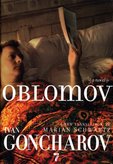
Long before Jerry Seinfeld and Samuel Beckett, there was Ivan Goncharov, a minor government official in czarist Russia, and his classic novel about an ordinary Russian aristocrat mired in his own extraordinary inertia. Originally published in 1859, Oblomov chronicles the misadventures of Ilya Ilich Oblomov, a protagonist who doesn’t leave his apartment, indeed scarcely shifts off his sofa, for the first 180-odd pages. Instead, like many Russian men of his era and station, Oblomov remains stolidly in place and worries ineffectually about the prospect of change—the planned uprooting of his Saint Petersburg household, distressing notices of declining fortune from his country estate, even casual invitations to dinner.
Which is not to say he is free of anxiety or preoccupation. Like all good aristocrats, he has a first-class liberal education and seized in his student years on “the pleasures of lofty thoughts.” But such intoxication faded almost as quickly as it descended: “Serious reading exhausted him. The great thinkers could stir no thirst in him for speculative truth.” Much the same convulsions of ardor and entropy mark Oblomov’s adult life—except entropy now has the upper hand. Absurdly, as his estate succumbs to neglect and declining income, he envisions grand, abstract reforms: “a brand-new plan that conformed to the demands of the era, a plan to organize his estate and administer his peasants.” But since these ideas involve forsaking his dust-filled apartment, Oblomov remains on-site, fretting, sleeping, eating, and sleeping some more.
Clearly, Oblomov is meant to serve as a social type, no less than the dissolute protagonists in the works of Chekhov, Lermontov, and scores of other writers decrying the decay of Russia’s feudal order. Yet as Mikhail Shishkin argues in the afterword to Marian Schwartz’s lively translation of a later version of the novel’s manuscript (which came to light in 1987), it would be a grave mistake to view Oblomov’s saga as a “satire on the fetters of serfdom.”
Bipedal Aliens: What Evolution Can Tell Us About Extraterrestrials and Vice Versa
If we ever do make contact with an extraterrestrial intelligence, what will it look like? Hollywood has had no shortage of examples for films and television shows that feature aliens, but they are almost always bipedal primates who speak English with a funny accent. This depiction is more the result of wardrobe budget constraints and the flexibility of actors than it is the imagination of writers…
My explanation — that the chances of an ET turning out to be a bipedal primate are close to zero — is not one shared by all scientists. None other than the Oxford evolutionary biologist Richard Dawkins wrote to Josh Timonen, the videographer who filmed and produced this piece:
I would agree with him in betting against aliens being bipedal primates and I think the point is worth making, but I think he greatly overestimates the odds against. Simon Conway Morris, whose authority is not to be dismissed, thinks it positively likely that aliens would be, in effect, bipedal primates. Ed Wilson gave at least some time to the speculation that, if it had not been for the end-Cretaceous catastrophe, dinosaurs might have produced something like the attached.
Dawkins then presented this page from Promethean Fire: Reflections on the Origin of Mind by Charles J. Lumsden and Edward O. Wilson, based on the paleontologist Dale Russell's evolutionary projection of how a bipedal dinosaur might have evolved into something like us had the dinosaurs not gone extinct.
by Charles J. Lumsden and Edward O. Wilson, based on the paleontologist Dale Russell's evolutionary projection of how a bipedal dinosaur might have evolved into something like us had the dinosaurs not gone extinct.On the Uprisings in Greece
Valia Kaimaki in Le Monde Diplomatique:
Following the killing of 15-year-old Alexis Grigoropoulos by a special police unit on 6 December, school and university students have risen up in an unprecedented outpouring of rage. Spontaneous demonstrations, mostly organised by email and SMS, have shaken towns and cities across the country: Athens, Thessaloniki, Patras, Larissa, Heraklion and Chania in Crete, Ioannina, Volos, Kozani, Komotini.
This is an uprising with many origins; the most obvious is police brutality. Alexis is not the first victim of the Greek police, only the youngest. But its roots also lie in the economic crisis – a national one which struck hard even before the consequences of the global financial storm made themselves felt. On top of this, Greece is going through a profound political crisis, both systemic and moral; it comes from the duplicity of political parties and personalities, which has broken all trust in state institutions.
Alexis’s death wasn’t an exceptional case, or a blot on the otherwise pristine copybook of the Athens police. The list of student and immigrant victims of torture and murder by the police goes back a long way. In 1985, another 15-year-old, Michel Kaltezas, was murdered by a police officer – a crime whitewashed by a corrupt judicial system. The Greek police may be no worse than police forces in other parts of Europe, but the wounds left by Greece’s dictatorship, the military junta of 1967-74, are still open here; and the memory of those seven dark years is deeply ingrained in people’s minds. This society does not forgive as readily as some.
Ten sci-fi devices that could soon be in your hands
In New Scientist:
2 Disappearing act
Few dreams have flipped from science fiction to fact as quickly as “invisibility cloaks”. The first, which worked only for microwaves, was unveiled in 2006. Since then the field has been inundated with attempts to make cloaks to rival Harry Potter's.
Cloaking makes an object disappear by steering electromagnetic waves around it – as if the waves had simply passed through. So far, the only way to do this is with “metamaterials”, which are made of electronic components designed to interact with light and direct it in a controllable fashion. The goal is to create a cloak that works for a broad spectrum of visible frequencies. Making these components isn't easy. They have to be tiny – smaller than the wavelength of light they are designed to interact with.
Last year, a group at the University of California, Berkeley, constructed a material that was able to bend – rather than reflect – visible light backwards for the first time. Ulf Leonhardt at the University of St Andrews, UK, has shown how metamaterials could work over a range of frequencies.
Even more mind-boggling, a team from The Hong Kong University of Science and Technology in China has worked out how to cloak objects at a distance. They suggest using “complementary materials” which have optical properties that cancel each other out. A wave polarised on a single plane passing through one material will become distorted, but this distortion is cancelled out as the wave passes through the complementary material, making it look as if neither material is there.