
Category: Recommended Reading
zoochitecture
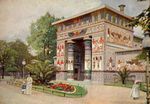
When the Bronx Zoo recently called lights out on the World of Darkness, I was disappointed. That’s not to say I was surprised: It’s news to nobody that the Bronx — like almost every other zoo, aquarium, museum, college, industry, company, household, individual — isn’t exactly flush right now, and something had to give. But though the loss of the nocturnal animals is a significant one, the exhibit’s closing was noteworthy for another reason. When it comes to zoo buildings, the World of Darkness is one of the most fascinating. The World of Darkness was built in 1969. It has no windows, and from above looks like a giant letter C; the exterior is made up of tall, narrow gray stone panels of varying heights, which pitch inward. Unlike a lot of the other things you find in zoos, there’s nothing goofy or frenetic about it. It is not austere or staid or “classic” in any historic way. You would actually never expect to stumble upon a building like the World of Darkness in a zoo. It’s the kind of structure you’d expect to find in a zoo on, say, the Krypton of 1978’s Superman. But this element of surprise is exactly what makes the building so compelling, its closing a loss. As a field, the architecture of zoos is a funny thing.
more from Jesse Smith at The Smart Set here.
to give the mundane its beautiful due

Hearing of John Updike’s death in January of this year, I had two immediate, ordinary reactions. The first was a protest—”But I thought we had him for another ten years”; the second, a feeling of disappointment that Stockholm had never given him the nod. The latter was a wish for him, and for American literature, the former a wish for me, for us, for Updikeans around the world. Though it was not as if he hadn’t left us enough to read. For years now his lifelong publishers at Knopf have been giving back-flap approximations. In the mid-1990s, in a cute philoprogenitive linking, he was “the father of four children and the author of more than forty books.” By the time of The Early Stories (2003) they had him, in a hands-in-the-air sort of way, as “the author of fifty-odd previous books.” Now, with Endpoint, they award him “more than sixty books.” Why ask for another ten years, and probably ten books, when even devoted Updikeans have probably only read half or two thirds of the corpus? Nicholson Baker’s act of homage, U and I (1991), was impudently predicated on the fact that he hadn’t by any means read all of Updike, or fully remembered what he had read—and no, he wasn’t going to do any extra homework before paying his tribute. It was a quirky approach, with which fellow Updikeans would sympathize; even if it did dangerously invite the act of imitation. I enjoyed Baker’s book, without feeling obliged to read it all.
more from Julian Barnes at the NYRB here.
protect protect

Although Jenny Holzer’s writing has often been the main focus of critics describing her art, her new and literally brilliant show makes it clear that she is as much a colorist as she is a provider of weighty aphorisms. Perhaps a reading closest to the truth would see her as an inspirational maker of active intellectual environments, whose effectiveness is far greater than the sum of their parts. At this point in time, there is a tradition of political resistance among artists—a legacy Holzer herself is partly responsible for—in the face of our government’s excessive force and anachronistically imperial ambitions. Taking our involvement in Iraq as her cue, Holzer has produced a truly political show, in which blacked-out secret document paintings and darkened handprints of persons suspected of torture add up to a bleak disregard for our military excursion. At the same time, her use of light-emitting diodes (LEDs) show her to be aware of the medium’s remarkably beautiful color, which according to both artist and curators stem from such high-brow sources as Matisse and Rothko. It seems to me somewhat exaggerated to tie modernist painting to so demotic an idiom as the LED, which after all is a technology more than a material. But maybe that is not really Holzer’s point—she wants the diodes to reach as many people as possible, and, equally important, she wants to communicate as much as possible with her writings.
more from artcritical here.
Wednesday Poems
–Ira Gershwin; Porgy and Bess
Zero
Robert Creeley
Not just nothing,
Not there's no answer,
Not it's nowhere or
Nothing to show for it –
It's like There's no past like
the present. It's
all over with us.
There are no doors…
Oh my god! Like
I wish I had a dog.
Oh my god!
I had a dog but he's gone.
His name was Zero,
something for nothing!
You like dog biscuits?
Fill in the blank.
Youth
Octavio Paz
The leap of the wave
whiter
each hour
greener
each day
younger
death
Damien Walters
The darker side of George Eliot
From The Guardian:
The most intriguing aspect of George Eliot's life has to be her honeymoon in Venice, in the summer of 1880. Her decision, at the age of 60, to marry John Cross, a young friend some 20 years her junior, had excited disapproval among friends and acquaintances, not least because GH Lewes, with whom she had enjoyed a long and loving relationship, had been dead for less than two years. Like Dorothea in Middlemarch, who begins to love Will Ladislaw while she is still married to Casaubon, Eliot had been delighted by Cross's youth and devotion long before Lewes's death. But their honeymoon punctured the fantasy for both when Cross leaped from the balcony of their hotel suite, sailing over three or four gondolas before landing in the middle of the Grand Canal. He was rescued and carried back to his room unharmed.
Tongues started wagging. Had Cross been in flight from the sexual demands of his older wife? “One could say he had a lucky escape!” wrote an Italian journalist with unconscious irony. Was it true Cross had begged the gondoliers not to drag him out of the canal? Brenda Maddox, in her jaunty sketch of Eliot's life, believes Cross was suffering from a recurrence of severe depressive illness. She also thinks that the marriage was unconsummated. It was, in any case, short-lived. Eliot was dead and buried in Highgate cemetery in just six months. Cross – “George Eliot's widow”, as he was unkindly known – became the keeper of the flame, producing a biography of his late wife that enshrined her as a sibyl and earnest talking head, leaving one critic to bemoan the absence of the “salt and spice” of Eliot's life.
More here.
Reality Check: The Inevitable Disappointments from Stem Cells
From Scientific American:
Happy days are here again for the embryonic stem cell (ESC) research community, or at least they should be. The day after Barack Obama was inaugurated as president in January, the U.S. Food and Drug Administration green-lighted an application from Geron Corporation to pursue the first phase I clinical trial of an ESC-based therapy (in this case, for spinal cord injury).
So scientists at last mostly have what they have been asking for. And the public should now prepare to be disappointed. To address the most obvious one first: practicable ESC-based therapies are years away. The upcoming tests of Geron’s paralysis treatment, for example, will look only at how safely it is tolerated by patients; tests of its effectiveness are further off. The therapeutic cells helped mice to partially recover from spinal injuries, but in humans they might fail to do the same or, worse, might induce tumors. It will take time to find out. New drugs often take five to nine years to progress from phase I testing to market. Moreover, many if not most of those future therapies based on ESC research may not actually involve ESCs. Patients, after all, will not be able to supply embryonic cells directly from their own body. Therapeutic ESCs would either have to come from immunologically matched stockpiles (the equivalent of blood banks) or be cloned for each patient individually. Both solutions would involve technological and legal headaches. Using adult stem cells or others reprogrammed for versatility from a patient’s own tissues may therefore prove much easier. (Adult stem cells are indeed already used to treat some blood-related and orthopedic disorders.)
More here.
Tuesday, May 26, 2009
Sculptor’s work made of human skin
Andrew Johnson in The Independent:
Some will find it shocking, macabre, echoing the worst allegations of Nazi atrocities. An American artist has spent the past 20 years making sculptures out of human skin, and is to exhibit his work in public in the UK for the first time later this year.
Welcome to the world of Andrew Krasnow, who has tackled one of the great taboos in art. Günther von Hagens may have caused controversy with his Body Worlds exhibition of human corpses, but Krasnow goes a step further.
His works include human skin lampshades – a direct response to the belief that similar items made from the skin of Holocaust victims were found at Buchenwald concentration camp.
Using skins from white men who donated their bodies to medical science, he has created freak versions of mundane items including flags, boots and maps of America – in effect using skin like leather. His work, he says, is a commentary on human cruelty and America's ethics and morality.
More here.
US Pole Dancing Federation 2009 Championship Highlights
bring on the paine
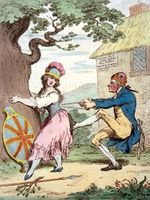
At the end of President Obama’s inaugural address in January 2009, he alluded to a small passage that appeared in Thomas Paine’s pamphlet Common Sense. Faced with an American economy wracked by nervousness and self-doubt Obama noted Paine’s rallying cry that galvanised and gave hope to the despairing: “Let it be told to the future world … that in the depth of winter, when nothing but hope and virtue could survive … that the city and the country, alarmed at one common danger, came forth to meet [this danger].” Unique among radicals, the 200th anniversary of the death of Thomas Paine will be marked in England, in France and across the Atlantic. This is a measure of the impact of Paine’s ideas both in his own country and in parts of the world that became the centre of revolutionary political change at the end of the 18th century. Paine was perhaps fortunate to live in such invigorating times and to be able to think about them so constructively. Yet what is remarkable is that his message has been capable of speaking with immediacy to each successive generation, providing radical inspiration and comfort in troubled times. This is because Paine was a persuasive author with a gift for penetrating, lucid and memorable language. However, he was also actively participating in the revolutions he wished to inspire. Both through word and deed he could justly claim ‘the world is my country and my religion to do good.’
more from David Nash at History Today here.
nehamas on dutton
Dutton’s effort to use Darwin to go beyond the origins of art and to evaluate its forms and resolve its philosophical ambiguities is animated by the desire to find the “human universals that underlie the vast cacophony of cultural differences through history and across the globe.” But why think of these differences as a cacophony? Why not celebrate them as a proliferation of human possibilities? Because the overvaluation of unity, an avatar of Platonic idealism, which lurks within Dutton’s naturalism has impelled him to write, in effect, two different books—one of which, on the prehistory of art, is better than the other, a novel and important work. Here, he is on solid ground—if, of course, we can speak of solid ground where speculation and theory are still impossible to distinguish. The evolutionary psychology of art seems to be living through its own Pleistocene Era. But to concede as much is also to suggest that, at least, it has a future. The Art Instinct is taking some of the very first, if uncertain, steps toward it.
more from The American Scholar here.
the laboratory of Cassius Marcellus Coolidge
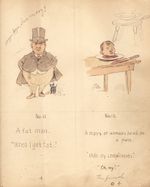
For more than a century, any promenade down a seaside boardwalk has required a stop at an apparently nameless apparatus: a painted wooden façade featuring a colorful character in an outlandish situation with a hole where its head should be. A tourist playfully inserting his or her head into the cartoonish scene is then recorded for posterity by a professional photographer. The genre has its favored iterations, from the weightlifting hulk to the bathing beauty, the swimmer perilously clenched in the mouth of a shark to the novice aviator nervously clutching the controls of an airplane. As one of the omnipresent features of visual mass culture in American life since the end of the nineteenth century, these façades offer the possibility of radical transformation in the guise of carefree recreation, a chance for the working-class beachgoer to become, safely and fleetingly, someone very different. As with any element of quotidian experience that seems always to have existed, the photo-caricature or comic foreground (two names given to the innovation by its inventor) does in fact have a genealogy—a complex one that winds its way through the rise of modern culture. Comic foregrounds were but one of a series of contributions to mass culture by the polymathic Cassius Marcellus Coolidge (1844–1934), who also gave the world the now-canonical “dogs playing poker” paintings and a comic operetta about a mosquito invasion in New Jersey.
more from Cabinet here.
Tuesday Poem
Fugitive Beauty
George De Gregorio
The term “fugitive beauty” came
to me in a letter. A friend’s wife
had used it in conversation. My friend
is a painter who studied in Paris.
I sought his opinion on poetry.
Fugitive beauty, evanescent, fleeting,
as if it implied a criminality
I did not understand.
Did all art start that way –
alone, furtive, so coiled
in its incubation that it feared
possible success or failure?
Fugitive, running away,
not standing with the norm, the herd,
not strong enough
to be judged?
Or did it mean beauty as Keats meant it?
“Truth is beauty, beauty truth” –
a raw truth, or a new dimension of beauty,
a new adjective
to describe eagles soaring,
no parameters,
like prisoners breaking out.
Out there by itself,
not great, not mediocre,
but flying in its own space
against all normalcy, blasting off
to its own truthfulness,
its own freedom.
The Evolution of House Cats
Carlos A. Driscoll, Juliet Clutton-Brock, Andrew C. Kitchener and Stephen J. O'Brien in Scientific American:
It is by turns aloof and affectionate, serene and savage, endearing and exasperating. Despite its mercurial nature, however, the house cat is the most popular pet in the world. A third of American households have feline members, and more than 600 million cats live among humans worldwide. Yet as familiar as these creatures are, a complete understanding of their origins has proved elusive. Whereas other once wild animals were domesticated for their milk, meat, wool or servile labor, cats contribute virtually nothing in the way of sustenance or work to human endeavor. How, then, did they become commonplace fixtures in our homes?
Scholars long believed that the ancient Egyptians were the first to keep cats as pets, starting around 3,600 years ago. But genetic and archaeological discoveries made over the past five years have revised this scenario—and have generated fresh insights into both the ancestry of the house cat and how its relationship with humans evolved.
More here.
A Delicate Subject
From The Washington Post:
“To me,” Peter Laufer writes early in “The Dangerous World of Butterflies,” “journalism is an all-or-nothing calling. A real journalist is a journalist to the grave.” But even the toughest reporters can get worn out. Laufer, the author of many hard-edged books — about the rise of neo-Nazism, vigilantes on the Mexican-American border and, more recently, the suffering of soldiers returning from Iraq — has decided to take on a more lighthearted subject: butterflies. He begins his sally in Nicaragua, where he learns of a conflict between the “butterfly huggers” of the North American Butterfly Association and the International Butterfly Breeders Association over the staged release of butterflies at public events. His investigation reveals a sordid underworld of butterfly hobbyists in which “nefarious collectors fuel criminal butterfly poachers worldwide.”
More here.
Texting May Be Taking a Toll
From The New York Times:
They do it late at night when their parents are asleep. They do it in restaurants and while crossing busy streets. They do it in the classroom with their hands behind their back. They do it so much their thumbs hurt. Spurred by the unlimited texting plans offered by carriers like AT&T Mobility and Verizon Wireless, American teenagers sent and received an average of 2,272 text messages per month in the fourth quarter of 2008, according to the Nielsen Company — almost 80 messages a day, more than double the average of a year earlier. The phenomenon is beginning to worry physicians and psychologists, who say it is leading to anxiety, distraction in school, falling grades, repetitive stress injury and sleep deprivation.
Dr. Martin Joffe, a pediatrician in Greenbrae, Calif., recently surveyed students at two local high schools and said he found that many were routinely sending hundreds of texts every day. “That’s one every few minutes,” he said. “Then you hear that these kids are responding to texts late at night. That’s going to cause sleep issues in an age group that’s already plagued with sleep issues.” The rise in texting is too recent to have produced any conclusive data on health effects. But Sherry Turkle, a psychologist who is director of the Initiative on Technology and Self at the Massachusetts Institute of Technology and who has studied texting among teenagers in the Boston area for three years, said it might be causing a shift in the way adolescents develop.
“Among the jobs of adolescence are to separate from your parents, and to find the peace and quiet to become the person you decide you want to be,” she said. “Texting hits directly at both those jobs.”
More here.
The rise and fall of Prabhakaran
M K Bhadrakumar in Asia Times:
The Liberation Tigers of Tamil Eelam supremo Velupillai Prabhakaran's death circa May 19, 2009, in circumstances we will never quite get to know, concludes a morality play.
As the curtain comes down and we leave the theater, the spectacle continues to haunt us. We feel a deep unease and can't quite figure out the reason. Something rankles somewhere. And then we realize we have blood on our hands.
Not only our hands, but our whole body and deeper down, our conscience – what remains of it after the mundane battles of our day-to-day life – are also dripping with blood.
Prabhakaran's blood. No, it is not only Prabhakaran's, but also of 70,000 Sri Lankan Tamils who have perished in the unspeakable violence through the past quarter century.
All the pujas we may perform to our favorite Hindu god, Lord Ganesh, for good luck each morning religiously so that we march ahead in our life from success to success cannot wash away the guilt we are bearing – the curse of the 70,000 dead souls.
Our children and grandchildren will surely inherit the great curse. What a bitter legacy!
A long time ago, we created Prabhakaran. We picked him up as an urchin from nowhere. What we found charming about him was that he was so thoroughly apolitical – almost innocent about politics. He was a simpleton in many ways, who had a passion for weapons and the military regimen. He suited our needs perfectly.
Which was to humiliate the Junius Richard Jayewardene government in Sri Lanka and teach it a hard lesson about the dangers of being disrespectful to India's status as the pre-eminent power in the Indian Ocean.
More here.
Monday, May 25, 2009
perceptions
Sunday, May 24, 2009
A journey through the heart of Iran
Hooman Majd in Newsweek:
The layers of contradiction that make up the modern Islamic Republic of Iran are both pervasive and confounding, and not any less so in Yazd. Set amid the blistering deserts of central Iran, the city is home to the kind of fierce religiosity bred in Islam's starker landscapes, and many of its sons were sacrificed to the bloody war with Iraq. Yet it is also a capital of pre-Islamic Persia, and is well known for its Zoroastrian temples and grave sites. (At one fire temple, priests continue to tend a flame that they claim has burned for more than 500 years.) It is the only city in the world that can boast two native sons, Khatami and Moshe Katsav, who simultaneously served as presidents of Iran and Israel. Even the mosque where Sadoughi leads prayers is named after a Jewish convert.
The sermon that Sadoughi had delivered that morning had been equally impossible to categorize. He defended the inflammatory speech that President Mahmoud Ahmadinejad had delivered earlier that week at a United Nations conference on racism, chiding Western nations who “allegedly are … defenders of free speech” for walking out. But he also criticized the government, in this case for failing to ensure that Iranian pilgrims traveling to Iraq were adequately protected, a large number of them having been killed the day before in a suicide bombing near Baghdad. And he conceded that the United States had elected a new president who had promised to change its relationship with Iran. He declared that Iranians were waiting to witness real deeds from Washington, not mere rhetoric. But at the end of his 30–minute sermon, unlike past Friday prayers and prayers that same day in Tehran, there were no chants of “Death to America” or “Death to Israel,” not even halfhearted ones. Later that night in his office he repeated, wistfully, the same sentiment—that words alone were not enough from the United States, not for Iranians, who are master rhetoricians, and who well understand the many uses to which they can be put.
More here.