
Victor Brombert at the Hudson Review:
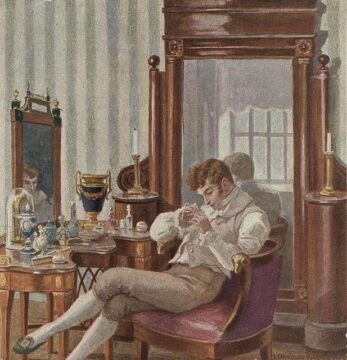 Friends called her Anna Vassilievna, according to the Russian custom of having the patronym follow the given name. As evening fell, I often lay in my child’s pyjamas, on the living room sofa, close to my grandmother, my Babushka. The sofa stood in our living room in the Leipzig apartment, close to the large window. Some light came from the outside.
Babushka would recite Russian poetry. She made me repeat the names of Pushkin and Lermontov, and sang to me snatches from the opera Eugene Onegin. “Why don’t you dance, Lenski, why don’t you kiss the ladies’ hands?” Onegin asks his close friend whom he will soon kill in a duel. I heard the story many times, as it appears in Pushkin’s verse novel and in Tchaikovsky’s operatic version.
more here.
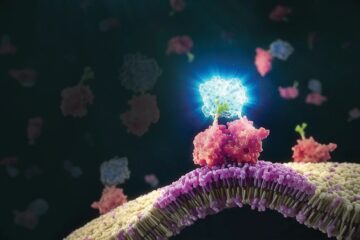 Although chimeric antigen receptor (CAR)-T therapy — where a patient’s T cells are engineered to fight cancer — works well against blood cancers in young people, that success drops dramatically for older patients. The impact of ageing on an older patient’s T cells, so-called cell fitness, could be the problem.
 For the first half of my life, certainly, when I was in my twenties, I was a great disappointment to my parents. College had held no interest for me. I was threatened that I had such a bad record of attendance at Hindu College that I would not be allowed to sit for my final-year exams. Each morning I boarded the University Special, the shuttle bus that the DTC provided for students, but I did so with the sole aim of sitting close to a girl I liked. (In three years, the sum total of our conversation had gone like this: “Would you like to read my poems?” “No.”) Then, I fell in love with another woman, from a different year, a year junior to me. I wrote her many letters, and even received responses, but we spent very little time together. We never even held hands. But I was happy. Instead of going to class, I sat on the college lawns smoking cigarettes, or reading in various libraries in the city, discovering poetry and fiction.
 The Obama administration saw a flurry of tech sector hype about self-driving cars. Not being a technical person, I had no ability to assess the hype on the merits, but companies were putting real money into it, and so I wrote pieces looking at the labor market, land use, and transportation policy implications. But the tech turned out to be way overhyped, progress was much slower than advertised, and then Elon Musk further poisoned the water by marketing some limited (albeit impressive) self-driving software as “Full Self-Driving.”
 In 2017, strategic studies scholar Brahma Chellaney
  There’s the crux of the issue: the k-hole. Ketamine gets you really, elaborately, bizarrely high. Doctors have never quite known how to describe this high or what to do about it. During the drug’s clinical trials in 1964, recovering patients reported that they’d been dead, suspended among the stars, or living in a movie. One researcher observed that ketamine “produced ‘zombies’ who were totally disconnected from their environment.” Investigators had to find the right word to broach these effects; hallucinations and zombies wouldn’t go over well with the FDA. An early contender, schizophrenomimetic (i.e., mimicking schizophrenia), was tossed out for obvious reasons. They settled on dissociative, which suggested a gossamer untethering of body and brain. A hot air balloon dissociates from the earth; the two halves of a Venn diagram are a dissociated circle. Confusingly, there was already a long history of dissociation in psychology, where the word describes someone too detached from reality to function. Dissociative anesthesia is technically unrelated, but people understandably conflate the two, especially now that ketamine is used in mental health contexts. Hence ketamine clinics speak of “the healing powers of dissociation”—seemingly the very thing of which you’d want to be healed.
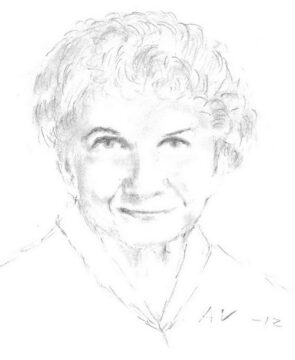 I reread “Family Furnishings” this morning because it is one of my favorite stories and because I will be discussing it soon with my students and because Alice Munro, possibly the greatest short-story writer there ever was and certainly the greatest in the English language, is dead. One of my teachers at the University of Montana introduced me to the story when I was an undergrad who had just begun to write and was utterly lost and did not know yet that these two things were one and the same. The story was so far beyond me I had almost no sense of what was going on except that by the end the narrator had been exposed to her own ignorance and arrogance and emotional irresponsibility in a way that was permanently imprinted on me, most likely because I understood it as a premonition of what was to come in my own life. But it is also a story about how the narrator becomes a fiction writer, about the ways a person from a small town might become such a thing, the ways high art will come into your life and separate you from the people who don’t live for art—this is most of them—and the things you must give up in order to commit yourself to the discipline of writing, the ways you will almost certainly piss people off back home when you finally find a way to fork the lightning of the sentence. Munro is one of the only writers whose work has haunted me not just on the first read but more and more as I’ve gotten older. A good story will hold your attention for a while, but a great story will open a new door in your head and then will change with you as you go and “Furnishings” is that kind of story. Each time I read it I see a thing I somehow did not before and understand something about life I did not before or had purposely forgotten; Munro’s best work is always a step past me and no matter what I do or how much older I get it remains that way and I hope it stays that way.
 The blockbuster diabetes drug Ozempic — also sold as the obesity drug Wegovy — can add another health condition to the list of maladies it alleviates. Researchers presented clinical-trial data today
 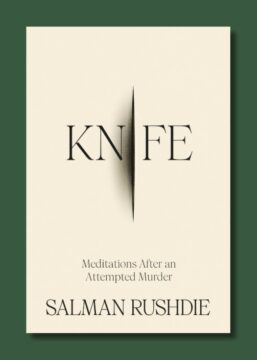 Is Salman Rushdie an artist or a symbol? Can he be one but not the other? Or perhaps it’s an all-or-nothing affair and he is both or else neither. Ever since Rushdie, the author of 13 novels, was violently attacked onstage in August 2022 at a literary event, one line of thinking has it that his books should perforce be celebrated. The
  “We were really motivated to try and develop a system where we could study the behavior of the African malaria mosquito in a naturalistic habitat, reflective of its native home in Africa,” McMeniman said. The researchers also wanted to compare the mosquitoes’ smell preferences across different humans, to observe the insects’ ability to track scents across distances of 66 feet (20 meters), and to study them during their most active hours, between 10 p.m. and 2 a.m.
 In a terse statement, Joe Biden called the charges “outrageous”,
  A parent asked a question in a private Facebook group in April 2024: Does anyone with a child who is both gifted and disabled have any experience with New York City public schools? The parent received a seemingly helpful answer that laid out some characteristics of a specific school, beginning with the context that “I have a child who is also 2e,” meaning twice exceptional.