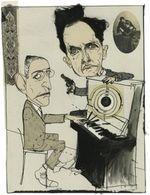
thornton wilder: between the cracks

66591-004-2BD6A7B2

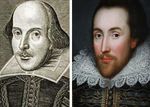
He was born in 1897, the same year as William Faulkner, a year after F. Scott Fitzgerald, and two years before Hemingway; he published his first novel in 1926, the same year as Soldiers’ Pay and The Sun Also Rises, a year after The Great Gatsbyand Arrowsmith, and a year before Elmer Gantry, and was immediately hailed as one of the best writers of his generation. He went on to write several more novels, almost all of them critically acclaimed bestsellers, and to win three Pulitzer Prizes, one for fiction and two for drama (he is still the only writer to have won Pulitzers in both categories). One of his novels was among the twentieth century’s great publishing sensations; one of his plays is the most performed American theatrical work of all time; yet another of his stage efforts was the basis for one of the most successful Broadway musicals in history. Some consider him the equal or superior of Hemingway and Fitzgerald as a novelist, and some place him alongside—or above—Eugene O’Neill and Tennessee Williams in the pantheon of American drama. Why, then, can it seem as if Thornton Wilder has fallen between the cracks?

link to the pdf at Hudson Review here.

Updike the Synthesizer

Our own Morgan Meis in The Smart Set:

ScreenHunter_10 Feb. 04 17.54 Updike gave a lecture on American art last year at the National Endowment for the Humanities. It was called “The Clarity of Things: What is American about American Art.” Updike discussed how American painting finally managed to become American. Most of the early American painters were tradesman. They knew how to paint, but they didn't know how to be “painterly.” As Updike put it, they were “liney” in the beginning.

A line is a child’s first instrument of depiction, the boundary where one thing ends and another begins. The primitive artist is more concerned with what things are than what they look like to the eye’s camera. Lines serve the facts.

Liney is how you paint when you know how to render individual things but you don't have the skill to make the depth and perspective cohere into a scene, to blur some of the hard lines in order to create a work of art. Still, there was something about liney painting that was true to the American experience. Speaking about the liney paintings of mid-18th-century painter John Singleton Copley, Updike said, “In the art-sparse, mercantile world of the American colonies, Copley’s lavish literalism must have seemed fair dealing, a heaping measure of value paid in shimmering textures and scrupulously fine detail.” But as America developed, so did its painters. They wanted to be able to paint like the masters across the sea. As ever seems the case in America, they had mixed-up desires: They wanted to be just as good as the Europeans and yet uniquely American. So American painters had to learn the subtle lessons of the craft all over again. Aesthetic problems that, in Europe, had been tackled and resolved in the early Renaissance became contemporary. Eventually, the American painters found a way. During the 19th century, they started making paintings that could easily have been created by European masters but for the slightly rougher subject matter of an American wilderness largely untamed. In doing so, they gained in skill at the expense of their specific style. To become better painters, they had to stop being so American.

More here.

Wednesday Poem

///
Omaha Beach
Piotr Florczyk

Returning here, it hasn't been easy
for them to find their place in the black sand—
always too much sun or rain,
strangers driving umbrellas yet deeper

into their land. The young radio host said so,
speaking of the vets. When the sea had come,
some curled up inside the shells;
others flexed and clicked their knuckles

on the trigger of each wave, forgetting
to come up for breath. Then as now, there was
no such a thing as fin-clapping fish,
quipped the host—his voice no more than

an umlaut going off the air. But he didn't
give us a name at the start or the end.
Nor did he explain how to rebury a pair of
big toes jutting out from the mud

at the water's edge. In the end, it's a fluke.
A beach ball gets lost. And a search
party leads us under the pier, into the frothy sea
impaling empty bottles on the rocks.
///

A Skeptic’s Take on the Public Misunderstanding of Darwin

Michael Shermer in Scientific American:

Darwin-misunderstood_1 On July 2, 1866, Alfred Russel Wallace, the co-discoverer of natural selection, wrote to Charles Darwin to lament how he had been “so repeatedly struck by the utter inability of numbers of intelligent persons to see clearly or at all, the self acting & necessary effects of Nat Selection, that I am led to conclude that the term itself & your mode of illustrating it, however clear & beautiful to many of us are yet not the best adapted to impress it on the general naturalist public.” The source of the misunderstanding, Wallace continued, was the name itself, in that it implies “the constant watching of an intelligent ‘chooser’ like man’s selection to which you so often compare it,” and that “thought and direction are essential to the action of ‘Natural Selection.’” Wallace suggested redacting the term and adopting Herbert Spencer’s phrase “survival of the fittest.”

Unfortunately, that is what happened, and it led to two myths about evolution that persist today: that there is a prescient directionality to evolution and that survival depends entirely on cutthroat competitive fitness.

More here.

African American social scientists: Cornel West

Note: This month, we will be posting daily items in honor of Black History Month:

From Wikipedia:

C_west Cornel Ronald West (born June 2, 1953) is an American scholar, public intellectual, philosopher, critic, pastor, and civil rights activist. West currently serves as the Class of 1943 University Professor at Princeton University, where he teaches in the Center for African American Studies and in the department of Religion. West is known for his combination of political and moral insight and criticism, and his contribution to the post-1960s civil rights movement. The bulk of his work focuses upon the role of race, gender, and class in American society and the means by which people act and react to their “radical conditionedness”. West draws intellectual contributions from such diverse traditions as the African American Baptist Church, pragmatism and transcendentalism.

West was born in Tulsa, Oklahoma.[2] The grandson of a preacher, West marched as a young man in civil rights demonstrations and organized protests demanding black studies courses at his high school. West later wrote that, in his youth, he admired “the sincere black militancy of Malcolm X, the defiant rage of the Black Panther Party […] and the livid black theology of James Cone.” After graduating from John F. Kennedy High School in Sacramento, California, where he served as president of his high school class, he enrolled at Harvard University at age 17. He took classes from philosophers Robert Nozick and Stanley Cavell and graduated in three years, magna cum laude in Near Eastern Languages and Civilization in 1973. He was determined to press the university and its intellectual traditions into the service of his political agendas and not the other way around: to have its educational agendas imposed on him. “Owing to my family, church, and the black social movements of the 1960s”, he says, “I arrived at Harvard unashamed of my African, Christian, and militant de-colonized outlooks. More pointedly, I acknowledged and accented the empowerment of my black styles, mannerisms, and viewpoints, my Christian values of service, love, humility, and struggle, and my anti-colonial sense of self-determination for oppressed people and nations around the world.”

More here.

We must adjust our distorted image of Hamas

William Sieghart in The Times:

Khaled_MeshaalImage4 Who or what is Hamas, the movement that Ehud Barak, the Israeli Defence Minister, would like to wipe out as though it were a virus? Why did it win the Palestinian elections and why does it allow rockets to be fired into Israel? The story of Hamas over the past three years reveals how the Israeli, US and UK governments' misunderstanding of this Islamist movement has led us to the brutal and desperate situation that we are in now.

The story begins nearly three years ago when Change and Reform – Hamas's political party – unexpectedly won the first free and fair elections in the Arab world, on a platform of ending endemic corruption and improving the almost non-existent public services in Gaza and the West Bank. Against a divided opposition this ostensibly religious party impressed the predominantly secular community to win with 42 per cent of the vote.

Palestinians did not vote for Hamas because it was dedicated to the destruction of the state of Israel or because it had been responsible for waves of suicide bombings that had killed Israeli citizens. They voted for Hamas because they thought that Fatah, the party of the rejected Government, had failed them. Despite renouncing violence and recognising the state of Israel Fatah had not achieved a Palestinian state. It is crucial to know this to understand the supposed rejectionist position of Hamas.

More here. [Photo shows Hamas leader Khaled Meshal.]

Tuesday, February 3, 2009

Literary legacy of slavery

Note: This month, we will be posting daily items in honor of Black History Month:

From Worldbook.com:

Douglass Before the American Civil War (1861-1865), many black writers were fugitive slaves. They described their experiences on plantations in an attempt to convince readers that slavery was immoral and to show the courage, humanity, and intelligence of the slaves. The most important slave autobiography of the period is the Narrative of the Life of Frederick Douglass (1845). Douglass became the leading spokesman for American blacks in the 1800's. Incidents in the Life of a Slave Girl (1861), by Harriet Ann Jacobs, is the only autobiography about the unique hardships suffered by women slaves.

The first published African American fiction appeared in the mid-1800's. This fiction included such novels as Clotel, or The President's Daughter (1853), by William Wells Brown; and Our Nig (1859), by Harriet E. Wilson. They were similar in content to slave autobiographies. The Garies and Their Friends (1857), by Frank J. Webb, is a novel that describes the problems of a free family living in the North. Blake (1861-1862), by Martin Robinson Delany, is a novel about a free black man who organizes a slave rebellion.

After slavery was abolished in 1865, African American authors wrote in many literary forms to protest race discrimination. In the 1890's and early 1900's, Paul Laurence Dunbar was acclaimed for his romantic poems in black dialect. However, some of his verses imply bitter social criticism. Charles Waddell Chesnutt sought to revise the negative images of former slaves by portraying them as intelligent and resourceful in his realistic short stories and novels. Chesnutt is considered to be the first major African American writer of fiction. Such black women writers as Frances Harper and Pauline Hopkins challenged both racism and sexism in their novels.

More here.

Black History Month

From CNN.com:

February marks the beginning of Black History Month, a federally recognized, nationwide celebration that provides the opportunity for all Americans to reflect on the significant roles that African-Americans have played in the shaping of U.S. history. But how did this celebration come to be, and why does it take place in February?

We should emphasize not Negro History, but the Negro in history. What we need is not a history of selected races or nations, but the history of the world void of national bias, race hate, and religious prejudice.

WoodsonDr. Carter G. Woodson (1875-1950) on founding Negro History Week, 1926

Dr. Carter G. Woodson, considered a pioneer in the study of African-American history, is given much of the credit for Black History Month, and has been called the “Father of Black History.” The son of former slaves, Woodson spent his childhood working in coalmines and quarries. He received his education during the four-month term that was customary for black schools at the time. At 19, having taught himself English fundamentals and arithmetic, Woodson entered high school, where he completed a four-year curriculum in two years. He went on to receive his Master's degree in history from the University of Chicago, and he eventually earned a Ph.D from Harvard.

Disturbed that history textbooks largely ignored America's black population, Woodson took on the challenge of writing black Americans into the nation's history. To do this, Woodson established the Association for the Study of Negro Life and History. He also founded the group's widely respected publication, the Journal of Negro History. In 1926, he developed Negro History Week. Woodson believed that “the achievements of the Negro properly set forth will crown him as a factor in early human progress and a maker of modern civilization.”

Woodson chose the second week of February for the celebration because it marks the birthdays of two men who greatly influenced the black American population: Frederick Douglass (February 14), an escaped slave who became one of the foremost black abolitionists and civil rights leaders in the nation, and President Abraham Lincoln (February 12), who signed the Emancipation Proclamation, which abolished slavery in America's confederate states. In 1976, Negro History Week expanded into Black History Month. The month is also sometimes referred to as African-American Heritage Month.

More here.

Joseph Stiglitz: Let Banks Fail

Ambrose Evans-Pritchard in The Daily Telegraph:

ScreenHunter_07 Feb. 03 19.05 Professor Stiglitz, the former chair of the White House Council of Economic Advisers, told The Daily Telegraph that Britain should let the banks default on their vast foreign operations and start afresh with new set of healthy banks.

“The UK has been hit hard because the banks took on enormously large liabilities in foreign currencies. Should the British taxpayers have to lower their standard of living for 20 years to pay off mistakes that benefited a small elite?” he said.

“There is an argument for letting the banks go bust. It may cause turmoil but it will be a cheaper way to deal with this in the end. The British Parliament never offered a blanket guarantee for all liabilities and derivative positions of these banks,” he said.

More here.

How to Measure a Cheshire Grin?

John Allen Paulos in the New York Times Book Review:

ScreenHunter_03 Feb. 03 17.20 Charles Lutwidge Dodgson, better known as Lewis Carroll, was a mathematician at Oxford University for most of his life. His fanciful “Alice’s Adventures in Wonderland” and “Through the Looking Glass” are quite familiar to us, as, to a lesser extent, are his photographs of young children. In “Lewis Carroll in Numberland,” the distinguished British mathematician Robin Wilson has filled a perceived gap in the writings about Carroll by describing in a straightforward, jabberwocky-free fashion the author’s mathematical accomplishments, both professional and popular.

Wilson begins this fine mathematical biography with an account of Dodgson’s idyllic North England childhood. Born in 1832, the eldest son in a large family, Dodgson was mathematically gifted like his clergyman father. He read widely, wrote amusing pamphlets for his siblings and dazzled his teachers. As Wilson documents, some of Dodgson’s later concerns with logic, time and puzzles were already apparent in his pamphlets and letters.

Proceeding linearly through Dodgson’s life, Wilson pays particular attention to his early career at Oxford, including the sometimes tedious details of exams, classes and the tutoring of fellow students. But even at the beginning of his career, Dodgson demonstrated a playful approach to mathematics, frequently injecting little puzzles into his lessons. (One of his classics: A cup contains 50 spoonfuls of brandy, and another contains 50 spoonfuls of water. A spoonful of brandy is taken from the first cup and mixed into the second cup. Then a spoonful of the mixture is taken from the second cup and mixed into the first. Is there more or less brandy in the second cup than there is water in the first cup?)

More here.

A trip through Gaza’s underground smuggling network

Sarah A. Topol in The New Republic:

ScreenHunter_01 Feb. 03 17.06 Finding the tunnels proved much easier than I had expected. Together with two other journalists, I hired Mahmoud, who moonlights as translator while co-owning a profitable, albeit somewhat vague, telecommunications company in the Palestinian town of Rafah. His best friend drove us the 15 minutes from Rafah to just outside the Philadelphi corridor, the heavily guarded strip of no-man's land that separates the two countries. Approximately 70 yards from the border, we hit dozens of tattered white tents, organized row upon row, tens of feet apart. Each tent houses the mouth of a tunnel that snakes beneath the border to Egypt.

Following Mahmoud's instructions, we wait in the car as he attempts to negotiate an interview for us with one of the tunnel owners. Around us, the flurry of activity is anything but surreptitious. Trucks, heavily laden with unmarked, small white parcels, loiter outside the tents ready to transport goods around the Strip. Tractors push and pull mounds of sand disgorged by bombings, looking to recover lost goods. Some tents have been damaged by the war, but many remain unscathed.

“What are the tents for?” I ask Mahmoud.

“They are to protect from sun and rain,” he answers.

“It's not to keep the tunnels secret?”

“The tunnels are not a secret!” he exclaims over the din of generators and the frantic scraping of shovels.

More here.

hitch does updike

090202_FW_UpdikeTN

Most of the celebrations and elegies for the great John Updike were abysmally bland, praising him as the bard and chronicler of the great American middle (middle-class, middle-minded, and so forth). One obituarist got it more nearly right, saying that Updike seemed like a paragon of the bourgeoisie to some while appearing as a worrying outrider of sexual liberation and subversion to others. A lot depends on how you first come upon an author—at my English boys boarding school in the 1960s, a copy of one of the early Rabbit works (Rabbit, Run) was passed around the dormitory with its covers ripped off as a “hot stuff” illicit text. To this day, I hardly dare go and look it up, but at one point “she” was apparently acting as if she wanted to turn herself inside out, while “he” could feel something like the inside of a “velvet slipper.” Oh, sweet Jesus, what was all this? I burned and yearned to know, just as Alexander Portnoy might have done, and was amazed later to discover that both Updike and Philip Roth were considered to be literature in the United States.

more from Slate here.

end of the road?

Williambuckley_narrowweb__300x4910

In the tumultuous history of postwar American conservatism, defeats have often contained the seeds of future victory. In 1954, the movement’s first national tribune, Senator Joseph McCarthy, was checkmated by the Eisenhower administration and then “condemned” by his Senate colleagues. But the episode, and the passions it aroused, led to the founding of National Review, the movement’s first serious political journal. Ten years later, the right’s next leader, Barry Goldwater, suffered one of the most lopsided losses in election history. Yet the “draft Goldwater” campaign secured control of the GOP for movement conservatives. In 1976, the insurgent challenge by Goldwater’s heir, Ronald Reagan, to incumbent president Gerald Ford was thwarted. But Reagan’s crusade positioned him to win the presidency four years later and initiate the conservative “revolution” that remade our politics over the next quarter-century. In each instance, crushing defeat gave the movement new strength and pushed it further along the route to ultimate victory. Today, the situation is much bleaker. After George W. Bush’s two terms, conservatives must reckon with the consequences of a presidency that failed, in large part, because of its fervent commitment to movement ideology: the aggressively unilateralist foreign policy; the blind faith in a deregulated, Wall Street-centric market; the harshly punitive “culture war” waged against liberal “elites.” That these precepts should have found their final, hapless defender in John McCain, who had resisted them for most of his long career, only confirms that movement doctrine retains an inflexible and suffocating grip on the GOP.

more from TNR here.

Transfer of Mother’s Cells Molds Baby’s Immunity

From The New York Times:

Fetus Researchers have long wondered how pregnant women might shape their fetuses’ development — by protecting them against later disease, perhaps, or instilling an appreciation of Mozart. Now a group in California has discovered a surprising new mechanism by which women train their fetuses’ budding immune systems: the mother’s cells slip across the placenta, enter the fetus’s body and teach it to treat these cells as its own. A crucial task of the developing immune system is to learn to distinguish between foreign substances and the self. It is tricky: the system must respond to outside threats but not overreact to harmless stimuli or the body’s own tissues.

The new findings show “how Mom is helping to tune that whole system early on,” said William J. Burlingham, an immunologist at the University of Wisconsin, who is not connected with the research. “It’s a major advance, very new and very exciting.” The work could have relevance to research on topics as diverse as organ transplantation, mother-to-child transmission of H.I.V. and autoimmune disorders like Type 1 diabetes.

More here.

Monday, February 2, 2009

Sunday, February 1, 2009

Obama reaches out

John Esposito in The Immanent Frame:

President Barack Obama has moved quickly to follow up on his inaugural statement: “To the Muslim world, we seek a new way forward, based on mutual interest and mutual respect.” He appointed and sent his special envoy to the Middle East, George Mitchell, to the region on an eight day trip. Then on January 28, on Al Arabiya, the prominent Arab satellite TV network, Obama addressed the Arab and Muslim worlds in his first televised interview from the White House.

For many Muslims, eight years of the Bush administration’s war against global terrorism has looked more like the use of terrorism, WMDs and then the promotion of democracy to legitimate a neo-colonial design to redraw the political map of the Muslim world. Conscious of the popular perception and fear that the U.S. has been fighting a war against Islam and Muslims, President Obama sought to counter soaring anti-Americanism and reassure Muslims that “the Americans are not your enemy.” Signaling a shift from the perception globally of U.S. arrogance and interventionism, Obama declared that while “we sometimes make mistakes,” America is not a colonial power and hoped for a restoration of “the same respect and partnership that America had with the Muslim world as recently as 20 or 30 years ago.”

Obama’s message did strike many of the right chords.

Heavy costs of a dirty war

Dushka H. Saiyid in DAWN:

THAT the world changed with the departure of Bush was borne out by Obama’s words at his inaugural address when he said, “Our founding fathers … drafted a charter to assure the rule of law and the rights of man … those ideals still light the world, and we will not give them up for expedience’s sake.” This is what distinguishes the western civilisation from what the Taliban and Osama are selling: it underscores the supremacy of the rule of law, and its cornerstone, that everyone is innocent till proven guilty. It was a rejection of rendition, water-boarding and other euphemisms for the torture of prisoners, incarcerated for years without trial. It is not difficult to fathom why the US, and Britain under Blair, lost their moral leadership of the world.

British Foreign Secretary David Miliband, a gifted man by all accounts, and son of the well-respected scholar and academic Ralph Miliband, felt that the time had come to accept that the war on terror, as conducted since 9/11, had been self-defeating, and that “we must respond to terrorism by championing the rule of law and not subordinating it, for it is the cornerstone of the democratic society”. He was articulating much the same vision as Obama, and like him mentioned the need to settle the Kashmir issue, “as that would deny extremists in the region one of their main calls to arms”. He was referring to one of the “contexts” of terrorism, as Arundhati Roy refers to it, and which must be addressed if a long-term end to terrorism is to be found.

More here.