
Category: Recommended Reading
The hidden story behind India’s remarkable election results: lethal heat
Amitava Kumar at The Guardian:
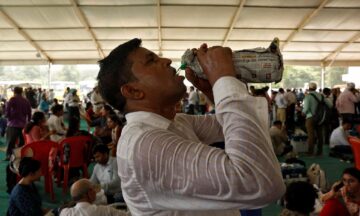 The Bharatiya Janata party (BJP), led by India’s prime minister, Narendra Modi, has won more seats than the opposition alliance, and yet its victory tastes of defeat. Why?
In the days leading to the election, the BJP’s main slogan had been Abki baar, 400 Paar, a call to voters to send more than 400 of its candidates to the 543-member parliament. This slogan, voiced by Modi at his campaign rallies, set a high bar for the party. Most exit polls had predicted a massive victory for the BJP – and now the results, with that party having won only 240 seats, suggest that the electorate has sent a chastening message to the ruling party and trimmed its hubris.
Let’s take as an example what has happened in the Faizabad constituency.
More here.
Weird Mysticism: Bataille, Cioran, Ligotti with Brad Baumgartner
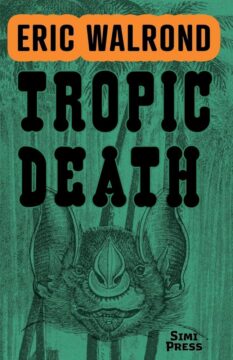
In Praise Of The Briefly Famous Caribbean Author Eric Walrond
Meara Sharma at The Believer:
 The specter of failure, of course, looms large over creative people, whose identities are particularly bound up with their work; the stock character of the tortured artist dates back to Plato. Culturally, we tend to romanticize grandiose failure—artists who toiled in bitter agony or isolation or with complete lack of recognition their whole lives, only to become demigods after death (van Gogh, Emily Dickinson). In an essay in Boston Review, the critic Tom Bissell considers how fragile the phenomenon of writerly success is, exploring how names that are iconic and enduring today, like Herman Melville and Walt Whitman, could easily have been long lost, had it not been for an assortment of arbitrary occurrences: “Remaindered copies bought from book peddlers. A man, sitting at his desk, an oxidized copy of a forgotten novel beside him, cobbling together an essay with no idea of what it would accomplish.… Essays published at the right time, in the right journals or books, noticed by the right people.” The reasons many famous writers of yore continue to have star status has little to do with fate, Bissell writes, but rather with “the stagecraft of chance.” He quotes Melville—notoriously unsuccessful in his lifetime, writing to a friend in 1849 upon the flop of his novel Mardi. “[It] may possibly—by some miracle, that is—flower like aloe, a hundred years hence—or not flower at all, which is more likely by far, for some aloes never flower.”
more here.
Alone Again, Unnaturally
Joseph Epstein in Commentary:
 For Billie Holiday, solitude was no bargain. “In my solitude,” she tells us in one of her signature songs, she sits in her room, filled with despair, gloom everywhere, eminently sad, certain she’ll soon go mad. Were she alive today, Ms. Holiday would be astonished to learn that solitude is no longer the dark and dreary state described by the lyricists Eddie DeLange and Irving Mills, but one, au contraire, that needs to be cultivated on the way to a rounder, fuller, in many ways more healthy mental life.
…More than two centuries earlier, Montaigne wrote at essay-length on the subject of solitude. “Now the aim of all solitude, I take it, is the same: to live more at leisure and at one’s ease,” he explained. To achieve this, it is “not enough to have gotten away from the crowd, it is not enough to move; we must get away from the gregarious instincts that are inside us, we must sequester ourselves and repossess ourselves.” He notes that “real solitude may be enjoyed in the midst of cities and the courts of kings; but it is enjoyed more handily alone,” and adds that “the greatest thing in the world is to know how to belong to oneself.” Montaigne lived this ideal, retiring after an active political life for the better part of each of his days to a tower in which he kept his books and lived his private life, enjoying his own thoughts and writing them out in his essays.
More here.
Scientists Are Working Towards a Unified Theory of Consciousness
Shelly Fan in Singularity Hub:
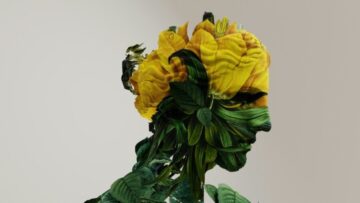 The origin of consciousness has teased the minds of philosophers and scientists for centuries. In the last decade, neuroscientists have begun to piece together its neural underpinnings—that is, how the brain, through its intricate connections, transforms electrical signaling between neurons into consciousness. Yet the field is fragmented, an international team of neuroscientists recently wrote in a new paper in Neuron. Many theories of consciousness contradict each other, with different ideas about where and how consciousness emerges in the brain. Some theories are even duking it out in a mano-a-mano test by imaging the brains of volunteers as they perform different tasks in clinical test centers across the globe.
But unlocking the neural basis of consciousness doesn’t have to be confrontational. Rather, theories can be integrated, wrote the authors, who were part of the Human Brain Project—a massive European endeavor to map and understand the brain—and specialize in decoding brain signals related to consciousness. Not all authors agree on the specific brain mechanisms that allow us to perceive the outer world and construct an inner world of “self.” But by collaborating, they merged their ideas, showing that different theories aren’t necessarily mutually incompatible—in fact, they could be consolidated into a general framework of consciousness and even inspire new ideas that help unravel one of the brain’s greatest mysteries.
More here.
The Unending Allure Of High Mountains
Henry Wismayer at Noema:
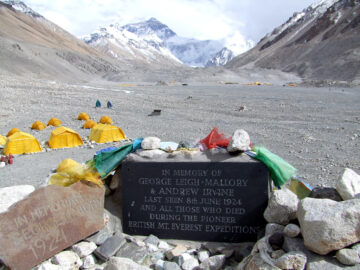 This month marks 100 years since Mallory’s last dance with the sublime. Debate persists over whether a 1920s climber in hobnail boots, even a phenom like Mallory, could have made it past the Second Step, a technical and challenging 100-foot promontory, to reach the summit.
“It’s the ultimate exploration detective story,” said Mick Conefrey, whose new book “Fallen” (2024), is the latest to dissect the 1924 expedition and its aftermath. “Mallory was the most romantic figure in the early history of mountaineering. The fact that he climbed ‘unplugged,’ without any down clothing, satellite phone or Kevlar oxygen bottle, means that people really want to believe he could have done it.” Definitive proof may never arrive. Irvine may have been carrying a Kodak Vest Pocket camera, the film inside which, were it ever recovered, might solve the question. But his body remains missing, imprisoned somewhere in the Himalayan deep freeze.
more here.
Friday Poem
When I Dream of You Young
Today I woke
thinking of you as you are
and as you have never been:
sundressed in a field,
the yellow of spring
in your step – and, pressed
against the balls of your feet,
the roots of every fledgling thing.
I exhaled the last wisp of sleep,
opened my eyes to rumpled sheets,
to our bedside clock set five minutes behind
the rest of the city. Your arms were cradled
between us, ambered,
the press of age
on the backs of your hands.
Your feet have never been warm.
Your mouth has never opened
to change.
When I dream of you young,
it is only a desire to know
a version of you that came before.
When I dream of you old
it is only an overabundance
of hope.
by Rebecca Cohen
from Across the Margin
Thursday, June 6, 2024
Salman Rushdie’s new memoir, ‘Knife,’ describes the assassination attempt its author survived and offers a moving contemplation of mortality
Paul Berman in Quillette:
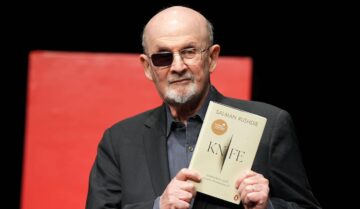 My copy of Salman Rushdie’s new book, Knife, arrived a few weeks ago, and before I had even opened the package, the news also arrived that Paul Auster had succumbed to cancer—and the confluence of Rushdie’s book and the information about Auster hit me harder than I would have predicted. Rushdie and Auster were friends. I knew this because in August 2022 there was a major assassination attempt on Rushdie—the assassination attempt is the topic of Knife—and a very few days later PEN America, the writers’ organisation, held a solidarity rally on the steps of the 42nd Street Library in New York. I attended, and I listened to Auster deliver a short speech. He celebrated Rushdie’s dedication to the storytelling imagination. He conjured the principle of freedom, and, in doing so, he expressed quietly an ardour of personal love, one friend for another in his moment of extreme trouble.
But it is Auster who has died, and the news has led me just now to reflect on the death, as well, of Rushdie’s close friend Martin Amis, who likewise succumbed to cancer, a year ago; and on the death thirteen years ago, again of cancer, of Amis’s best friend, Christopher Hitchens, the journalist, who was Rushdie’s friend as well. So I found myself gazing ruefully at the package with Rushdie’s book inside, and I was hit with the recognition that an entire chapter of Anglo-American letters appears to be nearly at an end—not entirely, of course, given that Rushdie does, in fact, have a new book. But his book is nothing if not a contemplation of mortality.
More here.
AI Outperforms Humans in Theory of Mind Tests
Eliza Strickland at IEEE Spectrum:
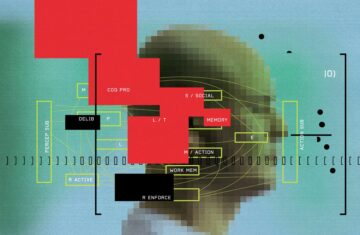 Theory of mind—the ability to understand other people’s mental states—is what makes the social world of humans go around. It’s what helps you decide what to say in a tense situation, guess what drivers in other cars are about to do, and empathize with a character in a movie. And according to a new study, the large language models (LLM) that power ChatGPT and the like are surprisingly good at mimicking this quintessentially human trait.
“Before running the study, we were all convinced that large language models would not pass these tests, especially tests that evaluate subtle abilities to evaluate mental states,” says study coauthor Cristina Becchio, a professor of cognitive neuroscience at the University Medical Center Hamburg-Eppendorf in Germany. The results, which she calls “unexpected and surprising,” were published today—somewhat ironically, in the journal Nature Human Behavior.
More here.
Geoffrey Hinton on working with Ilya Sutskever, choosing problems, and the power of intuition
Why No One Will Save Sudan
Cameron Hudson in Persuasion:
 History is repeating itself in Sudan. Tensions between rival security factions, which spilled out last April into open conflict, have rapidly created the world’s largest displacement crisis and food security crisis. Nearly half of the country’s 50 million people are in desperate need of food aid that is not reaching them, either because of access constraints or because it is simply not available.
For those tracking events in the country, a seemingly endless thread of headlines and editorials lament this “forgotten conflict.” But this is the wrong framing. The crisis in Sudan is neither forgotten nor ignored. It is de-prioritized. And that is worse.
The fact is that we know far more about the unfolding crisis today than we did 20 years ago when the Darfur region first became a household name.
More here.
Telepathy: Always Just Around The Corner
Roger Luckhurst at Aeon Magazine:
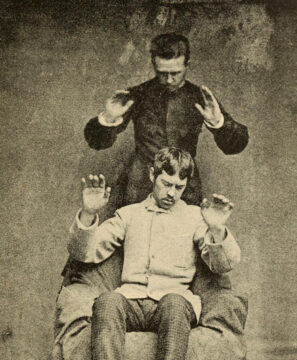 This linking of American paranormal research to the worlds of science fiction and UFOlogy suggests that we need to see telepathy in the context of the wider culture, where its meanings were always unstable and unbounded by any scientific protocols. For instance, telepathy resurfaced in the hippy counterculture of the 1960s, among a group that often opposed the oppressive military-industrial machine. Stuart Holroyd’s Psi and the Consciousness Explosion, published in 1977, placed parapsychology as part of a ‘new gnosis’ for the New Age, in which, Holroyd argued, ‘faculties that have been fettered and inhibited by the rigid orthodoxies of the bourgeois life-style and the materialistic values that sustain it will freely flourish.’ As emergent signs of this flourishing, he listed examples of an openness to mystical experience, telepathic communication, psychic healing and the fusion of mind and matter exemplified by biofeedfack research. In the same argument, Holroyd directly linked the counterculture to ‘its allied experimental science, parapsychology’. New Age gurus in the 1960s and ’70s often spoke in the language of the sublime: in their lexicon, telepathy was an instance of expanded consciousness.
more here.
How did Yahweh Become God? The Origins of Monotheism
Who Was George Eyser?
Joshua Prager at The American Scholar:
 On August 16, 1918, a bookkeeper in Denver named George Eyser wrote a will. He was not married and had no children. And so it was to his only sibling, his sister Ottilie, with whom he lived in a two-story brick house at 420 Downing Street, that he bequeathed his property and possessions: money, the proceeds from an insurance policy, a gold watch and chain, a scrapbook that chronicled the nearly three decades he spent as an amateur gymnast, and his crowning glory—the six Olympic medals he won on a single October day in 1904.
One hundred and twenty years later, as we near this summer’s Paris Olympic Games, no athlete has won as many medals on a single day as Eyser did. The three golds, two silvers, and one bronze he received at the St. Louis games remain just two shy of the record for individual medals at an entire Olympiad (a record shared by swimmer Michael Phelps and gymnast Aleksandr Dityatin). And yet, it is not Eyser’s medals that most distinguish him. It is rather, as a category on Jeopardy! once put it, his “anatomical oddity”: George Eyser had a wooden leg.
more here.
Thursday Poem
Coffee
The only precious thing I own, this little espresso
cup. And in it a dark roast all the way
from Honduras, Guatemala, Ethiopia
where coffee was born in the 9th century
getting goat herders high, spinning like dervishes, the white blooms
cresting out of the evergreen plant, Ethiopia
where I almost lived for a moment but
then the rebels surrounded the Capital
so I stayed home. I stayed home and drank
coffee and listened to the radio
and heard how they were getting along. I would walk
down Everett Street, near the hospital
where my older brother was bound
to his white bed like a human mast, where he was
getting his mind right and learning
not to hurt himself. I would walk by and be afraid and smell
the beans being roasted inside the garage
of an old warehouse. It smelled like burnt
toast! It was everywhere in the trees. I couldn’t bear to see him.
I sometimes never knew him. Sometimes
he would call. He wanted us
to sit across from each other, some coffee between us,
sober. Coffee can taste like grapefruit
or caramel, like tobacco, strawberry,
cinnamon, the oils being pushed
out of the grounds and floating to the top of a French Press,
the expensive kind I get
in the mail, the mailman with a pound of Sumatra
under his arm, ringing my doorbell,
Read more »
The real reason Sarmad Khoosat’s Zindagi Tamasha is banned in Pakistan
Aisha Sarwari in Dawn:
 The difference between good art and bad art is that good art is subtle. Pakistan struggles to do subtle. There is certainly your everyday slapstick comedy, the tragic heroine, and the flippantly violent hero. But no, Pakistan is not at all good at subtle, which is why Sarmad Khoosat’s Zindagi Tamasha is banned. To put it succinctly, this film is about how a non-minority becomes a minority. The protagonist is a religious devout, who gets an instant rogue status for the crime of loving to dance effeminately. Had our hero danced unnoticed, he would have survived, but he gets caught [on camera] by the ridicule-addicted world of viral social media take downs and cancel-culture. Zindagi Tamasha is old world meets new, but it’s also the worst of both worlds.
We are a country that prefers staying within social constructs. A daughter must be dutiful towards a father. The respectable must not have whims. The wives must be able-bodied. The community must have only men and women. This is the only script that the gatekeepers of morality will accept — the grossly hypocritical. The utterly unrealistic. The fashionable lie. The rest is punishable.
More here. (Note: Available on YouTube. Do watch this excellent film)
A dad’s diet affects his sperm — and his sons’ health
Julian Nowogrodzki in Nature:
 A dad’s sperm records his diet — and this record affects his sons’ metabolism, according to a study of mice and humans1. Giving male mice a high-fat diet raises levels of some types of RNA in their sperm, the study found. The research also showed that the male offspring of male mice on this unhealthy diet had metabolic problems such as glucose intolerance, a characteristic of diabetes. The sons of human dads with a high body mass index (BMI) exhibited similar problems, according to epidemiological analysis.
Studies have shown that mothers can pass on metabolic traits to their offspring. As for fathers, Qi Chen, a reproductive-biology researcher at the University of Utah School of Medicine in Salt Lake City, and his team showed in 2016 that fertilized mouse eggs injected with sperm RNA from dads on a high-fat diet developed into mice with metabolic disorders2. Research shows that the ripple effects of a parent’s diet are caused by changes not to the offspring’s genome but to their ‘epigenome’ — the collection of chemical tags hanging from DNA and its associated proteins.
More here.
Wednesday, June 5, 2024
Review of “Godwin” by Joseph O’Neill
Anthony Cummins in The Guardian:
 Joseph O’Neill broke out with his third novel, Netherland, which made the Booker longlist in 2008 and was ecstatically reviewed in the New Yorker by James Wood, whose praise made it that summer’s hot book, propelling him into the literary A-list. But come autumn, O’Neill was the fall guy in Zadie Smith’s influential essay Two Paths for the Novel, which contrasted the smoothness of his post-9/11 scenario (“perfectly done … that’s the problem”) with the edgier experiment of Tom McCarthy’s Remainder, branding Netherland an antiquated example of “a breed of lyrical realism [that] has had the freedom of the highway for some time now, with most other exits blocked”.
Although his next novel, The Dog (2014), about a New York attorney in Dubai, widely seen as a Netherland minus, was also Booker longlisted, O’Neill seemed to recede from view almost as suddenly as he’d emerged. So much the better, perhaps: his exceptional new novel, Godwin, coming 10 years after his last, would seem to represent time well spent.
More here.
Why the Pandemic Probably Started in a Lab, in 5 Key Points
Alina Chan in the New York Times:
 For more than four years, reflexive partisan politics have derailed the search for the truth about a catastrophe that has touched us all. It has been estimated that at least 25 million people around the world have died because of Covid-19, with over a million of those deaths in the United States.
Although how the pandemic started has been hotly debated, a growing volume of evidence — gleaned from public records released under the Freedom of Information Act, digital sleuthing through online databases, scientific papers analyzing the virus and its spread, and leaks from within the U.S. government — suggests that the pandemic most likely occurred because a virus escaped from a research lab in Wuhan, China. If so, it would be the most costly accident in the history of science.
More here.