
Adam Shatz at the London Review of Books:
When Ariel Sharon withdrew more than eight thousand Jewish settlers from the Gaza Strip in 2005, his principal aim was to consolidate Israel’s colonisation of the West Bank, where the settler population immediately began to increase. But ‘disengagement’ had another purpose: to enable Israel’s air force to bomb Gaza at will, something they could not do when Israeli settlers lived there. The Palestinians of the West Bank have been, it seems, gruesomely lucky. They are encircled by settlers determined to steal their lands – and not at all hesitant about inflicting violence in the process – but the Jewish presence in their territory has spared them the mass bombardment and devastation to which Israel subjects the people of Gaza every few years.
The Israeli government refers to these episodes of collective punishment as ‘mowing the lawn’. In the last fifteen years, it has launched five offensives in the Strip.
More here.
 Put slightly differently, my point in appending a reading of “Le Colonel Chabert” to my account of Géricault was to suggest that what we find in the painter’s career is ultimately the defeat of drama and expression in the Diderotian/Davidian sense of both, which is also to say, in the terms developed in my essay, at least a partial loss of world as representable by painting. Nor does French painting following Géricault’s death undo that defeat and that loss. As I remark in “Géricault’s Romanticism,” the two major figures that dominate the scene in the second half of the 1820s and 1830s, Ingres and Delacroix, found ways of bypassing or disabling the issue of theatricality by shifting the imaginative center of their art altogether elsewhere, toward what I think of as a “stylistic” or, better, “esthetic” register (GR, 58–60). By so doing both artists secured long and productive careers, ones, however, that from my point of view remained somewhat askew to the dominant thrust or dialectic of the central current of French nineteenth-century painting.
 The contemporary world of botany that Schlanger explores in “The Light Eaters” is still divided over the matter of how plants sense the world and whether they can be said to communicate. But, in the past twenty years, the idea that plants communicate has gained broader acceptance. Research in recent decades has shown garden-variety lima beans protecting themselves by synthesizing and releasing chemicals to summon the predators of the insects that eat them; lab-grown pea shoots navigating mazes and responding to the sound of running water; and a chameleonic vine in the jungles of Chile mimicking the shape and color of nearby plants by a mechanism that’s not yet understood.
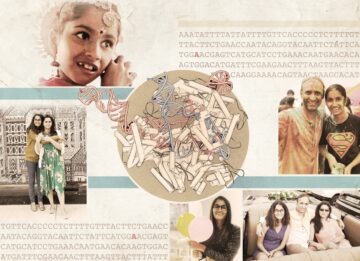 When researcher Arkasubhra Ghosh finally met Uditi Saraf, he hoped that there was still a chance to save her. Ghosh and his collaborators were racing to design a one-off treatment that would edit the DNA in the 20-year-old woman’s brain cells and get them to stop producing toxic proteins. It was an approach that had never been tried before, with a long list of reasons for why it might not work. But the team was making swift progress. The researchers were maybe six months away from being ready to give Uditi the therapy, Ghosh told her parents over breakfast at their home outside New Delhi last June. Even so, Uditi’s mother was not satisfied. Work faster, she urged him.
 Pale Fire is one of the greatest books I’ve ever read. It is so great it is terrifying to write about. This is not something I would normally confess, but in this case it seems better to just come out and say it, lest the reader feel the awful stammering of suppressed terror quavering through my words without knowing what they are feeling. It is terrifying! But I want to do it anyway, because although mighty brains from all over the planet have weighed in on the subject with breath-taking and exhaustive scholarly ardour, I feel that something essential about the book remains not exactly unseen but distinctly understated.
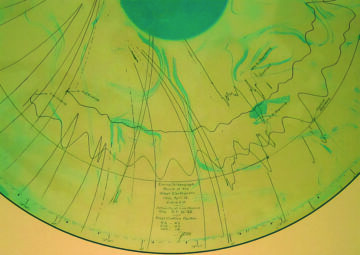 Earthquake professionals have made major strides in forecasting the long-term average rate of earthquakes in any given region. Unlike predictions, which involve meaningfully useful bounds in time, space, and magnitude, forecasts are made in terms of probabilities that an earthquake of a certain size will strike on decadal or longer timescales. For example, in 2008, seismologists predicted that there is an estimated 99.7% chance that at least one magnitude 6.7 or greater earthquake will occur in California over the next 30 years. Based on long-term odds, seismologists are known to tell the public that “it’s not a question of if, it’s a question of when” a damaging earthquake will strike.
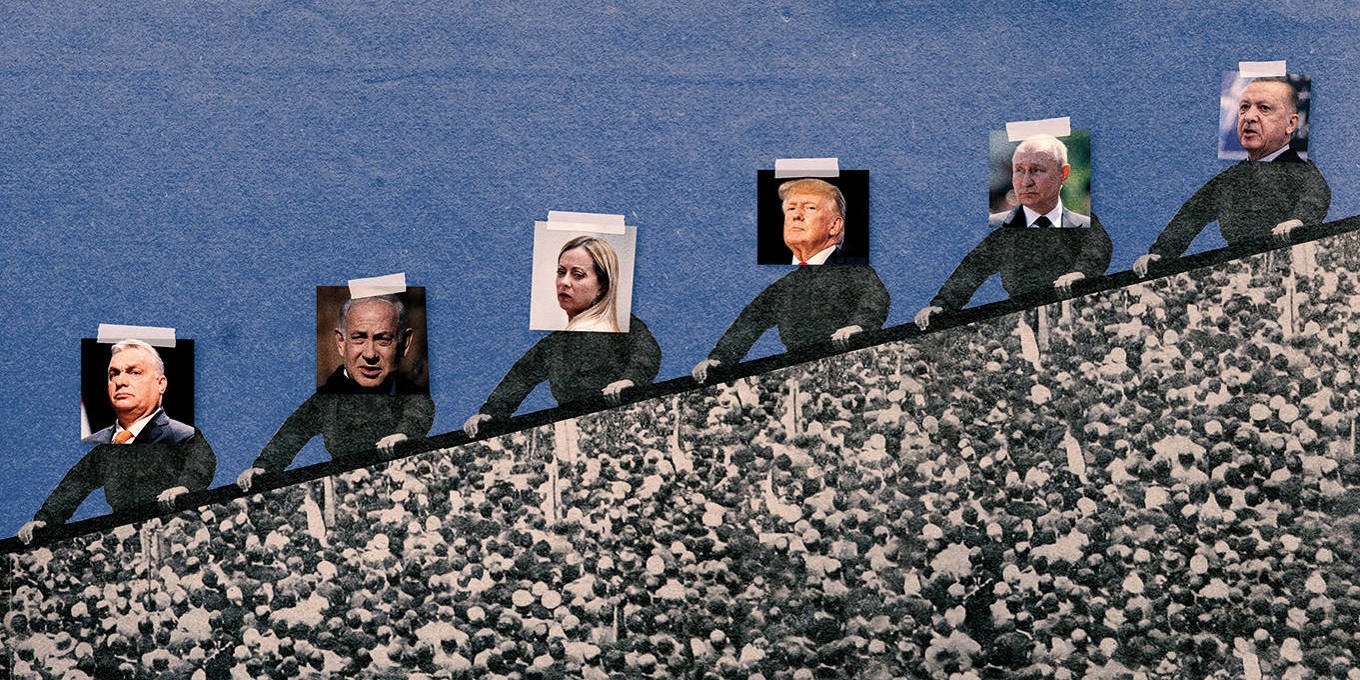 Over the past decade, Ruth Ben-Ghiat has emerged as one of the English-speaking world’s leading experts on, and chroniclers of, authoritarian leaders in the twenty-first century. A professor of history and Italian studies at New York University and the author of
  Y
Y Humans and bacteria are in a perpetual war.
 M
M Dear Reader,
 George Salis: Your latest book is