The beginning of the end for the regime?

As Robin reminded me earlier today by IM (en route from Johannesburg to Rome!) things did not turn decisively against the Shah in 1978/79 until the labor unions went on strike, crippling the economy. Now, via Andrew Sullivan, there this from Al Giordano in The Field:

ScreenHunter_06 Jun. 19 17.02 The workers of the Khodro automobile company in Iran today issued the following declaration (translated for The Field from the original Farsi by Iraj Omidvar):

Strike in Iran Khodro:

We declare our solidarity with the movement of the people of Iran.

Autoworker, Fellow Laborers (Laborer Friends): What we witness today, is an insult to the intelligence of the people, and disregard for their votes, the trampling of the principles of the Constitution by the government. It is our duty to join this people's movement.

We the workers of Iran Khodro, Thursday 28/3/88 in each working shift will stop working for half an hour to protest the suppression of students, workers, women, and the Constitution and declare our solidarity with the movement of the people of Iran. The morning and afternoon shifts from 10 to 10:30. The night shift from 3 to 3:30.

Laborers of IranKhodor

This announcement – to my knowledge this is the first place it appears in English anywhere – obtained by The Field by the auto workers of the largest automobile producer in Iran, is significant on multiple levels.

The obvious one is that once the workers begin to flex their muscles on the means of production, no illegitimate regime can continue standing.

Another is that it reveals the malicious lie spread by some that the Iranian resistance is an upper class phenomenon restricted to one or two regions for what it is: untrue.

More here.

painting as thought itself

Cover00

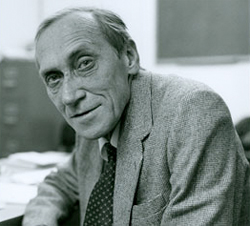
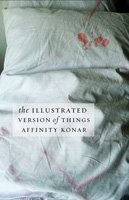
It is part of Robert Ryman’s legend that he is a self-taught artist. He moved to New York in 1952, at age twenty-two, to pursue a career in jazz. A year later, he took a job at the Museum of Modern Art as a security guard. Paintings had begun to interest him “not so much because of what was painted but how they were done. I thought maybe it would be an interesting thing for me to look into—how the paint worked and what I could do with it.” So he bought some art supplies and began to experiment. At no point, then or later, did he try to depict anything—a face, a figure, a natural object like a tree or a flower, an artifact like a bottle or a guitar: “I thought I would try and see what would happen. I wanted to see what the paint would do, how the brushes would work. . . . I had nothing really in mind to paint. I was just finding out how the paint worked, colors, thick and thin, the brushes, surfaces.” He evidently found the activity sufficiently absorbing that he put music aside. By the end of the ’50s, Ryman was using white paint almost exclusively, as if color interested him far less than certain physical properties of paint. He had developed a signature style. Suzanne P. Hudson’s Robert Ryman: Used Paint is the first book-length study of the artist’s achievement, and it comes with an interesting thesis, namely that his paintings exemplify what the author calls “embodied thinking,” which I interpret to mean that his paintings are not the product of thought, but thought itself.

more from Arthur Danto at Bookforum here.

the genie is out

139994108_b66bdbfbb7_o

Ever since the first days of the Islamic Republic of Iran, there have been two sovereignties in Iran: one divine and one popular. The popular part of the equation is codified in Iran’s Constitution, which calls for the popular election of a president and parliament. Divine sovereignty is believed to derive from God’s will, as interpreted by Shiite institutions that bestow power on the faqih, or supreme leader — currently Ayatollah Ali Khamenei. Increasingly, the divine sovereignty has been less about religion than about political theology. As for the popular sovereignty, it has found its due place in the social work and political action of Iranian civil society. The presence of these two incompatible and conflicting conceptions of sovereignty, authority and legitimacy has always been a bone of contention in Iranian politics, often defining the ideological contours of the political power struggle. The present crisis in Iran after the presidential election is rooted in the popular quest for the democratization of the state and society, and the conservative reaction and opposition to it. Another factor distinguishing the current political crisis from the previous instances of political factionalism and internal power struggle is a deep-seated ideological structure inherited from the Iranian revolution.

more from Ramin Jahanbegloo at the LA Times here.

how could it not?

Bayrle_2

Air brakes screeching, a truck comes to a halt uncomfortably near to our taxi on a busy Barcelona street. Thomas Bayrle nods at one of its giant wheels and says: ‘See that tyre? That’s what’s interesting to me.’ Knowing of his craze for traffic and roads – understood as metaphors for the complex systems and superstructures that control and organize us – I realize he’s not being ironic or flip. Take, for instance, the sculptural wall relief $ (1980), which consists of a model, dollar-sign-shaped cardboard motorway interchange dotted with plastic toy cars and trucks as scrupulously positioned as the coloured squares on Piet Mondrian’s Broadway Boogie Woogie (1942–3). Bayrle was in Barcelona for a retrospective of his work at the city’s Museu d’Art Contemporani (MACBA) titled ‘I’ve a Feeling We’re Not in Kansas Anymore’. The artist and I had just met for the first time and it was immediately apparent what a generous thinker and beguiling talker he is. But with this statement he seemed also to be making clear to me that the thoughts on art, politics and people that he offers and happily debates, are grounded in personal observation, in telling details lifted from the real. Later, I started thinking about all the billions, perhaps trillions, of tonnes of rubber rolling around on asphalt in clouds of exhaust fumes. And about the fact that the most visible signs of the economic integration and expansion of the European Union are not blue flags with yellow stars, but the endless processions of trucks that run along its roads, connecting the continent to the arteries of global trade.

more from Dominic Eichler at Frieze here.

Friday Poem

Inscription
Mehdi Akhavan-Sales

The stone lay there like a mountain
and we sat here a weary bunch
women, men, young, old
all linked together
at the ankles, by a chain.

You could crawl to whomever your heart desired
as far as you could drag your chain.

We did not know, nor did we ask
was it a voice in our nightmare and weariness
or else, a herald from an unknown corner,
it spoke:

“The stone lying there holds a secret
inscribed on it by wise men of old.”
Thus spoke the voice over and again
and, as a wave recoiling on itself
retreated in the dark
and we said nothing
and for some time we said nothing.

Afterwards, only in our looks
many doubts and queries spoke out
then nothing but the ambush of weariness, oblivion
and silence, even in our looks
and the stone lying there.

One night, moonlight pouring damnation on us
and our swollen feet itching
one of us, whose chain was the heaviest
damned his ears and groaned: “I must go”
and we said, fatigued: “Damn our ears
damn our eyes, we must go.”
and we crawled up to where the stone lay.
One of us, whose chain was looser
climbed up and read:

“He shall know my secret
who turns me over!”

Read more »

Evolutionary Origins of Your Right and Left Brain

From Scientific American:

Evolutionary-origins-of-your-right-and-left-brain_1 The left hemisphere of the human brain controls language, arguably our greatest mental attribute. It also controls the remarkable dexterity of the human right hand. The right hemisphere is dominant in the control of, among other things, our sense of how objects interrelate in space. Forty years ago the broad scientific consensus held that, in addition to language, right-handedness and the specialization of just one side of the brain for processing spatial relations occur in humans alone. Other animals, it was thought, have no hemispheric specializations of any kind.

Those beliefs fit well with the view that people have a special evolutionary status. Biologists and behavioral scientists generally agreed that right-handedness evolved in our hominid ancestors as they learned to build and use tools, about 2.5 million years ago. Right-handedness was also thought to underlie speech. Perhaps, as the story went, the left hemisphere simply added sign language to its repertoire of skilled manual actions and then converted it to speech. Or perhaps the left brain’s capacity for controlling manual action extended to controlling the vocal apparatus for speech. In either case, speech and language evolved from a relatively recent manual talent for toolmaking. The right hemisphere, meanwhile, was thought to have evolved by default into a center for processing spatial relations, after the left hemisphere became specialized for handedness.

More here.

Khamenei backs election result: heavy crackdowns likely if the protests continue

From the BBC:

ScreenHunter_05 Jun. 19 12.28 Iran's Supreme Leader has issued a stern warning that protests against the country's disputed presidential election results must end.

In his first public remarks after days of demonstrations, Ayatollah Khamenei said the outcome must be decided at the ballot box, not on the street.

He said political leaders would be blamed for any violence.

Demonstrators calling for a new election earlier vowed to stage fresh protests on Saturday.

Addressing thousands of people at Tehran University, the ayatollah voiced support for President Mahmoud Ahmadinejad, saying his views on foreign affairs and social issues were close to his.

Responding to allegations of electoral fraud, the ayatollah insisted the Islamic Republic would not cheat.

More here.

Live Tweeting Khamenei’s Speech

Here's some of what's coming through on Twitter (take with grain of salt):

Khamenei praising #iranelectiondebates… After praising hard working “president” Ahmadi, he asseerts that people voted their conscience…

It's not going well guys…Khamenei is saying that the people have voted…he is not talking about any recount or relection

Khamenei criticizes the West for bringing doubt to #IranElection, crowd chants “Death to America” … yep he doesn't want peace

Ayatollah says: Zionist & British radio are trying to change meaning, remove trust in the system. Vote of people was clear. #IranElection

#IranElectionI guess there won't be a happy ending to this, I was really hoping there would be a peaceful resolution.

Please keep the protests going you all. Keep the green wave going. The world is with you #iranelection

Khamenei is objecting to calling Ahmadinejad a liar (which Mousavi did), calling it unethical and illegal. #IranElection

Khamenei clearing Rafsanjani of any financial corruption. #IranElection

He is surprisingly praising Hashemi #iranelection

Khamenei: “Ahmadinejad's views are closer to my view than Rafsanjani's to mine!!!” Takbir! #IranElection

Ahmadinejad is sitting like a kid listening to Khamenei admonishing him for criticizing Rafsanjani & Nateq. #iranelection

#iranelection#Khamenei“Iranian People have chosen their president”

Khamanei says not poss there was cheating in the election, the margin was too great. Some mistakes,not cheating. #IranElection

Khamenei misses the opportunity to sell out Ahmadinejad to save the islamic regime #IranElection

Khamenei: Those politicians who make the situation chaotic, would be responsible for the bloods. #IranElection

Crowd chants include the “Marg ba Israeel” – death to Israel – a standard rhetorical element for this camp #Iranelection

Khamenei:'Law does not allow vote rigging' – nobody does, but it doesn't mean vote rigging doesn't happen! #IranElection

@Khameinei “extreme move will lead to another extreme move” blaming political elite for bloodshed…

Khamenei: Western diplomats are 'hungry wolves' ambushing, showing their true face. #IranElection

Khamenei: Political activists must be careful of their behavoir #IranElection

Now he is saying that political leaders will be accountable for violence! Menaing mousavi! #IranElection

Khamenei is talking against reformists, saying that they shouldn't have started by bringing their supporters to the streets.

After every few sentences, people have to shout “Death to England!” nobody mentions US 😉 #IranElection

Iran's supreme leader rejects vote fraud claims, describing Pres Ahmadinejad's election win as “definitive.”

Khamenei: “They terrorize the Basij and Police!” Reversing roles! #IranElection

Khamenei: Rallies are a good cover up for terrorists #IranElection

More here. I'll post a translation of the speech and analysis as it becomes available.

Shirin Ebadi: Void the Elections or Risk Violence

While we wait to see what Khamenei says, this from Nobel laureate Ebadi in The Huffington Post:

240shirin_ebadi,0 Mir Hossein Mousavi and Mehdi Karroubi encouraged their supporters to continue calm and peaceful protests. They told them to voice their objection and dissatisfaction through shouts of Allah-o-Akbar (God is great) between 9 p.m. and 10 p.m. The sound of Allah-o-Akbar resonates in the entire city every night and is reminiscent of the nights of the revolution.

The intensification of popular protests has resulted in the Leader of the Islamic Republic ordering an investigation of the complaints and the Guardian Council announcing that some of the ballot boxes would be recounted. It does not appear, however, that this will calm the situation.

The best solution for establishing peace in Iran consists of:

1. The unconditional release of every individual arrested and imprisoned for having objected to the results of the elections.

2. Ordering the cessation of Basij and police violence toward protestors.

3. Declaring the election void.

4. Ordering new elections under the auspices of international organizations.

5. Paying compensation to the injured and to the families of those who have been killed.

Calm could perhaps be brought back to the Iranian society if these conditions are met. Otherwise, there is a great possibility of increased violence in Iran.

More here.

Shadowy Iranian Vigilantes Vow Bolder Action

ScreenHunter_04 Jun. 19 12.15

Situation scary, according to this report by Neil MacFarquhar in the New York Times:

The daytime protests across the Islamic republic have been largely peaceful. But Iranians shudder at the violence unleashed in their cities at night, with the shadowy vigilantes known as Basijis beating, looting and sometimes gunning down protesters they tracked during the day.

The vigilantes plan to take their fight into the daylight on Friday, with the public relations department of Ansar Hezbollah, the most public face of the Basij, announcing that they planned a public demonstration to expose the “seditious conspiracy” being carried out by “agitating hooligans.”

“We invite the vigilant people who are always in the arena to make their loud objections heard in response to the babbling of this tribe,” said the announcement, carried on the Web site Parsine.

The announcement could be the first indication that the government was taking its gloves off, Iranian analysts noted, because up to this point the Basijis, usually deployed as the shock troops to end any public protests, have been working in stealth.

“It is the special brigades of the Revolutionary Guards who right now, especially at night, trap young demonstrators and kill them,” said Mohsen Sazegara, an Iranian exile who helped write the charter for the newly formed Revolutionary Guards in 1979 when he was a young aide to Ayatollah Ruhollah Khomeini. “That is one way the regime avoids the responsibility for these murders. It can say, ‘We don’t know who they are.’ ”

More here.

Fears Growing as Iran Crisis Deepens

Longtime 3QD friend Hadi Ghaemi in The Huffington Post:

ScreenHunter_03 Jun. 19 10.24 What is happening in these days is a reflection of two such long-running tensions. One is the differences within the ruling elite that have mushroomed into what appears to be a full-scale confrontation over the recent election results.

The other underlying tension, which is unfolding daily in huge protests across the country, comes from the deep dissatisfaction of much of the population with social and political restrictions imposed on them by the state, coupled with failing economic policies.

Let us not confuse these two trends. One is a political catfight within the regime, and the other is an outburst of popular demands for greater civil liberties and basic freedoms, and for effective economic policies. The former is serving as a vehicle for the latter.

The huge participation of the electorate in Friday's election, over eighty percent, included many who had never before participated in the political process, but saw this as a unique opportunity to bring about positive change.

The disillusionment caused by the strongly contested election result quickly translated to an outpouring of protests on the streets because many people felt their sense of honor and integrity has been insulted beyond limit.

Meanwhile the political catfight continues to develop without any clear winner emerging. On one side of the equation are Ahmadinejad's government, the Revolutionary Guards commanders, and the Office of the Leader. The Leader, Ayatollah Khamanei, has clearly come out in support of this faction, although historically he had implied he acts only as an arbitrator of power, and is above factionalism. But this time his sympathies are squarely placed behind this camp, at least up to this point.

It is of the utmost importance that none of the Grand Ayatollahs and clerics in Qom has come forward to endorse the election results or congratulate Ahmadinejad. The core political conflict appears to be expressing itself in a fissure between Ayatollah Khamanei and the rest of the traditional clerical establishment in Qom.

More here.

A Different Iranian Revolution

19letters190By Shane M., an anonymous student in Iran, in the NYT:

[T]he election does reveal a paradox. There is strong evidence that Iranians across the board want a better relationship with the United States. But if Mr. Moussavi were to become president and carry out his campaign promise of seeking improved relations with America, we would probably see a good 30 percent of the Iranian population protesting that he is “selling out” to the enemy.

By contrast, support for Mr. Ahmadinejad’s campaign was rooted in part in his supposed defense of the homeland and national honor in the face of United States aggression. Americans too-long familiar with the boorish antics of the Iranian president will no doubt be surprised to learn that the best chance for improved relations with the United States perhaps lies with Mr. Ahmadinejad. But Mr. Ahmadinejad is perceived here as being uniquely able to play the part of an Iranian Nixon by “traveling to the United States” and bringing along with him his supporters — and they are not few.

Read more »

Cut Off The DNC’s Money!

ObamaDNC Andrew Sullivan on the administration's disappointing policy on benefits to same-sex couples:

One way to get the Obama administration's attention on civil rights is for gay people to stop funding the Democrats. That's all these people care about anyway when it comes to gays: our money. If the Democrats refuse to support us, refuse to support them. This is a start. But we need to get more creative. We need actions to highlight the administration's betrayals, postponements and boilerplate. We need to start confronting the president at his events. We need civil disobedience. We need to tell him we do not want another fricking speech where he tells us he is a fierce advocate for our rights, when that is quite plainly at this point not true. We will not tolerate another Clinton. No invites to these people for dinners or fundraisers. No cheering him at events while he does nothing to follow up on his explicit promises. Of course these things can be done. If anyone high up in the Obama administration or the Pelosi-Reid Congress gave a damn, much would have been done.

Thursday, June 18, 2009

Ayatollah Khamenei’s massive miscalculation about the extent of his power

Abbas Milani in The New Republic:

ScreenHunter_01 Jun. 18 17.45 The IRGC has largely accepted the leadership of the clergy and Khamenei's role as commander in chief. But while Khomeini strictly kept them out of politics, Khamenei has encouraged them to get involved in his political battles. In his eight-year tug-of-war with the reformist movement led by Khatami, Khamenei used the IRGC more than once to suppress Iran's rapidly developing civil society and student movement. The most egregious example of this militarization of politics came in the 2005 presidential election, when Khamenei, worried about a possible Rafsanjani victory, reportedly ordered IRGC members to vote for Ahmadinejad and take members of their family with them to the polls. The rise of Ahmadinejad, himself once a member of the IRGC and reportedly an engineer in its infamous Al-Quds Brigade, has further encouraged the IRGC to seek an increasing share of political power.

It is difficult to imagine the IRGC quelling the current protests and then simply turning power over to the clergy. If a political compromise cannot be reached between the regime and the opposition, and the IRGC is used in suppressing the protests, its commanders would likely expect a bigger role in the government. It is even conceivable that faced with irresolution among the clergy, they will act on their own, and establish a military dictatorship that uses Islam as its ideological veneer–similar to Pakistan under Muhammad Zia-ul-Haq.

Khamenei thus finds himself in a difficult situation as a result of his incautious gambit with Ahmadinejad. Whether he gives more power to the IRGC or to the opposition, there is little chance that he will emerge from the current crisis with his supremacy intact.

More here.

Why Iran Matters

Andrew Sullivan in The Daily Dish:

ScreenHunter_02 Jun. 18 19.47 Among the more moving emails I've received these past few days have been from Iranians asking why on earth I seem to care so passionately about what's happening right now. The premise – that somehow Iranians' fight for freedom is a parochial issue that the rest of us should not be concerned with – is heart-breaking. But here's my answer: this is the central event in modern history right now. The forces of democracy have marshalled in Iran for accountability, transparency and fairness. Wherever they marshall, we should stand with them, especially in the blogosphere, where our Iranian brothers and sisters built the foundation for this moment.

Moreover, Iran is at the very heart of the global struggle between the forces of distorted and politicized religious tyranny and the power of real faith and freedom. This struggle was never ours' to impose, however good the intentions. It was always there for the people themselves to grasp. And grasp it they now have – with astounding courage, clarity and calm.

And so at the white-hot center of the global conflict, this astonishing force has emerged to resist escalation, unwind conflict, get past ideology, insist on change, and demand a better future. This is hopeful enough. But the use of technology to achieve this offers a whole new paradigm for world politics.

More here.

Obama Swats Fly during CNBC Interview: “I got the sucker!”

And the same thing, dubbed over:

Also, this from the AP:

PETA wishes Obama hadn't swatted that fly

The group People for the Ethical Treatment of Animals wants the flyswatter in chief to try taking a more humane attitude the next time he's bedeviled by a fly in the White House.

PETA is sending President Barack Obama a Katcha Bug Humane Bug Catcher, a device that allows users to trap a house fly and then release it outside.

“We support compassion even for the most curious, smallest and least sympathetic animals,” PETA spokesman Bruce Friedrich said Wednesday. “We believe that people, where they can be compassionate, should be, for all animals.”

More here.

Plus, you can tell a lot about a man from how he kills insects. See this. 🙂

Sex and the (fortysomething) single girl

From Salon:

Story “I remember the moment I first became aware of aging,” says the novelist Kate Christensen, now 46, at a rooftop cafe near her house in Greenpoint, in Brooklyn, N.Y. “I was 30. I looked down at my knees and the skin above them had become a little loose. And I thought, 'And so it begins'!” Probably the swiftest way to trivialize the work of a woman writer is to make a big to-do about how sexy she is in person. But Christensen, wearing no make-up and a fitted gray dress, has the easy and direct confidence of a person who feels good in her own skin. Her last novel, “The Great Man” (which won the PEN/Faulkner award), was about three women in their 70s and 80s — two widows and an embittered lesbian painter — who rediscover love, lust and ambition after the death of the “great man,” an artist who had always towered over them all.

In her latest, novel, “Trouble,” two college best friends in their mid-40s, Josie, a Manhattan psychotherapist, and Raquel, an indie rock star, meet up in Mexico City for a “Thelmita and Luisa”-style adventure. Josie has just informed her professor husband, Anthony, and her adopted daughter, Wendy, that she is moving out. Raquel is hiding out from the paparazzi (her most virulent pursuer is a Latina lesbian blogger known as Mina Boriqua) after having been vilified for dating an HBO star half her age, who also happens to have a pregnant girlfriend. The two spend five days in Mexico drinking sangrita and mescal, eating chorizo tacos and chilaquiles, hanging out with artists, and getting reacquainted with a new adult version of their younger selves. But while Josie is coming out of hibernation and reclaiming a sexuality she didn't feel in her 20s, she doesn't realize that Raquel may be going in a very different direction.

More here.

bright lights, dim future

ID_PI_GOLBE_TONYS_AP_001

Bit by bit, shpiel by shpiel, the musical is being re-explored if perhaps beyond Broadway. One of the first great musicals of the 21st century was not a play but a film: Lars von Trier’s Dancer in the Dark. The movie was a revelation in the musical form, using the disintegrating experience of its main character, Selma — slowly going blind and withdrawing further into an internal fantasy world — as an excuse to have some great song and dance numbers inside an otherwise bleak Dogme script. It solved the problem of cheesy musical music by featuring original songs all written and composed by Björk (and whose music is more relevant and more directly connected to popular culture?). Dancer in the Dark took another interesting step by having Björk perform the songs largely alone, unheard of in traditional musical theater, unless you’re watching a one-woman show. The result is startling: stylized artifice that is completely at one with stark realism. Dancer is consciously weird, and yet it’s impossible not to be absorbed by its internal logic. When we are absorbed by a musical in this way, we experience wonder. Wonder, though, is not escape, something separate from our lives. In fact, it’s the opposite. The way that a big song and dance number disrupts a seemingly straightforward story — just like someone bursting into song on the subway — opens up a space to reflect on the incoherency of life. It sparks our imagination and curiosity, creating possibility out of babble. Wonder is horrifying and unnerving but also liberating and thrilling. “From wonder into wonder existence opens,” wrote the Chinese philosopher Lao Tzu. And so it does, whether we like it or not. Louis Armstrong was right. The world is indeed wonderful, just like a musical.

more from Stefany Anne Golberg at the Smart Set here.

dangerous broad

Ae10_patricia

“The essential American soul,” wrote D.H. Lawrence in a celebrated description, “is hard, isolate, stoic, and a killer.” Of course, he was talking about Natty Bumppo and similar rough-and-tumble frontier spirits. By contrast, the amoral Tom Ripley—novelist Patricia Highsmith’s most famous character—is easygoing, devoted to his wife and friends, epicurean, and a killer only by necessity. By my count, necessity leads this polite aesthete to bludgeon or strangle eight people and watch with satisfaction while two others drown. He also sets in motion the successful suicides of three friends he actually, in his way, cares about. Yet aside from an occasional twinge about his first murder, Ripley feels no long-term guilt over these deaths. (Tellingly, he can never quite remember the actual number of his victims.) He was simply protecting himself, his friends and business partners, his home. Any man would, or at least might, do the same. Tom, as his indulgent creator tends to call him, first appeared in The Talented Mr. Ripley (1955). This was Highsmith’s fourth published book, preceded by three highly original novels. In Strangers on a Train (1950)—later filmed (and softened) by Alfred Hitchcock—two men, hitherto unknown to each other, “exchange” murders, Bruno agreeing to kill Guy’s estranged wife in return for Guy doing away with Bruno’s hated father. Each will consequently possess a perfect alibi. In The Price of Salt (1953, published under the name Claire Morgan) the nineteen-year-old Therese falls in love with the married Carol—and perhaps for the first time a novel about lesbians ends happily.

more from Michael Dirda at the NYRB here.