
There is what seems an interesting slip early in A.S. Byatt’s new novel. It is 1895. A young working-class man, Philip Warren, has been adopted by a liberal upper-class family, the Wellwoods. At the Kentish country home of Olive and Humphry Wellwood, a glorious Midsummer Party is in preparation. Humphry is a banker (though he will soon switch to journalism), and Olive is a famous children’s writer. Lucky Wellwood children, Tom, Dorothy, Phyllis and Hedda, are making paper lanterns. Philip reflects that, in his former life, he had to beg for scraps of paper to draw on; but these generous people throw away paper with unconcern. Byatt comments: ‘He looked up and had the disconcerting sense that Dorothy was reading his mind.’ There is a section break, and Byatt continues: ‘Dorothy had indeed, more or less accurately, followed Philip’s thoughts. She did not know how she had done that. She was a clever, careful child, who liked to think of herself as unhappy.’ We have instantly entered, with the finality of fairy tale, a familiar Byattian world, in which the author dances, with leaden slippers, around the thought-sleep of her characters. There is that teacherly, qualifying authorial judgment: ‘more or less accurately’.
more from James Wood at the LRB here.
Predicament
I feel exactly like a young mother
who buys a book—a biography of Marie
Antoinette and then cannot
push past the opening chapters,
the overbearing Queen, summer retreat,
line of carriages slowly winding
through the forest, the necessary
rouge, everyone watching, nothing
happening, gambling experts brought
in from Paris, the earnest insistence
that one has not been riding horseback.
I feel exactly like a young mother
who bought a book about a young
Austrian girl but is actually only
a new mother, not young, pushing
my cart through the bread aisle,
rolls and loaves lined up
wondering about scarcity,
the anger rising up in the countryside
when the nobles go plowing through
fields as they hunt, thoughtlessly stomping
down the corn, the peasants at this point
still raising a hand in respectful greeting,
but the smile, the bright and fixed smile,
fading away so much more quickly now.
by Jenn Blair
from Loch Raven Review;
2009- Vol. 5, No.2
Ron Charles in The Washington Post:
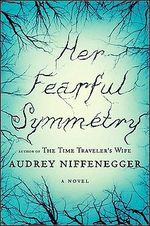 More than a month before Halloween, the most sophisticated horror stories are already crawling out of the ground. You think you're safe over there in the primly maintained Literary Fiction section of the cemetery, peering across the rusty gate at Stephen King's “Under the Dome” (Nov. 10), Anne Rice's “Angel Time” (Oct. 27) and even a sequel to “Dracula” written by — please, no! — Bram Stoker's great-grandnephew (Oct. 13). But meanwhile your genteel old friends have already been hideously transformed: Sarah Waters leads this bone-chilling pack with a Jamesean ghost story called “The Little Stranger,” which has a good shot at winning the Booker Prize next week. Dan Chaon's “Await Your Reply” pays homage to everybody from Peter Straub to H.P. Lovecraft, and Mary Shelly's “Frankenstein” has been re-stitched by such non-horror writers as Peter Ackroyd and Laurie Sheck. In short, there's nowhere to hide this year from frighteningly smart, scary novels.
The latest to join this infernal group comes from Audrey Niffenegger, author of the phenomenally popular “Time Traveler's Wife,” which means her new one has a good chance of haunting the bestseller list, too. As naturally as she used elements of science fiction in the past, she borrows the tropes of Victorian Gothic here for a story that seems, at first, more interested in whimsy than terror. “Her Fearful Symmetry” doesn't reveal its spectral elements for more than 60 pages, and when the first ghost does make an appearance, “gaining opacity gradually,” the scene is strangely poignant and witty, like a visitation from Noël Coward's “Blithe Spirit.” But Niffenegger manages to breathe life into these dead cliches, noting at one point that the soul leaves the body “slippery like an avocado stone popping out.”
More here.
From Science:
 Flaherty speaks in a rapid-fire staccato about her still-born twin sons, lost after a difficult pregnancy more than 10 years ago, as she was about to start the residency portion of the Harvard-MIT M.D.-Ph.D. program. A postpartum depression morphed into mania and an eventual diagnosis of bipolar disorder. As a psychiatrist in training, Flaherty was fascinated by her own disease and began speaking publicly about her travails. During that time, she was approached by her peers and discouraged from talking about her mental illness.
“One thing that appalled me is how many doctors told me I should hush it up,” says Flaherty, who today is an assistant professor in the Neurology Department at Harvard Medical School in Boston and directs a fellowship program at Massachusetts General Hospital. She didn't listen. And as she reached out, she found that her experiences resonated with other students who were isolated, enveloped in their own malaise. They began to seek her out and share their own experiences with depression. Their stories convinced her that there was an undercurrent of depression among a significant portion of her profession that no one wanted to talk about publicly. “The more I talked, the more I met all these people who were saying, 'Oh yeah, I had all these problems when I was a resident or when I got my first job.' And they had never talked to anybody, so it was a sort of a relief for them that I was out of the closet,” she says.
More here.
Our own Morgan Meis in The Smart Set:
 Henry Hudson spent most of his time looking for the Northwest Passage. He wanted to get through all the pesky land and make it from one ocean (the Atlantic) to another (the Pacific). Such a passage doesn't really exist. To get around North America you've got to do just that — go up and around the thing altogether. But Henry didn't know that. He hoped the river was the ticket, west meets east. When you're looking for something that bad it screws your brain up. Some suspect that's what happened to Henry. The Northwest Passage drove him crazy. He pushed his crew too far. He couldn't stop and everyone else wanted to go home. Finally, the crew put Henry in a dingy with his son and a few others and set him loose in northern waters. It was mutiny. Real, honest-to-goodness mutiny. Nobody ever saw Henry Hudson again, at least that we know of. He died for the Northwest Passage and for being a stubborn bastard and for not knowing when it is time to go home.
The Hudson River is similarly possessed of an irresponsible flow. It doesn't know whether it is coming or going.
More here.
WARNING: This piece contains vulgar language—lots and lots of it—that may be inappropriate for children or the faint of heart.
Jesse Sheidlower in Slate:
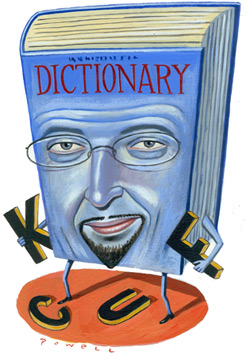 In 1966, Jess Stein, the editor-in-chief of the major Random House Dictionary of the English Language, told the New York Times about a meeting he convened with the company's editorial and sales staff to discuss the words cunt and fuck. “When I uttered the words there was a shuffling of feet, and a wave of embarrassment went through the room,” he said. “That convinced me the words did not belong in the dictionary, though I'm sure I'll be attacked as a prude for the decision.”
Stein did not have to wait long to be proven right on the last point: A mere two weeks later, the Times' own book reviewer wrote, “Unfortunately, a stupid prudery has prevented the inclusion of probably the most widely-used word in the English language. The excuse here, no doubt, is 'good taste'; but in a dictionary of this scope and ambition the omission seems dumb and irresponsible.”
With the advantage of hindsight, Stein may seem priggish. But dictionary editors throughout history would sympathize. Figuring out how to put sex in the dictionary—which terms to include and how to define them—is actually one of the most challenging tasks we face.
More here. [Thanks to Rebecca Ford.]
Thursday, October 1, 2009
A more tolerant Islam is confronting extremism in the world's most populous Muslim country.
Michael Finkel in National Geographic:
 For several decades, Indonesian society had been growing more overtly Islamic: Attendance at mosques swelled, and Muslim dress became popular. In the late 1990s, a growing number of district governments began enacting regulations inspired by sharia, or Islamic law, and support for Islamic political parties was on the rise. Increasingly, militant Islamic groups that advocated a violent struggle to recast Indonesia as an Islamic republic seemed to be drowning out the voices of the majority of Indonesian Muslims, who believe that their faith can smoothly coexist with modernity and democratic values.
But in the past few years, although Indonesians continue to embrace Islam in their private lives with greater fervor, it's become clear that most don't want religion to be enforced in the political sphere. “So many people equate Muslim piety with radicalism,” says Sidney Jones, an Indonesia specialist with the nonprofit International Crisis Group who has lived in the country for more than 30 years. “Indonesia is full of examples of why that notion is wrong.” As Islamist politicians have moved to regulate women's dress codes and ban activities like yoga, moderates have begun to make their voices heard. In the Indonesian parliamentary elections this past April, candidates backed by Muslim organizations received less than 23 percent of the vote, down from 38 percent in 2004.
Though the recent bombings are a setback, Indonesia has lately been seen as a success story in how to curb violent extremism.
More here.
Juan Cole in Salon:
Ali Akbar Salehi, the head of Iran’s Atomic Energy Organization, reaffirmed Monday that a date would soon be set for the International Atomic Energy Agency to inspect the planned nuclear enrichment facility near Qom about which the Iranian government informed the IAEA on Monday a week ago.If Iran really does permit full, ongoing IAEA inspections of the facility, then it cannot be used for weapons production. Secretary of State Hillary Clinton admitted Sunday that Iran cannot use the Natanz plant for bomb-making because it is being regularly inspected by the UN.
Scott Ritter, an experienced inspector himself, dispels the myths about the new Qom facility and urges against new economic sanctions on Iran as counter-productive. Greater transparency and more inspections should be the demand of the West, he says.
I made the same point on MSNBC on Monday with Nora O’Donnell:
More here.
Joel Schechter in Haaretz:
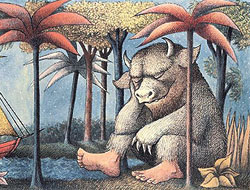
The discomfort caused by some of the stories – Sendak's deployment of monsters and brutes only a child can tame – may be part of their attraction. Other Sendak stories of homelessness and kidnapping, and his modern equivalents of Brothers Grimm barbarisms, could keep a child awake, too, as the books explore childhood fears in a universal picture language. But the innocents in the stories survive, and even thrive on challenges they face.
Still, there is a dark, nightmarish aspect to some of the stories, particularly for those adults who see in the visual acknowledgments of Sendak's Yiddish background images that evoke the Holocaust. “Brundibar,” with text by playwright Tony Kushner, portrays Czech Jewish ghetto children rebelling against a tyrant who resembles Hitler in an early Sendak sketch for the story. In a later draft, the tyrant turns into a clownish bully, an organ grinder with Napoleonic hat and bluster; but the story of children resisting tyranny remains a poignant tribute to its sources: Czech composer Hans Krasa's opera, and children in the Terezin concentration camp who sang about “Brundibar” in 1943 before they were sent to Auschwitz. On one level, the story is simply a fable in which children rally, sing (despite Brundibar's objections) and drive away the town bully; but it alludes to far more disturbing events of the 1940s and, as in other Sendak works, more meets an adult eye than might be seen by a child. This could explain why many of the drawings at the Contemporary Jewish Museum hang at a height more easily viewed by adults than by small children, as if the kids are not expected to see everything.
More here.
Stefany Anne Golberg in The Smart Set:

Etiquette in America has always been slippery. And so it’s been with regard to mourning. The Pilgrims kept mourning on the DL. A fussy public burial was seen an affront to God’s will, as was mourning dress or other conspicuous displays of grief. Even praying for the dead was seen as a rebellion against predestination. There was no fanfare, no beating of the breast. A quiet, restrained Pilgrim death was most befitting a quiet, restrained Pilgrim life.
All that changed with the queen of artifice herself, Victoria. Of all the protocol of Victorian-era America, mourning etiquette was perhaps the most complicated, especially for women. Handbooks and catalogues rigorously detailed mourning manners, from how one should dress according to degrees of mourning (deep mourning, first mourning, second mourning, half mourning…), to how one’s house ought to be prepared (uncovered mirrors were a big no-no), to the infinite accoutrements like post-mortem photos and the ever-popular hairpiece jewelry made of the deceased’s, yes, hair. You always immediately knew when someone had a death in the family and how much the loss meant to them, not by any display of emotion, but rather by how well that emotion translated into etiquette. All this had the effect of bringing death out into the open, making it a matter of the utmost social importance. By the time the Civil War rolled around, rules of mourning served as a comfort and social cohesion that allowed people to somehow deal with the seemingly unending deluge of dead.
The most dramatic change in the ritual of American mourning was how the dead themselves were buried.
More here.

The revolutionaries of Fidel’s Twenty-sixth of July Movement rolled into history sporting beards and smoking cigars. Occupying the lobby of the Havana Hilton in January 1959, the barbudos, as they came to be known, puffed on Western culture’s most compact emblem of personal wealth[2] while planning to nationalize the marble beneath their feet. It would have been one thing if they’d smoked cheap Creole stogies, but Che’s Montecristos were top-shelf, and Fidel’s taste, even before he created Cuba’s premium brand, Cohiba, ran to pricey Partagas and Bauza. Was this anachronism, ironic appropriation, nationalism—or all of these at once? Tobacco is an essential part of Cuba’s identity. That the island’s soil and climate are ideally suited to the perfection of the tobacco leaf is national dogma. The plant’s origins on the island are prehistorical; we know that it arrived between the third and second millennia BCE from South America, where it was cultivated by the ancient Mayans. The Tainos, Cuba’s native people, showed Christopher Columbus how to roll and smoke what they called cohibas. The Spanish first spurned tobacco, then changed their minds. They monopolized the trade for almost a century, funneling all Cuban tobacco back to the Crown. By the mid-nineteenth century, when great Cuban brands like Partagas and Upmann were established, the habanero was known all over Europe, and Cuban cigars had become the iconic smoke. In reclaiming the cigar from the imperialists, the revolution reclaimed a part of Cuba’s national myth.
more from Ginger Strand and James Wallenstein at The Believer here.
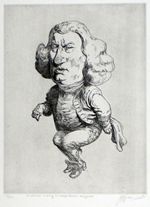
Dr Johnson once lamented that ‘no man leaves his eloquence behind him’. And yet, thanks to his friends, hundreds of the Great Cham’s forceful one-liners survive. We know what he said about cucumbers (good for nothing), Scotland (not worth invading), France (worse than Scotland, apart from the weather), happiness (most likely to be found in a pub), and patriotism (last refuge of a scoundrel). But early memoirists were just as keen to preserve the oddities of Johnson in private: his greed, benevolence, and terror of death; his laziness and hardened tea-drinking; his burnt wig, his three-legged chair – and his flatulence. This last ailment makes several irruptions into David Nokes’s readable and imaginative new biography. ‘My nights are flatulent, and unquiet’, writes Johnson in 1772; three years later, he is frankly complaining to the same correspondent that ‘I cannot get free of this vexatious flatulence’ – indeed, ‘I am almost convulsed’. Nokes adopts as the epigraph to his book Johnson’s advice in Rambler no 60 that ‘the business of the biographer is often to pass slightly over those performances and incidents which produce vulgar greatness … and display the minute details of daily life’. As Johnson well knew, the minute details of daily life could shape an author’s character in print. What of the connection, for instance, between his tortured bowels and his sketch in Idler no 74 of ‘an intellect defecated and pure’?
more from Freya Johnston at Literary Review here.

“Infinities within infinities within infinities”, as one character observes. Iain Banks’s new novel can be a confusing place to be. No reality here is more than an aspect of an endlessly complex system of completely separate though ultimately related existences between which the leading actors “transition” (a verb here) more or less at will. SF-sophisticated fans of Iain M. Banks may feel instantly at home in this mesmerizing “multiverse”, while long-term readers of Iain Banks will be prepared for what awaits them; but newcomers may struggle to find their way. Yet however many worlds we traverse in however many time schemes, we are always recognizably here on earth: Transition is not about space travel, as traditionally conceived. Instead, a fast-moving action flits back and forth between a Venetian palazzo; a Limehouse loft; a Paris cabaret; a casino; a derelict industrial unit outside Chernobyl. It might be any airport thriller, except for the less familiar locations, from the mundane (a British bus stop) to the fantastical (the Himalayan seat of a world emperor of the future). All these places are provisional, the articles indefinite: “I live in a Switzerland”, says Transitioner Temudjin Oh.
more from Michael Kerrigan at the TLS here.
From Salon:

No matter what your political orientation, if you believe — or ever did believe — in the potential betterment of humanity, then you've got something to learn from the strange and tragic story of Leon Trotsky. It's a tale of pride and power and political failure, of genius turned to the service of dogged, dogmatic conviction, of a supremely intelligent man who destroyed others in the name of a cause that then destroyed him. It was a story that finally reached its end in 1940, in a legendary encounter with an assassin armed with a mountaineer's pickax, as Stanford professor Bertrand Patenaude illustrates in “Trotsky: Downfall of a Revolutionary,” his gripping, cinematic new book about the last years of the Ukrainian Jew who was born Lev Davidovich Bronstein. (Whatever your feelings about Trotsky, the story of his murder by Ramón Mercader, the suave Stalinist agent who had wormed his way into the heavily guarded Trotsky compound outside Mexico City, may give you sleepless nights.)
More here.
From Scientific American:
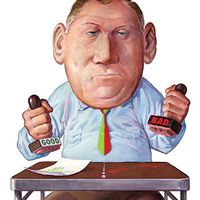
Once, while visiting Brooklyn, I got a call from a fellow Bronxite, back on the mainland. When I revealed my location, he said, “Brooklyn?! What time is it there?” Despite the interborough bafflement, Brooklyn has been a genuine part of the land of the free since day one, that is, July 4, 1776. So when Lena Horne was born there in 1917, she automatically became a U.S. citizen. About 25 years later Horne was asked to give two concerts at Camp Robinson in Alabama, one to white servicemen, the second to black GIs. But she refused to do the second one when she saw that black Americans were sent to the back of the theater. Who got the good seats up front? German prisoners of war. Journalist Nat Brandt’s book Harlem at War: The Black Experience during World War II quotes Horne as summing up the situation thusly: “Screw this.”
Today, of course, the commander in chief of the U.S. military is black, and President Barack Obama gets the best seats in the house. A black president, however, causes great cognitive dissonance in some. But members of the “birther” movement have found a clever solution: Obama isn’t really president! Because he wasn’t really born in the USA!
More here.
Wednesday, September 30, 2009
Carl Zimmer in the NYT:
Evolutionary biologists have long wondered if history can run backward. Is it possible for the proteins in our bodies to return to the old shapes and jobs they had millions of years ago?
Examining the evolution of one protein, a team of scientists declares the answer is no, saying new mutations make it practically impossible for evolution to reverse direction. “They burn the bridge that evolution just crossed,” said Joseph W. Thornton, a biology professor at the University of Oregon and co-author of a paper on the team’s findings in the current issue of Nature.
The Belgian biologist Louis Dollo was the first scientist to ponder reverse evolution. “An organism never returns to its former state,” he declared in 1905, a statement later dubbed Dollo’s law.
To see if he was right, biologists have reconstructed evolutionary history. In 2003, for example, a team of scientists studied wings on stick insects. They found that the insects’ common ancestor had wings, but some of its descendants lost them. Later, some of those flightless insects evolved wings again.
Yet this study did not necessarily refute Dollo’s law. The stick insects may indeed have evolved a new set of wings, but it is not clear whether this change appeared as reverse evolution at the molecular level. Did the insects go back to the exact original biochemistry for building wings, or find a new route, essentially evolving new proteins?
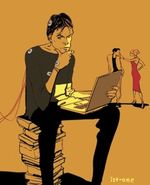
The fiction of Richard Powers sometimes resembles a dying satyr—above the waist is a mind full of serious thought, philosophical reflection, deep exploration of music and science; below, a pair of spindly legs strain to support the great weight of the ambitious brain. Powers thinks, and thinks well, and his almost nostalgic devotion to the European modernist tradition of “The Magic Mountain” and “The Man Without Qualities” makes him rare in American fiction. In his best books, “The Gold Bug Variations” (1991) and “Galatea 2.2” (1995), he displays an impressive command of the languages of music, genetics, computer science, and neurology, but more exciting is his willingness to engage in abstract thought, to argue and persevere, to carry arguments through the rooms of logic. (“The Gold Bug Variations,” in particular, contains several profound essays on Bach.) Contemporary American novelists, compared with Powers, can seem like intellectual visitors, fiddling in the foyers of the mind.
more from James Wood at The New Yorker here.
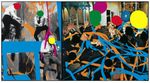
Once upon a time the young John Baldessari was so desperate for images that he prowled back alleys hunting for discarded photographs. He’d climb into garbage bins (diving head first was never the recommended technique) and rummage around, finding curious rejected pictures of odd male bowlers (something about what their hands revealed in the follow-through) or stiff ceremonial group portraits of beaming Caucasians with faces revealing their true jack-o-lantern selves, or a stack of dead bodies, or – simply and remarkably – a photograph of a standing man in a black suit which would eventually be cropped and tilted on its side and positioned at the bottom of a horizontal stack of other men – soldiers, cowboys, etc. – all of whom appear to have been shot dead in the street. The solitary living man in the black suit is on the bottom tier, facing up.
more from Benjamin Weissman at Frieze here.
