A Transylvanian critic takes on the popular Twilight series

Peter C. Baker in The National:

ScreenHunter_03 Dec. 15 11.43 Readers, you all know where I stand: mainstream Transylvanian cinema is hands down the most vibrant in the world today. I’m not talking about the so-called independent fare that gets drooled over by left-wing academics in the Cluj-Napoca Times, the so-called “paper of record”, but never plays in cinemas where you and I live. I’m not talking about “experimental” shorts that consist of nothing but close-ups of necks. And I’m definitely not talking about black-and-white “mumblecore” films where a bunch of overprivileged slackers sit around being lazy, and never even show their fangs.

Foreign film? Thanks but no thanks. I’ve said it before and I’ll say it again: what do far-flung elites know about the daily concerns – the hungers, the fears, the desires – of real Transylvanians? The only thing worse than a foreign film, to be perfectly honest, is a foreign film made by humans. Liviu Vlaicu at the Cluj-Napoca Times can say whatever he wants: 90 minutes with no bloodsucking just doesn’t add up to entertainment. Don’t be tricked into thinking otherwise by the pimply 108-year old at your local video store – and don’t be fooled by the titles, either. Beware, readers, of Reality Bites, There Will Be Blood and Red Dawn: none are what they seem.

Last year, when I first heard that a human movie was doing big box office here in Transylvania, I wrote it off to the enthusiasm of self-hating city slickers like Liviu Vlaicu who drink organic blood from bottles (if they drink real blood at all). But as the weeks wore on and Twilight steadily conquered our multiplexes, I became worried and curious. I went to the movie’s website, and here is what I found: this movie selling out theatres across Transylvania – written by a human, directed by a human, starring humans, based on a book by a human – claims to be about vampires.

More here.

Hollywood gives biologists a helping hand

From Nature:

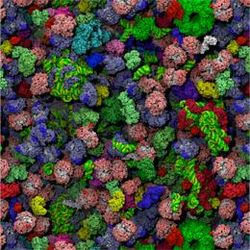
Hollywood Computer programs like those used in animated movies such as Shrek could soon be helping more cell biologists explain hypotheses — or even to make new discoveries, according to scientists presenting work in San Diego this month at the meeting for the American Society of Cell Biology.

“We want to be able to make predictions,” says Adrian Elcock of the University of Iowa in Iowa City. “At the very least we want our models to reproduce known behaviours.” Elcock is simulating the movement of proteins and other big molecules inside virtual bacterial cells. He built models from known data — including the atomic structures of proteins and concentrations of the 50 most abundant macromolecules in Escherichia coli — and then factored in how the molecular structure of each might cause proteins to stick to each other. His model nicely reproduces established data showing that green fluorescent protein diffuses approximately 10 times more slowly in the crowded environment of a bacterial cell than in a test tube.

More here.

Trusting Nature as the Climate Referee

John Tierney in The New York Times:

Climate Imagine there’s no Copenhagen.

Imagine a planet in which global warming was averted without the periodic need for thousands of people to fly around the world to promise to stop burning fossil fuels. Imagine no international conferences wrangling over the details of climate policy. Imagine entrusting the tough questions to a referee: Mother Earth.

That is the intriguing suggestion of Ross McKitrick, an economist at the University of Guelph in Ontario who, like me, is virtuously restricting his carbon footprint by staying away from Copenhagen this week. Dr. McKitrick expects this climate conference to yield the same results as previous ones: grand promises to cut carbon emissions that will be ignored once politicians return home to face voters who are skeptical that global warming is even a problem. To end this political stalemate, Dr. McKitrick proposes calling each side’s bluff. He suggests imposing financial penalties on carbon emissions that would be set according to the temperature in the earth’s atmosphere. The penalties could start off small enough to be politically palatable to skeptical voters.

More here.

The World’s Fastest Animal Takes New York

Meera Subramanian in Smithsonian Magazine:

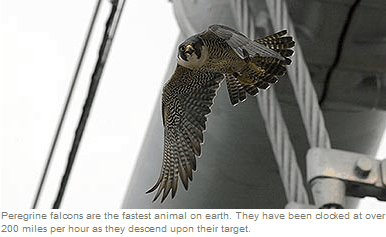
ScreenHunter_02 Dec. 15 11.26 I’m standing a thousand feet above the streets of New York City, on the 86th floor observatory deck of the Empire State Building, looking for birds. It’s a few hours after sunset, and New York City naturalist Robert “Birding Bob” DeCandido is leading our small group. We can see the cityscape in every direction as the cool wind tousles our hair, but our gaze is focused up. Migrating songbirds, many of which travel by night to keep cool and avoid predators, are passing high overhead on their autumn journey. DeCandido has taught us how to differentiate the movement of small birds—“See how they flap-flap-glide?” he tells us—from the erratic motions of moths, But there is another denizen of the city’s skies that we’re all hoping to see.

A blur of a bird zips past the western flank of the building, level with the observatory. It’s too fast for a gull, too big for a songbird. Maybe a pigeon. Maybe something else. There is an excited buzz as we fumble with binoculars, unable to track the receding figure.

Ten minutes after that first flash, an unmistakable form draws our eyes directly overhead. Collectively, we cry, “Peregrine!”

More here.

Mammogram Math

John Allen Paulos in the New York Times Magazine:

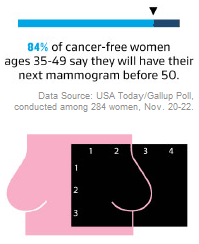
ScreenHunter_01 Dec. 15 10.52 In his inaugural address, Barack Obama promised to restore science to its “rightful place.” This has partly occurred, as evidenced by this month’s release of 13 new human embryonic stem-cell lines. The recent brouhaha over the guidelines put forth by the government task force on breast-cancer screening, however, illustrates how tricky it can be to deliver on this promise. One big reason is that people may not like or even understand what scientists say, especially when what they say is complex, counterintuitive or ambiguous.

As we now know, the panel of scientists advised that routine screening for asymptomatic women in their 40s was not warranted and that mammograms for women 50 or over should be given biennially rather than annually. The response was furious. Fortunately, both the panel’s concerns and the public’s reaction to its recommendations may be better understood by delving into the murky area between mathematics and psychology.

Much of our discomfort with the panel’s findings stems from a basic intuition: since earlier and more frequent screening increases the likelihood of detecting a possibly fatal cancer, it is always desirable. But is this really so?

More here.

Monday, December 14, 2009

Look Who’s Talking: The Turing Test’s 3,000 Year History – And My Proposed Modification

Golem3by Richard Eskow

In his famous experiment, Alan Turing pictured somebody talking with another person and a computer, both of which are out of sight. If they're unable to tell the computer from the human being, the machine has passed the “Turing Test.” But here's a question for a human or a machine to answer: Why did Turing pick speech as his proof?

The Test is usually described as way to determine whether a computer has achieved consciousness, but Turing's original framing was more subtle. “I believe (the question of whether machines can think) to be too meaningless to deserve discussion,” he wrote. “Nevertheless I believe that at the end of the century the use of words and general educated opinion will have altered so much that one will be able to speak of machines thinking without expecting to be contradicted.”

Now, that's interesting: Not only did Turing choose good conversation as a valid substitute for proof of machine “thought,” but he then added an implied proof – based on what people say. If people say machines “think,” then they do think. If people say they're conscious, then they are conscious.

Why such an emphasis on speech – the machine's, and our own? The idea that language, words, and names are a measurement of consciousness goes back at least 3,000 years, to the Tower of Babel story from the Book of Genesis. “And the whole earth was of one language, and of one speech,” it says, “and they said … let us build us a city and a tower … and let us make us a name.” You know what happens next: “And the Lord said, Behold, the people is one now nothing will be restrained from them, which they have imagined to do.” The great tower, that literal Hive Mind with its worldwide common language (HTML?), came crashing down. The lesson? Language and knowledge equal personhood, but too much equals Godhood.

People could create artificial life in the ancient texts, too – but their creations couldn't speak. In the Talmud, Rabbah makes an artificial man that looks just like the real thing, but a shrewd scholar – one Zera, who I picture as looking like Peter Falk in Columbo – administers a Turing Test and the creature flunks: “Zera spoke to him, but received no answer. Thereupon he said unto him: 'Thou art a creature of the magicians. Return to thy dust.'”

Flash forward to the 1600's and Descartes, who wrote in Discourses On the Method: “If there were machines which bore a resemblance to our bodies and imitated our actions as closely as possible for all practical purposes, we should still have two very certain means of recognizing that they were not real men. The first is that they could never use words, or put together signs, as we do in order to declare our thoughts to others.”

I don't know Descartes if read the Talmud, but he claimed to be religious and even wrote an ontological argument for the existence of God (if not a very convincing one). There's no question he read Genesis, as well as many other papers, poems, and stories derived from these ancient texts and legends.

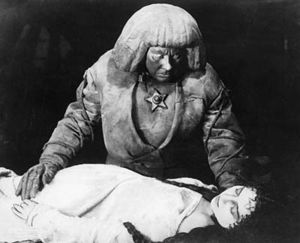
Did Turing read Descartes? We don't know – but we can be pretty sure he saw another work: Boris Karloff's Frankenstein. The monster, who was eloquent in Mary Shelley's book, was mute in the movie. Whether or not the film makers were echoing these ancient stories, they'd undoubtedly seen the 1920 German film The Golem (see above), based on a folktale derived from the Talmud passage about the wordless “man” made of dust. The Golem story spread in the shtetls of Eastern Europe during the 18th Century at the same time the Frankenstein story was written. They may both have stemmed from the same fear – that humanity's industrial advances were bringing us to a new Babel even as new medical discoveries invaded God's turf.

I'm not a big fan of the Turing Test (which is analyzed in detail here). I'm sympathetic to the Chinese Room argument that you can replicate speech without creating the sentience behind it. I lean toward the idea that most speech is just an output for the human species, the way honey is for wasps or webs are for spiders. My first mother-in-law could weave something that looked like a spiderweb, if you asked her nicely, but that didn't make her an arachnid. So if we build an AI – or meet an alien, for that matter – that can speak like a human being, I still won't be completely convinced it has consciousness like ours.

Which gets us to singing. Its main evolutionary purpose seems to be attraction – either sexually, or as a way of establishing trust. Daniel Levitan suggests that singing might have been used to convey honesty when a stranger approached a new community, because the emotion conveyed is more difficult to fake. Maybe that's why Bob Dylan's more popular than Michael Bolton: It's easier to lie with words than music, and the successful transmission of emotion is more important to us than the sweetness of the voice.

So I hereby propose a modification to Turing's test: Instead of asking our entity to speak, let's ask it to sing. If it can make us cry with a sad song, we'll say that it's conscious. And if it can get us aroused – with, say, a new version of “Sexual Healing” – well, then let's just say our experiment could take an unexpected turn.

It's true that all of the arguments against the Turing Test could also be used against this one, so it doesn't really advance the debate very far. But what the hell: At least we might hear a decent song for a change, instead of all the crap they've been playing lately.

Sunday, December 13, 2009

Like Lives: On Lorrie Moore

David Wallace-Wells in The Nation:

Lorrie In the spring of 1985, Knopf published Self-Help, an acerbic collection of stories by the precocious aphorist Lorrie Moore. Self-Help was also a debut, and it was also written largely in the second person, but it told a very different story about the allure of city life and the comforts of living in close quarters. One would not want to change places with anyone in Moore's New York–“it is like having a degree in failure,” she wrote of living there–or, for that matter, with those characters in Scranton, Rochester or Owonta, who viewed the '80s not as a new frontier but as a deadening stretch of the same old disappointments, romantic, professional, intellectual and filial. A mordant series of devotional texts, Self-Help traced those disappointments, mapping the lean inner life of the American boom years. The second-person voice of Bright Lights was flat, credulous and smug; Moore's prose was briny, superior and self-loathing. The book was a study of the dream life of fatalism, and it was narrated in the clairvoyant mood.

“Meet in expensive beige raincoats, on a pea-soupy night. Like a detective movie,” begins “How to Be an Other Woman,” the cheeky first story in the collection. “Whisper, 'Don't go yet,' as he glides out of your bed before sunrise and you lie there on your back cooling, naked between the sheets and smelling of musky, oniony sweat. Feel gray, like an abandoned locker room towel.” “Smoke marijuana,” advises an entry in “How to Talk to Your Mother (Notes).” “Try to figure out what has made your life go wrong. It is like trying to figure out what is stinking up the refrigerator. It could be anything.” “How to Become a Writer”: “First, try to be something, anything, else. A movie star/astronaut. A movie star/missionary. A movie star/kindergarten teacher. President of the World. Fail miserably.”

More here.

Paul Samuelson, 1915-2009

Samuelson Michael Weinstein in the NYT:

When economists “sit down with a piece of paper to calculate or analyze something, you would have to say that no one was more important in providing the tools they use and the ideas that they employ than Paul Samuelson,” said Robert M. Solow, a fellow Nobel laureate and colleague.of Mr. Samuelson’s at M.I.T.

Mr. Samuelson attracted a brilliant roster of economists to teach or study at the Cambridge, Mass., university, among them Mr. Solow as well as such other future Nobel laureates as George A. Akerlof, Robert F. Engle III, Lawrence R. Klein, Paul Krugman, Franco Modigliani, Robert C. Merton and Joseph E. Stiglitz.

Mr. Samuelson wrote one of the most widely used college textbooks in the history of American education. The book, “Economics,” first published in 1948, was the nation’s best-selling textbook for nearly 30 years. Translated into 20 languages, it was selling 50,000 copies a year a half century after it first appeared.

“I don’t care who writes a nation’s laws — or crafts its advanced treatises — if I can write its economics textbooks,” Mr. Samuelson said.

His textbook taught college students how to think about economics. His technical work — especially his discipline-shattering Ph.D. thesis, immodestly titled “The Foundations of Economic Analysis” — taught professional economists how to ply their trade. Between the two books, Mr. Samuelson redefined modern economics.

Catalin Avramescu on the Idea of Cannibalism

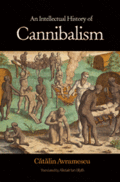
Avramescu Over at the excellent Philosophy Bites, David Edmonds and Nigel Warburton interview Catalin Avramescu:

Catalin Avramescu, from the University of Bucharest, discusses the part played in 17th and 18th century thought by the cannibal. Cannibalism provided a kind of test case for all sorts of natural law theories – it also posed difficulties for those who believed in a literal resurrection of the body after death, since if eaten, then their body parts would have been assimilated into someone else's body.

Listen to Catalin Avramescu on the Idea of Cannibalism

The introduction to Avramescu's An Intellectual History of Cannibalism can be found over at Princeton University Press.

Also, Jenny Diski's review of the book can be found over at the LRB, here, and Justin's review in n+1.

Gross National Politics

NussbaumDeborah Solomon interviews Martha Nussbaum in The New York Times Magazine:

Your inquiries have lately revolved around the politics of physical revulsion, which you see as the subtext for opposition to same-sex marriage.
What is it that makes people think that a same-sex couple living next door would defile or taint their own marriage when they don’t think that, let’s say, some flaky heterosexual living next door would taint their marriage? At some level, disgust is still operating.

In your book “From Disgust to Humanity: Sexual Orientation and Constitutional Law,” which will be out in February, you draw a distinction between primary disgust and projective disgust.
What becomes really bad is the projective kind, meaning projecting smelliness, sliminess and stickiness ontoa group of people who are then stigmatized and regarded as inferior.

On the other hand, might one argue that disgust has been a positive force in evolution, keeping people away from dirt and germs?
We are disgusted by lots of things that are not really dangerous, such as a sterilized cockroach, as studies have found.

Do you find blood disgusting?
Blood in your veins is not disgusting. It’s when blood comes into the open that it gets to be disgusting. The common property of all these primary disgust objects is that they are reminders of our animality and mortality.

Feminism’s Face-Lift

BotaxAlexandra Suich on the “bo-tax”, in The Nation:

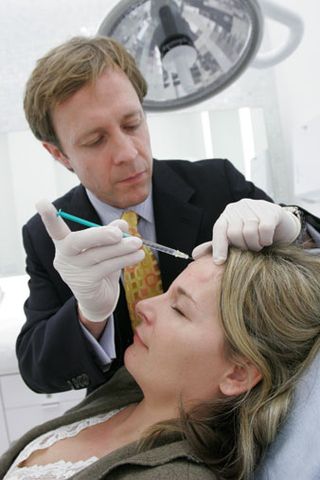
NOW has not taken to the streets to campaign for affordable access to face-lifts, and it is unlikely that the group will do so. But by framing it as a women's issue, NOW's president has given cosmetic surgery giants like Allergan, which makes Botox, a social grievance and one of its strongest arguments. Where companies and plastic surgeons might have only been able to whine to Congress about lost profits, they can now claim they are campaigning against a tax that unjustly targets women. The Bo-Tax, Allergan's spokeswoman explained to me without detectable irony, is about “a woman's right to choose.”

In 1991, Naomi Wolf published The Beauty Myth, which argued that society promoted unrealistic images of female beauty to keep women locked in place, forlorn and self-hating because they could not achieve that flawlessness themselves. Her book encouraged women to mobilize and discard their aspirations of plastic perfection and helped launch the Third Wave of feminism. Today, in a disturbing twist, NOW's president is not decrying the “beauty myth” but is accepting a “beauty reality.”

The real issue here is not whether women should have the choice to get plastic surgery. It is not a ban on plastic surgery that has been proposed, only an excise tax. What is of greater concern is that the leader of the most prominent feminist organization in the US could speak out on a topic of such minor concern when there are so many feminist issues at stake in the healthcare debate, like reproductive rights and insurance coverage of mammograms. Botox should not be further from feminists' minds. Aligning feminism with the cause to keep plastic surgery costs low reinforces the notion that feminism is a movement for white, middle-aged, middle-class women. Feminism has needed to lose that label for more than a century.

Is Obama’s War in Afghanistan Just?

Michael Walzer makes the case that it is, in Dissent:

THERE is one strong argument for undertaking the effort Obama has called for that he didn’t make and that may be more compelling than the strategic arguments he did make. It’s a moral and political argument about what we owe the Afghan people eight years after we invaded their country.

Things have not gotten better for most Afghans in those years, and for many of them, who live in the battle zones or who endure the rapaciousness of government officials, things have probably gotten much worse. At the same time, however, there have been some gains, in parts of the countryside and in the more secure cities. American and European NGOs have been doing good work in areas like public health, health care, and education. Schools have opened, and teachers have been recruited, for some two million girls. Organizations of many different sorts, including trade unions and women’s groups, have sprung up in a new, largely secular, civil society. A version of democratic politics has emerged, radically incomplete but valuable still. And all the people involved in these different activities would be at risk—at risk for their lives—if the United States simply withdrew. Given everything we did wrong in Afghanistan, the work of these people—democrats, feminists, union activists, and teachers—is a small miracle worth defending against the Taliban resurgence.

Higgs Could Reveal Itself in Dark-Matter Collisions

FermiJon Cartwright in Physics World:

The LHC was built to search for a wealth of new physics but its foremost target has always been the Higgs. The only fundamental particle in the Standard Model yet to be discovered, the Higgs – or more precisely its associated field – is supposed to “stick” to other particles and thus give them the property of mass. Many particle physicists have been hoping that the LHC’s expected collision energies of 14 TeV will be powerful enough to finally unearth the Higgs, and in doing so wrap up the Standard Model.

However, Taoso’s group, which includes members at Argonne National Laboratory and Northwestern University in Illinois, US, thinks experiments searching for traces of dark matter might get there first. Dark matter is thought to make up more than 80% of the matter in the universe but it does not interact with light (hence being “dark”) so its presence has only been inferred from its gravitational effects on normal matter.

Most models of the universe suggest that dark matter was more prevalent in the distant past, and this has led physicists to assume that dark-matter particles have been annihilating one another through collisions. Although dark matter itself doesn’t interact with light, such an annihilation could generate a photon and another particle, possibly the Higgs.

The researchers claim that detecting this Higgs would be a matter of spotting the partner photon with an energy reflecting the Higgs’s mass. If their calculations are correct, gamma-ray telescopes like Fermi might see the first evidence within a year.

Modeling Human Drug Trials — Without the Human

From Wired:

Man In 1997, the UK Department of Health launched a studyto determine whether a popular cardiovascular drug, atorvastatin, could reduce the number of heart attacks and strokes in diabetic patients. The trial, known as the Collaborative Atorvastatin Diabetes Study(Cards), took seven years to complete. Money had to be raised, doctors had to be recruited, and then 2,838 patients had to be monitored weekly. Half of the diabetics were given the drug. The other half received a placebo.

In early 2004, a few months before the results of the trial were released, the American Diabetes Association asked a physician and mathematician named David Eddyto run his own Cards trial. He would do it, though, without human test subjects, instead using a computer model he had designed called Archimedes. The program was a kind of SimHealth: a vast compendium of medical knowledge drawn from epidemiological data, clinical trials, and physician interviews, which Eddy had laboriously translated into differential equations over the past decade. Those equations, Eddy hoped, would successfully reproduce the complex workings of human biology — down to the individual chambers of a simulated person’s virtual heart.

Because the results of the real Cards trial were still secret, Eddy knew only the broadest facts about its participants, such as their average age and blood pressure. So Eddy and his team created a simulated population with the same overall parameters. Each person “developed” medical problems as they aged, all dictated by the model’s equations and the individual risk profiles. These doubles behaved just like people: Some, for example, forgot to take their pills every once in a while.

It took Eddy and his team roughly two months to construct the virtual trial, but once they hit Return, the program completed the study in just one hour. When he got the results, Eddy sent them to the ADA. He also mailed a copy to the Cards investigators. Months later, when the official results were made public, it became clear that Eddy had come remarkably close to predicting exactly how everything would turn out. Of the four principal findings of the study, Archimedes had predicted two exactly right, a third within the margin of error, and the fourth just below that. Rather than seven years, Eddy’s experiment had taken just a couple of months. And the whole project had cost just a few hundred thousand dollars, which Eddy estimates to be a 200th of the cost of the real trial. The results seemed to vindicate his vision for the future of medicine: faster, cheaper, broader clinical trials — all happening inside a machine.

More here.

Growing up in Ethology

Richard Dawkins writes a brief scientific autobiography:

ScreenHunter_01 Dec. 13 09.56 I should have been a child naturalist. I had every advantage: not only the perfect early environment of tropical Africa but what should have been the perfect genes to slot into it. For generations, sun-browned Dawkins legs have been striding in khaki shorts through the jungles of Empire. My Dawkins grandfather employed elephant lumberjacks in the teak forests of Burma. My father’s maternal uncle, chief Conservator of Forests in Nepal, and his wife, author of a fearsome ‘sporting’ work called Tiger Lady, had a son who wrote the definitive handbooks on the Birds of Borneo and Birds of Burma. Like my father and his two younger brothers, I was all but born with a pith helmet on my head.

My father himself read Botany at Oxford, then became an agricultural officer in Nyasaland (now Malawi). During the war he was called up to join the army in Kenya, where I was born in 1941 and spent the first two years of my life. In 1943 my father was posted back to Nyasaland, where we lived until I was eight, when my parents and younger sister and I returned to England to live on the Oxfordshire farm that the Dawkins family had owned since 1726.

It was through my father’s middle brother that I met the young David Attenborough…

More here.

Saturday, December 12, 2009

american fantastic

B5f66cb4-e530-11de-9a25-00144feab49a

A body is discovered in woods in rural Indiana, skinned from the neck up. The head is like “the cupped husk of a peeled orange”. The detective investigating soon unearths evidence that this grisly murder is linked to a war between two ancient secret cults, one celebrating laughter, the other despondency. The victim, a circus clown, was an adherent of one cult. His killer, from the opposing cult, removed his face – clown makeup and all – in order to appease a joyless deity and help usher in a dismal apocalypse. This short story, “The God of Dark Laughter”, by American author Michael Chabon, is an archly witty and chilling tale which plays on coulrophobia – a fear of clowns. It was first published in 2001 and is included in American Fantastic Tales, a two-volume anthology compiled and edited by the Wisconsin-born horror novelist Peter Straub.

more from James Lovegrove at the FT here.