
Susan Glasser in The New Yorker:
 It didn’t take long. From the very start of Thursday’s CNN debate between Donald Trump and Joe Biden, the question was not so much whether Biden was losing but exactly how much damage it would do to the President’s reëlection campaign. His first shaky answers, it turned out, were no outlier: Biden, his voice raspy and often unclear, struggled for the entirety of the debate, an agonizing hour and a half that, amazingly enough, Biden’s own campaign had sought out in an effort to make up ground against Trump, the defeated, criminally convicted ex-President who was nonetheless leading in the polls.
Let’s stipulate to this: Trump was no champion, either. For much of the debate, he reiterated familiar lines, often out of context or wildly untrue, from his rallies and social-media feed. CNN’s moderators, having announced in advance that they would not be doing any fact checking, stuck to their plan, and the Trumpian B.S. flowed freely: The Greatest Economy Ever! Biden’s Is the Worst Administration Ever! Russia, Russia, Russia! Some of Trump’s lies were flagrant and damaging; others were merely bizarre. But did anyone care? The news of the debate was not Trump saying crazy, untrue things, though he did so in abundance. It was Biden. The President of the United States, eighty-one years old and asking to be returned to office until age eighty-six, looked and sounded old. Too old.
More here.
 Thursday night’s
  You are standing on a boat that is drifting down a placid river. You watch the trees on the shore glide along. For a moment, it looks like the trees themselves are moving – not your boat. But this, of course, is mere appearance: the trees are still, and it is your boat that moves. This parallax effect was described by medieval philosophers, but it may be more familiar in another form: when you’re sitting on a train slowly rolling out of the station, it can seem like it is the stationary train next to yours that is departing instead.
 For some writers, some lovers, some readers, the physical and the verbal are the same. With erotica, I’ve found, there’s no way to lose. Best case scenario: you get turned on. Second best: you laugh. Worst case: you wonder why you didn’t get turned on or laugh, and you have a good think.
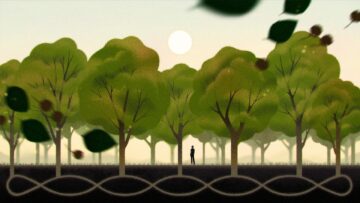 Each summer, like clockwork, millions of beech trees throughout Europe sync up, tuning their reproductive physiology to one another. Within a matter of days, the trees produce all the seeds they’ll make for the year, then release their fruit onto the forest floor to create a new generation and feed the surrounding ecosystem.
 ‘I
‘I W
W WHAT IS A GOOD DEATH?
 Over the last several decades, the digital revolution has changed nearly every aspect of our lives.
  Taylor’s new book is formidably chewy, with page after page featuring passages of Hölderlin, Novalis, and Rilke, offered both in the original German and in translation. Long analyses of
 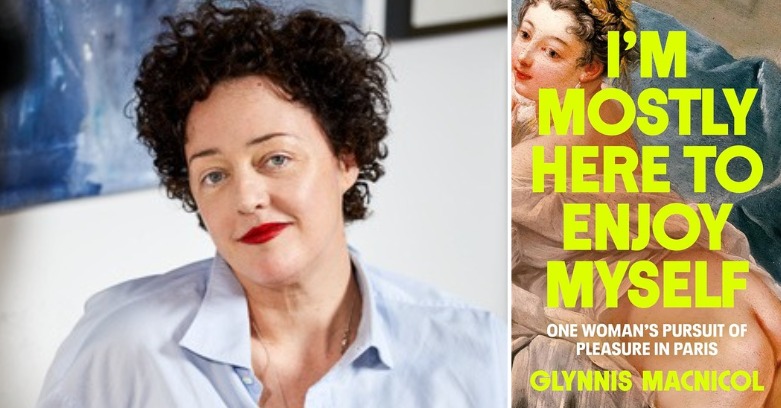 In Glynnis MacNicol’s second memoir,
 R
R You might have encountered Jehovah’s Witnesses before as the conservatively dressed religious types knocking on your front door, offering copies of The Watchtower, a free magazine promoting their faith. But there’s a darker side to this religious group, whose estimated 8 million members worldwide believe we are living in the “last days.” For the latest episode of
  The Medical Research Council’s Laboratory of Molecular Biology (LMB) in Cambridge, UK, is a world leader in basic biology research. The lab’s list of breakthroughs is enviable, from the structure of DNA and proteins to genetic sequencing. Since its origins in the late 1940s, the institute — currently with around 700 staff members — has produced a dozen Nobel prizewinners, including DNA decipherers James Watson, Francis Crick and Fred Sanger. Four LMB scientists received their awards in the past 15 years: