
Leon Vlieger at The Inquisitive Biologist:
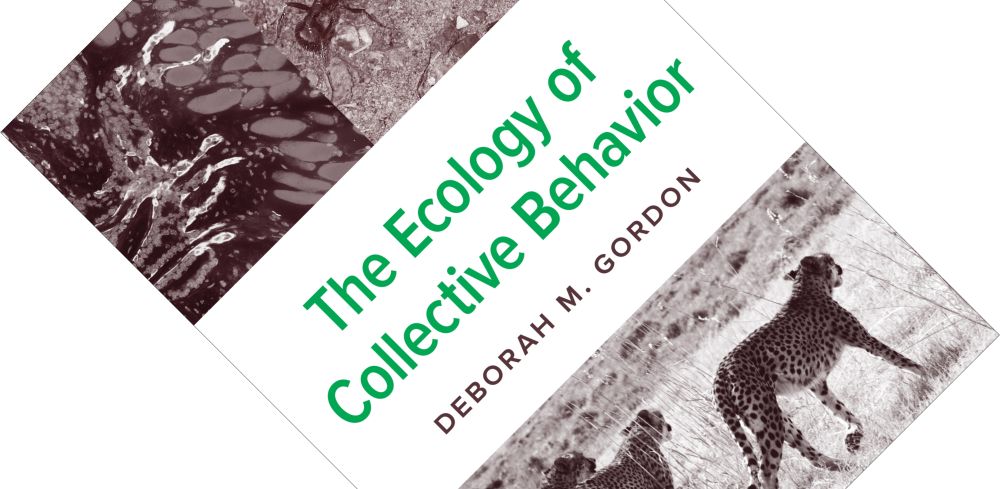 This is the third of a trio of reviews in which I take a brief detour into ants and collective behaviour more generally. I previously reviewed The Ant Collective, a graphical introduction to ant behaviour, and entomologist Deborah M. Gordon’s Ant Encounters, a primer on how collective behaviour in ants comes about. The Ecology of Collective Behavior is the second book by Gordon that I will examine. It proposes a research programme to figure out both how collective behaviour responds to changing environmental conditions, and how it evolves. Though squarely aimed at professional biologists, this brief and interesting book is nevertheless accessible to a wider interested audience and makes its case with nary an equation in sight.
One of the most familiar examples of collective behaviour is swarming, where large numbers of animals move in a coordinated fashion, whether flocks of birds or schools of fish. However, collective behaviour can take many different forms and it has proven incredibly tricky to develop a general theory that successfully captures the diversity of processes generating it.
More here.
Enjoying the content on 3QD? Help keep us going by donating now.
 I
I Ashura is marked on the 10th day of Muharram, the first month of the Islamic calendar, by all Muslims. It marks the day Nuh (Noah) left the Ark and the day Musa (Moses) was saved from the Pharaoh of Egypt by God. The Prophet Muhammad used to fast on Ashura in Mecca, where it became a common tradition for the early Muslims. Ashura this year will be marked in most places on August 29. But for the Shia, it is also a major religious event to commemorate the martyrdom of Husayn Ibn Ali al-Hussein, the grandson of the Prophet Muhammad, who died at the Battle of Karbala in 680 AD.
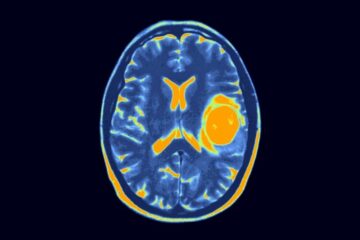 Every two weeks at Seattle Children’s Hospital in Washington, a five-year-old child stops by for a fresh dose of genetically engineered immune cells administered directly into the fluid around their brain.
 Robinson opens
  WHY WOULD A
  Melinda and I sometimes read the same book at the same time. It’s usually a lot of fun, but it can get us in trouble when one of us is further along than the other—which recently happened when we were both reading A Gentleman in Moscow by Amor Towles. At one point, I got teary-eyed because one of the characters gets hurt and must go to the hospital. Melinda was a couple chapters behind me. When she saw me crying, she became worried that a character she loved was going to die. I didn’t want to spoil anything for her, so I just had to wait until she caught up to me.
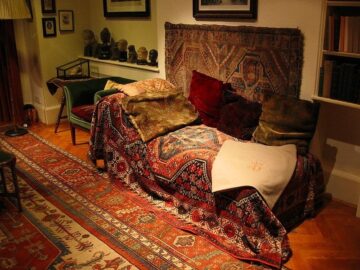 Some of the 20th century’s greatest thinkers – Higgs, Freud, Einstein – reveal so much to us through the objects that surrounded them. Higgs’s passion for music and ordered thinking is apparent through his alphabetised collection. The lack of concern for updating his interior suggests a focus on what’s going on in his mind, rather than material possessions. There is a joy to knowing he waited 47 years for his theory to be verified by the Large Hadron Collider, but lived to see it and secure his Nobel Prize.
 Seemingly overnight, Elena Ferrante — or rather, the novelist writing as Elena Ferrante — found worldwide acclaim.