
Alizah Holstein at Literary Hub:
 I first read Einstein’s Dreams in 1993, very shortly after it was published. The author, Alan Lightman, is a physicist at MIT whose writings have illuminated the intersection of science and the humanities. Einstein’s Dreams, his first work of fiction, explores the variety of dream scenarios that Albert Einstein might have dreamed in the months before submitting his special theory of relativity in June 1905.
Each “dream”—there are thirty—imagines time running in a different fashion and its resulting effect on how people live and experience their lives. They feel philosophical and almost like fables: fantastical but rooted in the concretely familiar. In one, time is like the light that passes between two mirrors, making each individual one of an endless number of copies. In another, time rushes quickly at its outermost edges but stands suspended at its center—those who find refuge there are, as we might guess, parents of small children, and lovers.
More here.
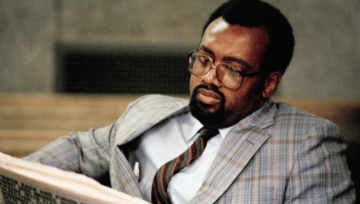 Glenn Loury has been one of the most arresting voices on the fraught topic of race in the United States over the past four decades. Now in his mid-seventies (he was born in 1948), he produces a rich and prolific digital output of interviews, debates, and essays on
  In the Jewish legend, the great warrior Samson ends up, as John Milton famously puts it, “eyeless in Gaza.” He is blinded by the Philistines and harnessed to a huge millstone, forced to drag himself around and around in circles, always moving but unable to go anywhere. Eventually, in the most spectacular of suicides, he gets his revenge by pulling down their temple on top of the Philistines, killing both them and himself. The story is apparently supposed to be heroic, but it feels more like a fable of vicious futility. Cruelty begets cruelty until there is nothing left but mutual destruction.
 In the years since her death, Didion’s star has only risen, with a
  One of the more interesting asides in the extensive coverage of Philadelphia’s
 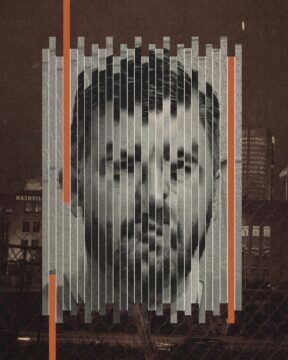 Erik Maund had always lived the high life, as you might expect of a man whose surname had been
  The technology certainly has the potential to improve family life, suggest New America’s Anne-Marie Slaughter and Milo’s Avni Patel Thompson. By taking over “repetitive and mundane tasks,” it would “enable human caregivers to spend more time establishing emotional connections and providing companionship.” Though developing an “AI for caregivers” would “test the technology’s technical limits and determine the extent to which it can account for moral considerations and societal values,” it would undoubtedly be “worth the effort.”
 America is in deep, deep trouble.
 THOM GUNN WAS THE GREAT RHAPSODE OF RISK