
 | A Hyderabad native, Gautam has been a Bombay based writer/director since his return to India 14 years ago from NYC. With a couple of Masters degrees, in Communication from the University of Hyderabad and Television-Radio- Film from Syracuse University, he worked as a producer for three and half years at the music TV station Channel[V] during the height of its influence. As an independent since 2000, he works in Broadcast Design, Promotion & Brand Identity as well as in non-fiction TV shows & documentary. Contributing off and on to a few publications, post-colonial India and its strange cities is a primary interest of his, amongst several unrelated, excursionary ones. Email: gautam.pemmaraju [at] gmail.com List of writings at 3QD, in reverse chronological order:
|
Category: Recommended Reading
Richard Eskow
 | Richard (RJ) Eskow is a consultant and writer who has worked as a Fortune 500 executive, a software designer, a professional rock musician. He’s been a consultant in health policy, technology, and medical issues for public and private clients, domestically and in over 20 foreign countries. Richard has conducted interviews with politicians such as John Kerry and Russ Feingold, musicians like Richard Thompson and Billy Joe Shaver, and figures in the worlds of religion and science. He is a regular contributor to The Huffington Post and is an occasional co-host for “The Young Turks” radio show, despite being neither Turkish nor particularly young. Email: reskow [at] att.net List of writings at 3QD, in reverse chronological order: |
Ryan Sayre
 | Ryan is currently out east finishing a PhD in socio-cultural anthropology. He works on security and seismicity in Tokyo and posts intermittently on architecture, earthquakes, and anthropology at www.architectonictokyo.com. Email: ryan.sayre [at] yale.edu List of writings at 3QD, in reverse chronological order:
|
Nick Werle
 | Raised in modern-day East Egg, Nick has watched two boom-bust business cycles up close. After concentrating in physics and modern critical philosophy at Brown, he has begun studying the history of modern physics and political economy. Currently an Affiliated Scholar at the Pembroke Center studying the history of physics and political economy, he teaches economics at The Wheeler School, in Providence, RI, and works as a writing tutor at the Brown University Writing Center. In addition to reading and writing, Nick enjoys long distance backpacking, cooking, and arguing. Email: nickwerle [at] gmail.com Website: www.runningthezoo.com List of writings at 3QD, in reverse chronological order:
|
Rishidev Chaudhuri
 | Rishi was born in Colombo, and grew up in Bangalore before going to college in Massachusetts, where he had a suitably unfocused liberal arts education. Afterwards, he drifted about India, and briefly worked as a journalist for a paper in Calcutta, interviewing local celebrities and struggling artists. He is now working towards a Phd in Applied Mathematics at Yale. In the meanwhile, he tries desperately to keep his literary and scientific interests away from each other, and to shield his worldview from the tentacles of modern science. Email: rishidev.chaudhuri [at] yale.edu List of writings at 3QD, in reverse chronological order:
|
Liam Heneghan
 | Liam Heneghan, a Dubliner, is an ecosystem ecologist working at DePaul University in Chicago where he is a Professor of Environmental Science and co-director of DePaul University’s Institute for Nature and Culture. His research has included studies on the impact of acid rain on soil foodwebs in Europe, and on inter-biome comparisons of decomposition and nutrient dynamics in forested ecosystems in North American and in the tropics. Over the past decade Heneghan and his students have been working on restoration issues in Midwestern ecosystems. Heneghan is co-chair of the Chicago Wilderness Science Team. He is also a graduate student in DePaul University’s philosophy program, a part-time model, and an occasional poet. Email: lhenegha [at] gmail [dot] com List of writings at 3QD, in reverse chronological order:
|
Jim Culleny
 | Jim Culleny is the Poetry Editor of 3 Quarks Daily. After a stint in the navy, Jim received a BA in Art Education from William Paterson University and did graduate work in art at NYU. He taught art for several years in NJ public schools in Newark and Bergen County. Taught a little bit of everything else during two years at a remote residential community school in New York’s Adirondacks. Was a social worker in Lower Manhattan before Soho was Soho. Made a living most of his life as a carpenter, designer, and builder. Did regular radio commentary for about 10 years during Morning Edition on WFCR.FM in Amherst, Mass. and some for NPR on All Things Considered. Played and sang his way from rockabilly to jazz in numberless band permutations over a period too long to believe. Came to poetry through songwriting. Has had work published in The Third Muse Poetry Journal, the Christian Science Monitor, Penthouse Journal, and in 5-Minute Pieces, a chapbook published in Shelburne Falls, Massachusetts. He’s also been writing a regular op-ed column for the past 12 years for the Greenfield Recorder along the beautiful Connecticut River, and is presently making a living as project manager for an Architectural firm. Jim lives with his wife, Pat, of 31 years, and his 17 year old granddaughter. He has three daughters and four other grandchildren. Email: jimculleny [at] comcast.net Jim’s poems at 3QD, in reverse chronological order: |
Saifedean Ammous
 | Saifedean Ammous lives in New York and is a candidate for a PhD in Sustainable Development at Columbia University. He grew up in Ramallah in Colonized Palestine and has a Bachelor’s in Mechanical Engineering from the American University of Beirut and a Master’s in Development Management from the London School of Economics. He supports Liverpool FC rabidly, cooks the undisputed best shrimp pasta in the world, and blogs at TheSaifHouse.wordpress.com Email: Saifedean.ammous [at] gmail.com List of writings for 3QD, in reverse chronological order: |
The Ultimate Obit – The periodic table
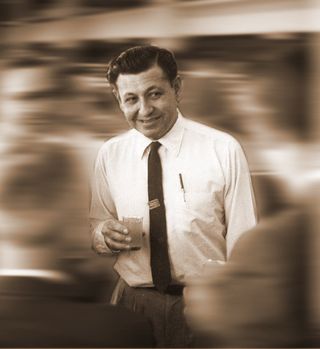
Of course, it’s even worse to know what the first line in your obit should be—and then not rate an obit at all, because people forgot you. Such was the fate of Albert Ghiorso (hard “g”), who helped discover more chemical elements, a dozen, than any human being who ever lived. Yet his death earned just three measly mentions in newspapers across the country (and those weeks after he died). I’d like to do the little I can to rectify that.
I wrote about Ghiorso in a recent book, and beyond the wizardry of his science, I remember most of all his mischief. He specialized in building radiation detectors that could pick out the presence of just a few atoms of new elements. The discovery of a new element was always a celebratory event—the periodic table is the most precious real estate in science—so during one experiment Ghiorso decided to wire his radiation detector to his building’s fire alarms at the University of California at Berkeley, so it would briiiiiing every time an atom appeared. For various reasons his team ran the experiment at night, and they cheered all through the a.m. as the atoms rang out. It was a complete success, except Ghiorso forgot to unwire the fire alarm the next morning. While he was at home sleeping, it went off during the day, forcing a panicked evacuation. The administration was not amused. In discovering a different element, berkelium, element 97, Ghiorso suggested using “Bm” as the chemical symbol for it, because it had been such a “stinker” to discover. To the eternal disappointment of every sophomore chemistry student in the world, the idea was vetoed.
perceptions

Sunday, January 23, 2011
Old Man in Winter
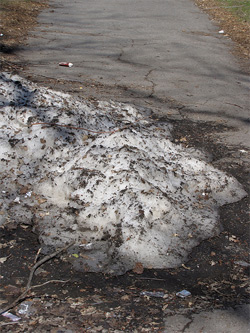
It is a time of dreariness and decay. I'm speaking of winter, of course. I always think, when thinking of winter, of the opening lines of Richard III. Richard, the king-to-be, is musing upon the ascension to the throne of his brother, Edward IV. He says, in lines that are burned into the deep pathways of our neural networks, “Now is the winter of our discontent / Made glorious summer by this son of York.”
These opening lines of the play are actually quite hopeful. The first word, “now,” looks forward to the “made” in the next line. Shakespeare, in that clever way of his, makes the language fresh by making you pay attention. The “now” is a placeholder for the thought to come. It sets the scenario, grabs us with its immediacy, and lingers there for a moment while we wait for the thought to develop. The thought develops into the idea that “now” is being “made glorious summer” by this son of York. The winter of our discontent is in the past. “Now” is, in fact, a time of glorious summer, a renewal brought about by the reign of Edward IV, son of York.
But the phrase “now is the winter of our discontent” is so powerful that it often gets picked out of context and made to stand alone. When you do that, it seems as if “now” is the winter of our discontent. The winter of our discontent isn't going anywhere. It is simply the way it is right now.
Sometimes when I hear that line I even hear it as a statement not about “now” but about winter. If you think of it as a winter statement, you can almost replace the word “now” with the word “winter,” i.e., “winter is the winter of our discontent.” I don't take this as a simple tautology, “winter is winter,” but the equation of winter the season with winter the mood. Winter, the season, is a time of general discontent. Winter, in its dreariness and decay, is the season of wanting things to be otherwise.
And yet, some part of us wants winter, some part of us glories in the winteriness of winter.
Mondo Weiss

When Philip Weiss, the Jewish anti-Zionist writer and blogger, compares himself to Theodor Herzl, he’s not being ironic. “I actually am like him in certain ways,” he says. “Herzl said, ‘Anti-Semites made me Jewish again.’ I would say that neo-conservatives made me Jewish again.”
To the legion of Jews that Weiss has enraged, this will sound perverse. It’s certainly self-aggrandizing. But it also gets at the way that Weiss has abandoned a deeply assimilated life for a profound—if idiosyncratic and tortured—engagement with Jewish questions. As the founder of Mondoweiss, a blog that has become a nucleus of anti-Zionist writing, and a co-editor of a new book about Richard Goldstone’s report on Israel’s 2008 invasion of Gaza, Weiss says that he now thinks about Jewishness all the time. In his fierce critique of tribal identity, he’s found his tribe—one he believes is growing.
“I think I was alienated from a lot of Jewish communal life in my 20s, 30s, 40s,” Weiss says. “One symptom of that is the fact that I’d never been to Israel until 2006. I was 50 before I got to Israel.” Now that he is 55, Israel has become the center of his life. He goes to rabbinical conventions and corresponds with left-wing Israelis. “I love what I’ve undergone in the last few years,” he says. “And I love my engagement with Jewish communal life now.”
Of course, much of that engagement comes in the form of relentless criticism. Weiss’ blog is fulsomely, intensely anti-Israel—it’s a universe in which even Noam Chomsky, hero of anti-imperialists worldwide, is criticized for his residual attachment to the Jewish state. His obsessive focus on Israel has come at the expense of a successful career as a magazine journalist. Harvard-educated, he got his start writing for the New Republic and later contributed features to New York, and the New York Times Magazine and wrote a column for the New York Observer. Initially he launched Mondoweiss as a general-interest blog on the New York Observer website. When he started to focus on Israel, his editor warned him that he was becoming a crank.
He didn’t listen, and in 2007 he left the Observer, taking the blog with him. Today it operates under the umbrella of the nonprofit Nation Institute, which allows Weiss to solicit tax-deductable contributions. But its budget comes entirely from donations, and Weiss has to rely on his wife, the writer and editor Cynthia Kling, to help support him.
It’s a little hard to figure out why Weiss threw so much away for a cause that was so new to him. Naturally, he sees a linear moral logic to his journey. He looks at contemporary Israel and is appalled.
Is 50 really the new 34, or is it a licence to wear elasticated waistbands?
From The Guardian:

Nevertheless there's something newly cool about turning 50. Just ask George Clooney – whose birthday falls in May and who has almost single-handedly ignited a revival of the Cary Grant/Spencer Tracy brand of suave older man – or Barack Obama (50 in August), still the closest thing we've got to a real-life superhero. As Michelle Pfeiffer said when she reached the landmark: “You just take stock and count your blessings.”
More here.
milonga del angel
Nocturne no. 8 op. 27 no. 2
in dark trees
The Grounds of Courage
From The New Republic:
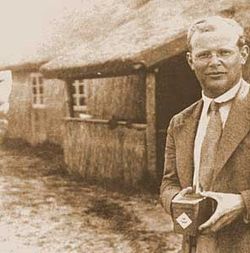
The solution was provided by America’s most illustrious theologian, Reinhold Niebuhr. Nine years earlier, Bonhoeffer had spent a year in the United States as a free-floating exchange student at Union Theological Seminary, arriving not long after Niebuhr had moved there from Detroit. He had made such a positive impression on Union’s faculty that Niebuhr jumped at the opportunity to bring him back. If we fail to offer him a job, he told Union’s president, Henry Sloane Coffin, Bonhoeffer will wind up in a concentration camp. This was not the stuff of run-of-the-mill letters of recommendation. Union extended the offer. Grateful to have a way out of his dilemma, Bonhoeffer booked passage, and in June 1939 found himself safe in America.
Safe, but unhappy.
More here.
Sunday Poem
The Story We Know
The way to begin is always the same. Hello,
Hello. Your hand, your name. So glad, just fine,
and Good bye at the end. That’s every story we know,
and why pretend? But lunch tomorrow? No?
Yes? An omelette, salad, chilled white wine?
The way to begin is simple, sane, Hello,
and then it’s Sunday, coffee, the Times, a slow
day by the fire, dinner at eight or nine
and Good bye. In the end, this is a story we know
so well we don’t turn the page, or look below
the picture, or follow the words to the next line:
The way to begin is always the same Hello.
But one night, through the latticed window, snow
begins to whiten the air, and the tall white pine.
Good bye is the end of every story we know
that night, and when we close the curtains, oh,
we hold each other against that cold white sign
of the way we all begin and end. Hello,
Good bye is the only story. We know, we know.
by Martha Collins
from A Catastrophe of Rainbows
Cleveland State University Poetry Center, 1985
H M Naqvi wins first $50,000 DSC Literature Prize for South Asia at the Jaipur Literature Festival
From the Hindustan Times:
“Some literature prizes tend to give more importance to the author rather than to his or her work. But I hope through this award we are able to ensure what matters is what the author is writing about,” he said.
He said that one of the measures that would go a long away in ensuring credibility to the award is the fact that it honours work on the subject of South Asia, be it by any author of any nationality.
“Its about time South Asians have our own damn award,” said an elated Naqvi.
Asked if he had to say something to his critics, the 36-year-old author said, “Mercifully in the US, in India as well as in Pakistan, my critics have been few. But all criticisms of Home Boy are valued. It is a debut novel and it has all the strengths and weaknesses of a debut novel.”
The winner was decided judged by a jury chaired by Nilanjana S Roy, along with Lord Mathew Evans, Ian Jack, Amitava Kumar and Moni Mohsin.
Awarded for the best work of fiction pertaining to the South Asian region, the prize is given to works published in English, and includes translations in English with a share of the award money also going to the translator.
More here. [Congratulations to Husain from all of us at 3QD, where he was once a columnist.]
The Original Sherlock Holmes: How a French Doctor Helped Create Forensic Science
Frank Thadeusz in Der Speigel:
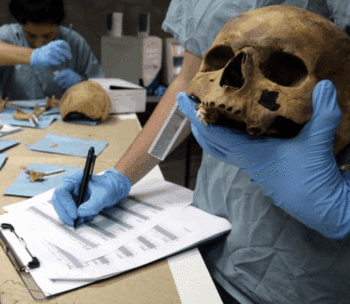
But then Vacher would go into uncontrolled rages. Once, he beat his small dog to death with a club because it wasn't eating its food.
His crimes against human beings were much worse. In remote forests and barns, Vacher, the son of a farmer, raped and murdered a total of 11 people, most of them children.
In late 19th-century France, this diminutive serial killer epitomized ordinary citizens' fears of the evil that lurks in the darkness. At the time, the guillotine was still used to execute dangerous criminals in France. In the Vacher case, however, the judges were hesitant to impose the death penalty. Was the mass murderer “a cannibal” who had to be beheaded, or was he a “certifiably insane person” who was to be locked up in an asylum?
Douglas Starr, a professor of journalism at Boston University, has now reconstructed the series of murders Vacher committed.
In his book, “The Killer of Little Shepherds,” Starr does not, however, assign the leading role to Vacher, the child murderer, but to the man who was to solve the Vacher mystery: Alexandre Lacassagne, the head of forensic medicine in the southern city of Lyon.
Lacassagne solved murder cases that seemed unsolvable at the time. To this day, students in police academies are taught the methods of the master criminologist from Lyon.
More here.