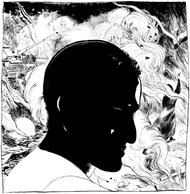
‘The Grand Design,’ by Stephen Hawking and Leonard Mlodinow

From The Washington Post:

Stephen-Hawking-006 In “The Hitchhiker's Guide to the Galaxy,” Douglas Adams famously had his characters ask a computer to provide the ultimate answer to “Life, the Universe, and Everything.” As Stephen Hawking and Leonard Mlodinow point out in their book “The Grand Design,” the computer's response — 42 — was less than helpful. Hawking, who needs no introduction, and Mlodinow, a Caltech physicist with a string of excellent books to his credit, have taken on that ultimate question in a somewhat more rigorous form by asking three related ones:

Why is there something instead of nothing?

Why do we exist?

Why does this particular set of laws govern our universe and not some other set?

More here.

Forget What You Know About Good Study Habits

From The New York Times:

Study Every September, millions of parents try a kind of psychological witchcraft, to transform their summer-glazed campers into fall students, their video-bugs into bookworms. Advice is cheap and all too familiar: Clear a quiet work space. Stick to a homework schedule. Set goals. Set boundaries. Do not bribe (except in emergencies). And check out the classroom. Does Junior’s learning style match the new teacher’s approach? Or the school’s philosophy? Maybe the child isn’t “a good fit” for the school.

Such theories have developed in part because of sketchy education research that doesn’t offer clear guidance. Student traits and teaching styles surely interact; so do personalities and at-home rules. The trouble is, no one can predict how. Yet there are effective approaches to learning, at least for those who are motivated. In recent years, cognitive scientists have shown that a few simple techniques can reliably improve what matters most: how much a student learns from studying. The findings can help anyone, from a fourth grader doing long division to a retiree taking on a new language. But they directly contradict much of the common wisdom about good study habits, and they have not caught on.

More here.

the medium and the tedium

Bochnereph006

AS AN ARTIST, I HAVE NEVER had an allegiance to any specific medium. In the 1960s, so-called medium-specific art prescribed the limits of what was permissible to express. This was the “repressive face of modernism.” My desire was to find a way to expand the range of philosophical, psychological, political, and visual ideas that my work could engage. New ideas evolved into new mediums. But these new mediums did not arise as mere acts of will. First, they were always contextual, based in actual situations and immediate needs. Second, they were oppositional, intended as an attack on the dominant aesthetic and critical hierarchy. For me, the medium was never transparent, never something to be seen through, never a neutral delivery system. No matter how reduced the means, they always remained something material, something to be taken apart and put back together, something to be confronted.

more from Mel Bochner at Triple Canopy here.

common as air

Cover00

The absurdity of the copyright extension increases the deeper we look into time. Holinshed died only thirty-six years before Shakespeare died, and the distance between the publication of his account of the Scottish regicide and the initial production of Macbeth was less than two decades. Holinshed’s estate could have stopped Will cold, exacting a price and a shared credit that very likely would have inclined him to turn his attention elsewhere. Surely, at this late date, Stephen Sondheim ought to have the same right to compose a musical about Gatsby, which is now more than a third as old as the Constitution that engendered limited copyright protection. Hyde devotes a passage to the familiar horrors unleashed by James Joyce’s malevolent seventy-eight-year-old grandson, Stephen James Joyce, who having no talent of his own has devoted his life and fortune to minimizing his grandfather’s place in the commons. When Ulysses is finally liberated, a great cheer will go up, and in no time at all we will have a more definitive text and competing annotated editions. The only annotated Ulysses at present is the Oxford World’s Classics paperback, which uses the now unprotected 1922 Sylvia Beach edition, and even that can’t be sold legally in the United States. (See previous reference to Amazon UK.) What kind of commons have we fortressed when a novelist could be sued several times over for writing a story in which Jake Barnes, Millicent Bloom, and Mickey Mouse indulge in a three-way at 7 Eccles Street, entangled on a bedsheet reproduction of Matisse’s Le Bonheur de vivre (photo provided), while George and Ira Gershwin’s greatest hits (lyrics provided) play on the radio.

more from Gary Giddins at Bookforum here.

city shrinking

Howtoshrinkacity2__1283541825_5321

Since cities first got big enough to require urban planning, its practitioners have focused on growth. From imperial Rome to 19th-century Paris and Chicago and up through modern-day Beijing, the duty of city planners and administrators has been to impose order as people flowed in, buildings rose up, and the city limits extended outward into the hinterlands. But cities don’t always grow. Sometimes they shrink, and sometimes they shrink drastically. Over the last 50 years, the city of Detroit has lost more than half its population. So has Cleveland. They’re not alone: Eight of the 10 largest cities in the United States in 1950, including Boston, have since lost at least 20 percent of their population. But while Boston has recouped some of that loss in recent years and made itself into the anchor of a thriving white-collar economy, the far more drastic losses of cities like Detroit or Youngstown, Ohio, or Flint, Mich. — losses of people, jobs, money, and social ties — show no signs of turning around. The housing crisis has only accelerated the process.

more from Drake Bennett at the Boston Globe here.

Understanding disenchantment

Akeel Bilgrami in The Immanent Frame:

ScreenHunter_01 Sep. 07 07.44 Jane Bennett’s sympathetic yet critical commentary on my essay ‘What is Enchantment?’ (published in the volume Varieties of Secularism in a Secular Age) describes the notion of disenchantment that I present as primarily addressing the theological displacements that emerged with the rise of the new science. Her own work, she says, offers a quite different focus, one of a mood or affect that ‘circulates between human bodies and the animal, vegetable, and mineral forces they encounter.’

I don’t doubt that this interesting focus is quite different from mine, though I think it would be wrong to represent my view as being focused on the theological. In my analysis, the theological had only a central genealogical role to play in the process of ‘disenchantment’. But, I had argued that the fallout of the theology—once the theological transformations were exploited in alliances forged between established religious interests, commercial interests, and the mandarin interests of organized scientific bodies (such as the Royal Society)—was impressively diverse, ranging from transformations in political economy to political governance and, further yet, to the mentalities of human culture in its relation to the natural world. So the focus, if any, on the theological was intended wholly to emphasize that, unlike purely materialist accounts, I was following more refined Marxists like Christopher Hill, who had written of the importance of the conflict of religious ideas in shaping the period of history in which I had invested my genealogical efforts.

More here.

Monday, September 6, 2010

Sunday, September 5, 2010

Foucault Among the Humanists

Paras_cover Corey McCall in Other Voices:

Readers of Foucault’s texts have long been perplexed by the apparent shift his writings underwent in the late 1970s. Following the appearance of the first volume of The History of Sexuality (Le volunté de savoir, translated as The History of Sexuality: An Introduction) in 1976, Foucault’s investigations inexplicably change focus: from an investigation of the prison and the mechanisms of power that produce the modern individual in Discipline and Punish, the second and third volumes of the History of Sexuality focus on practices of the self in ancient Greece and Rome. Indeed, at the time of his death, Foucault was at work on a fourth volume examining the practices of the self in the Christian era.1 How does one account for the fact that the thinker who had written in 1966 that the one could “certainly wager that man would be erased, like a face drawn in sand and at the edge of the sea” was suddenly writing about the various practices of the self prevalent in the ancient world, practices that were meant to ensure individual freedom and autonomy?2 This, after all, was the thinker that had famously feuded with Jean-Paul Sartre and labeled him an outmoded thinker of systems, better suited for the nineteenth century than the twentieth, who was now writing about themes seemingly much more at home in Existentialist writings than his own anti-humanist ones.

Eric Paras’ book represents the latest attempt to come to terms with this perplexity. What sets Paras’ work apart from previous attempts is the archival work that he marshals in support of his bold claim. Paras has done extensive research in the Foucault Archives, and he uses this research to claim that Foucault basically renounces his former, anti-humanist self in order to begin a project that resonates with certain core humanist values such as freedom and universal human rights. Foucault’s work after 1976 until his premature death in 1984 represents not an attempt to reassess his former positions and provide them with more depth, as some have argued.3 Instead, Foucault’s later writings enact a radical break from the doctrines he previously held. According to Paras, Foucault sought a position “beyond power and knowledge” and found it by delving into various ancient practices of self-cultivation. I am sympathetic to the more moderate claim that Foucault’s later writings represent an attempt to make good on the genealogical claims of his earlier texts and thus are continuous with his previous work rather than an outright renunciation. In the review that follows, I will attempt to outline this case as an alternative to Paras’ more radical claim. Despite the fact that I take issue with the author’s central thesis in the review that follows, Paras’ book stands as a worthy attempt to make sense of Foucault’s sometimes maddening intellectual odyssey.

The Philosopher Who Would Not Be King

Cover_summerfall10 Michael D. Jackson in The Harvard Divinity Bulletin:

That any philosophy mirrors the life of the philosopher is an assertion from which many thinkers would recoil, since it seems to reduce thought to the prejudices, preoccupations, and persuasions that supposedly characterize the musings of mere mortals. If every great philosophy is, as Nietzsche avows, “an involuntary and unconscious memoir” reflecting who the philosopher is before he or she takes up philosophy, then thought is but an adventitious byproduct of one's life rather than the disciplined, disinterested work of reason. I thought of Nietzsche when I first met Richard Rorty. There was something disarmingly vulnerable about him. Though renowned for his groundbreaking Philosophy and the Mirror of Nature and his MacArthur “genius award,” he seemed socially unsure of himself, and nonplussed whenever the talk turned from academic to mundane matters like Australian wines, the films of Werner Herzog, or the best Vietnamese restaurant in Canberra.

It was 1982. The Humanities Research Centre at the Australian National University. We were there on visiting fellowships—myself, Dick Rorty, Don Hirsch, Zygmunt Bauman, Paul Connerton, Russell Keat, Patrick McCarthy, and others I got to know less well. I was writing essays on embodiment, profiting from long conversations with Paul, who was writing his book on bodily social memory, and Russell, who was preparing his critique of Maurice Merleau-Ponty's Phenomenology of Perception. It was my hatha yoga practice that had inspired my explorations of body consciousness; unfortunately, it had also turned me into an obnoxious fundamentalist who believed that the respiratory and psychophysical disciplines of yoga enabled one to achieve a truer and more realistic relationship with the world, and that discursive thought was largely illusory. Rorty objected to the essentialist overtones of my view, arguing that efforts to ground knowledge in the body or the mind, in reasoned discourse or strong intuition, were equally misguided. And he cautioned me against explaining any human experience in terms of some prior cause or first principle. In my defense, I pointed out that a philosophical argument against foundationalism could not be transferred to the real world, since all human beings have recourse to notions of firstness, foundations, and fundamentals in their everyday lives. If it is existentially the case that life is insupportable without such notions, what is the point of making philosophical arguments to the contrary? Moreover, I felt that the Deweyan argument, to which Rorty subscribed, against Platonic dualisms like body-mind, true-false, and subject-object left unconsidered the way we deploy these antinomies to capture different modes of experience. Making epistemological claims for such distinctions is absurd, but recognizing the phenomenological differences they communicated was, I thought, vital to understanding human experience.

I suppose I was ineptly asking whether philosophy has anything to say that might make a real difference to our lives, and whether its insights had value only within the academic circles where they served as currency. I quickly learned that these were also burning questions for Rorty, for beyond the philosophical issue of whether we can ever truly represent what lies outside our minds—whether human thought can mirror nature—lies the much more pragmatic issue of whether the insights of thinkers can change the world.

Rivals: Misconceiving Asia

Asia-300x272 Achin Vanaik in For Liberation:

The mass of recent literature on the ‘rise of Asia’ largely focuses on the implications of this development for the West. [1] It rarely stops to consider the impact on inter-relations between the Asian states themselves. In Rivals, ex-Economist editor Bill Emmott attempts to correct this by examining the cases of China, India and Japan, and argues that the interaction between the three will decisively influence the shape of the coming world order. As he points out, their triple coexistence as major powers represents a historical novelty. In 1820, when China and India between them accounted for almost half of world output, Japan remained a relative backwater, its modernizing drive of the Meiji period lying decades in the future; by the 1930s, when Japan had become a full-fledged industrial and military power, China was impoverished and riven by warlordism, while India groaned under the British yoke. The headlong economic development of the prc and steady growth in India over the past decades suggest that the two Asian giants will join Japan among the top five national economies in the world.

Yet this very process is creating ‘disruptive transformations’ that will profoundly alter the economies, societies and polities of the states in question, Emmott argues, potentially raising new tensions between the three. Rising prosperity has brought commensurate expansion of Chinese and Indian global ambitions. The coming years will see intensifying competition over resources and markets, not least in the battle for Burmese oil and gas fields. In addition, Emmott sees an incipient arms race developing, in a region littered with potential flashpoints. As well as territorial disputes—over Aksai Chin and Arunachal Pradesh in the case of China and India, and over the Senkaku and other islands in the case of China and Japan—there are further sources of tension in Tibet, Taiwan, the Korean peninsula, Pakistan and Kashmir, which the deteriorating world economic outlook will likely only heighten. Emmott proposes a ‘plausible pessimistic’ scenario: China’s bubble-prone economy enters a deep recession, accompanied by rising social protests; the ccp tightens its grip with increased recourse to nationalism, amplifying regional tensions through displays of truculence. With Japan too bolstering its military, Taiwan might become the cause of a ‘short, exploratory exchange of fire’ that could also draw in the us.

Hazrat Ali on Good Governance, Early Muslim Style

Patricia Lee Sharpe in Whirled View:

Bhayya Ali bin Abi Talib, the fourth Caliph and son-in-law of the Prophet Mohammed, wrote a long letter of guidance after appointing Maalik al-Ashtar to be Governor of Egypt. He advises the new governor that his administration will succeed only if he governs with concern for justice, equity, probity and the prosperity of all.

The passages excerpted below illustrate the timeless applicability of Hazrat Ali’s admonitions. The letter itself is contained in the Nahjal Balaagha, which is a collection of the letters and speeches of the fourth Caliph.

Manifest religious tolerance: Amongst your subjects there are two kinds of people: those who have the same religion as you [and] are brothers to you, and those who have religions other than yours, [who] are human beings like you. Men of either category suffer from the same weaknesses and disabilities that human beings are inclined to; they commit sins, indulge in vices either intentionally or foolishly and unintentionally without realizing the enormity of their deeds. Let your mercy and compassion come to their rescue and help in the same way and to the same extent that you expect Allah to show mercy and forgiveness to you.

Equity is best: A policy which is based on equity will be largely appreciated. Remember that the displeasure of common men, the have-nots and the depressed persons overbalances the approval of important persons, while the displeasure of a few big people will be excused…if the general public and the masses of your subjects are happy with you.

The rich always want more: They are the people who will be the worst drag upon you during your moments of peace and happiness, and the least useful to you during your hours of need and adversity. They hate justice the most. They will keep demanding more and more out of State resources and will seldom be satisfied with what they receive and will never be obliged for the favor shown to them if their demands are justifiably refused.

More here. [The photo is of a painting of my father showing him holding a copy of his own much-reprinted translation of the Nahjal Balaagha from Arabic into English.]

The Masque of Africa

Sameer Rahim in The Telegraph:

V S Naipaul’s father was once forced to sacrifice a goat to the Hindu goddess Kali. In June 1933, when Vidia was still a baby, Seepersad Naipaul had written an article in the Trinidad Guardian criticising Hindu farmers who ignored government regulations and inoculated their cattle with religious rites. His angry opponents threatened him with a poisoning curse unless he appeased the goddess. He refused at first but soon relented: wearing trousers rather than the traditional loincloth (his small rebellion), he offered up a severed goat’s head on a brass plate. In that Sunday’s paper he was all bluster: “Mr Naipaul greets you! No Poison last night”. But this “great humiliation”, as his son wrote in Finding the Centre (1984), destroyed his life. He lost his job and sunk into depression. According to Naipaul’s mother, “He looked in the mirror one day and couldn’t see himself. And he began to scream.”

Over the course of his long writing career, V S Naipaul’s view of religion has moved – much like this story – from the potentially comic to the outright sinister. His first published novel, The Mystic Masseur (1957), was a satire on a fake pundit. In his masterpiece A House for Mr Biswas (1961) the title character (based on Seepersad) is expelled from his training as a Hindu priest when he pollutes some sacred flowers with his excrement. His travel book on India, An Area of Darkness (1964), took a harsher view of Hinduism and the caste system and after 1970, when he first learnt about his father’s ritual humiliation (the family had kept it an absolute secret), his work took on an unforgiving tone.

More here.

Pakistan is Sinking: Time For Tough Love?

Walter Russell Mead in The American Interest:

ScreenHunter_13 Sep. 05 14.23Beset by so many problems from so many different sources, Pakistanis struggle to make sense of their country and the world. Conspiracy theories are rife; the raucous and rambunctious media (especially the Urdu media) is better at expressing anger than analysis. A strong civil society is struggling to emerge, but the enormous internal disparities in wealth and education make it hard for strong and effective groups to emerge. Like idealistic 19th century Russian aristocrats and students, the educated idealists who direct many Pakistani social movements are so distant from the world of the poor that their efforts, commendable and well intentioned as they may be, are often irrelevant to the problems of the masses.

A recent example shows how this works. While I was in Pakistan, there was massive press coverage of “Diplomagate.” Pakistani law requires that members of parliament must have college degrees. It turns out that dozens of legislators had fake degrees, and the Good Government crowd raised holy hands in horror. It wasn’t just that the fake graduates were what in the American South we used to call ‘pig-ignorant,’ though some of them were. It was that they had perjured themselves to take their seats. There was a mass hue and cry to detect the fakers, expel them from parliament, and even to recover the salaries and expenses they were paid under false pretenses.

OK and fair enough, but a law that requires MPs to have university degrees doesn’t make much sense in a country where half the population can’t read at all and most adults have less than four years of school. And Americans can’t help but reflect that neither George Washington, Benjamin Franklin nor Abraham Lincoln could have taken a seat in the Pakistani legislature.

More here.

The fine-structure constant and the nature of the universe

From The Economist:

ScreenHunter_12 Sep. 05 13.34 Richard Feynman, Nobel laureate and physicist extraordinaire, called it a “magic number” and its value “one of the greatest damn mysteries of physics”. The number he was referring to, which goes by the symbol alpha and the rather more long-winded name of the fine-structure constant, is magic indeed. If it were a mere 4% bigger or smaller than it is, stars would not be able to sustain the nuclear reactions that synthesise carbon and oxygen. One consequence would be that squishy, carbon-based life would not exist.

Why alpha takes on the precise value it has, so delicately fine-tuned for life, is a deep scientific mystery. A new piece of astrophysical research may, however, have uncovered a crucial piece of the puzzle. In a paper just submitted to Physical Review Letters, a team led by John Webb and Julian King from the University of New South Wales in Australia present evidence that the fine-structure constant may not actually be constant after all. Rather, it seems to vary from place to place within the universe. If their results hold up to the scrutiny, and can be replicated, they will have profound implications—for they suggest that the universe stretches far beyond what telescopes can observe, and that the laws of physics vary within it. Instead of the whole universe being fine-tuned for life, then, humanity finds itself in a corner of space where, Goldilocks-like, the values of the fundamental constants happen to be just right for it.

More here.

Sunday Poem

Good Girls/Bad Girls

The good girls are the ones who are interviewed by the BBC
50 years after they didn’t sleep with their boyfriends,
who themselves, shortly after the non-act, either (1)
plummeted into the sea and were or were not rescued or
(2) didn’t; possibly returning to father four or five tow-haired children,
all of whom grew up and appalled mum and da with their wild wild ways.

I bet there were also bad girls, seams geometrically straight,
hair bobbed just so, white-gloved, heeled,
ready to walk out into the barley, eager even.
Bad girls and bad boys, who woke on a warm afternoon,
itchy with stubble, to find an inscrutable Shropshire ewe watching them,
calm as though the city behind her were not on fire.

by Judy Smith McDonough
Boston Review, May/June 2010