
Category: Recommended Reading
anne sexton
Barack Obama (born 1961)
From EmersonKent:
This article is posted in honor of Black History Month:
| My fellow citizens: |

That we are in the midst of crisis is now well understood. Our nation is at war, against a far-reaching network of violence and hatred. Our economy is badly weakened, a consequence of greed and irresponsibility on the part of some, but also our collective failure to make hard choices and prepare the nation for a new age. Homes have been lost; jobs shed; businesses shuttered. Our health care is too costly; our schools fail too many; and each day brings further evidence that the ways we use energy strengthen our adversaries and threaten our planet.
These are the indicators of crisis, subject to data and statistics. Less measurable but no less profound is a sapping of confidence across our land—a nagging fear that America's decline is inevitable, that the next generation must lower its sights. Today I say to you that the challenges we face are real. They are serious and they are many. They will not be met easily or in a short span of time. But know this, America—they will be met. On this day, we gather because we have chosen hope over fear, unity of purpose over conflict and discord. On this day, we come to proclaim an end to the petty grievances and false promises, the recriminations and worn-out dogmas, that for far too long have strangled our politics.
More here.
Sunday Poem
Tomorrow W.H. Auden would have been 104, but
here he is reminding us again that all things pass:
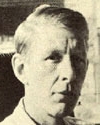
The Fall of Rome
The piers are pummelled by the waves; In a lonely field the rain Lashes an abandoned train; Outlaws fill the mountain caves. Fantastic grow the evening gowns; Agents of the Fisc pursue Absconding tax-defaulters through The sewers of provincial towns. Private rites of magic send The temple prostitutes to sleep; All the literati keep An imaginary friend. Cerebrotonic Cato may Extol the Ancient Disciplines, But the muscle-bound Marines Mutiny for food and pay. Caesar's double-bed is warm As an unimportant clerk Writes I DO NOT LIKE MY WORK On a pink official form. Unendowed with wealth or pity, Little birds with scarlet legs, Sitting on their speckled eggs, Eye each flu-infected city. Altogether elsewhere, vast Herds of reindeer move across Miles and miles of golden moss, Silently and very fast.
by W.H. AudenIf Marxism is the answer, what is the question?
From The Independent:
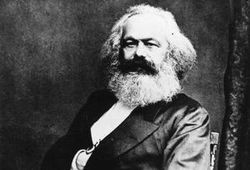
In just over 400 pages of essays and lectures written between 1957 and 2010, Hobsbawm's Marx emerges as a man burdened by History. It is ironic that silly conservatives accuse leftists of being uninterested in the authority of custom, experience and tradition – all ciphers of past practices – when the doyen of the left was obsessed with the past. Not just that: in German, there is a distinction between Historie, which refers to the past, and Geschichte, which refers to a process relating past and present with future. Marx's intellectual life, as presented by Hobsbawm, was based on his incorporation of the latter into politics.
More here.
Saturday, February 19, 2011
she invented countries on a map she had drawn herself

Bishop’s lightness of bearing cannot disguise a darkness of being. Gaiety barely disguises the resistant sadness — there is a peculiar infantilism in Bishop, and I fear that is what we love. Yet her warmth and reticence divide her from the confessional poets whose blared secrets she so disliked. She was a displaced person, physically and emotionally; her poems reveal that terrible rootlessness, even when rooted in Nova Scotia, or Florida, or Brazil (she joked that she moved “coastwise”). Even her first book was discreetly fashioned like an itinerary, from childhood in Nova Scotia through New York, Paris and Key West. Bishop worried that she had “wasted half one’s talent through timidity” and feared that her poems were “precious”; yet her luxuriant vision is tempered and restrained by the anxieties beneath. Her weaker poems ramble prosaically, offering only a scatty attention to the world; and perhaps one day readers will find her portraits of Brazilians affectionate but condescending — drawn to the quaint and naïve, she was all too privileged an outsider. This poet of travel and dream, of lost childhood, of angular moral vision (and a gloomy soul) lived in a 20th century still at times lost in the 19th — indeed, the untouched jungle of the Brazilian poems sometimes harks back to the Americas newly discovered.
more from William Logan at the New York Times here.
life…
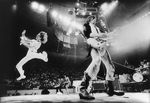
Keith Richards ended up calling his memoir Life, not, as had been planned, My Life, the more conventional choice. Almost any memoir ever written could be called My Life. It’s what Bill Clinton called his own memoir. For Clinton it was a defensive, even a defiant, title, but then, memoirs are defensive by nature. To exist, they must justify their existence. Uniqueness—the “my” in “my life”—is an important condition: without it none but the first-ever memoir would have to exist. And the suspicion of insufficient uniqueness is one great nullifier of memoir: this is the problem when memoir subgenres (abuse memoirs, addiction memoirs, conversion memoirs, travel memoirs) promise to convey shock or pathos or virtue, but get their ingredients from a cake mix. The recent crop of purloined, plagiarized, and manufactured memoirs—James Frey’s A Million Little Pieces, for example—unsettled readers not because some sacred line dividing fact and fiction had been crossed, but instead, I think, because they suggested we might actually be running out of interesting lives. Aspiring memoirists may just have to start writing fiction: though there the competition to make something new and good is, if anything, even more keen. The temptation for most memoirists is to beef up, at times even to make up, life; for Richards, who has lived one of the most eventful and excessive lives ever, the point is to tamp it down. His is an odd book for many reasons, among them its refusal to impute any meaning to the structure of experience, beyond its basic contingency. The book tells no “story,” presents no overwrought “themes,” proposes no shape to life beyond the amorphous ooze of passing time. Thus the hilariously nonchalant title, which, shorn of the expected first-person possessive, would suggest that Richards’s life is more or less the one we all experience.
more from Dan Chiasson at the NYRB here.
molotov cocktail
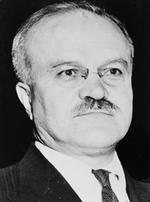
To say that Rachel Polonsky is a lifelong Russophile probably still understates the level of her engagement with the country that has so captured her imagination, heart and soul. This British journalist has written about its culture and experienced its realities, first when it was synonymous with the Soviet behemoth and then in the two decades of its more recent transformation. But exactly what has it become in that extraordinary metamorphosis? Foreign observers and analysts of Russia have come away perplexed by its unique nature and the difficulty of governing it. For Polonsky, who moves to Moscow, Russia is one giant echo chamber of historical and cultural resonances, every corner filled with the ghosts of past glories and terrors. Having thought, studied and written about great literary figures including Tolstoy, Dostoevsky and Chekhov, she is so steeped in their essence that they serve as guides and even more as templates for her as she breathes in the atmosphere of Russia today. But the important dissident writers of the Soviet era — Mandelstam, Pasternak and Akhmatova — are also very much with Polonsky. So when fate places her in an apartment block once reserved for the Communist elite, with access to no less a treasure trove than the actual library of Stalin’s henchman Vyacheslav Molotov, it is a gift from the gods.
more from Martin Rubin at the LA Times here.
A Surgical Assistant with Hands Blessed by God: Vivien Thomas
This article is posted in honor of Black History Month:
From ScienceHeroes:
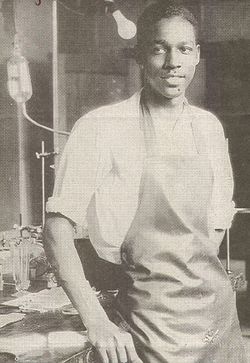
Thomas was a quick study, with particularly skilful hands. He worked diligently and learned to perform surgical operations, chemical reaction procedures and data analysis with precision. His quiet dedication to Blalock and the experiments was invaluable. When Blalock moved to Johns Hopkins in 1941, he asked Thomas to accompany him. Thomas joined Blalock's surgical team and helped to develop the “Blue Baby” operation, also known as the Blalock-Taussig shunt. Blue Baby (Tetralogy of Fallot) is a congenital defect involving multiple abnormalities of the heart. The condition causes blood to be diverted past the lungs, resulting in a lack of vital oxygen being transported throughout the body. It's this oxygen deprivation that causes the infant's bluish color (cyanosis) and gives the syndrome its name. Before Thomas and Blalock developed the Blue Baby operation, 25 percent of babies born with this condition died before their first birthday-by the age of ten, 70 percent would die. The procedure to correct Blue Baby was painstakingly worked out by Thomas over a two-year period. Ultimately, he joined an artery leaving the heart to an artery leading back to the lungs. This gave the blood a second opportunity to absorb the critical oxygen and transport it throughout the body. Delicate instruments were needed to perform the corrective heart surgery on their tiny newborn patients. Since no such instruments then existed, Thomas designed and built them himself.
More here. (Note: Thanks to Ms. Vasiliki Korikis who sent me this beautiful story)
Wise Guy
From New York Times:
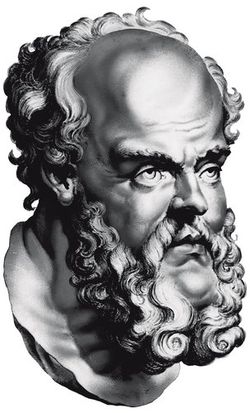
How do we examine the life of the man who told us that the unexamined life was not worth living? Hughes, a British television host and popular historian known for her book on Helen of Troy, does it by concentrating on the shape of the doughnut around the hole. She outlines Socrates mainly by describing the sights, sounds, mores and facts that surrounded him. For the most part, Hughes is successful, and even when not, she’s fascinating. What we get in “The Hemlock Cup” is many books interlaced: a biography of Socrates; a gritty description of daily life in Athens; a vivid history of the Peloponnesian War and its aftereffects; and — as an unexpected delight — a guide to museums, archaeological digs and repositories of ancient artifacts, as Hughes takes us by the hand while ferreting out her evidence. At one point we travel with her to the rear of the Ashmolean Museum in Oxford, England, to study a scrap of papyrus — Fragment 4807 — in the Sackler Library. It contains some lines, apparently by Sophocles, casting light on what life may have been like during the Peloponnesian War.
More here.
Saturday Poem
The Onion
the onion, now that's something else
its innards don't exist
nothing but pure onionhood
fills this devout onionist
oniony on the inside
onionesque it appears
it follows its own daimonion
without our human tears
our skin is just a coverup
for the land where none dare to go
an internal inferno
the anathema of anatomy
in an onion there's only onion
from its top to it's toe
onionymous monomania
unanimous omninudity
at peace, at peace
internally at rest
inside it, there's a smaller one
of undiminished worth
the second holds a third one
the third contains a fourth
a centripetal fugue
polypony compressed
nature's rotundest tummy
its greatest success story
the onion drapes itself in it's
own aureoles of glory
we hold veins, nerves, and fat
secretions' secret sections
not for us such idiotic
onionoid perfections
by Wistawa Szymborska
from Wistawa Szymborska New and Selected Poems
publisher: Harcourt, Inc. 1998
translation Stanislaw Baranczak and Clare Cavanagh
We can run the entire world on wind, water and solar power by 2050
James Hrynyshyn in Class M:
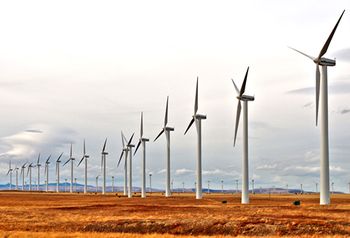
Finally, we're getting some honest assessments. First up is a pair of papers in the journal Energy Policy by Stanford's Mark Z. Jacobson and UC Davis' Mark A. Delucchi collected under the common title of “Providing all global energy with wind, water, and solar power.” Part 1 deals with the physical issues and Part 2 the economics. The conclusion of their exhaustive research is that is it entirely possible to run the entire world on wind, water (hydro-electricity) and solar power (both PV and concentrated thermal) by 2050. And they aren't restricting themselves to the electrical grid. This includes replacing all fossil fuels with batteries and fuel cells:
Such a WWS infrastructure reduces world power demand by 30% and requires only 0.41% and 0.59% more of the world's land for footprint and spacing, respectively. We suggest producing all new energy with WWS by 2030 and replacing the pre-existing energy by 2050. Barriers to the plan are primarily social and political, not technological or economic. The energy cost in a WWS world should be similar to that today.
How will we build it? Well, the numbers at first look daunting.
We estimate that ~3,800,000 5-MW wind turbines, ~49,000 300-MW concentrated solar plants, ~40,000 300-MW solar PV power plants, ~1.7 billion 3-kW rooftop PV systems, ~5350 100 MW geothermal power plants, ~270 new 1300-MW hydroelectric power plants, ~720,000 0.75-MW wave devices, and ~490,000 1-MW tidal turbines can power a 2030 WWS world that uses electricity and electrolytic hydrogen for all purposes.
But given how rapidly a modern industrial nation can build things like tanks and airplanes — as the American experience during the Second World War proves — the author's argument that we DO have the technology is pretty convincing.
More here.
The women of Tahrir Square
Barkha Dutt interviews Ahdaf Soueif, Shahira Amin, and Heba Fatma Morayef:
Arab Uprisings: What the February 20 Protests Tell Us About Morocco
Laila Lalami in The Nation:
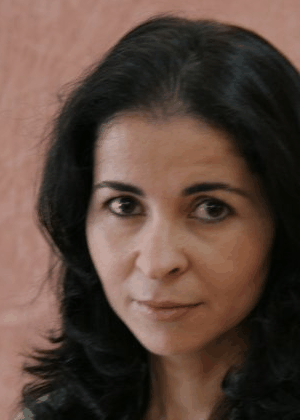
In his first official speech as head of state, King Mohammed outlined his plans for the country: constitutional monarchy, multiparty system, economic liberalism, regionalism and decentralization, building the rule of law, safeguarding human rights and individual and collective liberties, and security and stability for all. He defined his role as one of arbiter—one who does not side with any parties—as well as architect—giving general orientations and advice. He renewed his father’s commitment to alternance, a system that had allowed leftist parties, after nearly thirty years in the opposition, to finally hold cabinet positions and influence policy. The speech gave a lot of Moroccans great hope that their country would emulate Spain, their neighbor across the Mediterranean, and transition toward a democracy.
More here.
Friday, February 18, 2011
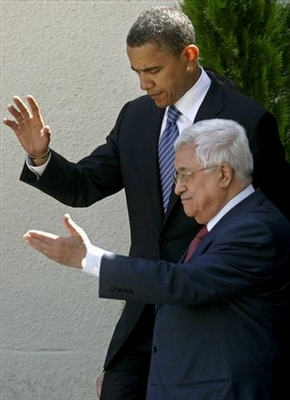
Without Mubarak, U.S. Struggles to Shield Israel from Diplomatic Pressure
Tony Karon in Time:
More here.
the welsh chekhov
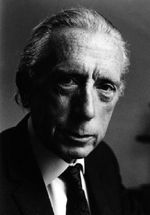
When I was young my father owned a factory in Tonypandy, a town in the Rhondda Valley of South Wales. He always disparaged the character of the Welsh, for whom I therefore conceived an affection that has remained with me ever since. You may be said truly to like a people when you are aware of their imperfections and are fond of them still. If one can be a patriot of a country not one’s own, I am a Welsh patriot. My memories of Tonypandy are hazy, for I was younger than ten when my father took me there. In those days, coal mining, not the administration of unemployment and its attendant social problems, was the Rhondda Valley’s major industry. Our civilization at the time was founded, as George Orwell once remarked, on coal, without which we would have lived in unlit and unheated houses. The miners were like Atlases; upon their shoulders a whole world rested. My visual recollection of Tonypandy is monochromatic—of everything begrimed with coal dust; of the slate roofs of tiny terraced houses dull in the perpetual, dirty rain; of black slag heaps lowering over the town. Whether this is a true memory or a reconstruction based on what I subsequently learned, I could not swear in a court of law. Half a century later, while scouring the secondhand bookshops during a sojourn in Wales, I discovered a writer who came from Tonypandy: Rhys Davies, who published 20 novels and about 160 short stories before he died in 1978. Some critics of his day esteemed him highly, calling him the Welsh Chekhov.
more from Theodore Dalrymple at City Journal here.
The Words That Maketh Murder

It seems rare that an album would inspire the listener to spend time, during the less compelling tracks, idly Googling contextual information about World War I trench warfare and the 1915 Gallipoli campaign, in which thousands upon thousands of men died over a months-long, epically failed invasion of a few square miles of Ottoman peninsula. Rare outside of heavy-metal albums, anyway. But here you have it: Polly Jean Harvey’s latest LP does precisely that, and I fully intend to bore someone, sometime, with every last grim thing I just learned about death, dysentery, great black clouds of flies that never let you sleep, and soldiers breaking their teeth on old biscuits. Try and track down how such an album came to be, and it begins to look like Harvey—an alternately primal and poetic British songwriter—might have spent a few months thinking about the same things as Britain’s actual poet laureate, Carol Ann Duffy. In the spring of 2009, Duffy gave the public a poem called “Last Post,” commemorating the deaths of the nation’s last few surviving World War I veterans, which borrows a few well-known lines from the soldier-poet Wilfred Owen. Around the same time, on the back half of an album she’d made with longtime collaborator John Parish, Harvey was singing about being a soldier, then echoing a line of World War II poetry from W. H. Auden. (“We must love one another or die,” he wrote—though she sings, ominously, “or accept the consequences.”) Duffy went on to ask her peers for more poetry about modern war, in Iraq and Afghanistan. Harvey went on to wonder why, if there could be more than a century’s worth of “war poets,” there mightn’t be a war songwriter.
more from Nitsuh Abebe at New York Magazine here.
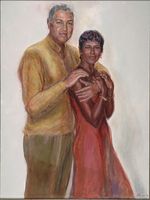
The Kinsey Collection: WHERE ART AND HISTORY INTERSECT
This article is posted in honor of Black History Month:
From NMAAHC:

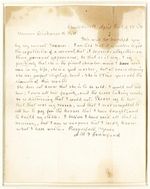 A Slave Carrying Her Fate in Her Hands, 1854
A.M.F. Crawford
Ink on paper, 19 ¾ X 12 ½ inches
When 17-year-old Frances carried this letter from her owner, she was unaware that it describes her valuable skills — “she is the finest chamber-maid [sic] I have ever seen in my life” — and offers her for sale. Although Crawford's letter acknowledges the inevitable heart-wrenching separation of Frances from her family, the slaveholder's only concern is for a profitable sale, without a “distressing leave-taking.” As indicated, the proceeds will pay for a new stable.
More here. (Note: Do take a moment to read this chilling letter by clicking on it. Maybe I am so upset because I have a 17 year old daughter…)
Reading is overrated
From The Guardian:
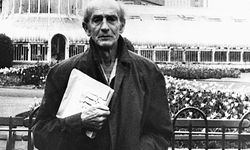
Let's take the following, by way of almost random example, from Charles Kingsley: “Except a living man, there is nothing more wonderful than a book.” Gosh. Any living man? Any book? Nothing else can compete? Flowers? Sunsets? Palladian villas? Pastrami sandwiches with extra pickles? Rubbish. One remembers Norman Mailer's definition of a “conservative” as one who, given a choice between saving the life of a man and that of a tree, will ask to view the tree and to meet the man before making his decision. You have to look at what is in front of your nose, after all. It's not too much to ask.
More here.
Friday Poem
Cairo
You burst into a
million seeds,
poured over the hot
stove of rancour,
Cairo.
When the walls no longer
withstood your curses,
you awakened the streets
with your boots,
Cairo.
Your cries brought the
sky down at Tahrir Square,
the Pharaoh shook
in his dreams,
Cairo.
With you the square
was a fortress of the heart,
engraved in
rebellion’s calligraphy,
Cairo.
When bulls of the regime
let loose their armoury,
you defended your future
with stones,
Cairo.
Your battered men did not
flee the field of honour,
they stood up to
your name,
Cairo.
by Manash Bhattacharjee
from The London Magazine
Feb-March, 2011