Sojourner Truth 1797-1883: Ain’t I a Woman?

At least one post every day will be devoted to honor Black History Month:
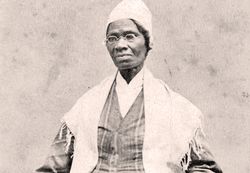
Aint_i_a_woman Sojourner Truth was born Isabella Baumfree. The lady was a tall African American who spoke Dutch and English. She was born a slave in Ulster County, New York, around the year 1797. Sojourner's parents were James Baumfree and Elizabeth Baumfree. Sojourner had 12 siblings. In 1826, Sojourner Truth lived with a Dutch couple, and hence, her legal name became Isabella Van Wenger or Isabella Van Wagener. Something like that. In 1843, and discovering her religious side, Isabella renamed herself Sojourner Truth. The word sojourner means temporary resident or visitor. And on her feet she was, traveling and preaching. Sojourner found her niche market and stood up for the rights of African Americans and the rights of women. She could not write but knew how to fight for human rights. Case in point was her Ain't I a Woman speech which she delivered in 1851 at the Women's Rights Convention in Akron, Ohio.

[Sojourner Truth spoke in a southern dialect that might be difficult for modern readers. Here is the speech in modern English:]

Well, children, where there is so much racket there must be something out of kilter. I think that 'twixt the negroes of the South and the women at the North, all talking about rights, the white men will be in a fix pretty soon. But what's all this here talking about? That man over there says that women need to be helped into carriages, and lifted over ditches, and to have the best place everywhere. Nobody ever helps me into carriages, or over mud-puddles, or gives me any best place! And ar'n't I a woman? Look at me! Look at my arm! I have ploughed and planted, and gathered into barns, and no man could head me! And ar'n't I a woman? I could work as much and eat as much as a man – when I could get it – and bear the lash as well! And ain't I a woman? I have borne thirteen children, and seen most all sold off to slavery, and when I cried out with my mother's grief, none but Jesus heard me! And ain't I a woman? Then they talk about this thing in the head; what's this they call it? [member of audience whispers, “intellect”] That's it, honey. What's that got to do with women's rights or negroes' rights? If my cup won't hold but a pint, and yours holds a quart, wouldn't you be mean not to let me have my little half measure full?

Then that little man in black there, he says women can't have as much rights as men, 'cause Christ wasn't a woman! Where did your Christ come from? Where did your Christ come from? From God and a woman! Man had nothing to do with Him. If the first woman God ever made was strong enough to turn the world upside down all alone, these women together ought to be able to turn it back and get it right side up again! And now they is asking to do it, the men better let them. Obliged to you for hearing me, and now old Sojourner ain't got nothing more to say.

More here.
Who’s Behind Egypt’s Revolt?

Robert Dreyfuss in The Nation:

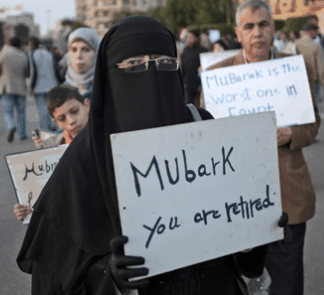
ScreenHunter_02 Feb. 01 10.29 It’s spontaneous, yes, triggered by the explosion in Tunisia. But contrary to some media reports, which have portrayed the upsurge in Egypt as a leaderless rebellion, a fairly well organized movement is emerging to take charge, comprising students, labor activists, lawyers, a network of intellectuals, Egypt’s Islamists, a handful of political parties and miscellaneous advocates for “change.” And it’s possible, but not at all certain, that the nominal leadership of the revolution could fall to Mohammad ElBaradei, the former chief of the International Atomic Energy Agency, who returned to Egypt last year to challenge President Mubarak and who founded the National Association for Change.

Let’s look at the emerging coalition, in its parts.

First, by all accounts, is the April 6 Youth Movement. Leftists, socialists and pro-labor people know that the movement takes its name from April 6, 2008, when a series of strikes and labor actions by textile workers in Mahalla led to a growing general strike by workers and residents and then, on April 6, faced a brutal crackdown by security forces. A second, allied movement of young Egyptians developed in response to the killing by police of Khaled Said, a university graduate, in Alexandria. Both the April 6 group and another group, called We Are All Khaled Said, built networks through Facebook, and according to one account the April 6 group has more than 80,000 members on Facebook. The two groups, which work together, are nearly entirely secular, pro-labor and support the overthrow of Mubarak and the creation of a democratic republic.

More here.

Interview with a man planning to attend the huge planned protest today in Cairo

Parvez Sharma in Al Bab:

Me: I hope you all are ok. Just describe your day—I know tomorrow is very important so I will try not to interrupt.

O: Today was a continuation of other days—We went to Midan Tahrir—It was much larger today—and there were way more women today, amazing—the military followed the same procedure—checked our ID’s and very cordial but I think that there was way more people today—people from all different groups of society from Zamalek to Masriyat Naser, from Mohandessin to Giza…Today for the first time it felt like the people had secured their homes well and could confidently come out—other days many other family members especially housewives had stayed back to guard—but today they were all there—everyone spoke about how the looting was a design by Mubarak to keep us in our homes…Parvez, there were also so many much older people today, you know 60 and above, who had stayed away because of the violence. But today any fear seemed to have disappeared. Really it felt like we knew exactly what we want…

Me: So tomorrow is huge—you must sleep tonight—both of you—all of you—who knows what will happen?

O: We are meeting at Tahrir at 9 am and marching to Helioplos—this is very important Parvez—After 7 days this government comfortable with us spending time in Tahrir and they are even spinning it and saying: See we are allowing protesters in Tahrir, so we are so democratic—It was so clear today that we needed to go tomorrow to Heliopolis, to the presidential palace where Mubarak is hiding…All of the organizing I have seen since Friday really has been through fliers, through pamphlets…today they said—we are marching to Heliopolis tomorrow—if you cant come to Tahrir in the morning then join us on the way…this I a huge turning point in this revolution … huge …. It is also very important Parvez to know that people are saying they request the fall of the regime, not government—its an important distinction…

Me: Have you been watching Al Jazeera?

O: Are you kidding me? I can either be there or stay at home and watch the damn TV and try and get on the fucking internet which is not working and try and do these damn tweets you keep on telling me about…I mean yes, some people watch it when they go home at night and today the word on the street was that the Egyptian media finally caught up with the international media—people were saying that for the first time now they are starting to report—they are showing that there are people, looting, violence—Even State TV…Nile TV is reporting…and you know we also have this state public radio channel…its at 88.7 fm and even they are being more balanced than before, people were saying…. You know till yesterday the assholes were showing streets of Cairo are calm.

More here. [Thanks to John Ballard.]

Seven Places in My Heart

Journalist and award-winning author Mohammed Hanif travels back in time to tell the story of the places he’s called ‘home’ in Karachi. He recounts a journey from the backwaters to the bright lights of the big city – and how the literary seed was sown…

Here is the story of seven places that are part of his story.

Mohammed Hanif in Newsline:

Aagay Samundar Hai

ScreenHunter_01 Feb. 01 09.50 Your first home in Karachi is a little room in a big, empty house near Sea View. The owners live in Norway, the servants live in the house and you live in a little extension that was probably meant to accommodate those servants. You have one bag of clothes and books, a cassette player and three tapes. You drive a Suzuki 100 that you bought from a milkman. This is the first time in your life that you are living close to the beach. Judging by the stench, in the evenings it seems half of Karachi’s population has pissed in the sea. At night you wake up to the roar of the waves. For a few moments you are scared; is this a giant bellowing? Is it a tornado approaching? Is this what grown-up life is like?

A pair of Bengali servants – you’ll never discover their exact relationship – take care of the house. To your lonely heart it seems they have been hired to canoodle in every corner of the house. They seem so much in love with each other, it frightens you. You wonder if you should have rented the premises in Baloch Colony, where the owner promised that the water pump was situated only one street away and it would be okay if you wanted to keep goats.

Your sustenance comes from a one litre bottle of Fanta and a large fruit bun. You take a bite, you take a sip, you kick-start your bike and roar into the city. One day you pick up the bun and see fungus growing on it. You start spending your nights in Sabzi Mandi.

More here.

Monday, January 31, 2011

perceptions

Latenightcabdriving

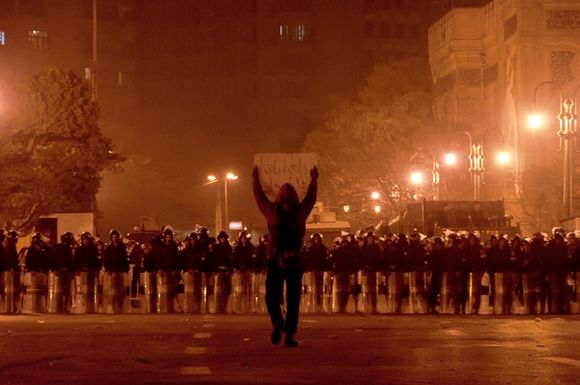
“Latenightcabdriving”. Protests in Cairo. Jan 29, 2011.

Those who frequent cyberspace have likely seen this photo a dozen times by now but for us who don't 🙂, this is the most powerful image I have found over the last 6 days of revolution in Egypt.

Abbas, I also like the version you have on Facebook, with the title “Walk Like an Egyptian”.

More here for details.

Sunday, January 30, 2011

A New Vision of the Public University

Michael Burawoy over at the SSRC blog:

The university is in crisis everywhere. In the broadest terms, the university’s position as simultaneously inside and outside society, simultaneously participant in and observer of society, – always precarious – is being eroded. With the exception of a few antiquated hold outs the idea of the ivory tower has gone. We no longer can hold on to a position of splendid isolation. We may think of the era gone by as the Golden Age of the University, but in reality it was a Fool’s Paradise that simply couldn’t last. Today, the academy has no option but to engage with the wider society, the question is how.

We face enormous pressures of instrumentalization, turning the university into a means for someone’s else’s end. These pressures come in two forms – commodification and regulation. I teach at the University of California, which, with its seven plus campuses, is (or was) surely one of the shining examples of public education in the world. This last year it was hit with a 25% cut in public funding. This is a sizeable chunk of money. The university has never faced such a financial crisis and it has taken correspondingly drastic steps – laying off unknown numbers of non-academic staff, putting pressure on already outsourced low paid service workers, furloughing academics that include world renown figures. Most significantly it involved a 30% increase in student fees, so that they now rise to over $10,000 a year, but still this is only a quarter of the price of the best private universities. These are drastic measures indeed, and a violation of California’s Master Plan for higher education, a vision of free higher education for all who desired it, orchestrated through a system that integrated two year community colleges, the state system of higher education and then, at the pinnacle, the University of California. All this is now turning to ruins.

A Niche for a Prophet

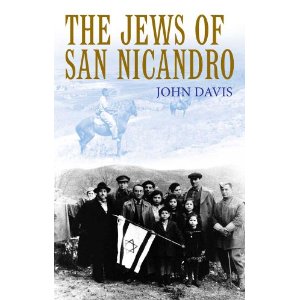
51SGvpZifGL._SL500_AA300_ Eric Hobsbawm in the LRB:

San Nicandro Garganico is a modest agrarian township of some 16,000 inhabitants on the edge of the spur of the boot-shaped Italian peninsula. It has been somewhat bypassed by Italy’s postwar development and has never been on the tourist circuit, or indeed had anything about it that might attract outsiders. The railway didn’t even reach it until 1931. To judge by the photo in the current Italian Wikipedia entry, it looks pretty much the same as it did in 1957, when I visited it, curious about the subject on which John Davis has now given us a first-rate, concise and attractively written book. San Nicandro has made only two entrances onto the historical stage. It was an early centre of Italian socialism and agrarian struggle in the grain-fields of northern Apulia, whose local political head, Domenico Fioritto, became its deputy and subsequently leader of the Italian Socialist Party. The former Communist Party (now the Democratic Party) continues to supply its mayor. The second appearance of the town in the wider world was less relevant to Italian politics, but globally more prominent, though the postwar headlines would soon be forgotten. It linked the town to a group of local peasants who decided in the 1930s to convert to Judaism and eventually emigrated to Israel. John Davis has not only rescued the ‘Jews of San Nicandro’ from more than a half-century of oblivion, but used them to illuminate 20th-century Europe’s extraordinary history.

In purely quantitative terms the phenomenon was negligible: the Fascist police, ever on the watch, reported them as nine families, or 40 people. Some 30 migrated to Israel in 1949. If this group of friends and kinsmen had not chosen to be Jews, but had joined one of those evangelical sects – Seventh-Day Adventists, Pentecostalists – brought into southern Italy by emigrants returned from the US, nobody would have paid any attention to them. They would have been regarded as just another kind of Protestant, as indeed they were by the authorities on their first contact with the sect in 1936, when their prophet, Donato Manduzio, was fined 250 lire as ‘a Protestant pastor’ for conducting an unauthorised religious service. It was in that world of postwar grassroots religiosity that they belonged, though dissident village conventicles were much smaller than Catholic miracle cults such as the one that developed around Padre Pio of San Giovanni Rotonda in the same region at the same time. Though the Vatican was then, understandably, sceptical about the holy man’s claim to bear the mark of Christ’s stigmata, he was to be promoted to sainthood by Pope Wojtyla.

Where else, except from a neighbouring Pentecostalist, would Manduzio have acquired a copy of the Bible in Italian, his study of which converted him to Judaism?

Collateral unpleasantness that Washington would rather not discuss

Tony Karon in The National:

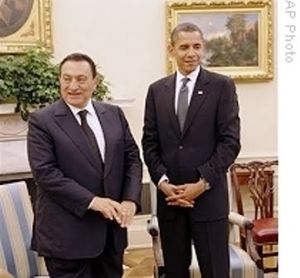
AP_Mubarak_Obama_Washington_Mideast_18aug09 On Saturday, CNN's Wolf Blitzer asked a guest on his show how al Qa'eda fitted into events in Egypt. The question itself was reminiscent of Larry King a few years back asking Tibet's spiritual leader, the Dalai Lama, to explain yoga.

Mr Blitzer's vigilance against Qa'eda bogeymen lurking in Egypt's democracy protests epitomises the US habit of seeing Egypt only through the prism of Washington's regional agenda.

US officials forced to explain their support for Hosni Mubarak's repressive autocracy over the past week have stressed Mr Mubarak's cooperation with Israel and support for a US regional strategy highly unpopular with the citizenry of the Arab world. As the State Department spokesman, PJ Crowley, told Al Jazeera: “Egypt is an anchor of stability in the Middle East … It's made its own peace with Israel and is pursuing normal relations with Israel. We think that's … a model that the region should adopt.”

The fact that Mr Mubarak has been kept in power for three decades by a police state that tortures opponents and runs sham elections is collateral unpleasantness that Washington would rather not discuss. In fact, it has been happy to outsource the torture of terror suspects to Mr Mubarak's security services under the CIA's “extraordinary rendition” programme. Fearing that democracy in Egypt would empower the Muslim Brotherhood, the US has lobbied for Mubarak-initiated reforms.

But paranoia over Islamist participation restrains US support for Arab democracy, which in most countries would include Islamist parties.

More here.

The consolations of understanding

From The Economist:

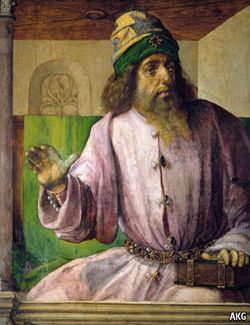
Aris THE unexamined life is not worth living, or so Socrates famously told the jury at his trial. He neglected to mention that the examined life is sometimes not all that wonderful either. In 11 biographical sketches of thinkers who tried to tread in Socrates’s footsteps, plus one on Socrates himself, James Miller explores what it means to follow the philosophical calling. Much trouble and uncertainty seems to be the answer, and some of the most famous philosophers turn out not to be all that admirable or convincing, he finds. So can philosophy inspire a way of life? That is one question raised by Mr Miller, who teaches politics and liberal studies at the New School for Social Research in New York.

Fortunately, Mr Miller does not press that question too hard. Any attempt to draw an all-encompassing moral from the lives he examines would have distorted the stories he has to tell. What we get instead is a vivid set of philosophical tales that are notable for their judicious use of sources, including rare early works. The result is a fresh treatment of subjects who are often served up stale. Even Immanuel Kant, whose writings were justly described by Heinrich Heine, a poet, as having “the grey dry style of a paper bag”, emerges as human.

More here.

Babylon Revisited: When the money runs out

From The Telegraph:

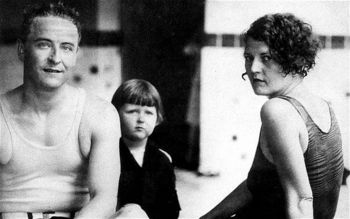
FScott_1813988b Today, Francis Scott Key Fitzgerald may be one of America’s most celebrated novelists, but during his lifetime, he was best known as a writer of short stories. At the end of the Twenties, he was the highest-paid writer in America earning fees of $4,000 per story (about $50,000 today) and published in mainstream magazines such as The Saturday Evening Post. Over 20 years, he wrote almost 200 stories in addition to his four novels, publishing 164 of them in magazines. When Ernest Hemingway first met Fitzgerald, in Paris in 1925, it was within weeks of the publication of The Great Gatsby; Hemingway later wrote that before reading Gatsby, he thought that Fitzgerald “wrote Saturday Evening Post stories that had been readable three years before but I never thought of him as a serious writer”. Gatsby would change all that, of course, so thoroughly that now we may be in danger of forgetting Fitzgerald’s stories. The haste in which he wrote them, in order to pay for the luxurious lifestyle he enjoyed with his wife, Zelda, means that the stories are uneven in quality, but at their best they are among the finest stories in English. And “Babylon Revisited”, a Saturday Evening Post story first published exactly 80 years ago next month – and free inside next Saturday’s edition of the Telegraph – is probably the greatest. A tale of boom and bust, about the debts one has to pay when the party comes to an end, it is a story with particular relevance for the way we live now.

Fitzgerald’s fortunes uncannily mirrored the fortunes of the nation he wrote about: his first novel, This Side of Paradise, became a runaway bestseller in early 1921, just as America entered the boom period that Fitzgerald himself would name the Jazz Age. He and Zelda became celebrities and began living the high life. They were the golden couple of the Twenties, “beautiful and damned”, as the prophetic title of Fitzgerald’s 1922 novel suggested, treated like royalty in America’s burgeoning celebrity culture. Glamorous, reckless and profligate, the Fitzgeralds were spendthrift in every sense. Much later, Fitzgerald would have to take account of all they had squandered – not only wealth, but beauty, youth, health, and even his genius.

More here.

Robert Fisk joins protesters atop a Cairo tank: “It is over.”

Robert Fisk in The Independent:

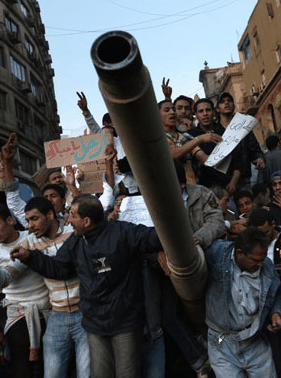
ScreenHunter_02 Jan. 30 09.11 The Egyptian tanks, the delirious protesters sitting atop them, the flags, the 40,000 protesters weeping and crying and cheering in Freedom Square and praying around them, the Muslim Brotherhood official sitting amid the tank passengers. Should this be compared to the liberation of Bucharest? Climbing on to an American-made battle tank myself, I could only remember those wonderful films of the liberation of Paris. A few hundred metres away, Hosni Mubarak's black-uniformed security police were still firing at demonstrators near the interior ministry. It was a wild, historical victory celebration, Mubarak's own tanks freeing his capital from his own dictatorship.

In the pantomime world of Mubarak himself – and of Barack Obama and Hillary Clinton in Washington – the man who still claims to be president of Egypt swore in the most preposterous choice of vice-president in an attempt to soften the fury of the protesters – Omar Suleiman, Egypt's chief negotiator with Israel and his senior intelligence officer, a 75-year-old with years of visits to Tel Aviv and Jerusalem and four heart attacks to his credit. How this elderly apparatchik might be expected to deal with the anger and joy of liberation of 80 million Egyptians is beyond imagination. When I told the demonstrators on the tank around me the news of Suleiman's appointment, they burst into laughter.

Their crews, in battledress and smiling and in some cases clapping their hands, made no attempt to wipe off the graffiti that the crowds had spray-painted on their tanks. “Mubarak Out – Get Out”, and “Your regime is over, Mubarak” have now been plastered on almost every Egyptian tank on the streets of Cairo. On one of the tanks circling Freedom Square was a senior member of the Muslim Brotherhood, Mohamed Beltagi. Earlier, I had walked beside a convoy of tanks near the suburb of Garden City as crowds scrambled on to the machines to hand oranges to the crews, applauding them as Egyptian patriots. However crazed Mubarak's choice of vice-president and his gradual appointment of a powerless new government of cronies, the streets of Cairo proved what the United States and EU leaders have simply failed to grasp. It is over.

More here.

Saturday, January 29, 2011

Alexandrian Kings

by Constantin P. Cavafy (who was born in Alexandria, Egypt, in 1863)

The Alexandrians turned out in force
to see Cleopatra’s children,
Kaisarion and his little brothers,
Alexander and Ptolemy, who for the first time
had been taken out to the Gymnasium,
to be proclaimed kings there
before a brilliant array of soldiers.

Alexander: they declared him
king of Armenia, Media, and the Parthians.
Ptolemy: they declared him
king of Cilicia, Syria, and Phoenicia.
Kaisarion was standing in front of the others,
dressed in pink silk,
on his chest a bunch of hyacinths,
his belt a double row of amethysts and sapphires,
his shoes tied with white ribbons
prinked with rose-colored pearls.
They declared him greater than his little brothers,
they declared him King of Kings.

The Alexandrians knew of course
that this was all mere words, all theatre.

But the day was warm and poetic,
the sky a pale blue,
the Alexandrian Gymnasium
a complete artistic triumph,
the courtiers wonderfully sumptuous,
Kaisarion all grace and beauty
(Cleopatra’s son, blood of the Lagids);
and the Alexandrians thronged to the festival
full of enthusiasm, and shouted acclamations
in Greek, and Egyptian, and some in Hebrew,
charmed by the lovely spectacle—
though they knew of course what all this was worth,
what empty words they really were, these kingships.

Translated by Edmund Keeley/Philip Sherrard

Will Egypt’s Military Officers Free the Revolution?

Michael Wahid Hanna in The Atlantic:

ScreenHunter_01 Jan. 29 18.09 When armored personnel carriers filled with soldiers began making their way into the heart of Cairo and other cities in Egypt on Friday January 28th, they were greeted with receptivity by protestors, who saw in the much-respected military a potential ally in their uprising against the regime. No doubt, the recent experience in Tunisia, where the military stepped in resoundingly on the side of the demonstrations and hastened the fall of the repressive regime of President Ben Ali, was fresh in their mind. The Tunisian military had intervened against the police forces, burnishing their image as popular heroes who shared the patriotic concerns of the brave Tunisians who defied the regime. The scenes that unfolded in Egypt made clear that the protestors there hoped to force a similar split between the security forces, run by the Ministry of the Interior, and the military.

While Egypt's military is no longer an active fighting force, it still retains more credibility as a public entity than Egypt's civilian institutions, crippled after years of neglect and one-man rule. In recent years, even some democracy activists, despondent from years of state repression and ineffectual organizing, have seen the military as the last hope for Egyptians against Mubarak's efforts to orchestrate his son, Gamal, as successor to the presidency. Now that demonstrators have overwhelmed the police forces and built popular momentum, the military, were it to shift its allegiance from Mubarak to the protesters, could effectively end the regime.

More here.