
Shelly Fan in Singularity Hub:
 The first time I heard nematode worms can teach us something about human longevity, I balked at the idea. How the hell can a worm with an average lifespan of only 15 days have much in common with a human who lives decades?
The answer is in their genes—especially those that encode for basic life functions, such as metabolism. Thanks to the lowly C. elegans worm, we’ve uncovered genes and molecular pathways, such as insulin-like growth factor 1 (IGF-1) signaling that extends healthy longevity in yeast, flies, and mice (and maybe us). Too nerdy? Those pathways also inspired massive scientific and popular interest in metformin, hormones, intermittent fasting, and even the ketogenic diet. To restate: worms have inspired the search for our own fountain of youth.
Still, that’s just one success story. How relevant, exactly, are those genes for humans? We’re rather a freak of nature. Our aging process extends for years, during which we experience a slew of age-related disorders. Diabetes. Heart disease. Dementia. Surprisingly, many of these don’t ever occur in worms and other animals. Something is obviously amiss. In this month’s Nature Metabolism, a global team of scientists argued that it’s high time we turn from worm to human. The key to human longevity, they say, lies in the genes of centenarians. These individuals not only live over 100 years, they also rarely suffer from common age-related diseases. That is, they’re healthy up to their last minute. If evolution was a scientist, then centenarians, and the rest of us, are two experimental groups in action.
Nature has already given us a genetic blueprint for healthy longevity. We just need to decode it.
More here.
Enjoying the content on 3QD? Help keep us going by donating now.
 A
A In America today, we are bad at conscious decisionmaking about technology. Our best efforts lately leave much to be desired: a decade of zero-sum argument about whose speech norms will prevail on social media, a long-delayed and fragmented debate about smartphones conducted through research about a teen mental health crisis, and scaremongering and special interests determining the fate of what was once the promise of “too cheap to meter” nuclear energy.
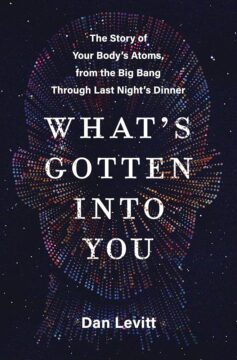 In 1918, the citizens of Moscow, the new capital of Communist Russia, struggled to maintain a semblance of normal life. It wasn’t easy. A brutal civil war between the White and Red Russian armies was raging. The West had imposed a trade war. The capital was aswirl with revolutionary ideas, new ways of thinking about equality, justice, and history. Those of means who had not fled were demoted to ordinary citizens and forced to share their wealth and homes with the less privileged. Despite all the revolutionary fervor, Alexander Oparin, a young biochemist steeped in radical scientific ideas, received disappointing news. The censorship board would not permit him to publish a manuscript that speculated on how life arose from mere chemicals. Though the Bolsheviks had overthrown the tsar a year ago, their revolutionary ideology had not yet filtered down to the censors, perhaps because they were not yet ready to directly antagonize the Russian Orthodox Church.
 The protests stem from long-running resentment over a quota system that saw
  A final idea that frames Harris’ interpretation of Śāntideva—one that is clearly correct, and unappreciated—is that the universal altruism and the attitudes of kindness, care, impartiality, and joy in the accomplishments of others that Śāntideva recommends do not constitute self-sacrifice or self-abnegation. Instead, Harris demonstrates that, on Śāntideva’s view, they are both constitutive of and instrumental to human happiness (40 ff., 60 ff.). So, when Śāntideva compares pleasure in the everyday world to honey on a razor blade, he is pointing out that the pursuit of our own pleasure in the end yields only pain, because of the attachment it generates to a fragile commodity; when Śāntideva argues that we only become happy when we dedicate ourselves to the welfare of others, the freedom from attachment to our own narrow interest expands our sources of joy. As Harris puts it, “Perfect giving, for Śāntideva, is private, but other-focused; self-benefitting, but radically benevolent; total, and yet not self-injurious” (67).
 At least one-quarter of people who have severe brain injuries and cannot respond physically to commands are actually
  I imagine the ideal way in which to read Giovanni Boccaccio’s profane and earthy 14th-century classic The Decameron is to be ensconced for a sweltering summer at the Villa Schifanoia. There you would have a small but elegant room overlooking the Tuscan hillsides whose winding roads are lined with those tall and preposterously skinny trees, while evenings would be given over to feasts in the yellow-walled courtyard where you dine on cantaloupe wrapped in prosciutto cut to a near-translucent pinkness, pappardelle with fresh pesto studded with garlic and pine-nuts, and a thick cut of charred and marbled ribeye whose interior is as luridly crimson as a muscular human heart.