
The Colbert Report Mon – Thurs 11:30pm / 10:30c Brian Greene
Colbert Report Full Episodes Political Humor & Satire Blog Video Archive
Category: Recommended Reading
A New Vision of the Public University
Michael Burawoy over at the SSRC blog:
The university is in crisis everywhere. In the broadest terms, the university’s position as simultaneously inside and outside society, simultaneously participant in and observer of society, – always precarious – is being eroded. With the exception of a few antiquated hold outs the idea of the ivory tower has gone. We no longer can hold on to a position of splendid isolation. We may think of the era gone by as the Golden Age of the University, but in reality it was a Fool’s Paradise that simply couldn’t last. Today, the academy has no option but to engage with the wider society, the question is how.
We face enormous pressures of instrumentalization, turning the university into a means for someone’s else’s end. These pressures come in two forms – commodification and regulation. I teach at the University of California, which, with its seven plus campuses, is (or was) surely one of the shining examples of public education in the world. This last year it was hit with a 25% cut in public funding. This is a sizeable chunk of money. The university has never faced such a financial crisis and it has taken correspondingly drastic steps – laying off unknown numbers of non-academic staff, putting pressure on already outsourced low paid service workers, furloughing academics that include world renown figures. Most significantly it involved a 30% increase in student fees, so that they now rise to over $10,000 a year, but still this is only a quarter of the price of the best private universities. These are drastic measures indeed, and a violation of California’s Master Plan for higher education, a vision of free higher education for all who desired it, orchestrated through a system that integrated two year community colleges, the state system of higher education and then, at the pinnacle, the University of California. All this is now turning to ruins.
Is it Morally Irresponsible to Theorize About a Multiverse?
A Niche for a Prophet

San Nicandro Garganico is a modest agrarian township of some 16,000 inhabitants on the edge of the spur of the boot-shaped Italian peninsula. It has been somewhat bypassed by Italy’s postwar development and has never been on the tourist circuit, or indeed had anything about it that might attract outsiders. The railway didn’t even reach it until 1931. To judge by the photo in the current Italian Wikipedia entry, it looks pretty much the same as it did in 1957, when I visited it, curious about the subject on which John Davis has now given us a first-rate, concise and attractively written book. San Nicandro has made only two entrances onto the historical stage. It was an early centre of Italian socialism and agrarian struggle in the grain-fields of northern Apulia, whose local political head, Domenico Fioritto, became its deputy and subsequently leader of the Italian Socialist Party. The former Communist Party (now the Democratic Party) continues to supply its mayor. The second appearance of the town in the wider world was less relevant to Italian politics, but globally more prominent, though the postwar headlines would soon be forgotten. It linked the town to a group of local peasants who decided in the 1930s to convert to Judaism and eventually emigrated to Israel. John Davis has not only rescued the ‘Jews of San Nicandro’ from more than a half-century of oblivion, but used them to illuminate 20th-century Europe’s extraordinary history.
In purely quantitative terms the phenomenon was negligible: the Fascist police, ever on the watch, reported them as nine families, or 40 people. Some 30 migrated to Israel in 1949. If this group of friends and kinsmen had not chosen to be Jews, but had joined one of those evangelical sects – Seventh-Day Adventists, Pentecostalists – brought into southern Italy by emigrants returned from the US, nobody would have paid any attention to them. They would have been regarded as just another kind of Protestant, as indeed they were by the authorities on their first contact with the sect in 1936, when their prophet, Donato Manduzio, was fined 250 lire as ‘a Protestant pastor’ for conducting an unauthorised religious service. It was in that world of postwar grassroots religiosity that they belonged, though dissident village conventicles were much smaller than Catholic miracle cults such as the one that developed around Padre Pio of San Giovanni Rotonda in the same region at the same time. Though the Vatican was then, understandably, sceptical about the holy man’s claim to bear the mark of Christ’s stigmata, he was to be promoted to sainthood by Pope Wojtyla.
Where else, except from a neighbouring Pentecostalist, would Manduzio have acquired a copy of the Bible in Italian, his study of which converted him to Judaism?
Collateral unpleasantness that Washington would rather not discuss
Tony Karon in The National:
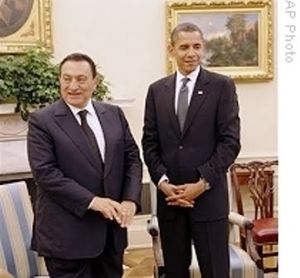
Mr Blitzer's vigilance against Qa'eda bogeymen lurking in Egypt's democracy protests epitomises the US habit of seeing Egypt only through the prism of Washington's regional agenda.
US officials forced to explain their support for Hosni Mubarak's repressive autocracy over the past week have stressed Mr Mubarak's cooperation with Israel and support for a US regional strategy highly unpopular with the citizenry of the Arab world. As the State Department spokesman, PJ Crowley, told Al Jazeera: “Egypt is an anchor of stability in the Middle East … It's made its own peace with Israel and is pursuing normal relations with Israel. We think that's … a model that the region should adopt.”
The fact that Mr Mubarak has been kept in power for three decades by a police state that tortures opponents and runs sham elections is collateral unpleasantness that Washington would rather not discuss. In fact, it has been happy to outsource the torture of terror suspects to Mr Mubarak's security services under the CIA's “extraordinary rendition” programme. Fearing that democracy in Egypt would empower the Muslim Brotherhood, the US has lobbied for Mubarak-initiated reforms.
But paranoia over Islamist participation restrains US support for Arab democracy, which in most countries would include Islamist parties.
More here.
Umm Kulthūm
road to Cairo
old cairo
The consolations of understanding
From The Economist:
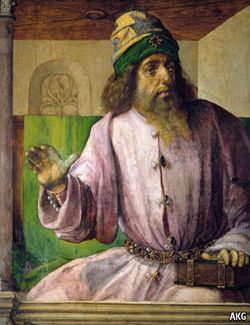
Fortunately, Mr Miller does not press that question too hard. Any attempt to draw an all-encompassing moral from the lives he examines would have distorted the stories he has to tell. What we get instead is a vivid set of philosophical tales that are notable for their judicious use of sources, including rare early works. The result is a fresh treatment of subjects who are often served up stale. Even Immanuel Kant, whose writings were justly described by Heinrich Heine, a poet, as having “the grey dry style of a paper bag”, emerges as human.
More here.
Babylon Revisited: When the money runs out
From The Telegraph:

Fitzgerald’s fortunes uncannily mirrored the fortunes of the nation he wrote about: his first novel, This Side of Paradise, became a runaway bestseller in early 1921, just as America entered the boom period that Fitzgerald himself would name the Jazz Age. He and Zelda became celebrities and began living the high life. They were the golden couple of the Twenties, “beautiful and damned”, as the prophetic title of Fitzgerald’s 1922 novel suggested, treated like royalty in America’s burgeoning celebrity culture. Glamorous, reckless and profligate, the Fitzgeralds were spendthrift in every sense. Much later, Fitzgerald would have to take account of all they had squandered – not only wealth, but beauty, youth, health, and even his genius.
More here.
Robert Fisk joins protesters atop a Cairo tank: “It is over.”
Robert Fisk in The Independent:
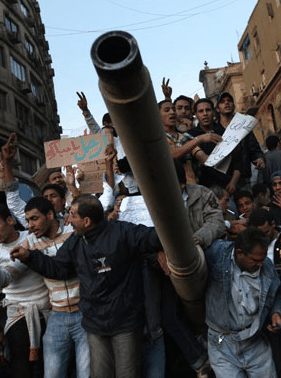
In the pantomime world of Mubarak himself – and of Barack Obama and Hillary Clinton in Washington – the man who still claims to be president of Egypt swore in the most preposterous choice of vice-president in an attempt to soften the fury of the protesters – Omar Suleiman, Egypt's chief negotiator with Israel and his senior intelligence officer, a 75-year-old with years of visits to Tel Aviv and Jerusalem and four heart attacks to his credit. How this elderly apparatchik might be expected to deal with the anger and joy of liberation of 80 million Egyptians is beyond imagination. When I told the demonstrators on the tank around me the news of Suleiman's appointment, they burst into laughter.
Their crews, in battledress and smiling and in some cases clapping their hands, made no attempt to wipe off the graffiti that the crowds had spray-painted on their tanks. “Mubarak Out – Get Out”, and “Your regime is over, Mubarak” have now been plastered on almost every Egyptian tank on the streets of Cairo. On one of the tanks circling Freedom Square was a senior member of the Muslim Brotherhood, Mohamed Beltagi. Earlier, I had walked beside a convoy of tanks near the suburb of Garden City as crowds scrambled on to the machines to hand oranges to the crews, applauding them as Egyptian patriots. However crazed Mubarak's choice of vice-president and his gradual appointment of a powerless new government of cronies, the streets of Cairo proved what the United States and EU leaders have simply failed to grasp. It is over.
More here.
Saturday, January 29, 2011
Alexandrian Kings
by Constantin P. Cavafy (who was born in Alexandria, Egypt, in 1863)
The Alexandrians turned out in force
to see Cleopatra’s children,
Kaisarion and his little brothers,
Alexander and Ptolemy, who for the first time
had been taken out to the Gymnasium,
to be proclaimed kings there
before a brilliant array of soldiers.
Alexander: they declared him
king of Armenia, Media, and the Parthians.
Ptolemy: they declared him
king of Cilicia, Syria, and Phoenicia.
Kaisarion was standing in front of the others,
dressed in pink silk,
on his chest a bunch of hyacinths,
his belt a double row of amethysts and sapphires,
his shoes tied with white ribbons
prinked with rose-colored pearls.
They declared him greater than his little brothers,
they declared him King of Kings.
The Alexandrians knew of course
that this was all mere words, all theatre.
But the day was warm and poetic,
the sky a pale blue,
the Alexandrian Gymnasium
a complete artistic triumph,
the courtiers wonderfully sumptuous,
Kaisarion all grace and beauty
(Cleopatra’s son, blood of the Lagids);
and the Alexandrians thronged to the festival
full of enthusiasm, and shouted acclamations
in Greek, and Egyptian, and some in Hebrew,
charmed by the lovely spectacle—
though they knew of course what all this was worth,
what empty words they really were, these kingships.
Translated by Edmund Keeley/Philip Sherrard
Will Egypt’s Military Officers Free the Revolution?
Michael Wahid Hanna in The Atlantic:

While Egypt's military is no longer an active fighting force, it still retains more credibility as a public entity than Egypt's civilian institutions, crippled after years of neglect and one-man rule. In recent years, even some democracy activists, despondent from years of state repression and ineffectual organizing, have seen the military as the last hope for Egyptians against Mubarak's efforts to orchestrate his son, Gamal, as successor to the presidency. Now that demonstrators have overwhelmed the police forces and built popular momentum, the military, were it to shift its allegiance from Mubarak to the protesters, could effectively end the regime.
More here.
Those who make peaceful revolution impossible will make violent revolution inevitable
Mubarak’s Last Breath

Frustration, shame, humiliation: it does not take much for Egyptians to call up these feelings. It’s still often said that ‘what happens in Egypt affects the entire Arab world,’ but nothing much has happened there in years. Egypt has fallen behind Saudi Arabia – not to mention non-Arab countries like Turkey and Iran – in regional leadership. Even tiny Qatar has a more independent foreign policy. Egypt is by far the largest Arab country, with 80 million inhabitants, yet it’s seen by most Arabs – and by the Egyptians themselves – as a client state of the United States and Israel, who depend on Mubarak to ensure regional ‘stability’ in the struggle with the ‘resistance front’ led by Iran. The liberalisation of Egypt’s economy – launched by Sadat’s Infitah (Open Door) policy in 1974 – has earned Mubarak praise from the World Bank. The 2007 constitution, purged of references to socialism, says that ‘the economy of the Arab Republic of Egypt is founded on the development of the spirit of enterprise.’ Yet Egypt’s market is anything but free: businesses tend to have very close, and mutually profitable, relationships with the state, in which the Mubarak family often participates and takes its cut. Hussein Salem, a hotel magnate, arms dealer and co-owner of the Eastern Mediterranean Gas Company – an Egyptian-Israeli consortium that recently secured a $2.5 billion contract to sell Egypt’s natural gas to Israel – is thought to be one of Mubarak’s frontmen; the gas began flowing in early 2008, just as Israel was tightening the siege of Gaza.
more from Adam Shatz at the LRB here.
Caught in the web

The internet has come a long way since Sir Tim Berners-Lee, the inventor of the world wide web, turned on the first web server in Geneva on Christmas day 1990. Today, 2bn people are online; 800m of them are on Facebook. Every minute, 24 hours worth of video is uploaded to YouTube. Google, a company founded only 15 years ago, has a market capitalisation just short of $200bn and a mission statement that it intends “to organise the world’s information and make it universally accessible and useful” – something no one thinks unlikely or even remarkable. We now bank, shop, communicate, work and date through the internet. The internet has come of age. It is as defining an achievement for humanity as the Enlightenment or the industrial revolution. But as the web’s youthful potential and teenage brashness give way to a more grown-up, complicated and multifaceted personality, our reaction to it has also changed. Our enthusiasm is tempered by a realisation that it is not simply an exciting force for good, as it was first seen. This year’s opening salvo of books about the internet does not laud web entrepreneurs or predict jetpacks and digital utopia. Instead, Sherry Turkle’s Alone Together, Evgeny Morozov’s The Net Delusion and John Brockman’s collection of essays all soberly assess the current state of the internet and ask: are the changes the internet brings to our society and our human nature actually beneficial?
more from Ben Hammersley at the FT here.
Arundhati Roy: India’s bold and brilliant daughter
From The Guardian:
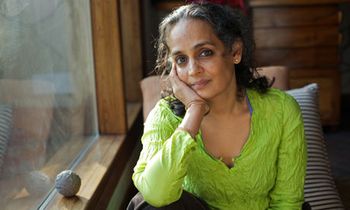
In India she draws even bigger crowds, and switches from English to Hindi. She tours extensively, and often to the kind of country towns and small cities that rarely see anyone so celebrated. Recently, she told me, 5,000 tribal people from 34 districts had gathered to hear her at Bhubaneswar in Orissa. Some had walked for days to get there; 40 had been arrested and charged with waging war against the state; two, she believed, had died in jail. “So it isn't like Jaipur,” she said, referring to India's first and largest literary festival, just ended, where well-fed writers are flown in from London and New York and put up in reupholstered palaces.
More here.
A Lion in the Undergrowth
From The New York Times:
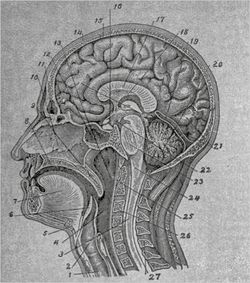
V. S. Ramachandran, a professor of neuroscience and psychology at the University of California, San Diego, has done as much as anyone to reveal the workings of the mind through the malfunctions of the brain. We meet some mighty strange malfunctions in his new book, “The Tell-Tale Brain: A Neuroscientist’s Quest for What Makes Us Human.” There is a man who, after a head injury, cannot recognize or respond to people when he sees them, but can happily chat on the phone. We meet a woman who laughs when she should be yelping in pain. There are patients with Capgras syndrome, who come to believe that people who are close to them (or, in one case, the patient’s poodle) are imposters. We meet unfortunates with an intense desire to have their own healthy limbs amputated, others who are paralyzed on one side but insist against all evidence that they are not, and, in Cotard’s syndrome, people who sincerely believe they are dead. Ramachandran weaves such tales together to build a picture of the specialized areas of the brain and the pathways between them, drawing his map by relating particular types of damage to their corresponding mental deficits.
More here.
Mubarak’s Defiance Makes Life Harder for Obama
Tony Karon in Time:

The speech was widely derided on the streets, and analysts warned that it was likely to intensify protests. And lest anybody doubt that the White House recognized Mubarak's position as a statement of defiance toward Washington, President Obama announced an hour later that he'd spoken to his Egyptian counterpart after the speech, and had made “very clear” that Mubarak had an obligation to refrain from violence against peaceful protests, to turn the SMS and Internet platforms blocked by his regime back on, and to take “concrete steps” toward real reform. “Ultimately the future of Egypt will be determined by the Egyptian people,” Obama said. “Governments have an obligation to respond to their citizens.” Press Secretary Gibbs put a price tag on further Mubarak misbehavior, warning that the annual $1.3 billion aid package the U.S. sends to Egypt's security forces would be placed under review on the basis of Egypt's handling of the protests.
The Administration is caught in a bind, but it's more strategic than just moral: Supporting tyrants loathed by their own people but willing to do Washington's bidding in international matters is a decades-old U.S. tradition in the Middle East, as well as in Asia, Africa and Latin America. The problem with Mubarak is not simply that his methods are at odds with professed U.S. values; it's that his brittle autocracy appears to have entered a period of terminal decline, with the U.S. potentially on the wrong side of history.
More here.
What to wear in Egypt

This is from an “Egyptian Activist's Action Plan” brochure that was printed and distributed before Friday's protests. The Atlantic has much more about it here. [Thanks to Tony Karon.]