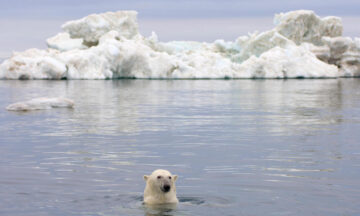
Wendy Brown in The Nation:
Only a few centuries old, capitalism’s unprecedented mode of producing for human needs and generating wealth shapes present and future conditions of earthly existence more pervasively and profoundly than anything else humans have made. It affects the entirety of the planet’s surface and crafts both possibilities and challenges for all life upon it. It arrays 8 billion homo sapiens across a wildly uneven spectrum of opulence, comfort, poverty, and desperation. It contours all social relations and subjectivities, from practices of work and leisure to arrangements of kinship, intimacy, and loneliness. In addition to class, it constructs and mobilizes race and gender in continuously changing yet persistently exploitable ways. It powers technological revolutions and scatters the discarded remains of past ones everywhere on earth and in orbits circling it. It birthed the Anthropocene—the epoch in which human and “natural” histories are now permanently and dynamically entwined—and within it, the Great Acceleration: the short half-century in which fossil fuel use intensified so radically as to inaugurate what scientists term the Sixth Mass Extinction. And it incited the development of finance, artificial intelligence, and other practices animated by digital technologies that bode ever more intense and paradoxical ways to both serve and dominate the species that invented them.
More here.
Enjoying the content on 3QD? Help keep us going by donating now.
 I
I T
T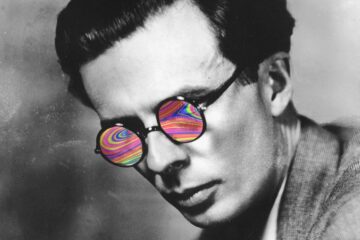 Around Christmas Eve 1955,
  Genetic analysis of a Neanderthal fossil found in France reveals that it was from a previously unknown lineage, a remnant of an ancient population that had remained in extreme isolation for more than 50,000 years. This finding sheds new light on the final phase of the species’ existence.
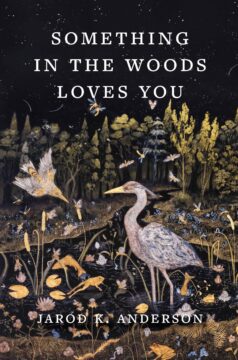 I have difficulty interpreting the nature of my own life, a thing I feel intimately and continuously, so it’s not surprising that we can’t all agree on the nature of herons.
 Love ’em or hate ’em, there’s a reason sarcasm quotes are all over the internet. Like funny sayings, sarcasm quotes play with the interpretation of words and tone in a way that can stretch your brain if you’re not expecting it. To use sarcasm, you have to say something that’s the opposite of what you mean (kind of like uttering a
 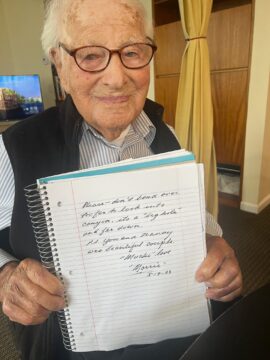 About a month ago, Judith Hansen popped awake in the predawn hours, thinking about her father’s brain.
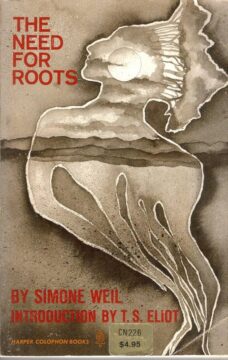 The French philosopher Simone Weil was a soul at odds with herself and with a world of affliction. The causes she espoused as a social activist and the faith she professed as a mystic were urgent to her and, as she saw it, to humanity. Little of her work was published in her lifetime, but since her death, at thirty-four, in 1943, it has inspired an almost cultlike following among readers who share her hunger for grace, and for what she called “decreation”—deliverance from enthrallment to the self.
 When history is about to take an abrupt turn, is there something in people’s eyes or in their secret longings that pre-announces it somehow—and that minds of a particular cast (poets and visionaries or perhaps psychiatrists) can read clearly and even put into words? If the world were to end next year, who would know about it today, and how? When we look back on the past, we say sometimes that there were “clear signs” that this or that event would happen, that the “writing was on the wall.” But how many of these signs were really there, and how many are projected back by hindsight? The problem is of special importance to historians. How can the historian single out a past event, focus on it exclusively, and pretend not to know what came after? How can a scholar fake ignorance?